Championship Banner Wording: What Schools Should Standardize Across Sports
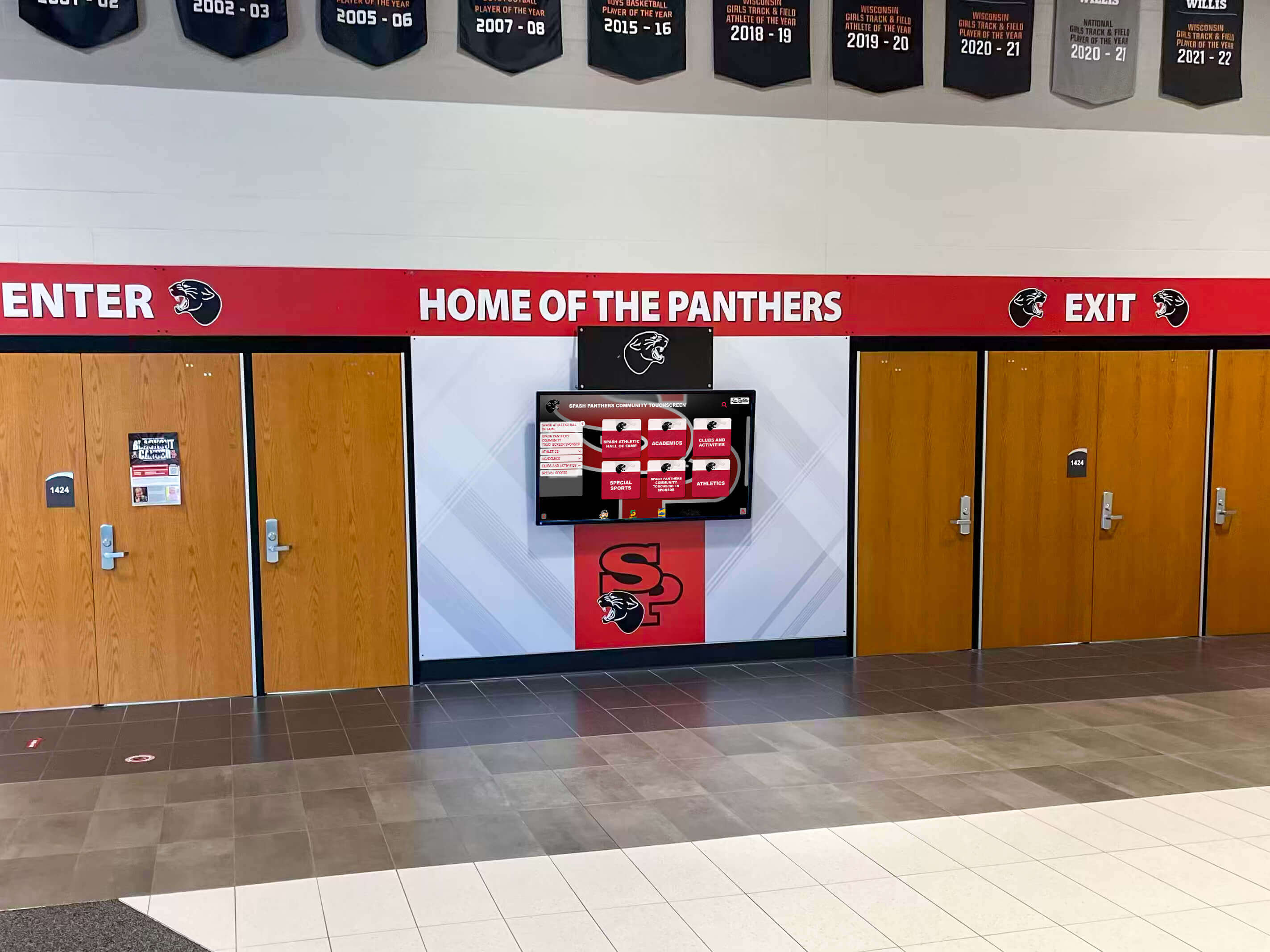
Championship banner wording is the one design decision that, once printed on vinyl or fabric and hung in a gymnasium, cannot be quietly corrected without reordering. Schools that standardize how they name sports, format seasons, designate team levels, and phrase championship titles before ordering banners avoid the inconsistency that accumulates over years — and they build a recognition infrastructure that transfers cleanly into digital archives, touchscreen halls of fame, and searchable program records. This guide covers every field that should be decided at the program level, with standard options and the tradeoffs behind each choice.
Read More
Commitment Graphic Template: What Schools Should Include for Signing Day and Display Archives
A commitment graphic template is a pre-structured design layout used by school athletic departments, coaches, and communications staff to announce an athlete’s college commitment — typically published on signing day or when an athlete shares their verbal commitment on social media. At its most basic, a commitment graphic includes the athlete’s name, the institution they are committing to, the sport, and a celebratory visual treatment. But commitment graphics that stop there create a problem athletic programs encounter years later: a disorganized folder of signing-day posts that no one can search, sort, or connect to a hall-of-fame display because the underlying data was never structured.
Read More
School Record Graphic: Designing Athletic Milestones for Social Posts and Digital Boards
A school record graphic serves two distinct purposes that athletic programs often treat as the same task — and the confusion produces designs that fail at both. The first purpose is immediate: celebrate a record-breaking moment on social media while the emotion is fresh. The second purpose is permanent: document that milestone in a format that belongs on a digital record board and can be searched, printed, or displayed for decades. Each purpose imposes different design requirements, and athletic departments that understand the distinction create graphics that genuinely serve both audiences instead of compromising for neither.
Read More