Middle school exists at a remarkable intersection—students are no longer elementary children, but haven’t yet arrived at the more defined identities of high school. This transitional energy, with its mix of awkward self-discovery, genuine friendships, and growing awareness of the wider world, creates both the challenge and opportunity for yearbook advisors working on K-8 or 6-8 campus publications.
The most memorable middle school yearbooks honor this specific life stage rather than borrowing wholesale from elementary formats (too cute) or high school conventions (too mature). When yearbook ideas for middle school succeed, they reflect the authentic culture of eleven- to fourteen-year-olds: playful but not babyish, aspirational but self-aware, communal yet individual. This guide offers 25 concrete concepts—ten themes, eight spread designs, and seven page layout ideas—to help advisors, staff, and student editors build a yearbook that captures a year worth remembering.
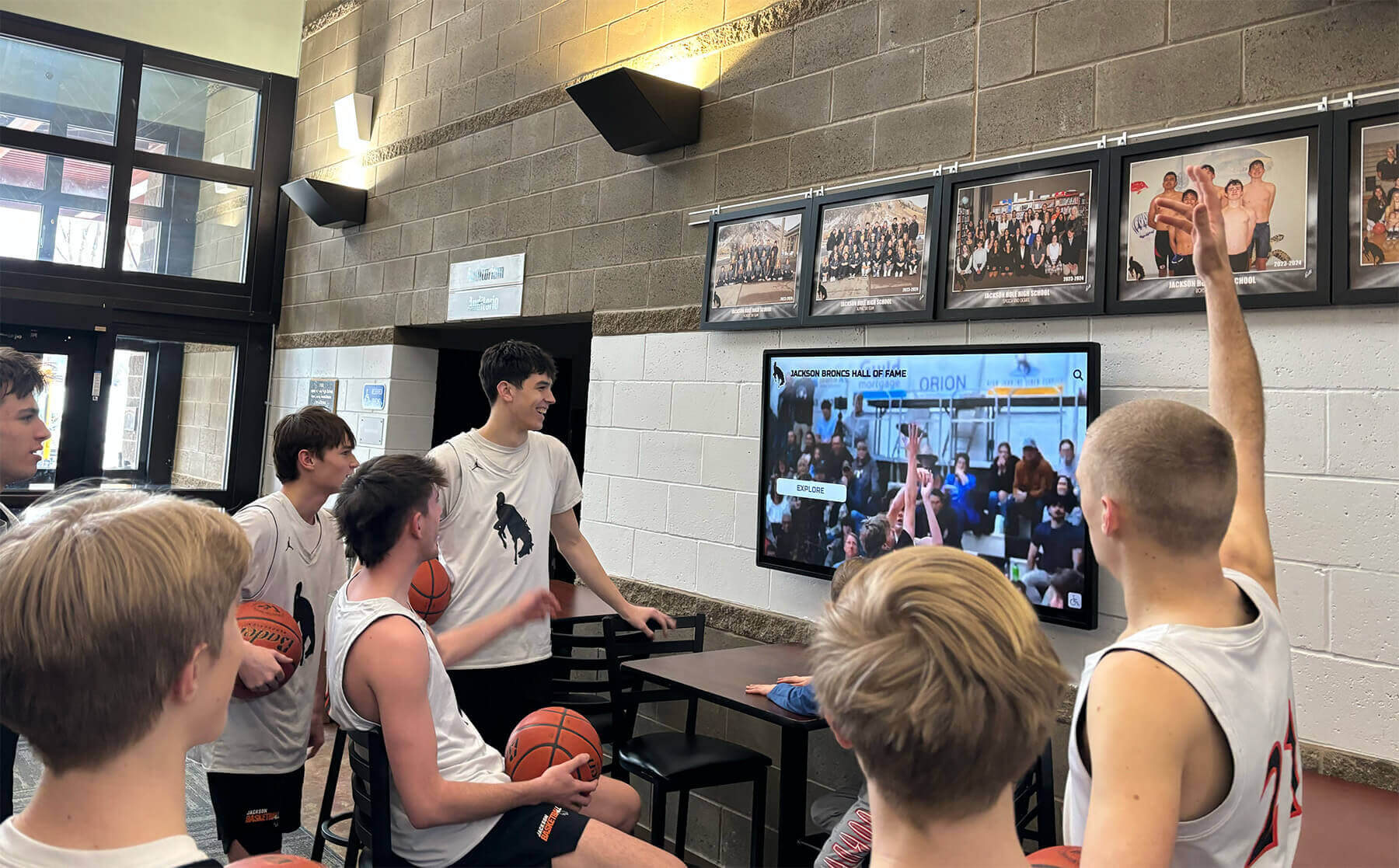
School displays and yearbook pages share the same mission: preserving memories students can revisit for years
Why Middle School Yearbooks Require Their Own Approach
Middle school students occupy a psychologically distinct space. They process visual information more like adults than young children, yet respond strongly to peer identity signals—in-group references, shared language, and cultural touchstones specific to their grade cohort. They are increasingly invested in how they appear to others, which makes candid photography a more delicate endeavor than in elementary contexts.
Advisors who recognize these dynamics create publications that sixth, seventh, and eighth graders actually want to look through—and keep. A yearbook that feels childish earns eye-rolls; one that feels authentic earns conversation and becomes the object students carry to end-of-year signings and revisit at reunions fifteen years later.
Understanding school identity also matters. Many middle school campuses have distinct mascots, color schemes, athletic programs, and academic initiatives that deserve visual acknowledgment throughout the yearbook. Just as schools invest in school banners and hallway displays to reinforce campus identity year-round, yearbooks create a parallel permanent record of that same institutional story.
10 Middle School Yearbook Themes
A strong theme functions as creative infrastructure—it guides cover design, interior color palettes, section dividers, caption writing style, and photo selection throughout the year. The best themes are specific enough to provide direction without being so narrow that they exclude large portions of the school’s activities.
1. Level Up
Borrowed from gaming culture that dominates many middle schoolers’ free time, “Level Up” frames the school year as a progression through increasingly challenging stages. Visually, this theme supports pixelated graphics or retro-arcade aesthetics alongside modern design, achievement-oriented section dividers, and language around growth and advancement. It resonates across grade levels because sixth graders entering middle school, seventh graders finding their footing, and eighth graders completing the journey each occupy a distinct “level” in the story.
2. Write Your Story
This theme centers student voice and individual narrative—the idea that each student authors their own middle school experience. Design execution can feature handwritten typography elements, notebook paper textures, open-book imagery, and pull quotes from students throughout the grade. It pairs well with student-written captions rather than staff-authored copy, making the yearbook feel authentically produced by the people who actually lived the year.
3. Uncharted Territory
Middle school genuinely is unexplored ground for students transitioning from elementary or joining new campuses for the first time. “Uncharted Territory” supports cartographic design elements—maps, compass roses, coordinate systems, and exploration motifs—while framing each academic and social discovery as a voyage. The theme works particularly well for schools with outdoors programs, travel experiences, or science and geography curricula that can be woven directly into the visual language.
4. Brighter Together
Community-centered themes resonate strongly in schools with active advisory programs or social-emotional learning initiatives. “Brighter Together” emphasizes collective achievement, friendship, and the specific bonds formed during the middle years. Design execution leans on warm color palettes, group photography, and layout approaches that show students in constellation rather than isolation. This theme also creates natural space for recognizing teachers, staff, and support personnel who shape school community.
5. The Middle of the Story
Meta-awareness fits middle school well—students this age appreciate the irony that they’re literally in the middle of their K-12 journey. “The Middle of the Story” creates narrative space for acknowledging where students came from and where they’re headed, while celebrating the distinctive value of the middle chapters. This theme pairs especially well with spirit week coverage and signature events that give each school year its particular character.
6. Future Forward
Aspirational themes work for middle school when they avoid preachiness and connect to genuine student interests. “Future Forward” can incorporate career exploration, interest-based electives, and the diverse pathways students envision for themselves. Design execution might feature bold geometric forms, progressive color gradients, and student-response elements where classmates share what they imagine doing in five or ten years—creating yearbook documentation that becomes more interesting as time passes.
7. One Voice, Many Stories
Diversity and inclusion themes have become increasingly important across grade levels, but this concept succeeds when executed with visual and editorial specificity rather than generic statements. The design strategy emphasizes portrait photography across backgrounds, cultural celebrations represented through the school year, and the mosaic of identities making up a real middle school community. Student quotes in multiple languages, when authentically representative of the school population, add genuine depth.
8. Wild at Heart
Nature and animal themes transcend age levels when executed with appropriate sophistication for middle school audiences. “Wild at Heart” incorporates botanical illustration, animal photography, ecological design elements, and language connecting the natural world to school community. Schools with mascots drawn from the animal kingdom find natural design synergy. The theme supports both playful visual execution and genuinely beautiful graphic treatment that older students appreciate.
9. Making Waves
“Making Waves” frames students as forces of positive change—in their school, community, and eventually the wider world. Water and ocean motifs provide rich visual material: waves, tides, underwater landscapes, and reflections. The theme connects well to community service initiatives, student government activities, and any advocacy or awareness campaigns that characterized the school year.
10. Just Like That
Nostalgia and the passage of time resonate with eighth graders completing middle school, but this theme works across all grades when framed around how quickly moments pass. “Just Like That” supports candid photography, timestamps, and design choices that feel like captured moments rather than posed productions. It pairs naturally with homecoming events and milestone gatherings where the feeling of time passing is most acute.
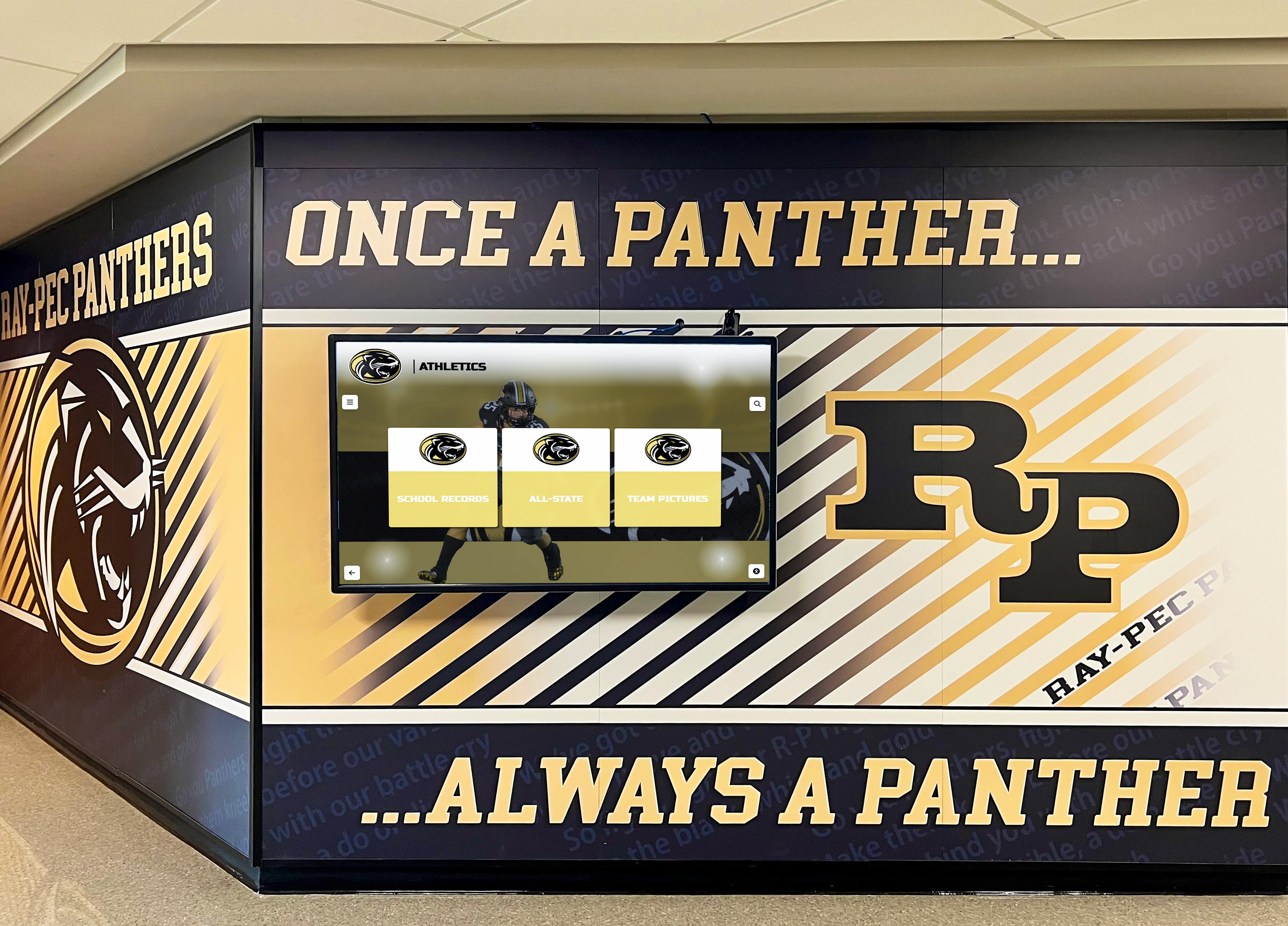
School mascot imagery creates natural cohesion between campus displays and yearbook theme execution throughout the publication
8 Creative Yearbook Spread Designs
Spreads—two-page layouts viewed together when the yearbook lies open—represent the primary unit of yearbook design. Each spread makes its own visual argument while contributing to the publication’s larger narrative. These eight concepts address the major content areas middle school yearbooks must cover.
11. Sports and Athletics Spread
Athletic coverage in middle school yearbooks deserves more design ambition than simple grid photography. Consider an anchor image from a decisive game moment occupying 50-60% of the spread, supported by a statistics sidebar (team record, leading scorers, standout plays), coach perspective, and a secondary image strip showing the season’s arc from first practice to final game. Action photography improves dramatically when shot at floor or field level rather than from standard standing height—photographers who kneel or crouch return with fundamentally more dynamic images.
12. Fine Arts and Performances Spread
Middle school fine arts programs—band, orchestra, choir, drama, visual arts—generate distinctive visual material that rewards creative treatment. The performance spread pairs stage photography with behind-the-scenes images: cast members in costume before curtain, orchestra sections tuning up, visual artists in the process of creating. Schools with digital arts recognition displays can cross-reference yearbook coverage with permanent campus recognition, giving arts achievements ongoing visibility.
13. Academic Achievements Spread
Recognition of academic accomplishments requires careful design to avoid reading like a printed awards assembly transcript. Effective academic spreads feature project showcases with student work photographed in context, teacher spotlights connecting classroom moments to student outcomes, and subject-specific deep dives: science fair projects at presentation, debate team preparation, literary magazine pages shown as finished artifacts. The goal is showing the human activity behind achievement rather than listing names.
14. Candid Life Spread
The most revisited pages in any yearbook tend to capture authentic, unposed moments: hallway conversations, lunch table dynamics, library study sessions, locker exchanges, the five minutes before class. Dedicated candid spreads give this material the intentional design treatment it deserves. A strong candid spread features high-volume small photography across varied locations, captions written in genuine student voice, and enough visual density to invite extended examination—the kind of page where you notice something new each time.
15. Eighth Grade Legacy Spread
Schools that include an eighth grade feature within the yearbook create lasting recognition for students completing their middle school journey. The legacy spread functions similarly to a senior spread in high school contexts: milestone photos from sixth grade arrival through eighth grade departure, individual quotes about middle school memories, and acknowledgment of what the graduating class contributed to school culture. Well-executed legacy spreads become the most-referenced pages by departing students. This content connects naturally to school history preservation practices that extend yearbook documentation beyond the physical page into permanent campus archives.
16. Clubs and Activities Spread
Middle school clubs represent some of the most important identity-formation spaces students occupy—robotics team, student council, environmental club, art club, drama club. The clubs spread works best when each group receives proportional rather than equal space based on size and activity level, with authentic photography showing groups in action rather than staged lineups. Design consistency across club treatments creates visual unity while still allowing each group’s distinct personality to register through the specific images selected.
17. Community and Service Spread
Schools with active community service programs, food drives, fundraising initiatives, or partnership events generate material that deserves dedicated documentation. Service spreads show students in action outside school walls, pair photography with the scale of impact (cans collected, hours volunteered, funds raised), and connect individual contributions to community outcomes. This content positions the school as engaged with something larger than campus life—a quality that makes yearbooks more meaningful to families and alumni.
18. Year in Review Spread
End-of-year review spreads compile the defining moments, surprises, and milestones of the academic year across all aspects of school life. Design execution often uses a timeline format or month-by-month grid, pairing representative photography with brief captions capturing what each period felt like. The year-in-review spread rewards rereading years later because specific dates and events anchor memories to real moments rather than general impressions of the school year.
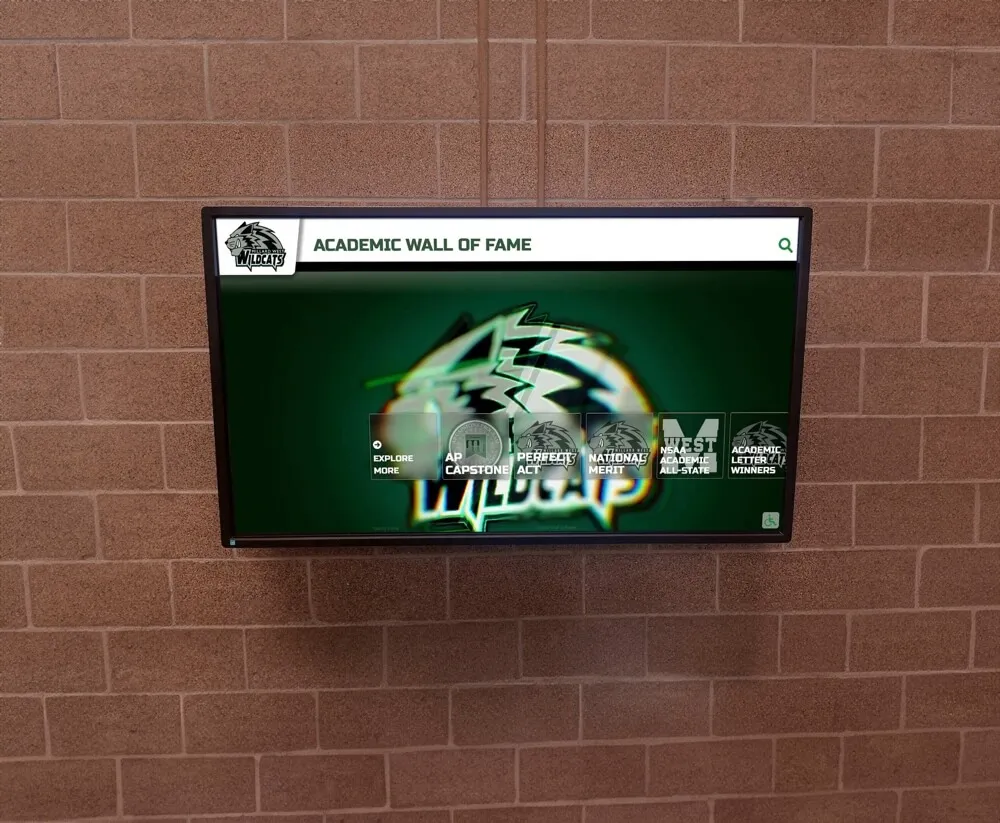
Academic recognition walls and yearbook achievement pages serve complementary functions in school memory preservation
7 Page Design Concepts
Beyond the specific content areas spreads cover, certain design approaches translate well to middle school yearbooks regardless of subject matter. These seven concepts address layout, photography treatment, and typography approaches that elevate yearbook pages from functional documentation to engaging visual storytelling.
19. Photo Mosaic Pages
Mosaic pages use high-volume photography—often 20-40 small images—to create textural visual fields that reward close examination. When individual images are sized one to two inches and arranged in consistent grid or organic layouts, pages become visual archives where nearly every student appears somewhere. Middle school students spend significant time searching mosaic pages for themselves and their friends, making this format among the most engaged-with in any yearbook section.
20. Bold Typography Feature Pages
Pages centered on expressive typography rather than photography create visual contrast within yearbook layouts and serve content that doesn’t require imagery. Section openers, theme statement pages, and transitions between major sections benefit from bold typographic treatment: large-scale lettering, textured letter forms, and strategic negative space. Typography-forward pages also provide design consistency cues that unify diverse page content throughout the publication, preventing the visual fragmentation that emerges when different section editors work without coordinated standards.
21. Student Voice Quote Pages
Pages organized around authentic student quotations create yearbook documentation of actual middle school perspective. Effective quote pages use consistent formatting with student name, grade, and photo alongside their words; select quotes that capture genuine personality rather than polished statements; and arrange content so readers naturally move from one voice to the next. Quote pages work especially well as section introductions or closings, grounding surrounding photography in the perspective of the students who lived the year.
22. Then and Now Pages
Comparing students’ current appearance and self-reported perspectives with earlier versions of themselves creates some of the most emotionally resonant yearbook content available to middle school publications. “Then and Now” pages pair current eighth grade portraits with first-grade or kindergarten photos obtained through family outreach, or compare student answers to the same questions asked in sixth and eighth grade. The contrast creates humor, nostalgia, and genuine documentation of growth that functions differently from any other yearbook content.
23. Visual Statistics Infographic Pages
Middle schoolers respond to information presented in infographic formats, which align with visual communication styles they encounter through digital media. Yearbook infographic pages document school statistics: attendance records, miles logged by the cross-country team, books checked out through the library program, pounds of food collected during drives, or collective hours of community service. This format makes data approachable and creates unique documentation that distinguishes yearbook content from photography-only approaches while also providing factual material that ages well.
24. Subject Deep-Dive Feature Pages
Rather than brief mentions across multiple subjects, deep-dive pages commit to extended coverage of a single topic: one classroom project photographed across its complete arc from assignment to presentation, one teacher’s curriculum translated into visual documentation across a semester, or one student group’s journey from initial interest through final product. Deep dives create yearbook content that functions differently from standard coverage, offering narrative depth and specificity that broad-coverage pages cannot provide. Schools with recognition programs celebrating academic achievement find natural alignment between deep-dive yearbook features and institutional award structures.
25. Interactive Memory Pages
Contemporary yearbooks can incorporate QR codes linking to video content, digital photo galleries, or supplementary material that extends the physical page into digital experience. Memory pages might include codes linking to student-produced video content from the school year, extended photo galleries from major events, or audio recordings of choir performances and drama productions. This approach bridges the permanent physical yearbook with the ephemeral digital documentation students create throughout the year. Schools already using digital signage for campus communication can extend yearbook content to touchscreen displays, creating year-round engagement with preserved school memories beyond distribution day.
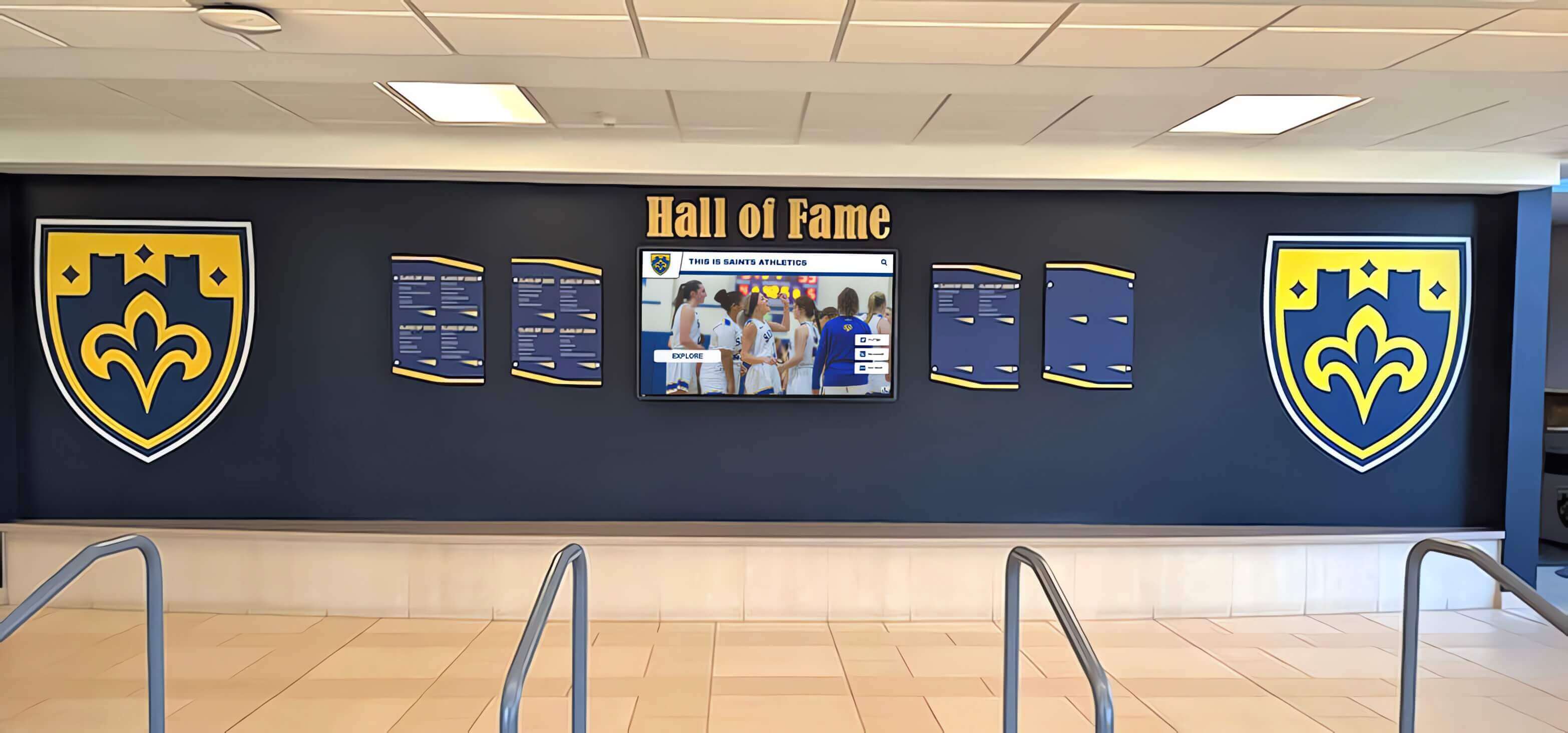
Physical and digital recognition systems create permanent memory infrastructure that complements yearbook documentation across the school year
Practical Production Guidance for Middle School Yearbooks
Student Involvement Best Practices
Middle school students are capable of genuine editorial and design contributions when given appropriate structure. The most effective yearbook programs assign section editor roles with real decision-making authority, provide explicit skill instruction in photography and caption writing rather than assuming students arrive with these abilities, establish editorial calendars with section deadlines students are accountable for meeting, and recognize student contributors prominently within the finished publication.
Photo-release processes require careful attention regardless of school size. Clear protocols around yearbook photo permissions and copyright requirements help advisors navigate parental consent, photography of minors, and use of images submitted by families or taken at external events. Establishing these protocols early in the year prevents complications during peak production periods.
Connecting Yearbook to School Visual Identity
The strongest middle school yearbooks feel continuous with the campus experience rather than separate from it. This means incorporating the same mascot graphics, school colors, and institutional visual language that students encounter in hallways, school display cases and recognition installations, and athletic spaces throughout the year. Students who see familiar visual identity elements in the yearbook feel the publication belongs specifically to their school rather than representing a generic template applied to any campus.
Design Consistency Across Sections
With multiple student editors handling different sections, maintaining visual cohesion requires explicit design standards established before production begins. Define primary and secondary fonts, approved color palette, margin standards, caption formatting, and photography treatment in a brief style guide distributed to all section editors. Consistent visual standards don’t eliminate creative expression—they channel it productively, ensuring the yearbook reads as a unified publication rather than a collection of unrelated assignments.
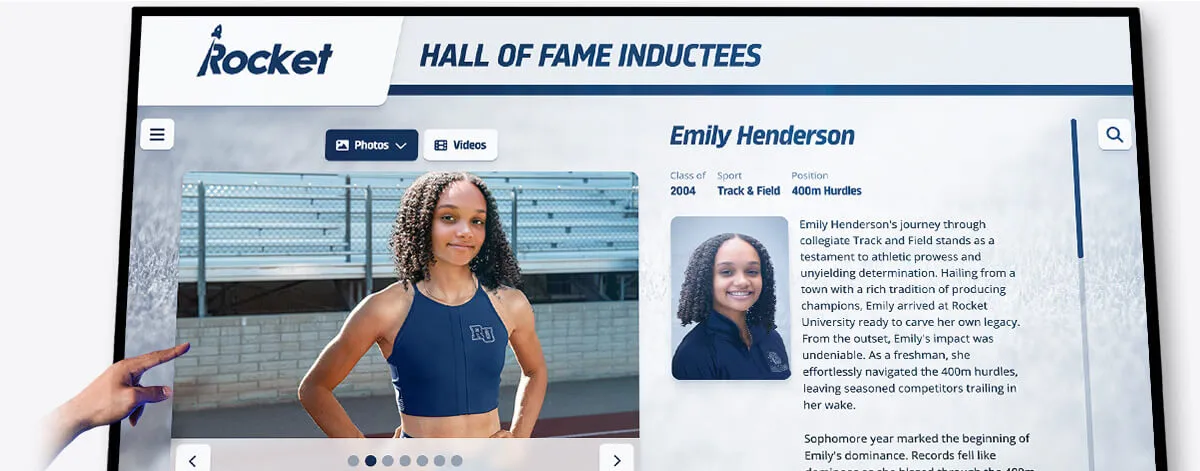
Individual student recognition across digital displays and yearbook pages creates layered, lasting documentation of school achievement
Frequently Asked Questions About Middle School Yearbook Ideas
What makes a good yearbook theme for middle school?
A strong middle school yearbook theme acknowledges the specific life stage of students aged 11-14 rather than borrowing directly from elementary or high school conventions. The best themes feel relevant to current students, referencing real aspects of middle school culture and the particular school year being documented. They provide flexible design direction without being so prescriptive that large sections of the school’s activities don’t fit within them. Themes that emerge from actual school initiatives, shared experiences, or values specific to the community feel more authentic than generic inspirational statements that could apply to any school anywhere.
How do you involve middle school students in yearbook design?
Middle schoolers contribute most effectively when given real responsibility within defined structure. Establish section editor roles with genuine decision-making authority over their coverage areas, teach photography and caption writing skills explicitly during an orientation period, create a clear editorial calendar with deadlines students are accountable for, and build visible recognition for student contributors into the yearbook itself. Student involvement produces better content and creates stronger investment in the finished publication—students who built the yearbook treat it differently than students who simply received it.
What yearbook spreads work best for middle school?
The most effective middle school spreads balance high photography volume with authentic student voice throughout. Candid life spreads and year-in-review spreads consistently generate the most engagement during distribution and at future reunions, because they capture the unscripted moments that define the actual experience of the year. Sports and fine arts spreads perform strongly when featuring action photography over posed lineups. Eighth grade legacy spreads become the most personally meaningful pages for graduating students and their families, functioning similarly to senior spreads in high school yearbooks.
How should middle school yearbooks handle individual portrait sections?
Individual portrait sections benefit from consistent photography standards applied equally across all students, clear advance communication to families about portrait day scheduling and dress expectations, thoughtful layout decisions that balance alphabetical organization with visual pacing across pages, and optional self-submitted candid photo additions that allow students to show personality beyond the formal portrait. Portrait sections succeed when students feel the presentation is dignified and equitable—no single student should appear significantly better or more prominently represented than their peers.
How can middle school yearbooks connect to school history archives?
Older yearbooks represent valuable institutional memory worth actively referencing. Incorporating historical yearbook imagery into current editions—a spread comparing eighth grade portraits across decades, or section openers showing how school spaces have changed—connects current students to the school’s longer story. Physical yearbook archives displayed in school libraries or media centers give students access to history beyond their own enrollment years. Schools with digital display infrastructure can showcase historical yearbook content alongside current student recognition, extending institutional memory into everyday campus life.
Capturing Middle School in Its Own Terms
The middle school years produce some of the most vivid memories people carry into adulthood—not despite their transitional character, but because of it. The friendships formed, the interests discovered, the awkward moments navigated, and the small triumphs achieved between ages 11 and 14 constitute a distinctive chapter that deserves documentation on its own terms.
Yearbook advisors who approach these publications with genuine respect for middle school culture—who treat tween students as the sophisticated audience they’re becoming rather than the children they were—create publications that earn lasting value. Whether you pursue the gaming-forward energy of “Level Up,” the introspective depth of “Write Your Story,” or the community celebration of “Brighter Together,” the 25 ideas in this guide offer concrete starting points for a yearbook your school community will return to for decades.
Ready to extend your school’s visual recognition beyond the yearbook? Rocket Alumni Solutions creates custom digital displays, hall of fame installations, and campus recognition systems that keep student and alumni achievements visible year-round—turning yearbook memories into permanent campus story.