Every student government election season, hallways fill with handmade signs, printed banners, and poster-board campaigns that students spend evenings designing and mornings taping up before homeroom. For a few weeks, student government posters transform corridors into a living visual argument about leadership, ideas, and school identity. Then the election ends—and most of those posters come down. What if the best of them stayed up? What if the energy that goes into SGA campaign graphics was channeled into something more permanent: a recognition wall that honors every class of student leaders who shaped school culture?
This guide covers both ends of that spectrum. First, the practical design principles that make student government campaign posters actually effective during election season. Then, the larger opportunity: how schools can transition from ephemeral campaign walls to lasting SGA recognition displays that build institutional memory year after year.
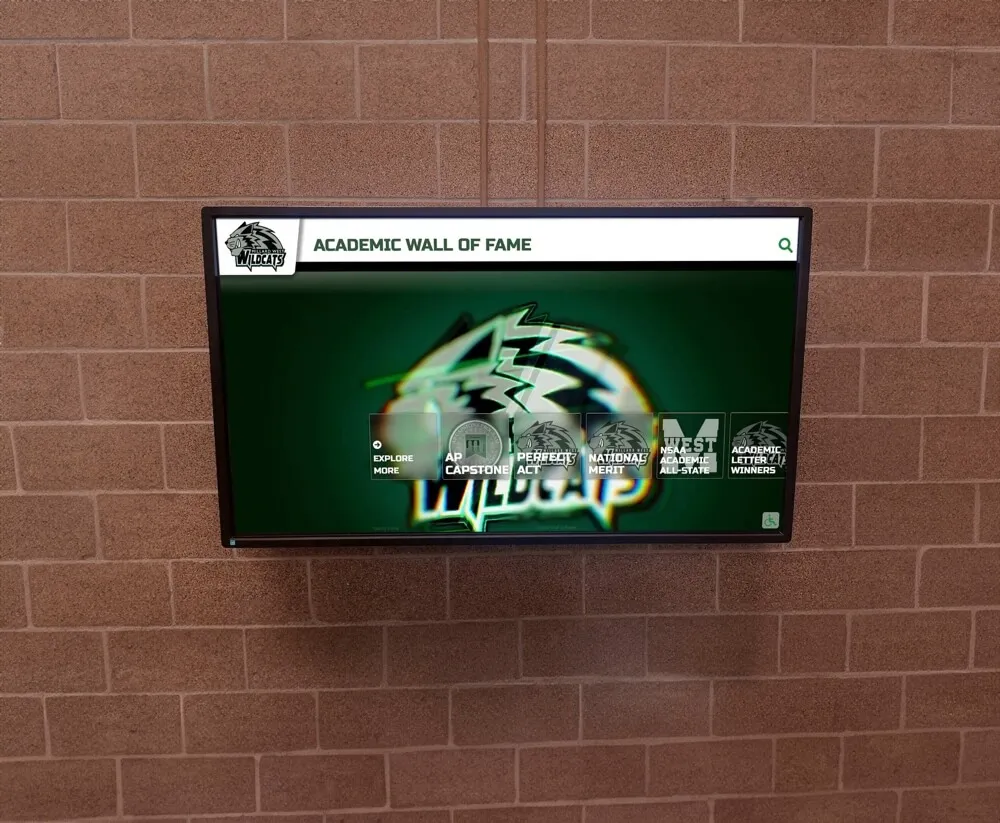
A permanent academic wall of fame with integrated digital display—the natural evolution of seasonal student government recognition graphics
Why Student Government Posters Deserve More Than a Two-Week Lifespan
Student government is one of the few arenas in high school where students lead by decision, not by athletic ability or test performance. SGA officers plan homecoming, coordinate community service drives, advocate for student interests in administrative settings, and manage budgets. These are real responsibilities with real impact—yet most schools recognize this service less visibly than they recognize a varsity letter or a state championship.
According to the National Association of Secondary School Principals (NASSP), schools with strong student council programs report measurably higher rates of civic engagement and post-secondary leadership involvement among alumni. The students who serve in student government are practicing democracy in one of its most direct forms—and the visual recognition they receive rarely matches the significance of that role.
Campaign posters are the most visible moment in the student government cycle. They’re also the moment when schools invest the most in student government graphics. The opportunity most schools miss is capturing that visual momentum and redirecting it from temporary campaign infrastructure into permanent recognition that outlasts any single election.
Design Principles for Effective Student Government Campaign Posters
Before thinking about permanence, you have to get the campaign poster right. A well-designed SGA campaign poster accomplishes three things simultaneously: it communicates the candidate’s name clearly, it conveys a personality or platform idea, and it contributes to a visual environment that makes the election feel significant. Here’s how to execute all three.
Readability Is the First Principle
Student government posters are read in motion—by students walking hallways between classes, glancing at bulletin boards for three seconds before turning a corner. The design hierarchy must be ruthless: name first, slogan or image second, supporting detail (class year, position, vote date) last.
Typography guidelines that hold up in hallway conditions:
- Name in the largest type on the page, minimum 72pt for an 18"×24" poster viewed from 6–8 feet
- Bold or extra-bold weight only—medium weight fonts wash out under fluorescent hallway lighting
- High contrast without exception—dark text on light background, or white/light text on a saturated school color
- Two fonts maximum—a display font for the name and a clean sans-serif for supporting text
Design consistency across school graphics doesn’t mean every candidate’s poster looks identical—it means the underlying visual logic (scale, contrast, hierarchy) is sound enough that personality and creativity can operate within it without sacrificing legibility.
School Color Strategy in SGA Campaign Posters
The most visually coherent election campaigns use school colors as the primary palette, then add candidate-specific accent elements to differentiate without fragmenting the overall environment. When every campaign poster in a hallway uses school colors as the base, the visual effect is cohesive even when individual designs vary significantly.
This matters for another reason: when campaign posters are built on school color foundations, they’re more likely to photograph well alongside other school graphics, integrate naturally into transition recognition displays, and maintain visual relevance beyond election season. Campaign posters that use random personal color choices often look out of place in any permanent recognition context.
Photography and Personal Brand
Student government campaign posters often include a candidate photo. The quality of that photo shapes the professionalism signal the poster sends—and student-shot smartphone photos in poor lighting undermine well-executed typography and layout.
Simple photography improvements that transform campaign posters:
- Solid background in school color or neutral dark—eliminates background clutter and focuses attention on the candidate
- Even, frontal lighting—natural light facing a window, or a simple ring light, eliminates harsh shadows
- Shoulders-up framing—shows face and expression clearly without wasted space at bottom of frame
- Expression matching platform—a serious platform (school safety, curriculum advocacy) warrants a more composed expression than a spirit or events platform
Schools that provide a simple photo setup for SGA candidates—even just a designated spot with good natural light and a school-colored backdrop—raise the floor of campaign poster quality across all candidates simultaneously.
Student Government Poster Ideas by Campaign Type
Not every SGA campaign poster serves the same function. The design approach that works for a class president race differs from what works for a student body vice president campaign or a class representative position.
Presidential and Vice Presidential Campaign Posters
School-wide elections require broad appeal across grade levels and student communities. Presidential campaign poster design should:
- Lead with name and position with maximum clarity—no ambiguity about what the candidate is running for
- Use a simple, memorable slogan that works at a glance and holds up to repeated exposure in hallways
- Avoid platform-specific detail that requires reading time—save specifics for campaign flyers and classroom presentations
- Present a consistent visual identity across all poster sizes and locations (hallway, locker bay, gymnasium entrance)
Class Officer Campaign Posters
Class officer campaigns reach a narrower audience—typically one grade level. This allows for more specific visual targeting: class year graphics, graduation countdown references, and shared class identity elements that the wider school wouldn’t recognize but the target class immediately responds to.
Including class-specific imagery (mascot treatments specific to the class year, established class colors if the school has that tradition) creates instant identification with the candidate before a name is read.
Spirit and Events Officer Campaigns
Student government positions focused on school spirit, activities coordination, and event planning benefit from campaign posters that demonstrate visual creativity—because the poster itself is a portfolio sample of what the candidate will do if elected.
A spirit officer candidate whose campaign poster is the most visually compelling piece in the hallway has made a credible case for their qualifications without saying anything. Contrast, energy, and creativity in the design communicate competence in ways that slogans cannot.
From Campaign Season to Year-Round: Building an SGA Presence in Your Halls
The gap between what student government contributes and how schools recognize it is often visible in the physical environment. Athletic achievements get trophy cases, halls of fame, and team photo galleries. Academic achievement gets honor rolls and National Honor Society displays. Student government recognition—the officers who organized the homecoming dance, coordinated the blood drive, advocated for a new policy—often gets a bulletin board that comes down when the next class takes office.
Closing that gap requires intentional visual systems, not just better campaign posters.
Annual Officer Portraits as Recognition Infrastructure
The most durable SGA recognition practice is annual officer portrait photography with consistent format and permanent display. This works exactly like a coach’s wall of fame: each year’s student government leadership is photographed in a consistent format, printed at a consistent size, and added to a cumulative display that grows with each graduating class.
What consistent annual SGA portrait displays require:
- Consistent photography specification: same background, same framing, same lighting setup each year so portraits from 2010 and 2026 look visually related
- Consistent frame dimensions: same frame size for every year so the wall reads as a unified installation rather than accumulated mismatched pieces
- Full officer corps recognition: president through class representatives, not just top-tier officers—every student who took on a recognized SGA role appears in the display
- Year labeling: clear year identification with each portrait set, allowing alumni to find their class immediately
Outstanding student honor wall guides provide detailed planning frameworks that apply directly to SGA recognition—the organizational logic for athletic honor walls translates cleanly to student leadership recognition.
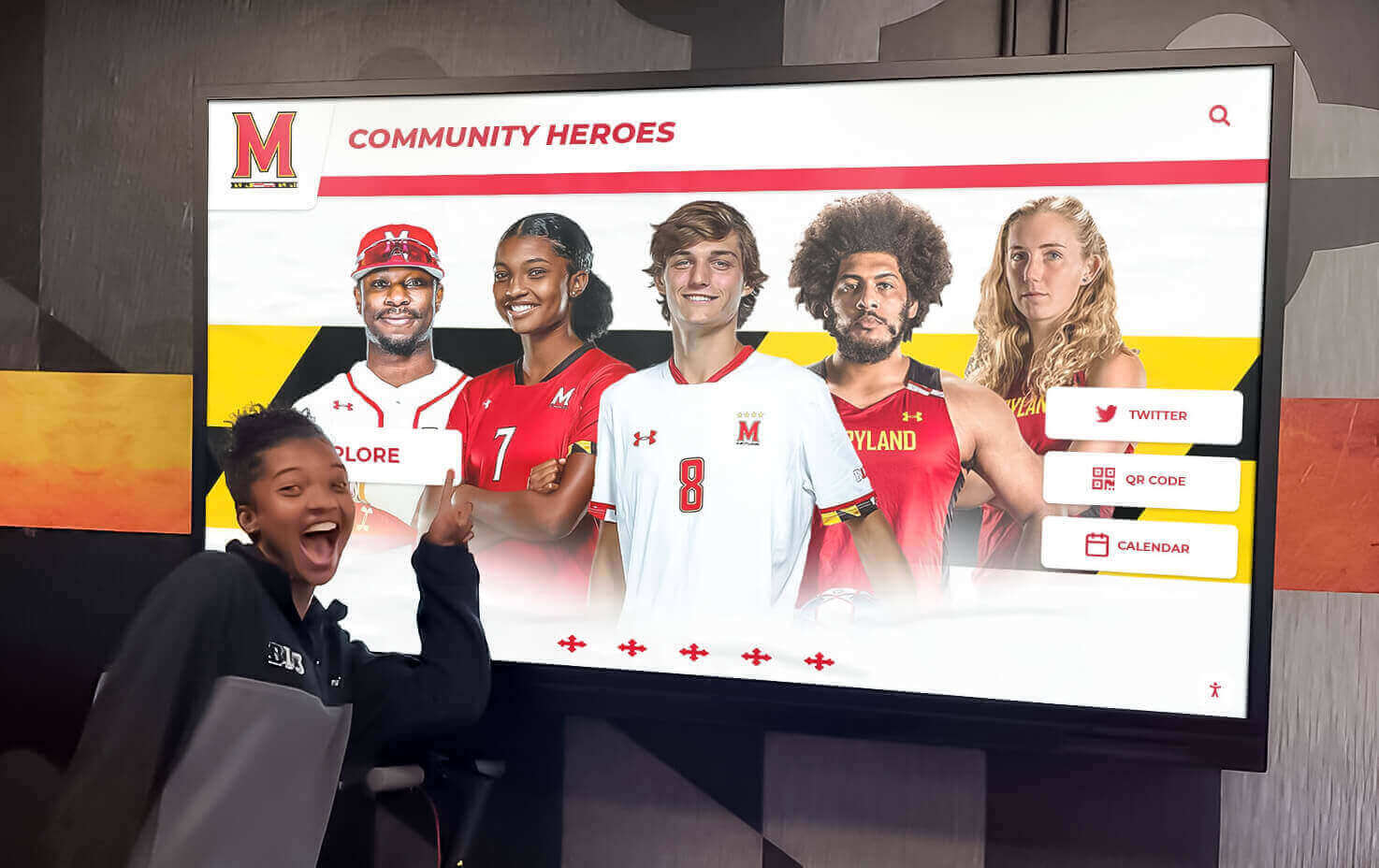
Recognition displays that invite students to engage actively create more lasting impressions than static bulletin boards
The SGA Legacy Wall: A Recognition Model That Works
Schools with the strongest student government recognition cultures treat SGA history the way successful athletic programs treat their record boards: as an accumulating institutional asset that grows more valuable with each passing year.
A well-executed SGA legacy wall includes:
Current year features prominently: This year’s officers are highlighted with photos, names, and office titles at eye level in the display’s prime position. This validates current service and makes student government participation feel worth the investment.
Historical archive building toward depth: Each year’s officer portraits added to the display in chronological order, creating a visual timeline of student leadership going back as far as records allow. The display’s value compounds—five years of SGA history is interesting, twenty years is compelling, forty years is institutional heritage.
Recognition beyond just presidents: Secretary, treasurer, class representatives, and specialty positions (spirit coordinator, community service director) appear alongside the president. Inclusive recognition at every officer level signals that all service is valued, which strengthens recruitment in subsequent election cycles.
School historical timeline digital display guides demonstrate how educational institutions build cumulative visual histories that become community anchors—the same principles structure an effective SGA legacy wall.
Connecting SGA Recognition to School-Wide Student Achievement Displays
Student government exists within a broader recognition ecosystem that includes academic honors, extracurricular achievement, and community service recognition. The strongest school environments integrate these streams rather than siloing them.
SGA recognition walls placed adjacent to or connected with academic achievement displays create a visual argument about what the school values: not just athletic performance, but the full range of student contribution. Schools that visually honor students who led the blood drive alongside those who scored 35 on the ACT send a coherent institutional message about what success means.
High school academic honors recognition displays demonstrate how schools build permanent recognition infrastructure for academic achievement—SGA recognition walls follow the same architectural logic and benefit from being planned and installed as part of the same recognition wing or corridor.
Integrated student achievement recognition that combines academic honors, student government service, and extracurricular leadership creates a recognition environment that reaches a far broader portion of the student body than athletic-focused displays alone.
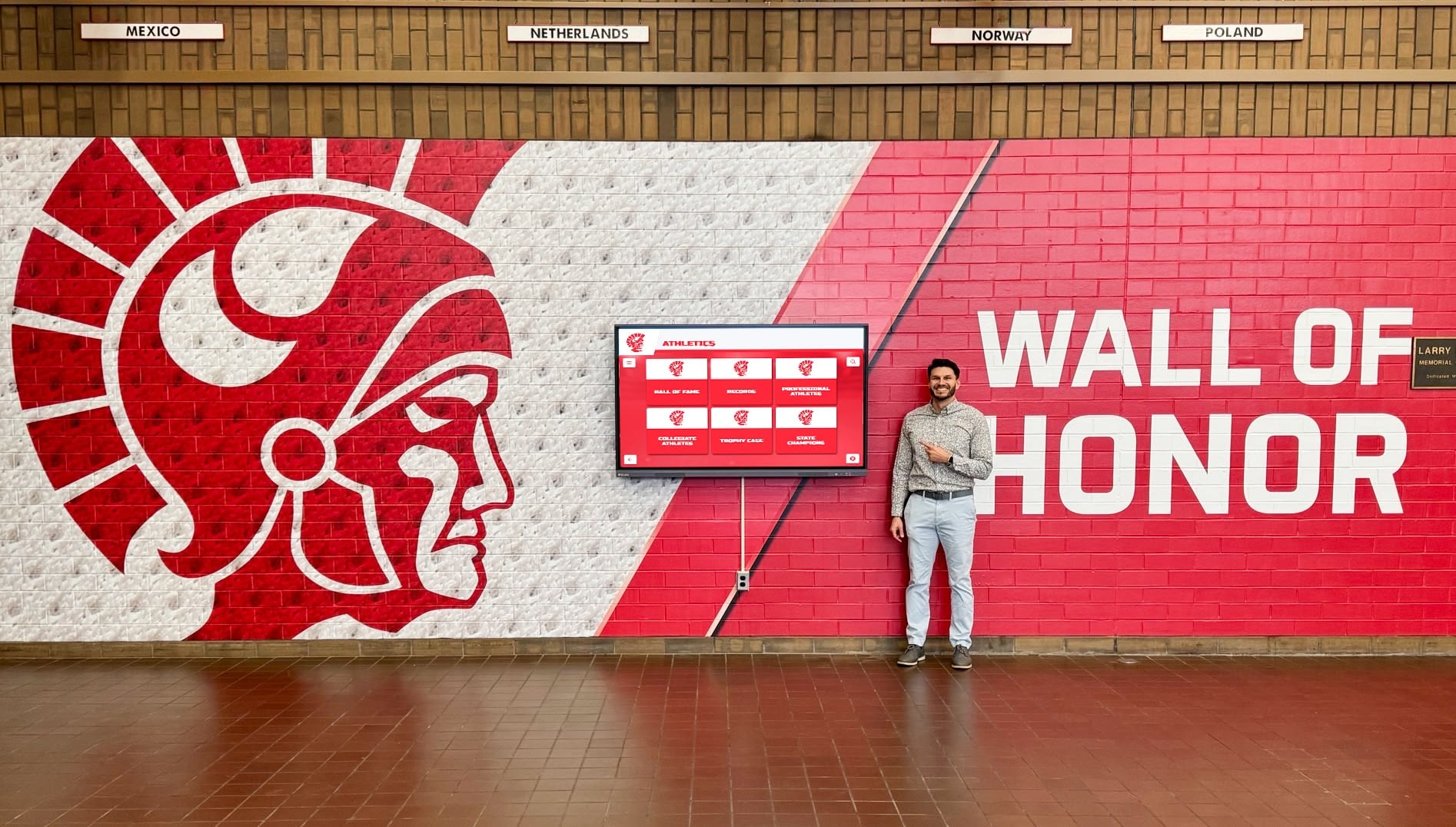
Permanent walls of honor in high-traffic hallways give student leadership contributions the same visible recognition as athletic achievements
Digital Displays for Student Government Recognition
Physical recognition walls have a fundamental constraint: they fill up. After fifteen or twenty years of annual SGA portrait installations, wall space runs out. Photos get moved to storage. The archive shrinks while the school’s history grows.
Digital display technology solves this problem while adding capabilities that physical walls cannot match.
What Digital SGA Displays Make Possible
A touchscreen display installed in the space occupied by a single framed composite can hold the complete SGA roster from every year since the school was founded—searchable, interactive, and permanently accessible without any loss of historical content.
Key capabilities that digital student government recognition displays add over physical installations:
- Unlimited capacity: Every year’s officers stored and accessible without space constraints
- Searchability: Alumni find their year, their name, or their office in seconds
- Multi-format content: Photos alongside initiative descriptions, event highlights, and notable accomplishments from each administration
- Real-time updating: New officer portraits added at the start of each term without reprinting or reframing
- Event integration: Homecoming court, spirit week themes, and school-wide initiatives organized by the SGA can be documented in the same display system
Interactive touchscreen displays at school events provide a practical model for how touchscreen systems engage school communities—the engagement patterns that work for athletic events apply directly to student government recognition displays during alumni gatherings, homecoming weekends, and parent open houses.
Class showcase digital display guides show how schools are documenting and celebrating complete class achievements in digital formats that remain accessible long after graduation.
Hybrid Recognition: Physical Permanence Plus Digital Depth
The most effective SGA recognition installations combine both approaches. Physical framed portraits of recent years’ officers provide tangible, permanent presence that communicates institutional investment. A digital kiosk or display panel adjacent to the physical installation holds the complete historical archive, event documentation, and detailed recognition content that physical frames cannot contain.
This hybrid approach matches what schools are implementing for athletic recognition: physical composites and trophies for permanent identity, digital systems for depth and interactivity. The same architecture serves student government recognition effectively.
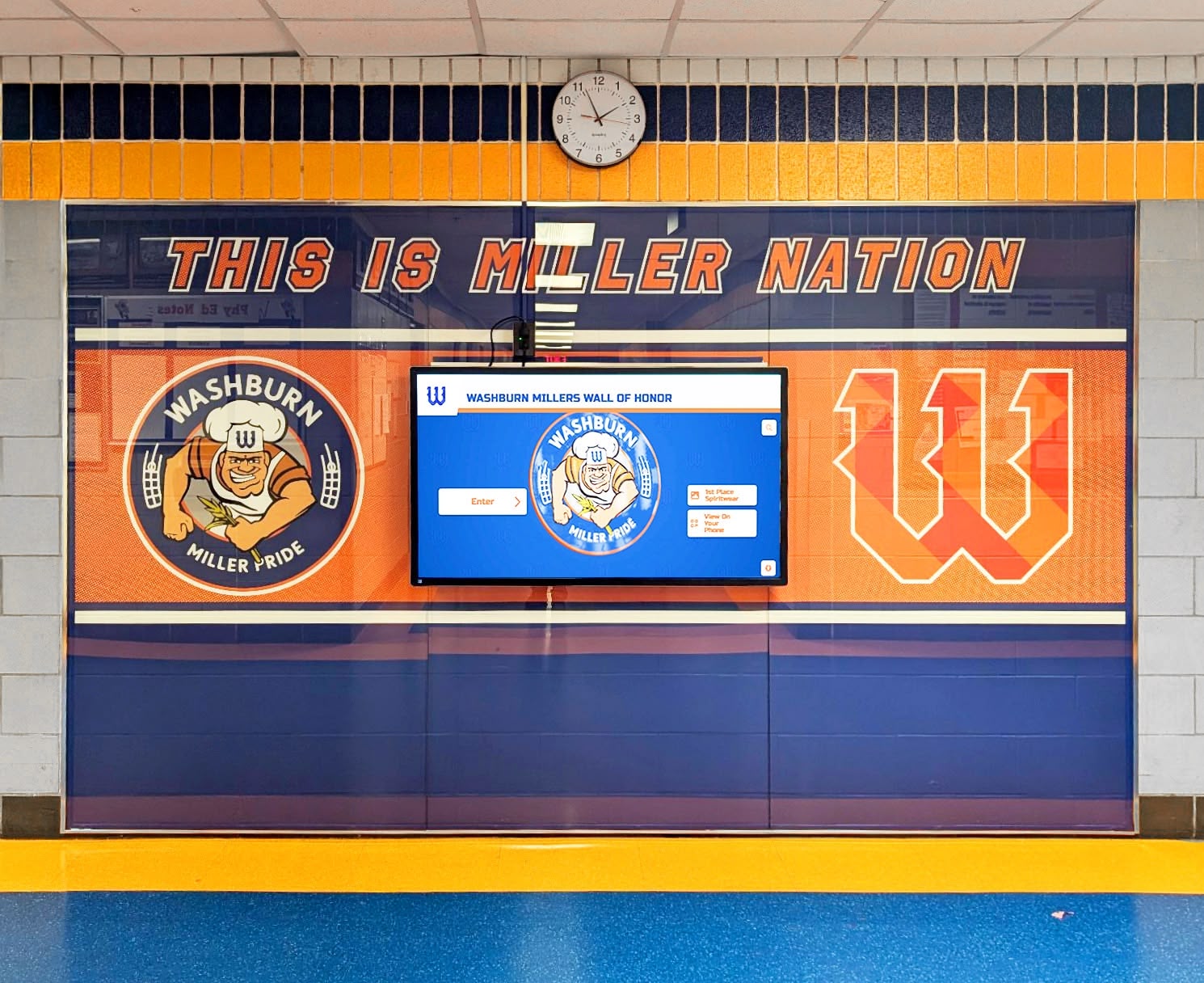
Integrating digital screens into physical recognition wall installations combines the permanence of framed displays with the unlimited capacity of digital archives
Preserving school archives digitally is a practice that student government programs benefit from directly—the SGA’s historical record of initiatives, budgets, and accomplishments is a form of school archive that deserves the same preservation attention as athletic statistics or yearbook collections.
AI-Powered Design Tools for Student Government Graphics
The practical bottleneck for most student government programs isn’t vision—it’s execution. Students running for office don’t have graphic design training. Advisors are managing elections logistics, not poster production. The gap between what SGA graphics could look like and what they typically look like comes down to tools and time.
AI-powered school graphics platforms have changed this significantly. These tools apply school colors, logos, and approved fonts automatically through brand preset systems—so a student candidate producing their campaign poster through an AI graphics tool gets a professional starting point rather than a blank canvas.
Practical AI graphics capabilities that serve student government programs:
- Template libraries calibrated for common SGA formats: campaign posters, event announcements, social media graphics, digital screen content
- Brand preset systems that lock school colors and fonts so every candidate’s poster maintains institutional visual standards even as individual designs vary
- Photo editing workflows that apply consistent treatment to candidate photos—same background style, same color grading, same professional polish regardless of the original photo’s technical quality
- Batch generation for event promotion graphics—creating multiple size variations of the same announcement for digital screens, printed posters, and social media simultaneously
For student government advisors managing both campaign season graphics and the transition into permanent recognition content, AI tools that handle both poster production and recognition display formatting eliminate the production barrier that typically causes most campaign graphics to disappear rather than evolve into lasting displays.
Making Campaign Poster Design Accessible to All Candidates
One underappreciated equity dimension of student government campaigns: candidates with design skills or family resources that include professional printers start with visual advantages over candidates who don’t. AI-powered design tools level this playing field by giving every candidate access to the same professional-quality starting templates, regardless of personal design background or budget.
Schools that make AI graphics tools available through the SGA advisor’s office—or through the library or media center—create conditions where campaign quality reflects candidate ideas and effort, not graphic design aptitude. That shift benefits the election process by reducing variables that have nothing to do with leadership capacity.
Connecting Student Government Events to School Recognition Infrastructure
Student government organizes events that create natural recognition touchpoints throughout the year: homecoming court selection, spirit week, senior recognition, academic award ceremonies, community service drives. Each of these events generates visual content—banners, programs, social media graphics, digital displays—that can be integrated into the school’s broader recognition infrastructure rather than treated as standalone production.
Homecoming recognition display guides demonstrate how homecoming court selections—events organized by student government in most schools—can become permanent recognition installations rather than one-week displays. The graphic assets created for homecoming week have obvious value as historical records of who was honored in each graduating class.
Schools that build recognition infrastructure around SGA-organized events create a virtuous cycle: the student government program generates recognition content, that content gets preserved in permanent displays, and those displays become recruitment tools for the next generation of student leaders who see that their potential service will be genuinely honored.
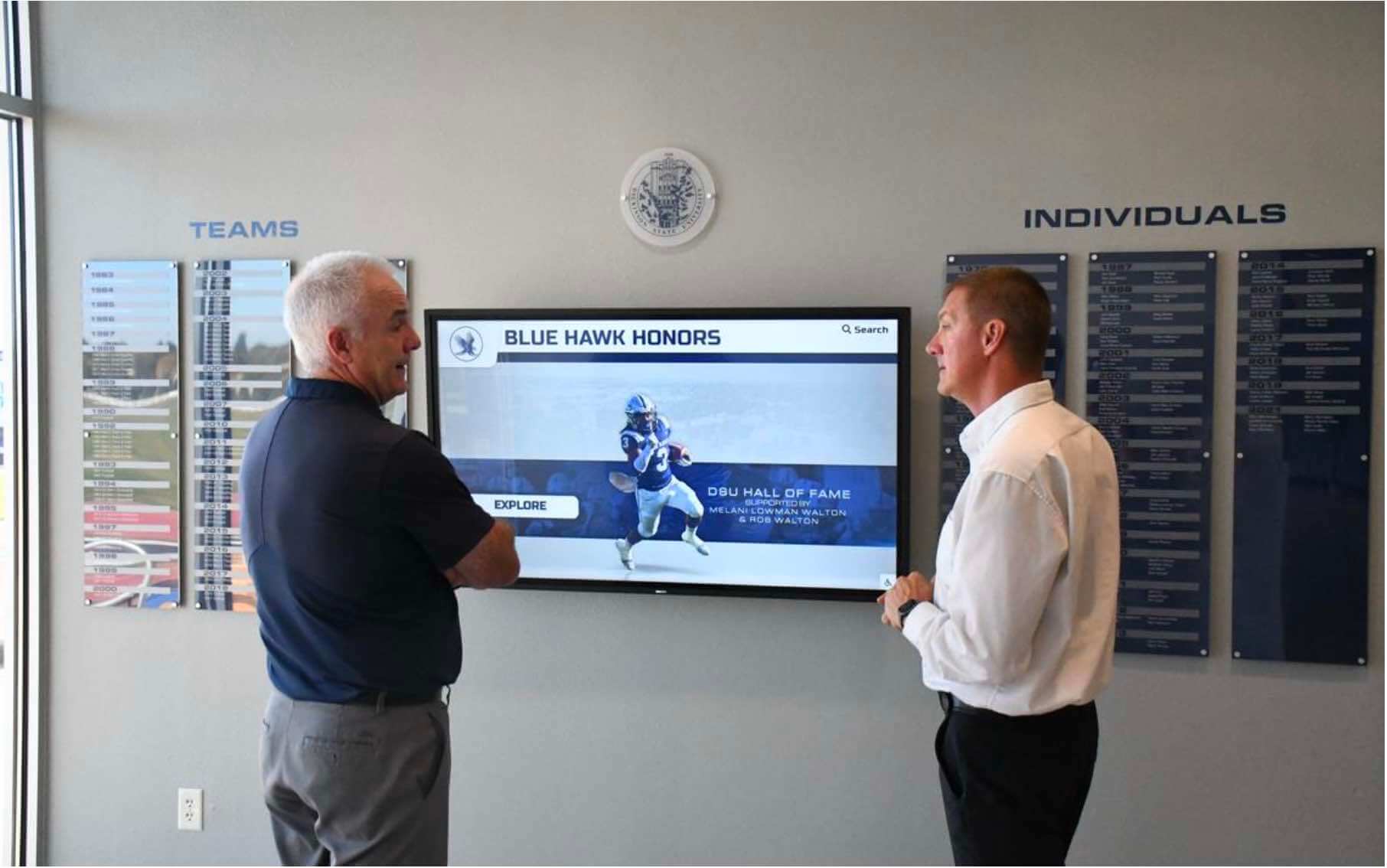
Digital hall of fame installations create engagement moments during alumni events and school visits that static displays cannot replicate
Planning an SGA Recognition Wall: Practical First Steps
The gap between wanting to build SGA recognition infrastructure and actually building it usually comes down to a few practical planning questions that feel hard to answer without a starting framework.
What physical space is appropriate? Student government recognition walls work best in high-traffic locations accessible to the whole student body—main hallway junctions, lobby entrances, and areas near the main office. Placing recognition too deep in an administrative wing limits the audience who encounters it daily.
How far back can historical records go? Most schools have yearbooks extending back decades—these provide SGA officer photos and names that can anchor the historical portion of a legacy wall. Contacting alumni associations frequently surfaces additional photography and documentation from years with incomplete institutional records.
Who will manage annual updates? Sustainable recognition systems have simple, defined update workflows. Annual SGA officer portrait photography, consistent documentation of major initiatives, and regular display updates should be scheduled into the activities calendar rather than treated as ad hoc projects.
What budget is realistic? Physical recognition installations for a starting SGA wall typically range from a few hundred dollars (framed composite photos in a designated hallway section) to several thousand (custom display design with professional installation). Digital display additions increase initial cost but reduce annual printing expenses significantly. Booster clubs, alumni networks, and local business sponsors regularly fund student recognition projects when approached with a clear proposal.
Frequently Asked Questions About Student Government Posters
What makes an effective student government campaign poster?
The most effective student government campaign posters prioritize name legibility above all else—the candidate’s name in large, bold type at high contrast is the non-negotiable foundation. A simple slogan (under 6 words) and a professional-quality photo come next. School color palettes create visual coherence across all campaign materials. Avoid cluttering the poster with detailed platform points; save those for flyers and speeches.
What size should student government posters be?
Standard hallway campaign posters work well at 18"×24" or 22"×28" for individual candidate posters. Full-width corridor banners for election announcements work at 36"×48" or larger. For digital screens in school lobbies and hallways, design at 1920×1080 (landscape) for horizontal screens or 1080×1920 (portrait) for vertical displays. Always verify print size against the intended viewing distance—text legible on screen may be too small when printed.
How can schools preserve student government history?
The most sustainable approach combines annual officer portrait photography in a consistent format with a permanent display that grows each year. Physical framed composites for recent years maintain tangible presence; digital display systems hold the complete historical archive without space constraints. Yearbooks provide historical photos for years before a formal recognition system was established.
Should student government posters match school branding?
Yes—building campaign posters on school color foundations creates visual coherence in the hallway environment and makes the election feel like an official school function rather than a personal competition. School color palettes also make campaign graphics more likely to survive in transition to recognition display contexts after the election.
Can student government posters be used for digital displays?
Yes, with format adaptation. Campaign graphics designed at 1920×1080 work directly on most lobby and hallway screens. Print-format posters need reformatting—not just scaling—for digital display because aspect ratios differ. AI graphics tools with both print and digital output capabilities handle this conversion automatically, making it practical to produce both print and digital versions from a single design.
Building a Student Government Legacy That Outlasts Every Election
The most valuable thing a school can do with student government posters is not treat them as temporary. The students who run for SGA office are practicing civic leadership, managing budgets, organizing community events, and representing their peers in institutional settings—contributions that deserve the same permanent recognition the school extends to athletic champions and academic award winners.
Start with campaign posters designed to school branding standards using AI-powered tools that make professional-quality graphics accessible to every candidate. Build toward annual officer portrait documentation with a consistent format. Install a cumulative SGA legacy wall that grows each year. And when physical wall space runs out—or when the school wants to surface decades of student leadership history for alumni events and homecoming celebrations—add digital display infrastructure that holds the complete record without size constraints.
For schools that want both the AI-powered graphics tools for everyday student government design work and the touchscreen recognition infrastructure to make SGA history permanently visible and interactive, Rocket Alumni Solutions provides the complete platform—from design generation to wall-of-fame display systems built to preserve student leadership legacies across decades.
Turn Student Government Posters Into Lasting Recognition
From AI-powered campaign poster templates to touchscreen walls of fame that preserve every class of student leaders, Rocket Alumni Solutions helps schools build recognition environments where student government service is honored for generations.
Get notified when Rocket Graphics opens