The senior yearbook ad is the most personal real estate in the entire book — and for graduating athletes, it carries a specific kind of weight. Four years of early-morning practices, road trips, championship runs, and team bonds all need to fit into a quarter-page or half-page rectangle alongside a personal message that a family will read for decades. Choosing the right senior ad ideas means knowing which photos tell the athletic story best, which messages land without sounding generic, and how schools can carry that recognition forward after the books are distributed.
This guide walks through the full picture: fifteen specific photo and layout ideas, family message frameworks, an achievement callout system, a design checklist, and a look at how athletic departments extend senior ad content into digital displays, lobby recognition walls, and end-of-year award programs.

Portrait recognition systems share the same organizational logic as senior ad layouts — one hero image per student, personal details, and a clear connection to team or class identity
What Makes a Senior Ad Work for an Athlete
Most senior ad advice focuses on general yearbook aesthetics. For athletes, the priorities shift. The yearbook ad needs to capture what made this student’s athletic career worth documenting — not just a nice graduation portrait, but evidence of commitment, achievement, and the relationships that defined those years.
Before selecting a template or layout, answer these three questions:
- What is the single most defining athletic moment from this student’s career? That answer determines the hero image.
- What numbers or records best capture the achievement level? Those become the callout data points, not paragraph text.
- Who did the athlete compete for, and how should that relationship appear in the message? The answer shapes whether the message is parent-to-senior, coach-to-player, or team-voice.
When those three questions have clear answers, the layout almost selects itself. When they don’t, the result is a generic collage that could describe any student at any school.
15 Senior Ad Ideas for Graduating Athletes
1. The Single-Action Hero Shot
One full-bleed action photograph of the athlete at peak performance — sprinting toward the finish, landing a jump, releasing a throw — with the student’s name set in large condensed type and a minimal achievement line beneath it. No clutter, no baby photos. Just the athlete at their best.
Works best for: Athletes with outstanding action photography from a team or school photographer. Requires 300 DPI source image for print quality.
2. Freshman-to-Senior Comparison
A side-by-side split design: freshman year photo on the left, senior portrait or action shot on the right. A year label anchors each side. The visual contrast does the storytelling — no extended text required beyond the name and years.
Works best for: Programs with consistent photo documentation across all four years. Coordinate with the school photographer to locate freshman-year team photos before senior year begins.
3. Career Statistics Dashboard
Instead of listing achievements in paragraph form, format them as a sports broadcast data panel:
- Goals/Points/Records: Large numerals with sport-specific labels
- Seasons Played: Clear year span
- Team Awards: All-conference, MVP, captain designation
- Class Year and School Colors: Anchoring the design identity
This approach, borrowed from broadcast graphics, communicates achievement density at a glance and avoids the wall-of-text problem that makes many senior ads difficult to read at the book’s trim size.
4. The Four-Season Collage
Four equal photo panels, one from each year of high school athletics. The layout maps the entire journey without hierarchy — every season gets equal visual weight. Add a timeline bar along the bottom with years marked, and the design doubles as a program history record for that player.
Meaningful ways to honor graduating athletes explore how the “four-year arc” narrative resonates with families at senior ceremonies — the same principle applies to yearbook layouts.
5. Action + Portrait Pairing
A large action photo paired with a smaller formal senior portrait. The two images together communicate the dual identity that defines student-athletes: the competitor in uniform and the person transitioning out. Place the action image as the dominant visual and the portrait in a secondary corner position.
6. Team Moment Feature
An image of the athlete with their team — celebrating a win, gathering on the sideline, walking off the field together — rather than an isolated portrait. This choice centers relationships over individual achievement and resonates especially well for athletes whose leadership role was less about personal stats and more about team culture.
7. Coach Quote with Portrait
A brief, attributed quote from the head coach — three to five sentences about this specific athlete’s character and contribution — set in a pull-quote treatment alongside a strong portrait. The coach quote is the element that cannot be replicated by a design template: it represents verified institutional recognition that carries weight far beyond a generic tribute message.
Practical note: Collect coach quotes in October or November, well before ad submission deadlines in winter. Coaches are often managing multiple senior recognition events simultaneously in late spring.
8. Jersey Number as Design Element
The athlete’s jersey number, rendered at display scale, serves as the primary visual layer with the portrait layered over or alongside it. This works particularly well for athletes whose number carries significance — worn for four years, inherited from a sibling, or attached to a record-breaking performance.
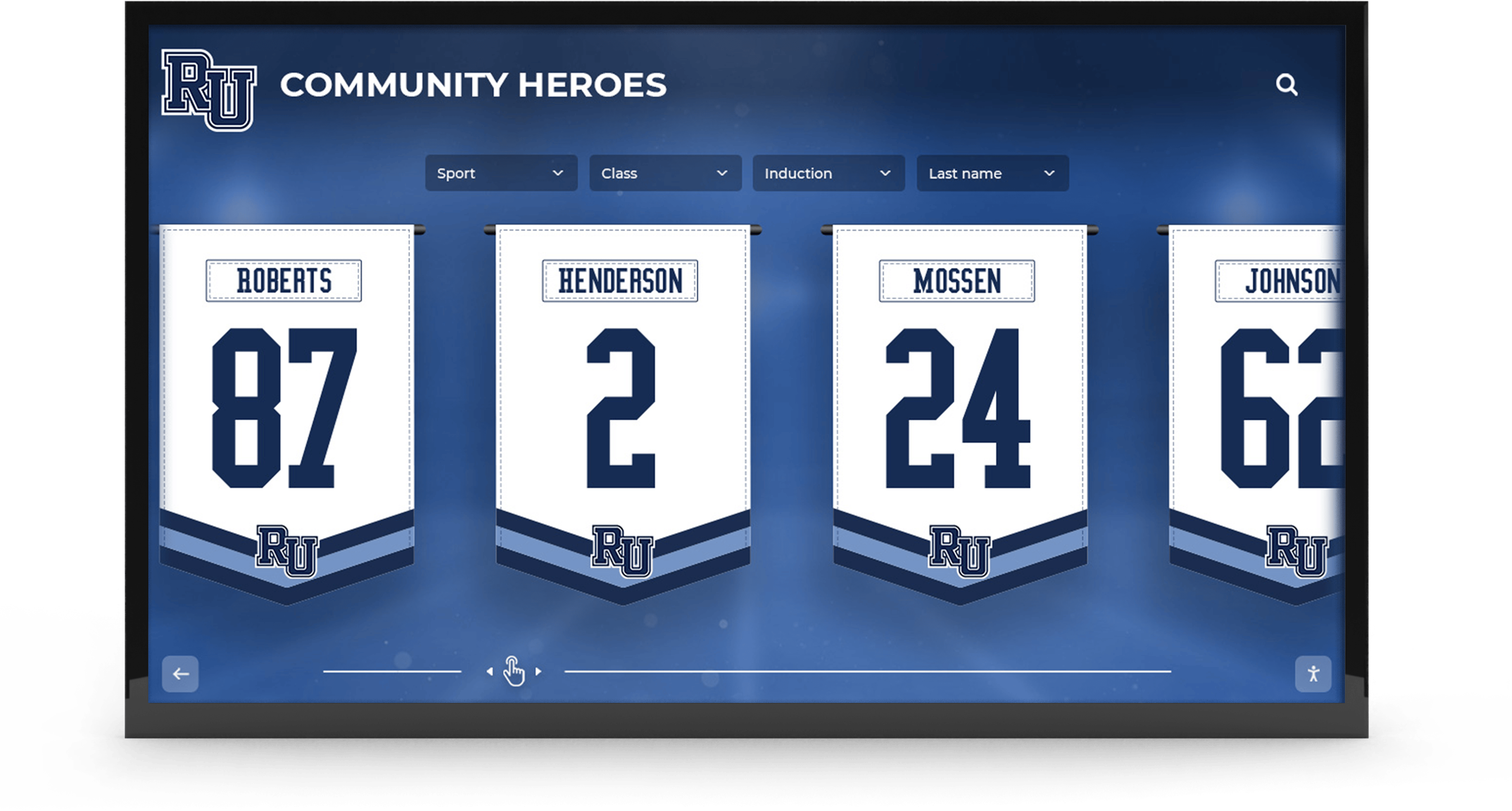
Jersey number recognition is a consistent design language across athletic tribute formats — from hallway banner displays to yearbook senior ads, the number anchors the athlete's identity
9. Multi-Sport Athlete Spread
Athletes who played multiple varsity sports often receive single-sport recognition at senior night. The senior ad is an opportunity to document the full multi-sport career. Split the layout by sport with distinct color zones for each, keeping the athlete’s portrait as the central unifying element.
Creative senior night ideas for celebrating athletes note that multi-sport athletes are frequently under-recognized at single-sport events — the yearbook ad is the one format that can hold the complete athletic profile.
10. The Scholarship Announcement Layout
For college-bound athletes, the senior ad can double as a signing announcement — future school name and logo included alongside the high school achievement record. This format works especially well when the ad appears near the front of the yearbook before the signing ceremony has occurred in other public venues.
11. Childhood-to-Senior Sports Arc
Baby photo or early childhood snapshot with equipment (tiny baseball glove, child-sized soccer ball, a youth uniform shirt three sizes too large) paired with the senior action shot. The juxtaposition is universally understood and requires almost no explanatory text.
12. Parent Letter Format
Rather than a traditional message, the entire text portion of the ad is structured as a formal letter from parents to the senior athlete. “Dear [name],” as the opening line, signed by the family at the close. This format is immediately recognizable as a personal family tribute rather than boilerplate recognition language.
13. Highlight Reel Still Frame
If the school or program has quality video footage from the athlete’s career, a still frame from a defining game moment — pulled and processed at print resolution — can anchor the design in a way that casual game photography cannot. This requires coordination with whoever manages program video, but the result is often the most distinctive senior ad in the entire section.
14. Award and Hardware Focus
An image of the athlete holding hardware — a championship trophy, an all-conference plaque, a state medal — surrounded by the context that gives the award meaning: opponent, date, win-loss record, or ranking. This design treats the award as a story element rather than a trophy shot.
Senior poster ideas for celebrating graduating athletes explore how hardware-focused designs reinforce the achievement narrative across recognition formats.
15. Legacy Message from Underclassmen
A message written collectively by the team’s returning players — what the senior meant to the program, what they’re leaving behind, what standard they set. This inversion of the usual “parent tribute” format positions the senior as a program institution rather than simply a graduating student.
Family Message Ideas That Work for Athlete Senior Ads
The message is where most athlete senior ads lose momentum. Generic phrases — “we’re so proud of you,” “go be great,” “fly high” — fill space but communicate nothing specific. The strongest messages do three things:
- Name a specific moment: “That overtime goal in the district final was everything this program stood for.”
- Acknowledge the work behind the achievement: “What the scoreboard never showed was the 5:30 AM weight sessions and the ice baths after every away game.”
- Connect the athletic career to the person’s future: “The resilience you built on that field is what makes everything ahead possible.”
Short messages with specific detail outperform long messages with generic sentiment. A 50-word message that references a real moment is more powerful than 200 words of stock graduation language.
Message length by ad size:
- Full-page: 100–200 words with room for multiple family voices
- Half-page: 60–100 words; focus on one or two specific moments
- Quarter-page: 30–50 words; one strong specific statement
- Eighth-page: 15–25 words; name + one defining line
Achievement Callouts: Turning Stats Into Visual Moments
Athlete senior ads should treat statistics as design elements, not paragraph content. An achievement callout strip — formatted as short labeled data points — communicates information density more efficiently than prose.
Effective callout format:
| Callout Label | Example Content |
|---|---|
| Career Points | 847 |
| Varsity Seasons | 4 |
| Team Awards | 2× All-Conference, 1× Team MVP |
| Championship Seasons | State Finalist 2025 |
| College Destination | [College Name], [Sport] |
These callouts work at quarter-page size where prose text becomes nearly unreadable at yearbook trim sizes. They also survive the scanning behavior most yearbook readers use — readers rarely read senior ad text in full, but they do read data points.
Football senior night recognition displays and pregame ceremonies use a similar callout approach in physical display formats — the same design logic that makes hallway recognition readable at distance improves yearbook ad legibility at book scale.
Senior Ad Design Checklist for Athletes
Use this checklist before submitting any athlete senior ad for yearbook production:
Photo Requirements
- Hero image at 300 DPI minimum at final print dimensions
- No photos sourced from social media at compressed resolution
- Action photos show recognizable face, not distant figure
- Childhood or throwback photo sourced in print-quality format
Information Requirements
- Student’s full name spelled correctly as it appears in school records
- Graduation year included
- Sport(s), position, team level (varsity/JV/multi-sport) documented
- Achievement callouts verified against school athletic records
- College destination confirmed if included (spelling of college name verified)
Message Requirements
- Message includes at least one specific moment or named achievement
- Message has been reviewed and approved by the family
- Message length matches the available space at selected ad size
- Signature attribution included (from whom to whom)
Design Requirements
- School colors used from official color values (not approximations)
- File submitted in CMYK color mode for print accuracy
- Bleed area of 0.125" included beyond trim on all sides
- Content kept within 0.25" safe zone inside trim edge
Submission Requirements
- File format matches yearbook vendor specification (print-ready PDF preferred)
- File name includes student name and ad size for vendor reference
- Backup copy saved outside of the submission platform
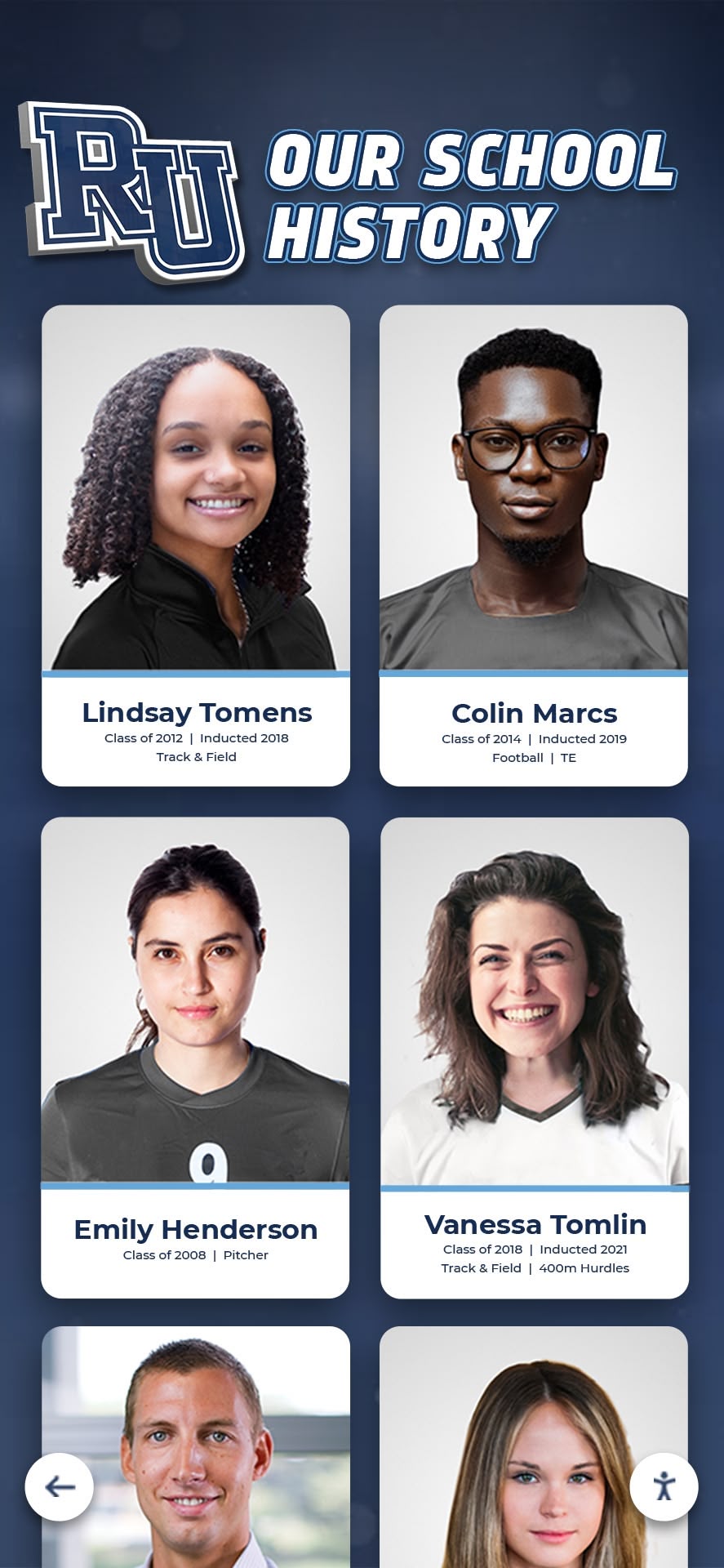
Archiving athlete portraits and recognition data at the time of the senior ad creates source material for hall-of-fame installations years later — schools that maintain these records consistently build more complete athletic histories
How Schools Reuse Senior Ad Content After the Yearbook
Senior ad content doesn’t have to end when the yearbooks are distributed. Athletic departments and school advancement teams that treat senior ad materials as institutional records — not just family keepsakes — extract significantly more value from the same production effort.
Digital Yearbook Wall Integration
Many schools now maintain lobby or hallway digital display systems that rotate graduating class portraits. Senior ad photos — already curated, captioned, and approved by families — are the most organized photo set available for populating these systems. When the yearbook advisor coordinates with the athletic director or advancement office, senior ad image packages can feed directly into digital recognition displays without additional photo collection.
Permanent tribute designs for graduating classes show how schools convert senior recognition from yearbook content into lasting lobby installations that honor each graduating class long after the books are shelved.
Year-End Athletic Award Programs
The achievement callout data documented in athlete senior ads — career stats, team awards, varsity seasons — is exactly the information year-end athletic banquets require for player recognition slides, program booklet bios, and award ceremony scripts. Programs that collect this data in a consistent format for senior ads avoid duplicating that work for spring banquet materials.
Athletic letter ceremony ideas and year-end recognition events outline how schools structure the transition from senior recognition to permanent athletic distinction — senior ad content is the bridge between the two.
Donor and Alumni Communications
Senior athletes who achieve at a high level become future alumni donors and program advocates. The images and narrative content from senior ads, when preserved institutionally, become source material for alumni engagement communications, annual fund appeals, and athletic booster donor recognition.
Donor recognition sign design ideas and best practices for schools explore how athletic achievement narratives connect to long-term donor relationships — the senior athlete who is recognized well during their high school career often becomes the alum who gives back to the program.
Hall-of-Fame Research Archives
When athletic directors field inquiries about program history — a 2019 state qualifier whose record has just been broken, a coach who wants to nominate a former player for hall-of-fame consideration — the senior ad package (photos, stats, achievement data) is exactly what makes that research possible quickly. Schools that archive these materials consistently can respond to hall-of-fame nominations and alumni inquiries in hours rather than weeks.
Lacrosse senior night ceremony ideas, gifts, and recognition guides demonstrate how sport-specific recognition content feeds longitudinal program history — a lacrosse senior ad from 2022 is a primary source document for a hall-of-fame research file in 2032.
Extending Athletic Recognition Beyond the Printed Page
The senior yearbook ad is a single touchpoint in a broader recognition lifecycle that begins with senior night and continues for years through alumni engagement, hall-of-fame inductions, and program milestone communications.
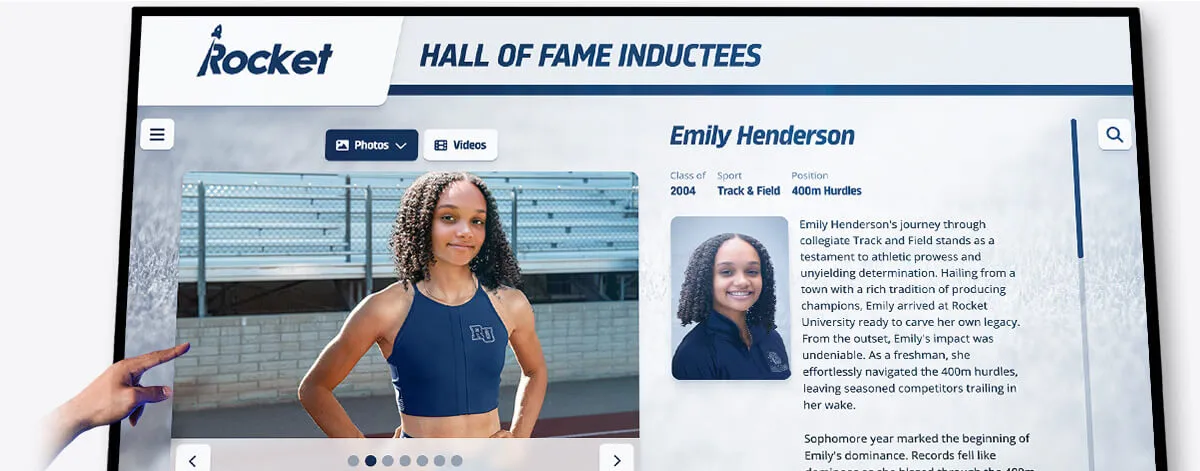
Interactive touchscreen recognition systems extend the senior ad format into a searchable, browsable athlete profile — the same photos, stats, and messages that appear in the yearbook become long-term institutional records in a campus display format
Schools that build the strongest athletic recognition legacies treat the yearbook senior ad not as the final recognition step but as the documentation event that enables every future recognition step. The photos get better when there’s a clear downstream use for them. The messages get more specific when families know the content will appear in hallway displays as well as the yearbook. The achievement data gets more carefully verified when it will be cited in hall-of-fame nomination materials a decade later.
Dance team senior night recognition and lobby display tribute ideas illustrate how performing arts programs apply the same recognition-lifecycle thinking — from senior night poster to permanent lobby display — that athletic programs can adopt for yearbook senior ad content.
Meaningful recognition gifts and senior night gift baskets for graduating athletes complement the yearbook senior ad by giving families additional keepsake formats — when the recognition system includes the yearbook ad, a senior night gift, and a digital display profile, the graduating athlete leaves with a complete recognition package that physical and digital formats cannot replicate individually.
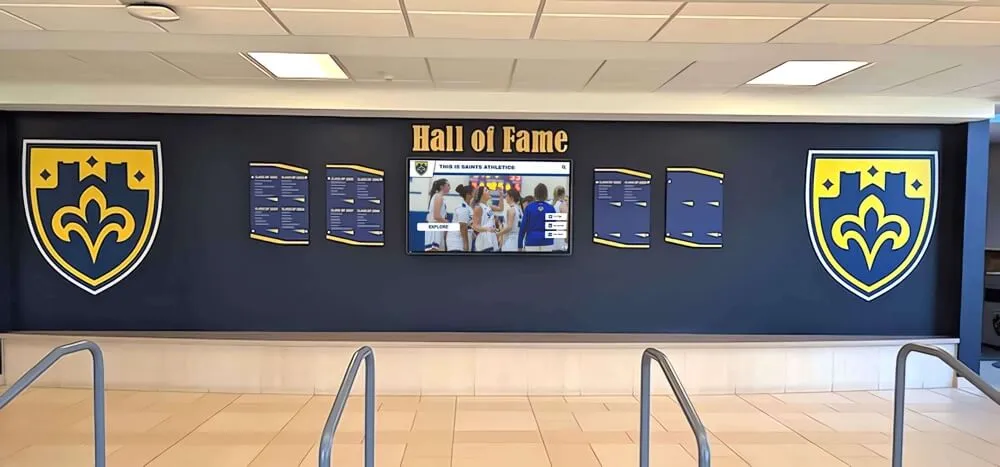
Permanent athletic recognition walls build from the same athlete data that yearbook senior ads document — schools with disciplined senior ad archives find hall-of-fame installation projects significantly easier to research and populate
According to the National Federation of State High School Associations (NFHS), more than 7.8 million students participate in high school athletics annually — each graduating class represents thousands of athletic careers documented in yearbook senior ads that rarely reach their full institutional potential. Schools that connect senior ad content to digital recognition systems, year-end award programs, and long-term alumni archives convert individual family keepsakes into program history infrastructure.
Frequently Asked Questions About Senior Ad Ideas for Athletes
What photos work best for athlete senior ads?
The strongest athlete senior ads use one defining action shot as the hero image — ideally from a significant game or personal best performance — paired with a formal senior portrait and one childhood or early-career photo. The action image should show a recognizable face rather than a distant figure, and all photos should be sourced at 300 DPI for print quality. Avoid compressed images downloaded from social media, which will print blurry at yearbook scale.
What should a family message say in an athlete’s senior ad?
The most effective athlete senior ad messages reference at least one specific moment — a named game, a record, a personal achievement — rather than relying entirely on general tribute language. Acknowledge the work behind the achievement: early practices, recovery time, sacrifices made. Connect the athletic career to the person’s character and future rather than ending with generic graduation wishes. Messages of 50–100 words with specific detail outperform longer generic messages.
How can schools reuse senior ad content after the yearbook is published?
Senior ad photos, achievement stats, and messages can feed directly into digital lobby displays, year-end athletic award program materials, alumni communications, and hall-of-fame research archives. Athletic departments that archive senior ad packages with metadata — sport, year, awards — can answer alumni inquiries, populate digital recognition systems, and support hall-of-fame nominations years after the original yearbook is published.
What achievement callouts should appear in an athlete’s senior yearbook ad?
Format athletic achievements as labeled data points rather than paragraph text: career statistics, varsity seasons played, team awards, championship seasons, and college destination if applicable. Data callouts communicate achievement density at a glance and remain readable at smaller yearbook ad sizes where prose text becomes difficult to read. Verify all statistics against official school athletic records before submitting.
What size senior ad works best for a graduating athlete?
Half-page senior ads are the most popular choice for athletes because they provide enough space for a strong action photo, a secondary portrait, achievement callouts, and a personal family message. Full-page formats allow for four-year photo timelines and extended coaching staff tributes. Quarter-page and eighth-page formats require disciplined simplicity — one excellent photo and a brief achievement statement — but can be effective for athletes with outstanding photography.
Take Senior Recognition Beyond the Yearbook
Rocket Alumni Solutions helps school athletic departments extend senior recognition from the yearbook page into touchscreen hall-of-fame installations, digital lobby displays, and interactive athlete profiles that honor graduating classes for decades. See how schools are building recognition systems that start with the senior ad and grow into lasting institutional history.
Get notified when Rocket Graphics opens