School award ceremony decoration ideas accomplish three things at once: they honor students in the room, produce the photo-worthy backdrops families share for years, and generate organized visual assets that can live on in permanent digital recognition displays. The strongest ceremonies integrate school colors, structured backdrops, intentional stage design, and digital screens into a cohesive environment that makes the evening feel worthy of the achievement — and leaves behind photographs, slideshow recordings, and a recognition archive that outlasts the event itself.
This guide covers the full range of decoration approaches — from budget-conscious stage setups to digital display integration — with a planning checklist and practical section breakdowns designed for athletic directors, school administrators, and recognition event coordinators.
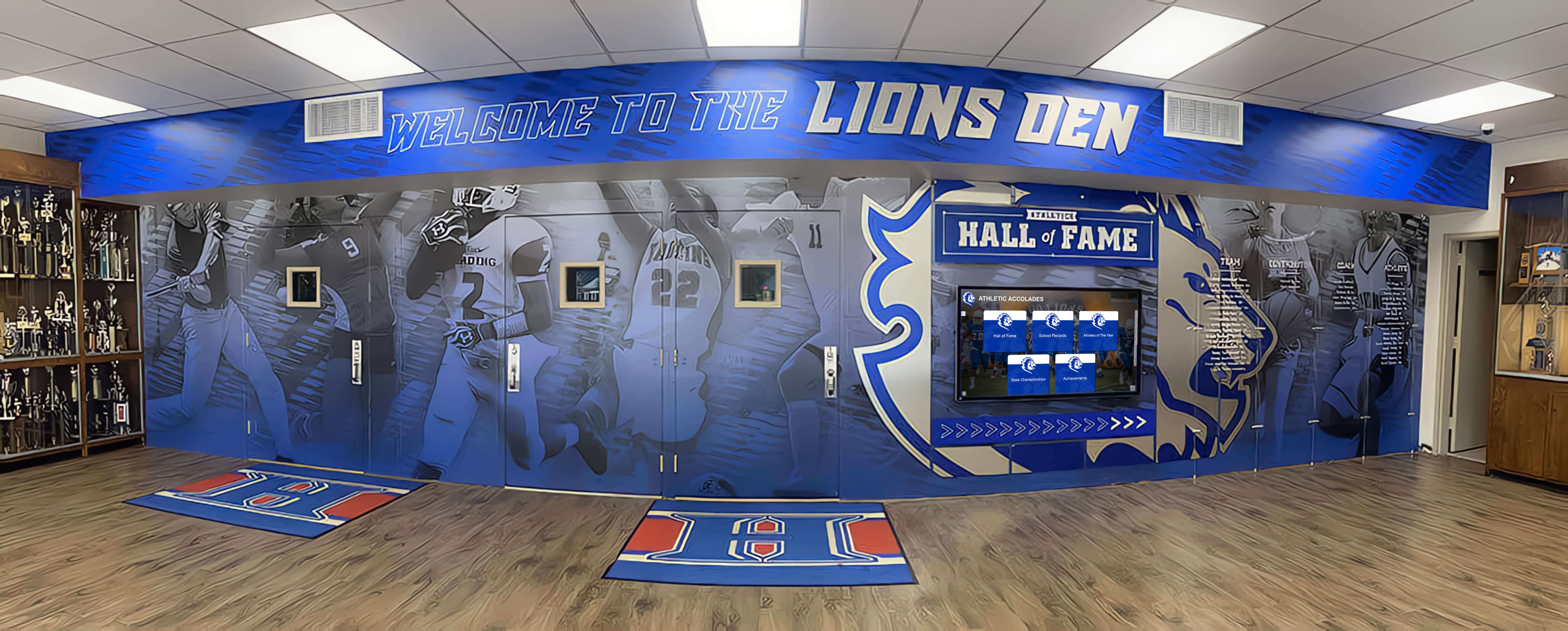
Permanent recognition environments set the visual standard that award ceremony decor should reinforce — ceremonies and hallway displays tell the same story about student achievement
Award Ceremony Decoration Planning Checklist
Before choosing specific decor elements, use this master checklist to ensure the ceremony environment supports all three functions: live recognition, photography, and digital archiving.
| Decoration Area | What to Plan | Photo-Ready? | Archive Value |
|---|---|---|---|
| Stage backdrop | Branded banner or step-and-repeat in school colors | Yes | High |
| Podium area | Logo-branded podium wrap or freestanding sign | Moderate | Low |
| Entry / arrival area | Welcome signage, photo station backdrop | Yes | High |
| Table centerpieces | School colors, mascot elements, award preview display | No | Low |
| Screen / digital display | Honoree slideshow, live recognition graphics | Yes | High |
| Award presentation table | Branded table skirt, award display board | Yes | High |
| Stage lighting | Directional front or side lighting for photos | Yes | Moderate |
| Room and event signage | Event title banner, year, and school identifier | Yes | High |
The archive value column reflects how likely each element is to generate reusable visual content for future recognition displays, digital trophy cases, or hall-of-fame profiles. Elements with high archive value are worth proportionally higher investment.
Stage and Backdrop Design for Award Ceremonies
The stage backdrop is the single most-photographed element of any award ceremony — every award presentation, every handshake, every moment families want to preserve happens in front of it. Getting this element right pays dividends in every photograph taken during the event.
Core backdrop design principles:
- School colors as the primary palette. A backdrop built from your school’s official colors is immediately identifiable in every photo, permanently connecting each image to the institution.
- School name or logo in every shot. Text or logo placement at 40–60% height on a standard backdrop ensures it appears in photos of award recipients regardless of their height.
- Avoid busy patterns behind the honoree. Solid color panels, large-scale mascot graphics, or clean geometric patterns work far better than intricate designs that compete visually with the recipient.
- Event year and name embedded in the design. Including the ceremony name (e.g., “2026 Scholar-Athlete Awards”) and year archives the photos automatically — every image carries its own date context without additional caption work.
Backdrop format options by budget:
- Step-and-repeat banner — A repeating logo or mascot pattern across a full-width fabric or vinyl banner. Rents or prints for most budgets; collapses for storage and reuse across multiple years.
- Single-panel custom banner — One large graphic (event name, year, school seal) rather than a repeating pattern. More visually distinctive but requires more design investment.
- Digital display backdrop — A screen behind the stage running a branded graphic during presentations. Allows real-time updates — the honoree’s name appears on-screen while they receive their award — but requires AV setup and a content operator.
- DIY school-color backdrop — Fabric panels or balloon arrangements in school colors, with a freestanding printed event sign. Lower investment, strong visual impact when colors are consistent and materials are purposeful.
Academic recognition program design principles consistently show that visual branding continuity between ceremony elements and permanent displays reinforces the credibility of the recognition — students and families who see consistent school identity across every surface understand the institution takes the award seriously.
Table and Room Setup for Recognition Flow
The table and room arrangement shapes how attendees move through the ceremony and how the award presentations photograph.
Seating arrangements that support ceremony flow:
- Theater-style seating (rows facing the stage) maximizes sightlines to the award presentations. Best for larger groups where a clear view of the stage matters more than conversation.
- Banquet-round seating (tables of 6–8 facing a central stage) creates a more intimate atmosphere but requires a raised stage or careful positioning so peripheral tables have clear views.
- Reserved front sections for honorees allows award recipients to stand and walk to the stage without disrupting other attendees, and ensures their section is clearly within the photographer’s frame.
Table decoration principles:
- Centerpieces in school colors — florals, ribbon arrangements, or table runners — create a cohesive visual environment without distracting from the stage.
- Avoid tall centerpieces at tables near the photography zone; anything that blocks sightlines creates problems for both photographers and attendees.
- Place printed programs or recognition booklets at each seat. These double as take-home mementos and create an additional archive record of the evening.
- A small printed card at each honoree’s seat identifying their award category makes the evening more personal and photographs well when included in table shots.
For ceremonies recognizing academic achievement alongside athletics, high school academic achievement award programs note that the ceremony environment itself signals institutional priority — rooms organized intentionally around the recognition moment feel categorically different from events where the decoration appears as an afterthought.
Digital Displays During the Award Ceremony
Digital screens running during an award ceremony serve recognition functions that no physical decoration alone can match. A well-programmed display system turns the ceremony environment into a dynamic, layered recognition experience from the moment guests arrive through the final award presentation.
What digital displays can show during ceremonies:
- Pre-ceremony honoree slideshow — Cycling through recipient names, photos, and award categories as guests arrive and find their seats. Creates anticipation and gives families time to spot their student before the program begins.
- Live recognition graphics — Real-time display showing the current honoree’s name, sport or academic category, and award title as each presentation happens. Particularly effective when synchronized with the MC’s announcement.
- Sponsor acknowledgment slides — Between award categories, sponsor recognition graphics run on screen. Consistent, professionally formatted sponsor slides protect commercial relationships and keep the ceremony moving without verbal interruptions.
- Photo and video highlights — For end-of-season athletic banquets, season highlight reels or photo slideshows during dinner create context for the award presentations that follow.
- Historical context slides — Past recipients of the same award displayed alongside the current winner connects the evening to program tradition and motivates the audience to value the recognition.
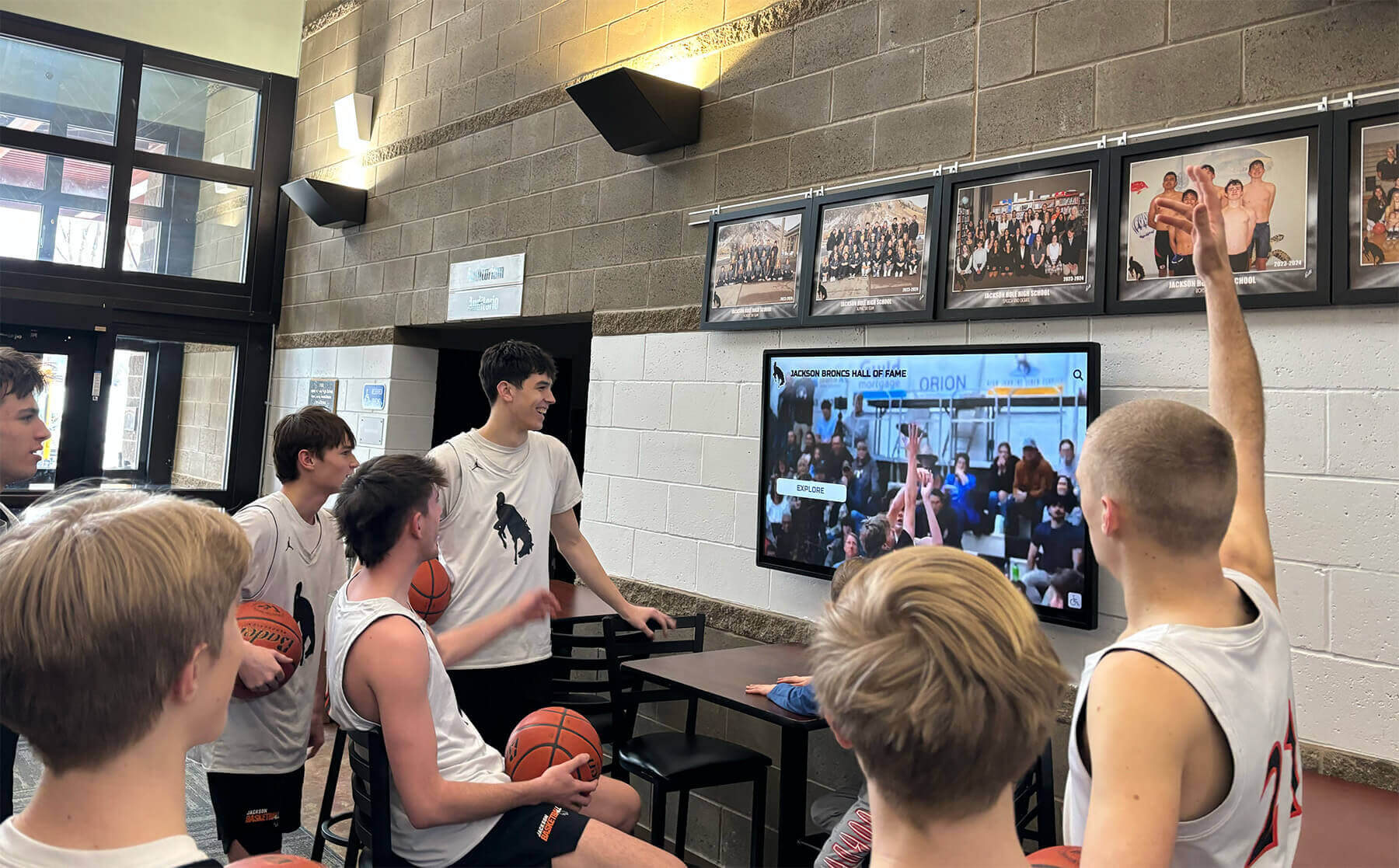
Digital screens that display highlights during the school day run the same recognition slideshows and honoree graphics during award ceremonies — one display system serving multiple recognition functions across the year
A day in the life of school digital displays shows how schools move the same display content from hallway loops to event-night presentations — the ceremony and the permanent recognition environment share content rather than requiring separate production for each context.
For programs exploring display options across formats and budgets, the best hall of fame and recognition display tools for athletics, donors, arts, and school history covers the full range of solutions that scale from a single event-night screen to a permanent campus installation.
Take Recognition Beyond the Ceremony Night
Rocket Alumni Solutions builds digital trophy cases, touchscreen halls of fame, and academic recognition displays that extend award night into a permanent, campus-wide recognition environment students and alumni can access year-round.
Get notified when Rocket Graphics opensPhoto-Ready Decoration for Award Ceremonies
Award ceremony photos serve two purposes simultaneously: immediate family sharing and long-term institutional archive. Decorations designed with both purposes in mind produce images that remain useful years after the event.
Design choices that improve award ceremony photos:
- Directional stage lighting. Overhead or front-facing stage lighting eliminates shadows that make award presentation photos look amateur even with professional equipment. Test the stage lighting setup before the event begins and document the settings for future years.
- Consistent backdrop height and position. When the backdrop shifts between award categories, photos from the same ceremony look inconsistent. Fix the backdrop and photo position before the event and keep it stable throughout.
- Clear floor markings for the photo position. A small piece of tape marking where award recipients should stand during the handshake moment — invisible in photos but clearly visible to recipients — creates consistent framing across every photo in the evening.
- Remove distracting background elements. Folding chairs, event equipment, and venue signage visible behind the backdrop undermine the professional appearance of awards photos. Walk the photo position before guests arrive and obscure anything that shouldn’t appear in every award photo.
Photo station setup separate from the stage:
Many schools add a dedicated photo station near the ceremony entry or in an adjacent space for candid, group, and post-award photos separate from the formal stage presentation shots.
For a standalone photo station backdrop:
- Use an 8×8 or 8×10 foot branded banner with the event name and year
- Place adequate lighting (two side lights minimum) to eliminate shadows
- Mark the foot position for the photo subject to ensure consistent distance from the backdrop
Academic all-conference and all-American award recognition programs note that photographs taken at ceremonies with consistent, professional setups translate most effectively into the formatted portrait cards and recognition displays that give awards permanent visibility long after the ceremony ends.
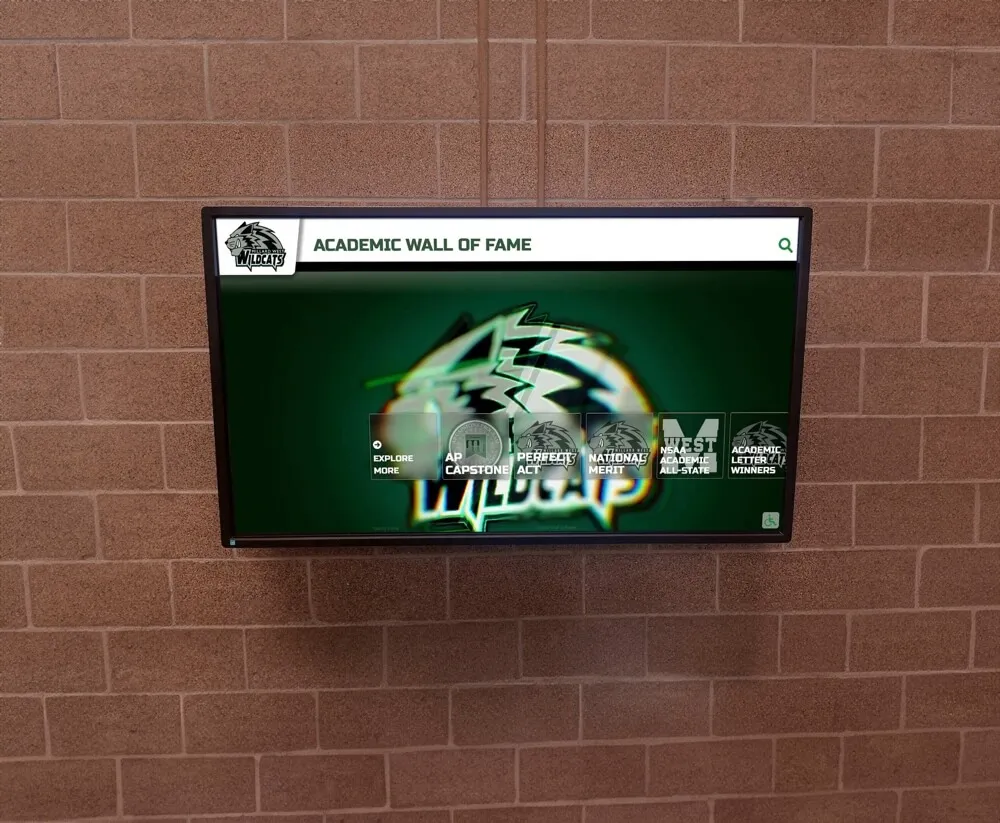
The award ceremony photo taken tonight becomes the recognition portrait displayed on a digital wall of fame next semester — consistent ceremony photography setup is the bridge between the ceremony moment and permanent recognition
Connecting Ceremony Decor to Permanent Recognition
The decoration decisions made for an award ceremony have long-term implications for how the recognition lives beyond the event. Photos taken against a consistent, branded backdrop can populate digital recognition displays, hallway portrait galleries, touchscreen kiosks, and athletic hall-of-fame installations for years.
Building a recognition connection into ceremony planning:
- Photograph every award presentation individually. Even with a ceremony photographer present, assign a second person to capture individual award recipients from a consistent position and distance. These photos become the formatted portrait images used in recognition displays.
- Capture award data in a structured format. A simple spreadsheet with recipient name, award name, category, year, and photo filename creates the structured data that populates digital displays and hall-of-fame profiles directly from ceremony night.
- Archive the ceremony program. The printed program is the definitive record of every award given at the ceremony. Archive both physical copies and a PDF version as the permanent reference for the evening.
- Organize ceremony photographs in a shared folder. A folder organized by award category, accessible to both photography staff and whoever manages digital recognition displays, prevents the “where are the photos from last year’s ceremony?” problem that erodes recognition archives over time.
Academic awards for high school students — how schools define, display, and preserve student honors describes the full lifecycle of an academic award: from the ceremony moment to the portrait card on a digital display to the searchable profile in a hall-of-fame kiosk. The ceremony is the beginning of the recognition story, not the end.
For schools building or updating their recognition infrastructure, youth sports and academic awards program ideas offers a comprehensive look at recognition categories that connect ceremony night to permanent display environments.
Award Ceremony Decoration Ideas by Budget Level
Not every ceremony has the same production budget — but the principles that make decoration effective scale across all investment levels.
Low budget (under $500):
- Fabric backdrop in school colors (purchased or rented)
- Printed event banner — school name, event title, year — 4×8 foot vinyl, approximately $50–75
- School-color table runners and ribbon centerpieces
- Existing screen with a free Canva or school graphics template for the honoree slideshow
- Printed programs as a take-home archive record
Mid budget ($500–$2,000):
- Custom step-and-repeat banner with school logo and event branding
- Portable photo lighting kit (two softbox lights)
- Professional award display table setup with branded table skirt
- Dedicated laptop and screen for the honoree slideshow
- Branded podium sign or facade wrap
Higher budget ($2,000+):
- Full stage scenic design including backdrop, side panels, and podium
- Professional AV setup with multiple synchronized screens
- Live recognition graphics system — honoree name appears on screen as each award is announced
- Hybrid ceremony capability for remote attendees
- Post-ceremony recognition content production, including formatted portrait cards for permanent digital displays
Schools that build interactive touchscreen and digital display recognition systems at various investment levels consistently find that concentrated spending on stage design and photography setup produces more long-term value than the same budget distributed evenly across all decor categories.
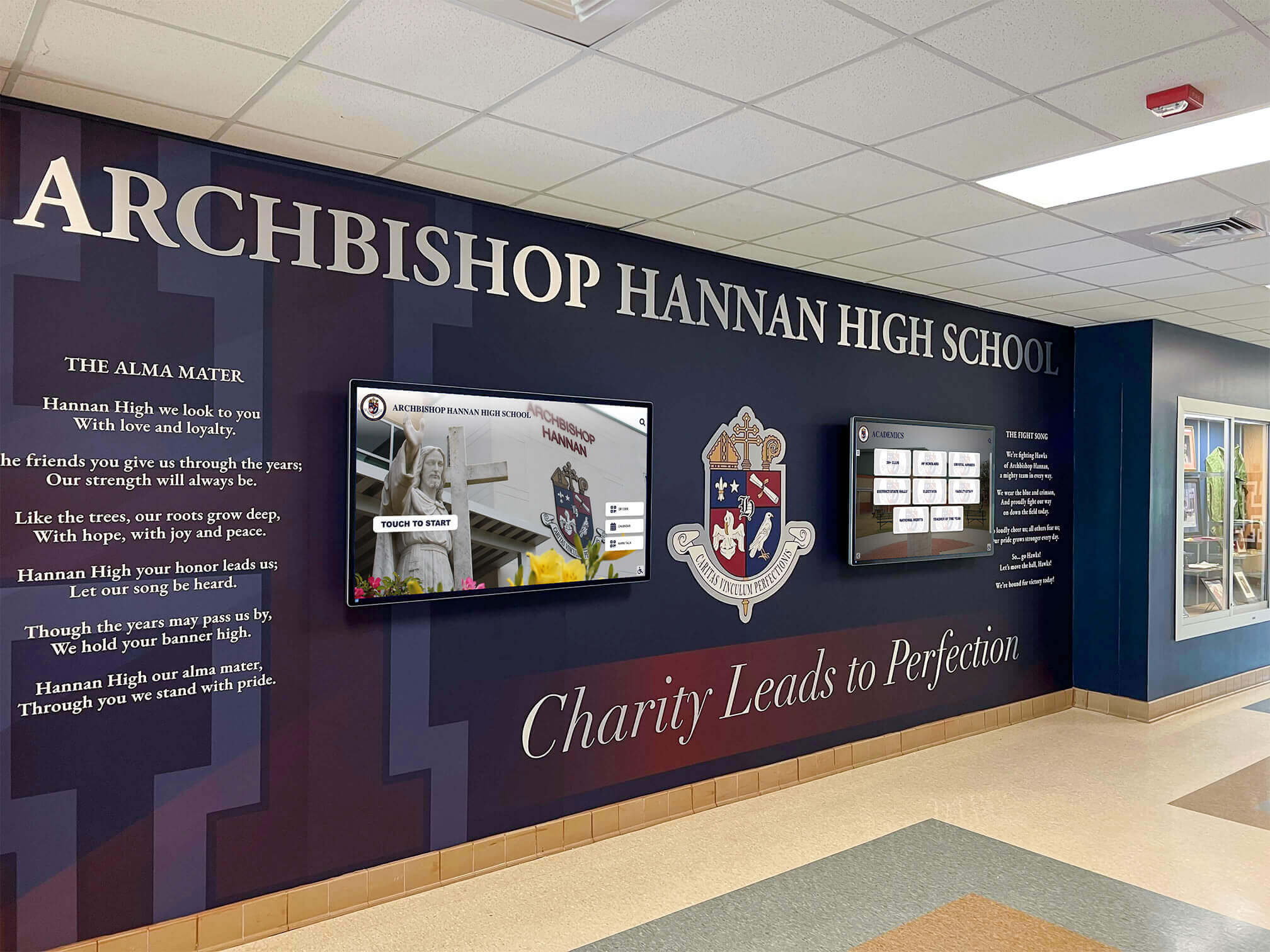
Permanent lobby installations and one-night ceremony decor work best when they share the same visual language — school colors, mascot, and event branding that connect the ceremony to the institution year-round
Frequently Asked Questions About School Award Ceremony Decoration Ideas
What decorations are most important for a school award ceremony?
The stage backdrop is the single highest-impact decoration element because it appears in every award presentation photo. A branded banner or step-and-repeat in school colors, with the school name or logo at a consistent height, ensures every photo is immediately identifiable as connected to the institution and event. After the backdrop, proper stage lighting and a marked honoree standing position have the greatest impact on photo quality and archive value.
How do schools use digital displays at award ceremonies?
Schools use digital displays for pre-ceremony honoree slideshows, live recognition graphics showing each recipient’s name and award as it’s announced, sponsor acknowledgment slides between categories, and highlight reels during dinner. Schools with existing lobby display infrastructure can run the same content used for hallway recognition through a secondary screen at the ceremony venue.
How can award ceremony photos be used for permanent recognition displays?
Award ceremony photos taken against a consistent, branded backdrop can populate digital hall-of-fame displays, touchscreen kiosks, hallway portrait galleries, and academic recognition boards. The key is capturing each recipient individually from a consistent position and pairing each photo with structured data — name, award category, year — so the ceremony photograph becomes a permanent recognition asset.
What is a step-and-repeat backdrop and should schools use one?
A step-and-repeat backdrop has a repeating pattern — alternating logos, school crests, or event branding — so the school identity appears in every photo regardless of where the subject stands. Schools should use one when the event produces many individual award photos that will be shared widely, or when ceremony photography feeds future recognition displays and hall-of-fame portraits.
How should schools connect one-night ceremony recognition to permanent displays?
Capture photos against a consistent branded backdrop, record award data in a structured spreadsheet, and archive both in a shared folder organized by category and year. This transforms ceremony-night photos and records into portrait cards, recognition profiles, and display content for touchscreen halls of fame, digital trophy cases, and academic recognition walls in the months after the event.
Making Award Ceremony Decoration Work Long After the Event
The best school award ceremony decoration ideas treat the ceremony as the opening chapter of a recognition story that continues through the school year and beyond. When the stage backdrop, photography setup, and digital displays are planned with archival intent from the start, the same investment that creates a memorable evening also builds the visual assets that keep recognition visible long after the program ends.
Schools that align their ceremony decor with their permanent recognition infrastructure — using consistent school branding, structured data capture, and photography designed for display use — give every award a longer life than a single evening in a gymnasium or auditorium.
Connect Your Award Ceremonies to a Permanent Recognition System
From touchscreen halls of fame to digital trophy cases to academic recognition boards, Rocket Alumni Solutions builds permanent recognition environments that turn award ceremony photos and records into year-round visibility for students, alumni, and families.
Get notified when Rocket Graphics opens