The gym fills before the first cheer lands—students filing under handmade signs, screens cycling through player photos and team colors, printed banners flanking the entrance tunnel. Pep rally posters are the visual backbone of that energy. They signal to every student in the room that this moment is worth celebrating, that the school has invested in honoring them, and that the athletes they’re about to cheer for have earned that recognition. When pep rally graphics are designed with intention—the right scale, the right colors, the right typography—they amplify crowd energy before anyone touches a microphone.
This guide covers everything schools need to design effective pep rally posters: foundational design principles, print format options, digital display layouts, hallway and entrance installations, and the AI-powered tools making professional-quality graphics accessible without a dedicated designer.
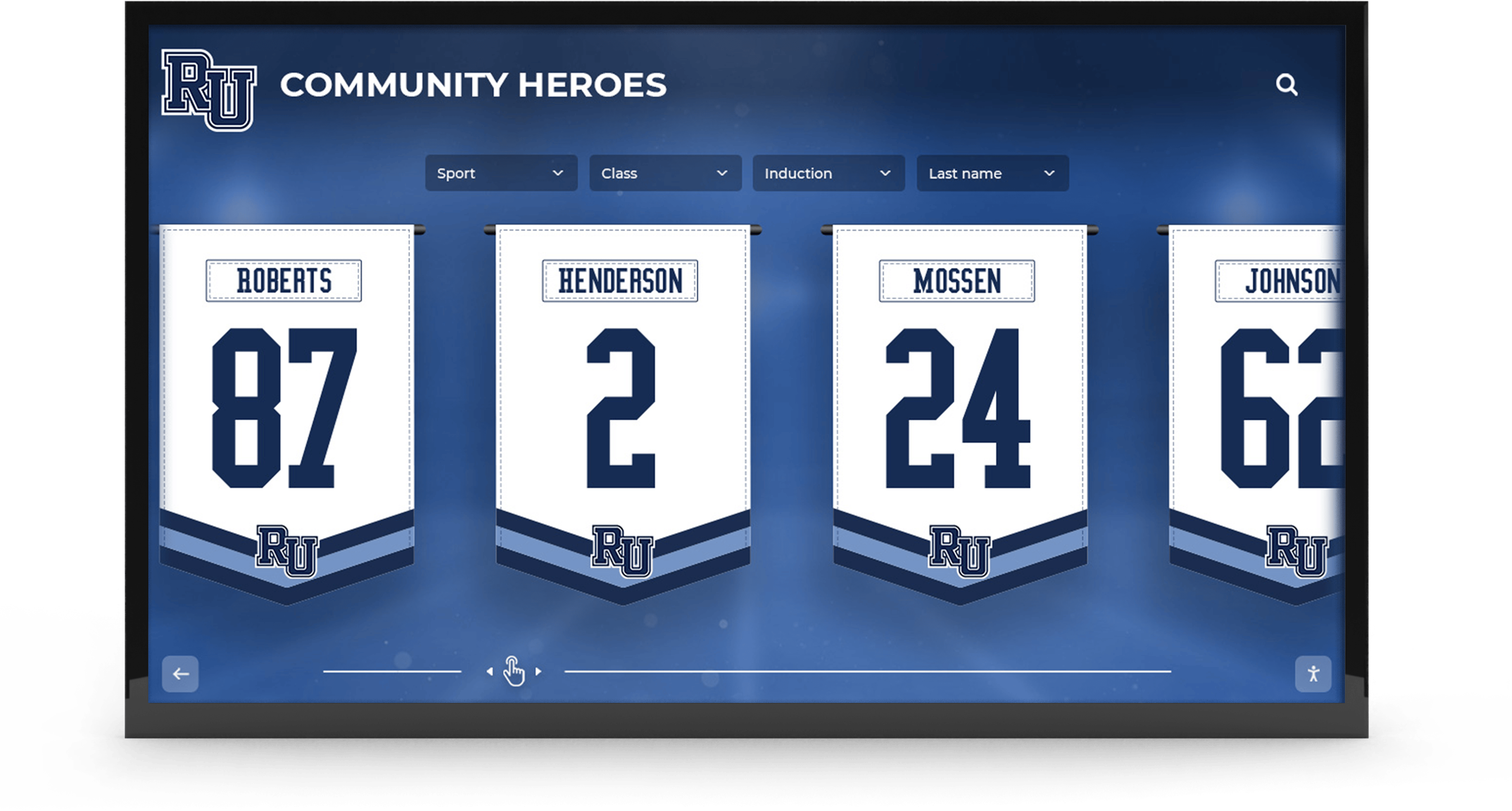
Digital banner displays highlighting athlete profiles and jersey numbers bring personalized recognition energy to pep rally environments
Why Pep Rally Posters Work: The Psychology Behind School Spirit Graphics
Pep rally posters work because visual recognition triggers belonging. Research published by the American Psychological Association on school culture and student motivation consistently links visible, public recognition to increased student engagement and school connectedness. When a student sees their name on a poster in the gym, or their teammate’s number on a banner above the bleachers, the abstract idea of “school pride” becomes concrete and personal.
The National Federation of State High School Associations (NFHS) has documented that schools with strong athletic traditions—maintained in part through consistent, high-quality visual recognition—report better student retention in extracurricular programs year over year. Pep rally graphics are a front-line tool in that retention strategy: they make participation visible and valued, not just during playoffs but throughout the regular season.
Beyond individual recognition, pep rally posters create shared visual identity. When every banner in the gym uses the same school colors, the same mascot treatment, and the same typographic language, the effect is a unified visual field that communicates institutional investment. That coherence is felt even by students who can’t articulate why the environment feels different from a generic assembly.
Core Design Principles for Effective Pep Rally Posters
Effective pep rally posters are designed for distance and motion. Unlike a printed program or a social media graphic, rally posters are read across a gymnasium floor, often by people in motion, in variable lighting conditions, surrounded by competing visual stimulus. These constraints shape every effective design decision.
Typography That Reads at 50 Feet
Use bold, sans-serif fonts at maximum size. Script fonts and decorative lettering that look polished in digital previews become illegible at gymnasium distances. The most effective rally poster typography treats the font as a graphic element first and a communication tool second—large enough that letter shapes are readable across the full width of the bleachers.
Proven pep rally typography principles:
- Primary message in 3–6 words maximum — attention spans in a live pep rally environment are measured in seconds, not minutes
- Contrast ratio above 7:1 — white text on a dark school color, or dark text on a light background with high-contrast border treatment
- Bold weight throughout — medium and light weights wash out under gymnasium lighting
- Single font family with two weights (bold and extra bold) beats three or four decorative fonts competing for attention
School Color Dominance
Pep rally poster color strategy is simple: lead with school colors, limit accent colors, and avoid colors that compete with the primary palette. The poster that looks most “spirited” in the room is almost always the one using school colors most consistently and at greatest saturation—not the most elaborate design.
A reliable color structure for rally posters:
- Background: Primary school color or deep neutral (black, charcoal) that the primary color pops against
- Primary typography: School secondary color or white at maximum contrast
- Accent elements: Single accent color applied sparingly—borders, stars, underlining, player number graphics
- Photography: Action imagery treated with a color overlay tint matching the school palette creates visual unity even when photos vary in original tone
Scale Is the Variable Schools Get Wrong Most Often
Every element on a rally poster should be sized for its primary viewing context—and that context is almost never “hands held in front of you.” Print banners mounted above entrance tunnels need to be legible from thirty feet away. Gym-end banners need to hold visual presence from one hundred feet. Digital screen graphics need to read clearly at a glance during transitions.
A practical scale test: step back from your computer screen or mockup to the distance the final piece will be viewed from. If the primary message isn’t legible, the typography is undersized.
Print Pep Rally Poster Ideas: Formats, Sizes, and Placement
Print posters remain the most versatile rally graphics format because they require no infrastructure—any wall, fence, locker bay, or bleacher railing becomes a display surface.
Recommended Print Formats for Pep Rallies
Individual player posters (24"×36" or 18"×24"): Action or portrait photos with the player’s name, number, and position. These are the highest-impact individual recognition pieces in a rally environment. Mounted on foam board and placed along entry corridors, they create a gauntlet that arriving students walk through—and that athletes walk through moments before competing.
Team banner signs (4’×8’ or 3’×6’): Full-team graphics using a single action photo or a grid of individual photos. Effective for end walls, above entry tunnels, and as backdrop panels behind podiums and microphone positions. Vinyl or fabric material with grommets for outdoor use; foam board or coroplast for interior mounting.
Crowd-size spirit signs (11"×17"): Printed in bulk for distribution to students, these create visual uniformity in the bleachers when color-matched to school colors. Simple design: school mascot or rally slogan on a bright background. Stack them near entry points for students to grab on the way in.
Hallway corridor posters (24"×36" or 36"×48"): Sport-specific posters for seasonal championships, rivalry games, and playoff runs. These live in athletic hallways where athletes and students pass them daily—not just during rally week. Effective designs treat this context as an ongoing communication opportunity, not a temporary decoration.
Print Material Selection
The right substrate for each application:
- Foam board — Clean appearance, rigid, lightweight, excellent for interior mounting. Not suitable for outdoor use or high-humidity gymnasiums.
- Coroplast (corrugated plastic) — More durable than foam board, holds up to brief outdoor use. Slightly lower print quality but practical for posters that need to survive the week.
- Fabric/polyester banner material — The professional choice for large-format banners over 3’ in any dimension. Holds vibrant color, doesn’t tear, stores easily for reuse. Significantly more expensive per piece but cost-effective per year of use.
- Adhesive vinyl — Best for mounting directly to wall or floor surfaces without frames. Excellent for locker graphics, floor decals near rally entrances, and permanent mascot installations.
School lobby design principles apply to pep rally entrance environments too: the first thirty seconds of a visitor or student’s arrival create an impression that the rest of the event either confirms or contradicts. Rally poster placement at entry points is disproportionately high-leverage for first-impression impact.
Digital Pep Rally Graphics for Screens and Display Systems
Digital displays have transformed what’s possible in pep rally environments. Where print posters require lead time, production budgets, and physical installation, digital screen content can be updated in minutes and scheduled to run automatically across every screen in the building.
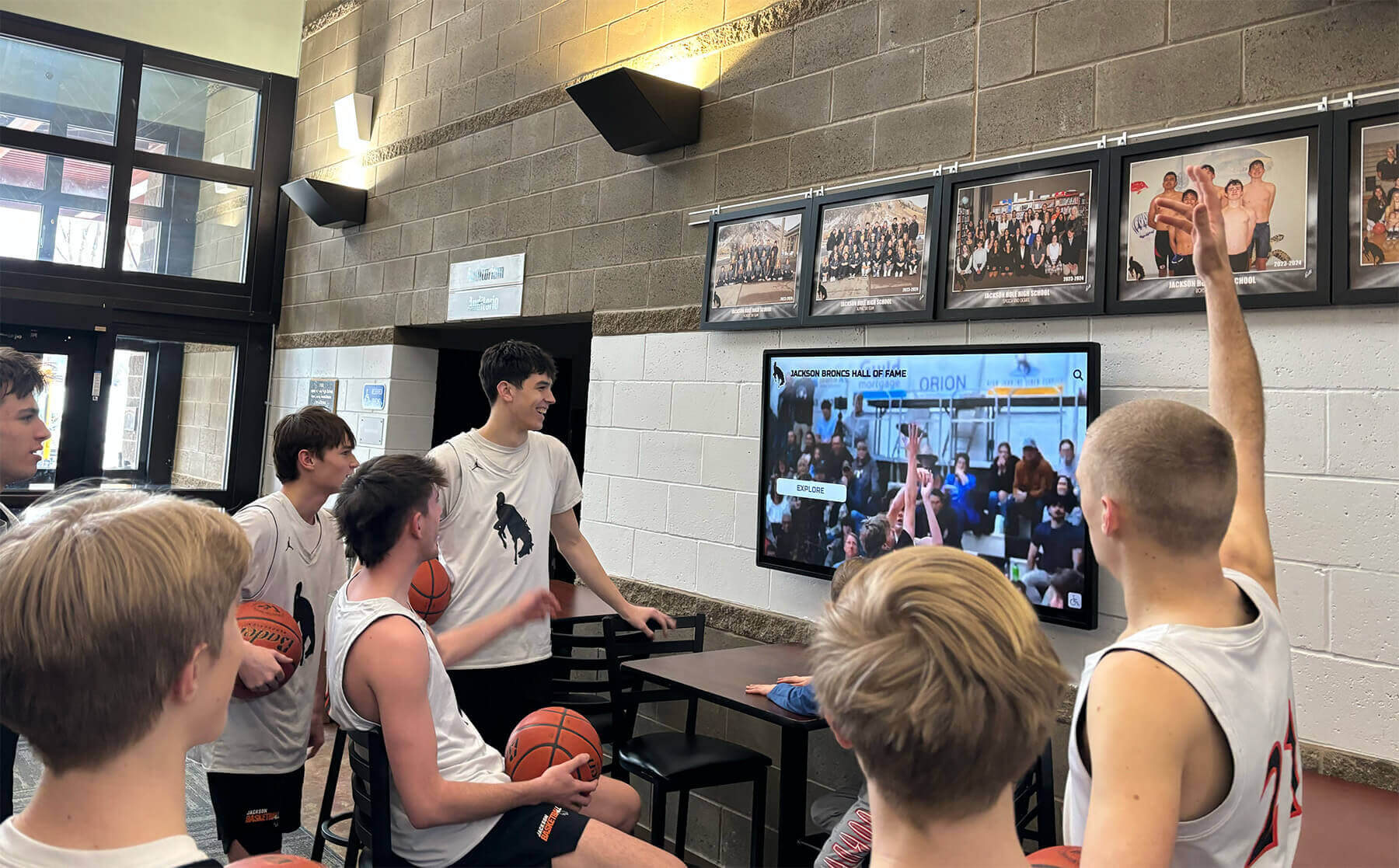
Digital lobby screens that show game highlights and player recognition content build pre-rally energy throughout the school day
Lobby and Hallway Screen Content
Digital screens in school lobbies and hallways are underutilized rally assets. The students walking past those screens during passing periods between classes are the same audience you’re trying to energize for a 2 PM rally—and those screens can be running rally-specific content for the six hours before the event starts.
Effective pre-rally digital screen content:
- Player spotlights rotating through the roster with name, number, and position
- Rally countdown timers with school color overlays and mascot animation
- Schedule and spirit theme reminders with color-of-the-day or theme-day instructions
- Championship records and season stats providing context for what students are celebrating
- Opponent history for rivalry games—win/loss records create narrative context that makes the upcoming game feel significant
When schools run digital signage software across a networked campus display system, rally-specific playlists can be pushed to every screen simultaneously and scheduled to run from first bell through the end of the rally—making the whole campus feel like it’s building toward something.
Gymnasium Digital Display Integration
Modern gyms increasingly feature permanent digital display infrastructure—scoreboards, end-wall screens, and entrance displays. Designing pep rally graphics for these fixed assets requires understanding the specific resolution and aspect ratio of each screen.
Practical considerations for gym digital displays:
- Scoreboard graphics: Most scoreboards run at non-standard resolutions. Always design for the actual pixel dimensions of the hardware, not a generic 16:9 assumption.
- LED video boards: The highest-impact visual surface in the room. Full-motion graphics and video highlights are possible; static image slides designed at 4K resolution work on most modern installations.
- Secondary screen pairs: Many gyms have two flanking screens at standard HD resolution (1920×1080) that are more accessible for custom rally content than the main scoreboard.
For schools evaluating or upgrading their display infrastructure, an interactive touchscreen kiosk comparison provides useful context on software platforms that manage content across multiple screen types simultaneously.
Digital Poster Design Specifications
Designing pep rally graphics for digital displays requires different specifications than print:
| Use Case | Recommended Resolution | Aspect Ratio | Format |
|---|---|---|---|
| Lobby screen | 1920×1080 | 16:9 | PNG or MP4 |
| Hallway portrait screen | 1080×1920 | 9:16 | PNG or MP4 |
| Scoreboard secondary screens | Varies by model | Check hardware | PNG |
| Social media rally graphics | 1080×1080 | 1:1 | JPG or PNG |
| Email or digital program | 800×1200 | 2:3 | JPG |
Keep digital rally graphics to under 3 MB per file for smooth playback on school display systems. Use solid color backgrounds rather than gradients when possible—they compress better and render more consistently across different screen qualities.
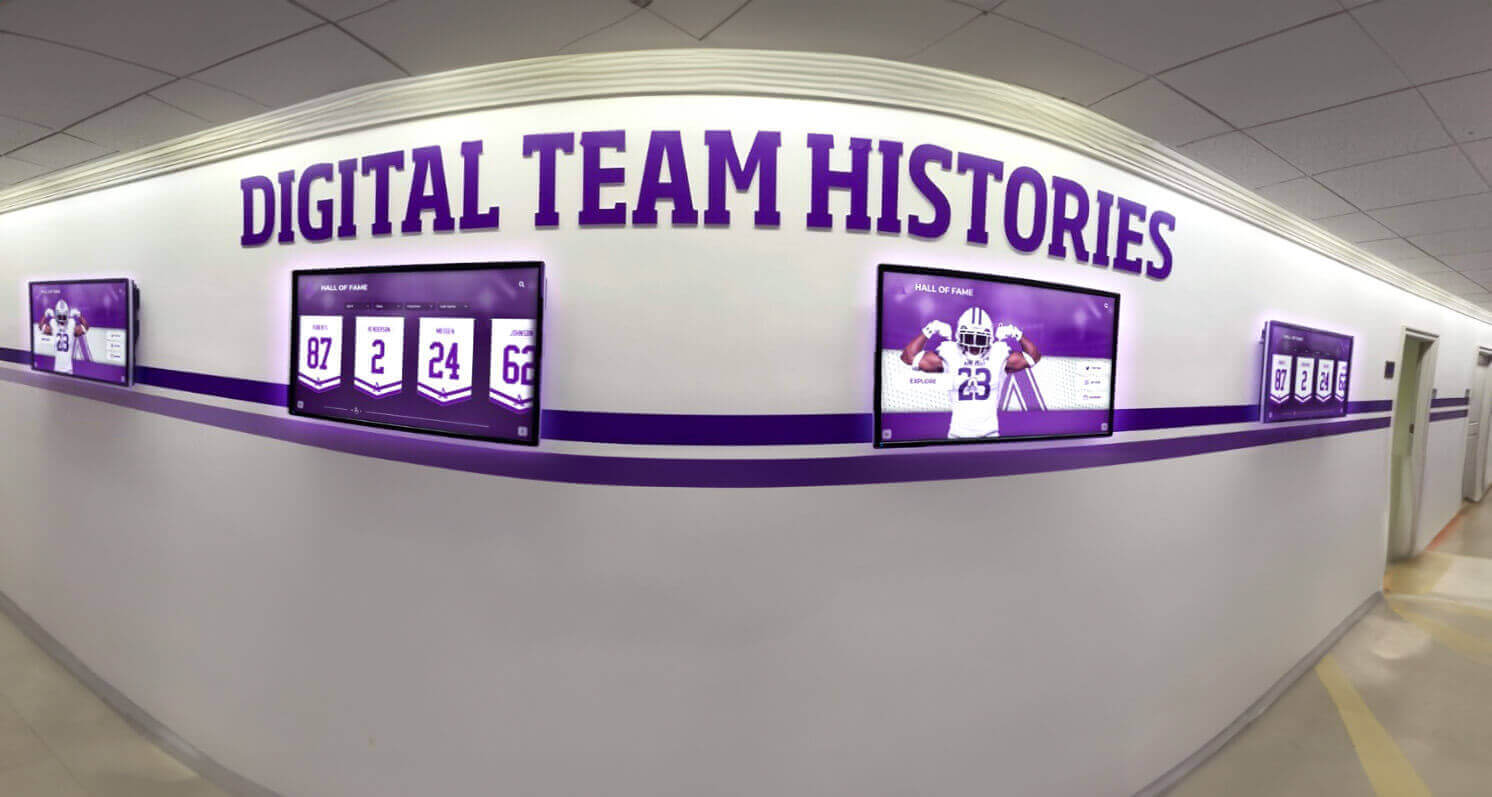
Hallway digital screens running team history and player recognition content keep school spirit visible between games and rally events
Hallway and Entrance Pep Rally Poster Ideas
The path athletes take from the locker room to the competition floor is one of the most emotionally loaded physical routes in a school. Rally posters placed along this path—what coaches sometimes call the “tunnel”—create a sustained recognition experience at the highest-stakes moment of an athlete’s school day.
The Rally Entrance Tunnel
An entrance tunnel built from rally posters is one of the simplest and highest-impact rally traditions a school can implement. Using full-size player posters (24"×36") mounted on lightweight supports along both sides of the entry corridor, the effect is a gauntlet of personal recognition that every team member walks through.
What makes tunnel posters effective:
- Individual, not group — one player per poster, not team photos, so each athlete has their own dedicated graphic
- Consistent design — all posters in the tunnel use the same template so the visual effect reads as a coordinated installation, not a collection of individually made signs
- Large photography — headshot or action photo fills at least 60% of the poster surface; text is secondary to the visual
For high school basketball programs and other sports with deep recognition traditions, the entrance tunnel creates a visual moment that players remember long after graduation—particularly when the design quality matches the significance of the moment.
Locker Corridor Displays
Athletic corridors between classrooms and gym spaces see daily traffic from athletes, coaches, and students throughout the school week. Seasonal rally posters in these corridors—updated for each playoff round, rivalry game, or championship appearance—keep the competitive calendar visible to athletes during every practice day, not just rally days.
Class president and student government digital displays demonstrate how schools use institutional displays to keep student leadership and accomplishment visible year-round—the same logic applies to athletic hallway recognition. When players walk past their own poster during a Tuesday practice, the poster functions as both motivation and institutional acknowledgment.
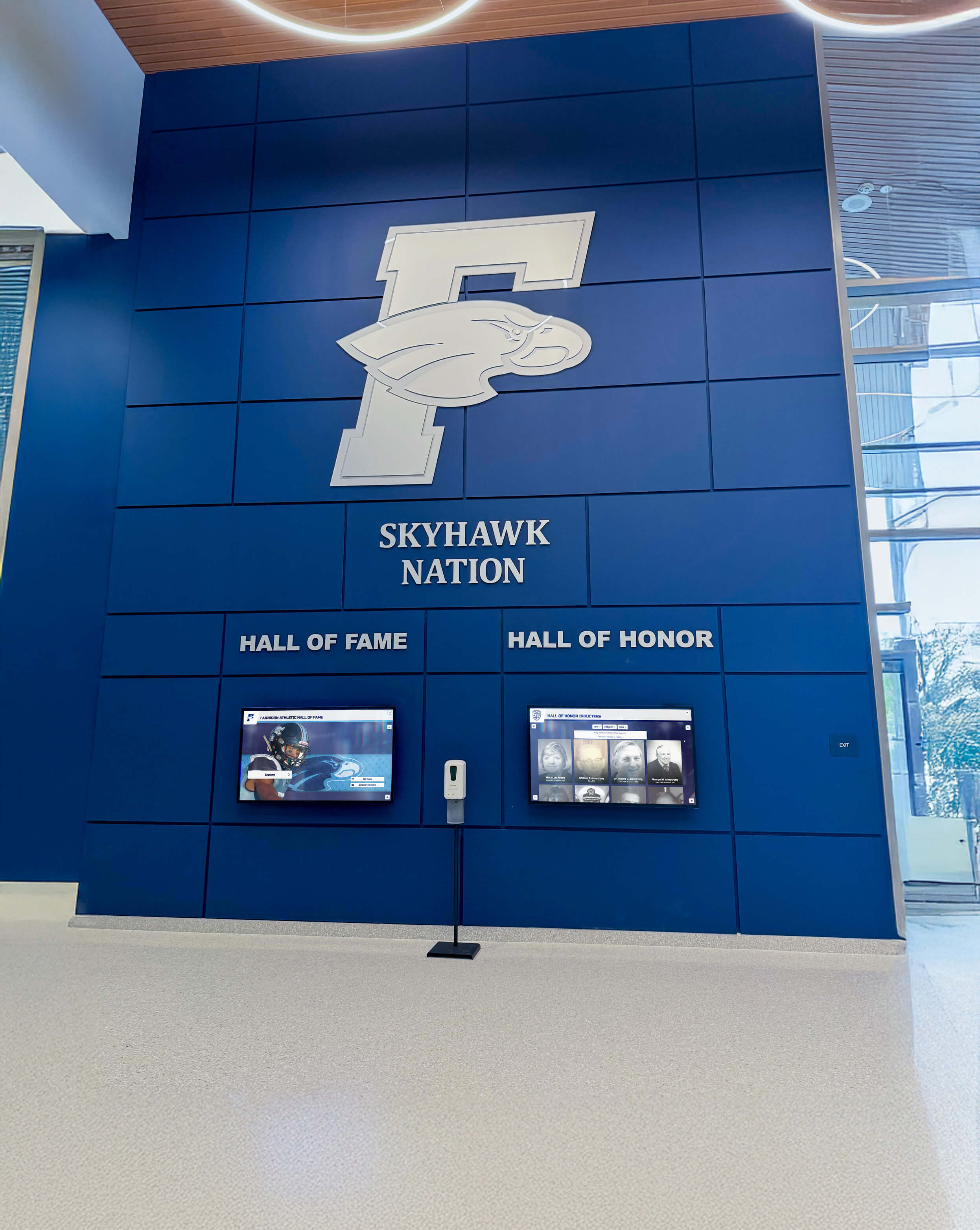
Permanent lobby installations in school colors create year-round spirit environments that amplify the impact of seasonal pep rally graphics
Integrating Print and Digital Pep Rally Graphics
The strongest rally graphic environments combine print and digital formats rather than choosing one over the other. Each medium contributes something the other cannot replicate.
Print posters contribute permanence and physical presence. A foam-board player poster in the entry tunnel is something athletes and parents walk past, touch, and photograph with their phones. It has physical weight in the environment that a screen cannot fully replicate. Print also works without power, without a content management system, and without any technical infrastructure.
Digital displays contribute motion, scale, and updateability. A lobby screen cycling through the full roster reaches more faces than a single banner can. Video highlights from previous seasons running in the 30 minutes before a rally starts tells a story no print poster can tell. And when the season advances unexpectedly—an overtime win, an upset, a playoff berth—digital content reflects that new reality the same afternoon.
Hybrid rally environments place screens adjacent to or within physical graphic installations. A painted mural with an embedded screen, or a banner wall flanked by two portrait displays cycling through player spotlights, creates an experience that reads as intentional rather than accumulated.
Content Scheduling for Rally Day
Digital display systems that support content scheduling allow athletic communications staff to pre-program the full rally-day content sequence:
- Morning through lunch: Season stats, individual player spotlights, opponent context
- Afternoon countdown: Live countdown timer with rally schedule and spirit theme reminders
- Rally itself: Full-motion game highlight reel, recorded hype graphics for use in the gym
- After event: Win recognition content or post-event photos if turnaround is fast enough
School award ceremony planning guides treat content scheduling as a logistics discipline, not just a creative one—the same rigor applies to rally graphics production.
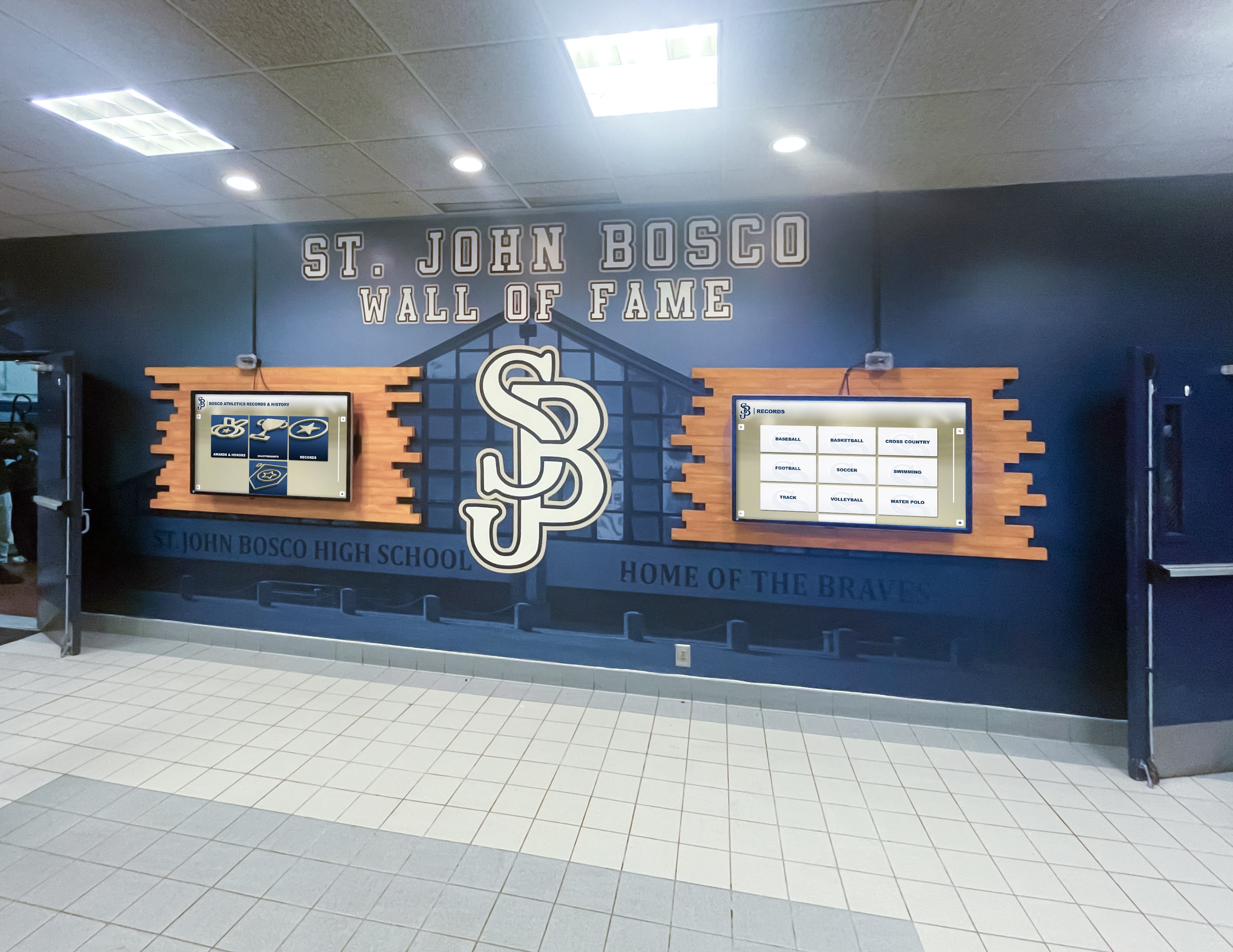
Dual digital screens integrated into hallway recognition walls blend permanent athletic history with real-time seasonal content
Creating Pep Rally Graphics Without a Dedicated Designer
Most schools do not have a full-time graphic designer on staff. The athletic director, activities coordinator, or a coach is typically the person who needs to produce rally graphics—often on a 24–48 hour turnaround before the event.
AI-powered design tools built specifically for school graphics have changed this calculus significantly. These platforms apply school colors, logos, and fonts automatically based on brand presets, eliminating the brand consistency problem that arises when multiple staff members create graphics independently over a season.
Practical capabilities available in current AI school graphics tools:
- Template libraries calibrated for rally-specific formats (tunnel posters, social graphics, lobby screen content)
- Brand preset systems that lock school colors and fonts so every graphic produced by any staff member matches institutional standards
- Photo treatment workflows that apply school color overlays to player photos automatically
- Batch generation for full-roster tunnel posters—produce 20 player posters in the same amount of time manual tools require to produce one
For schools managing graphics across athletics, student activities, donor recognition, and general communications, end-of-year banquet display recognition guides provide a useful model for how comprehensive visual recognition programs work across multiple event types—the same design infrastructure that produces rally graphics can produce banquet recognition materials, playoff bracket displays, and championship celebration content.
Beyond Rally Day: Year-Round School Spirit Graphics
Pep rally posters are part of a larger school spirit graphics ecosystem. Schools that invest in high-quality rally graphics but neglect year-round visual recognition create disconnected experiences—great energy on rally day, institutional silence the other 174 school days.
The programs with the strongest year-round spirit environments treat rally graphics as the high-visibility front end of a continuous recognition calendar:
- Season-opening graphics establishing team identity at the start of each fall, winter, and spring cycle
- Milestone recognition updating hallway and lobby displays when records fall, championships are won, or athletes earn post-season honors
- Senior recognition transitioning rally graphics into permanent archive displays when graduating athletes move on
- Alumni connection maintaining historical recognition infrastructure that makes former athletes feel their contributions are preserved
End-of-season banquet ideas offer a useful lens here: the graphics and recognition infrastructure a school builds for rallies can directly feed banquet displays, year-end ceremonies, and permanent hall of fame installations—making the investment compound rather than reset each season.
High school wall of fame installations represent the permanent end of the school spirit graphics spectrum—where rally-season recognition becomes permanent athletic archive. Connecting the two ends of that spectrum creates visual environments that feel continuous rather than event-dependent.
During playoff seasons, basketball state championship brackets and advancement graphics extend the rally poster tradition across multiple weeks—each win producing another round of updated graphics that keep the campus communicating competitive momentum.
Frequently Asked Questions About Pep Rally Posters
What size should pep rally posters be?
Individual player posters work best at 24"×36" or 18"×24" for close-range hallway display. Gymnasium banners and tunnel entrance signs should be at least 3’×6’, with 4’×8’ preferred for end walls and above-entrance placement. For crowd participation signs distributed to students, 11"×17" is the practical maximum for hand-held use.
How do you make pep rally posters without a graphic designer?
AI-powered school graphics platforms designed specifically for athletic communications allow non-designers to produce professional-quality rally posters using preset school colors, logos, and fonts. These tools include template libraries calibrated for common rally formats—tunnel posters, lobby screen graphics, social media content—and some offer batch generation for full-roster player poster sets.
What’s the best material for pep rally banners?
Polyester or fabric banner material is the best choice for large-format signs over 3’ in any dimension—it holds color vibrancy, resists tearing, and stores flat for reuse across multiple rallies and seasons. Foam board works well for individual player posters that will be displayed indoors for a week or less. Avoid paper-based materials for anything larger than 11"×17."
Can pep rally graphics be reused for digital displays?
Yes, with format adaptation. Rally graphics designed at 1920×1080 (landscape) work directly on most lobby and hallway screens. Print layouts designed for 24"×36" posters need to be adapted—not simply scaled—for digital display because the aspect ratios differ. AI design tools with both print and digital output capabilities handle this conversion automatically.
How far in advance should pep rally posters be designed?
Print production typically requires 3–5 business days for fabric banners and 1–2 days for foam board or paper prints ordered through local services. Digital display graphics can be designed and deployed same-day. Designing season-opening templates at the start of each athletic season—then updating them with current player photos and stats before each rally—significantly reduces per-event production time.
Building a School Spirit Visual Identity That Lasts Beyond Rally Day
The most effective pep rally posters are designed as part of a broader school spirit visual system—not as one-off productions assembled the night before each event. Schools that treat rally graphics as the high-energy front end of a year-round recognition calendar produce environments where students, athletes, and alumni feel the cumulative weight of that investment, not just a spike of energy on game day.
Start with templates that lock in school color and typography standards so every piece of rally content produced throughout the season feels coordinated. Build toward digital display integration so hallways and lobbies are working for you in the hours before each rally begins. And when the season ends, convert the best rally graphics into permanent recognition content that keeps athletic achievement visible in the building year-round.
For schools that want both AI-powered graphics tools for everyday rally and spirit content and the physical recognition infrastructure to preserve athletic legacy permanently, Rocket Alumni Solutions provides the complete platform—from design generation to touchscreen display systems that hold program history across decades.
Design Rally Graphics and Build Lasting Athletic Recognition
From AI-powered pep rally poster templates to touchscreen walls of fame that preserve every season's achievements, Rocket Alumni Solutions helps schools create visual environments that make athletes proud to compete—and fans proud to cheer.
Get notified when Rocket Graphics opens