Middle school spirit week is one of those rare events that can reach every student on campus—athletes and artists, eighth graders and sixth graders, the social butterflies and the kids who usually stay at the edges. Done well, a week of themed dress-up days, competitions, and community activities doesn’t just produce funny photos; it creates the kind of shared experience that students still talk about years after they’ve moved on to high school.
But poorly planned spirit weeks land flat. Generic themes that feel copied from every other school, activities with no stakes, or programs that quietly reward only the most visibly enthusiastic students can leave the majority of the student body feeling like passive observers. The difference between a spirit week that sticks and one that gets forgotten by the following Monday usually comes down to specific choices: the right themes for the middle school developmental stage, competitive structures that make participation meaningful, and intentional connection to the school’s broader identity.
This guide covers 25 middle school spirit week ideas across dress-up themes, competition formats, and school-wide events—along with practical guidance on translating a great spirit week into lasting school culture.
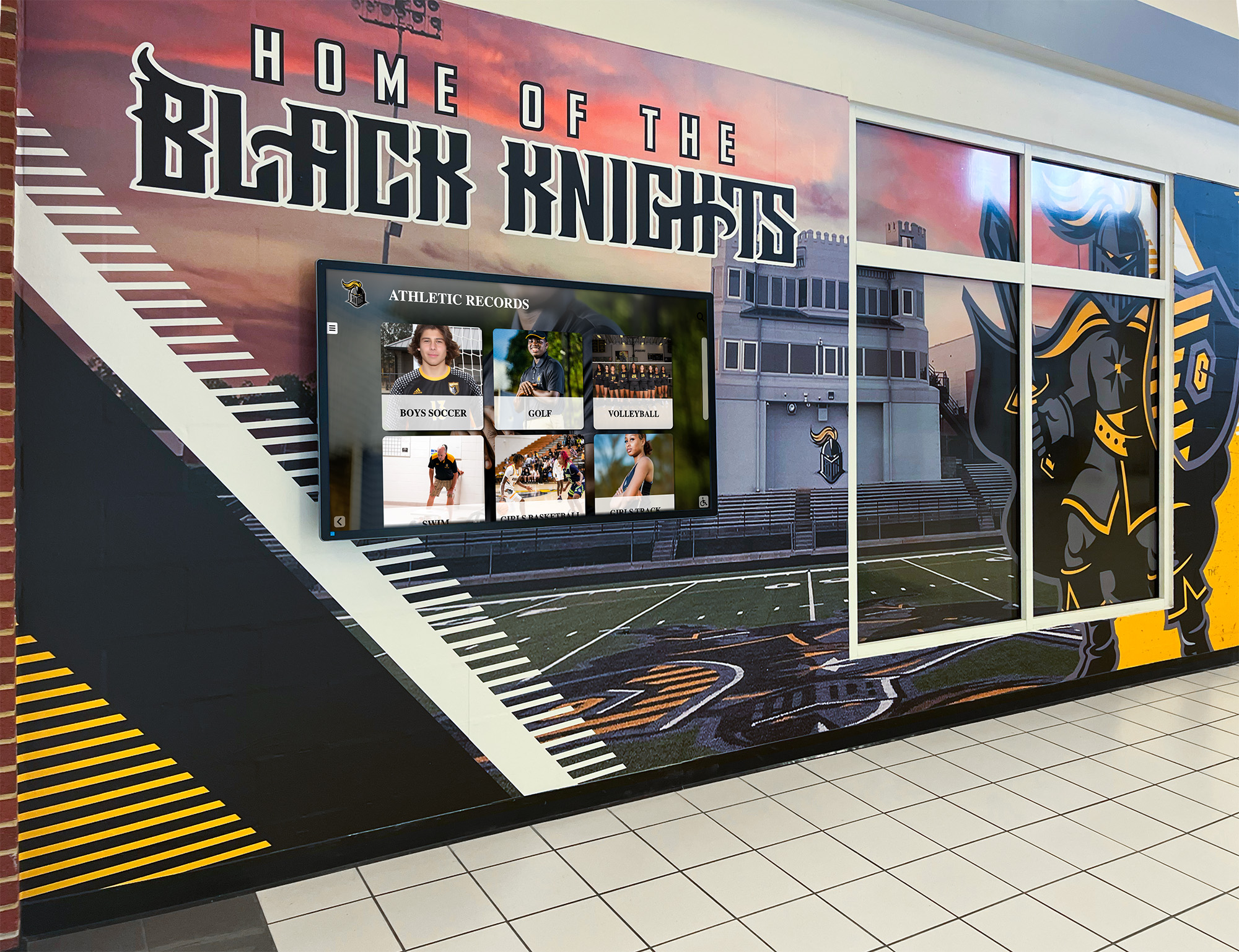
Hallway murals and recognition displays create the year-round visual identity that spirit week celebrates
Why Spirit Week Hits Differently in Middle School
The developmental window of ages 11–14 is arguably the most peer-sensitive period in a student’s life. According to research from the American Psychological Association, middle school students place dramatically higher importance on peer belonging than either younger or older students—and school-connected belonging is a measurable predictor of academic engagement and long-term outcomes.
Spirit week taps directly into that peer dynamic. When an entire grade shows up in matching colors, or when the pep rally crowd actually cheers, students experience collective identity in a way that classroom instruction alone rarely produces. The goal isn’t manufactured enthusiasm—it’s creating real moments of shared experience that attach positive emotional memory to the school itself.
For administrators planning spirit week programming, the school branding and visual identity principles that guide campus design year-round should also inform spirit week themes—consistency between what students see on the walls and what they celebrate during the week reinforces authentic school identity rather than feeling like a one-off performance.
Part 1: Dress-Up Day Themes (Ideas 1–10)
Dress-up days form the backbone of most spirit weeks because they require no equipment, no signup, and minimal planning from students—just a theme and the willingness to participate. The themes below work for sixth through eighth grade and are calibrated for middle school sensibilities: fun without feeling elementary, creative without requiring significant expense.
1. Decade Day
Students dress in the fashion of an assigned decade—1950s, 1970s, 1980s, or 1990s depending on grade level or class choice. Decade Day consistently produces the most visually diverse participation of any spirit week theme, since interpretations range from elaborate vintage outfits to a single accessory that nods to the era. Advisors can run Decade Day as a grade-level competition (each grade owns a different decade) or open all decades to all students.
2. Career Day
Students dress as the profession they want to pursue—doctor, engineer, chef, musician, filmmaker, or anything else they’re considering. Career Day opens conversation about future paths in an age-appropriate way, and the visual variety creates natural photography for the yearbook and social media. Many schools connect Career Day to advisory curriculum around personal goal-setting.
3. Twin Day
Pairs or small groups coordinate their outfits to match. Twin Day is reliable because it works through social relationships students already have—it gives students a concrete, low-stakes way to publicly claim friendship. For students who don’t have obvious twin partners, advisory teachers can facilitate pairing during homeroom. This theme naturally extends to “group” or “trio” day to include students in any size friend group.
4. Superhero Day
Students dress as existing superheroes or create their own original character. Superhero Day works especially well for schools using a character-education framework—students can declare a “superpower” that aligns with a school value, turning the costume day into a brief advisory discussion. The theme photographs well and tends to produce genuine creative effort even from students who don’t usually engage with dress-up events.
5. Character Day
Dress as any character from a book, film, television show, video game, or historical figure. The intentional breadth distinguishes this from narrower costume themes—a student can show up as a literary character from an English class reading and participate authentically alongside someone dressed as a game character. Schools can add a brief bracket element where classes vote for their favorite character and why.
6. School Colors Day
The simplest and most universally accessible dress-up day: wear the school’s colors. Effective School Colors Day builds on mascot and school identity design elements students already identify with. Schools can enhance participation by making matching gear available for purchase or loan from student government, ensuring cost isn’t a barrier to showing up.
7. Pajama Day
Students wear pajamas to school. The universal participation rate for Pajama Day consistently outperforms more elaborate theme days because the barrier to entry is essentially zero—every student owns pajamas. Scheduling this on a Friday maximizes both participation and the “Friday feel” of the school day.
8. Wacky/Mismatched Day
Students wear deliberately clashing patterns, mismatched colors, or absurd combinations. Mismatched Day rewards creativity but doesn’t require it—any combination of non-matching clothing qualifies. This theme tends to produce the most playful photography of any spirit week day and creates natural hallway conversation between students who wouldn’t otherwise interact.
9. Jersey Day
Wear any sports jersey—school team, professional, college, or recreational league. Jersey Day includes athletes who want to represent their school team, students who want to show professional sports allegiances, and students who borrow a sibling’s old little league shirt. The theme creates natural overlap with the athletic recognition culture that championship displays and record boards reinforce year-round.
10. Tropical/Hawaiian Day
Students dress in vacation-ready attire: Hawaiian shirts, shorts, sunglasses, and leis. Tropical Day provides an easy theme with broad participation appeal and creates a visual contrast with the usual school aesthetic that students find genuinely refreshing. It photographs brightly and works particularly well in the gray months of late winter or early spring when students need an energy shift.
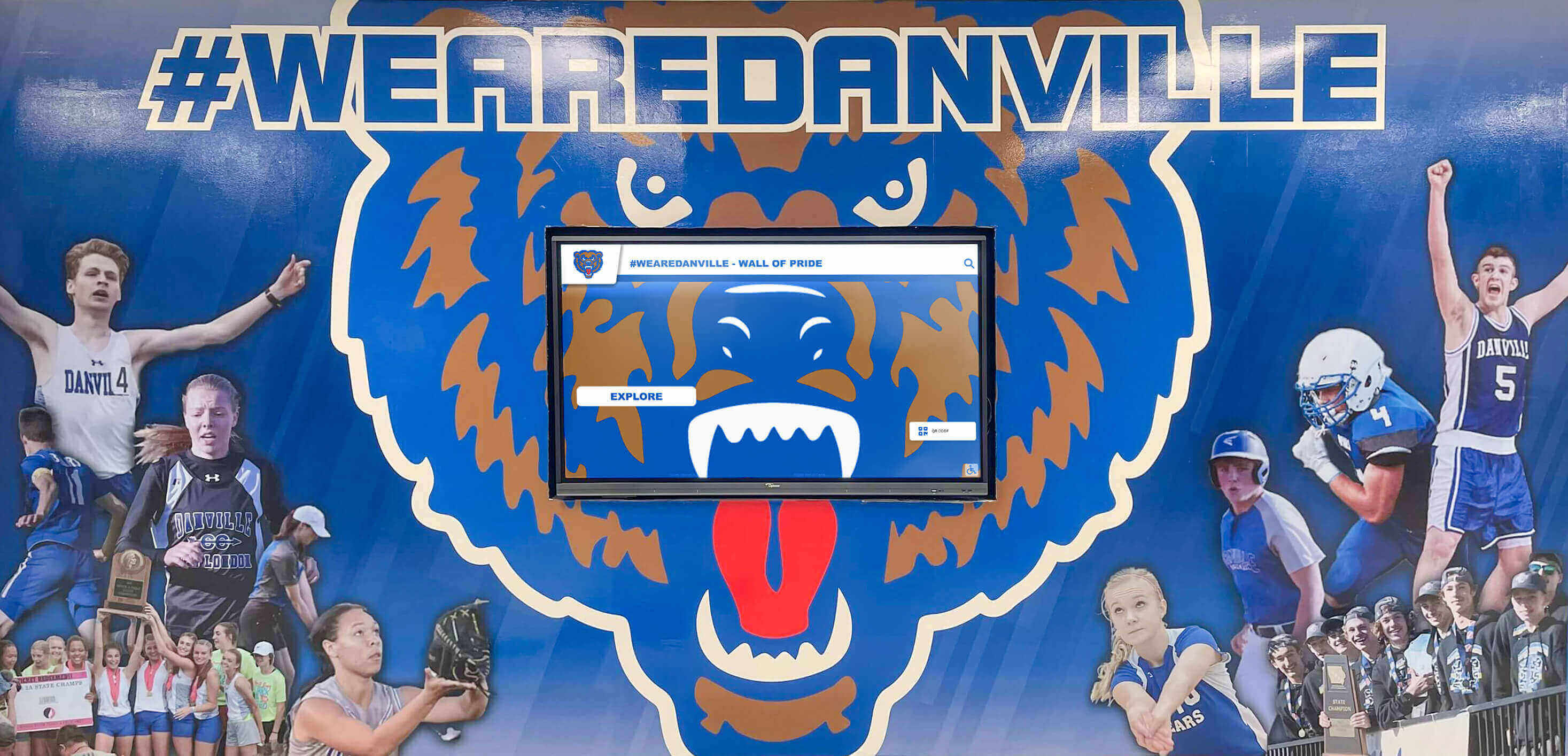
Mascot murals and digital screens create the visual environment that spirit week themes bring to life
Part 2: Competition Formats (Ideas 11–18)
The most memorable spirit weeks add stakes to participation. When grade levels, advisory classes, or teams compete for points across the week, individual participation decisions carry collective meaning—showing up in costume or cheering loudly becomes a contribution to something shared, not just a personal choice.
11. Color Wars / Grade-Level Competition
Assign each grade level a distinct color at the start of the week and track cumulative spirit points across all spirit week activities. Grade-level Color Wars is the most common framework for competitive spirit weeks because it uses the natural social divisions students already inhabit while creating genuine rivalry between groups. A physical scoreboard updated daily—or a digital display board that shows real-time standings—keeps energy high throughout the week and makes each day’s activities feel consequential.
12. Advisory Class Spirit Competition
Rather than grade-level teams, organize competition around advisory or homeroom classes. The smaller team size creates closer accountability—when 24 students are competing rather than 200, individual participation makes a more visible difference, and students feel the team dynamic more personally. Advisors often report higher investment in class competitions than grade-level ones for exactly this reason.
13. Hallway Decorating Contest
Each grade or advisory class decorates their hallway or classroom door according to the spirit week theme. Hallway decorating contests engage students who are more creative than competitive—the art club members, the students who care about design, the kids who want to contribute but don’t love loud cheering or athletic competition. Judging criteria should reward effort and creativity, not just resources, to ensure classes without large budgets can compete legitimately.
14. Lip Sync Battle
Classes or grade-level teams prepare and perform lip sync routines to music. Lip sync battles have become one of the most requested spirit week activities across grade levels because they combine performance, social bonding (practiced during rehearsal), and the school-wide moment of public performance. The preparation process itself generates school spirit even before the event—students talking about their routine, practicing at lunch, coordinating costumes for the performance.
15. Spirit Point Bracket
Run spirit week as a structured bracket tournament: each dress-up day generates points based on participation percentage, and events award additional points. Display the bracket publicly so students can see which grade or class leads heading into each new day. The bracket format creates narrative arc across the week—morning announcements can reference standings, teachers can reference the competition in advisory, and the final day carries accumulated stakes that feel genuine rather than manufactured.
16. Trivia Bowl / Spirit Quiz
Hold a school-knowledge trivia competition with questions about school history, mascot lore, record holders, championship seasons, and faculty facts. Academic competition creates an avenue for students who don’t shine in athletic or performance-based events to contribute meaningfully to their grade’s spirit total. Strong trivia programs also motivate students to actually learn institutional history—a benefit that outlasts the week itself.
17. Talent Showcase
An open-format talent show during lunch periods, with classes or advisory groups nominating participants. The talent showcase intentionally includes students who wouldn’t otherwise be visible during spirit week: musicians, dancers, comedians, spoken word performers, jugglers, and anyone else with a skill they’re willing to share. Unlike structured performances that require rehearsal time, a spirit week talent showcase can run on 3-5 minute slots submitted in advance with minimal prep.
18. Spirit Photo Challenge
A daily photo challenge with themed prompts—“show your school pride,” “capture your grade’s color,” “best twin photo”—shared through a school-monitored platform or displayed on hallway screens. The photo challenge generates spirit content throughout the day rather than only during designated events and creates visual documentation of spirit week that can be used in the yearbook, on digital displays, and in future spirit week promotion.
Part 3: School-Wide Events (Ideas 19–25)
Beyond individual dress-up days and classroom competitions, school-wide events give spirit week its biggest shared moments. These are the experiences students will specifically remember—and the ones that justify the planning investment.
19. Opening Assembly / Kickoff Pep Rally
Launch spirit week with a morning assembly that announces the week’s themes, introduces the competition format and scoring, and builds initial momentum. The opening assembly sets tone and expectations: students who understand the structure from day one participate more actively throughout the week. Schools with established athletic cultures can incorporate the pep rally game formats that have proven effective at middle and high school levels—structured activities keep large-group energy productive rather than chaotic.
20. Closing Championship Ceremony
End spirit week with a formal closing ceremony that announces competition winners, distributes recognition, and creates a shared endpoint for the week’s activities. The closing ceremony matters as much as the opening—it provides resolution and the feeling that the week meant something. Schools can use the ceremony to feature spirit week photography, recognize outstanding participation from across all grade levels, and transition naturally into end-of-year excitement.
21. Community Service Day
Incorporate a spirit week community service activity: a food drive with results announced at the closing ceremony, a school beautification project, or a card-writing initiative for local organizations. Service Day extends the spirit week energy into something tangible and lasting. Schools with strong community engagement programs find that connecting spirit week to service deepens student investment—participating in something meaningful together creates stronger bonds than participation in purely celebratory activities alone.
22. Faculty vs. Students Game
An afternoon athletic competition between teachers and students—basketball, volleyball, kickball, or dodgeball—draws reliable school-wide energy and gives students a context to see faculty members as people rather than institutional figures. Faculty participation is a critical variable: teachers who commit fully and bring genuine competitive spirit create the most memorable games. Schools can rotate which faculty team plays each year to keep the event fresh.
23. School History Hunt
A scavenger hunt using facts about the school’s history—founding date, notable alumni, championship years, long-tenured faculty, building history. The school history hunt creates engagement with institutional memory while functioning as a competition. Schools with digital displays that showcase school history can incorporate touchscreen kiosk clues that guide students to specific display content, turning the hunt into exploration of recognition infrastructure students walk past daily without noticing.
24. Class Chant Competition
Each grade or advisory class prepares an original chant or cheer performed at the closing ceremony. Chant competitions reward collective creativity and rehearsal investment rather than individual performance skill—every member of the class contributes to the result. Chants that connect to mascot identity, school history, or grade-specific experiences tend to get performed again at future events, extending the spirit week investment into ongoing school culture.
Connecting spirit week to visible recognition systems reinforces school pride beyond the event itself
25. Spirit Week Awards Recognition Display
After spirit week concludes, recognize the winners, outstanding participants, and memorable moments through a dedicated display—in the hallway, on the school’s digital signage system, or through a yearbook feature spread. This final step is where most schools leave value on the table: the energy of spirit week dissipates quickly, and without visible, lasting recognition, it becomes a pleasant memory rather than a culture-building event.
Schools that document spirit week winners on hallway recognition boards, feature winning photos on digital displays, and incorporate the event into their broader student achievement honor wall programs turn a week-long activity into a year-round cultural reference point. When sixth graders see photos of last year’s Color Wars champions in the hallway, they arrive at the next spirit week already invested in what it means to win.
Making Spirit Week Stick: Building Lasting School Culture
Spirit week works best when it’s part of a broader, intentional approach to school identity rather than an isolated event. The schools with the strongest spirit cultures aren’t the ones with the most elaborate single-week programming—they’re the ones that maintain visible recognition, pride infrastructure, and community connection year-round.
Recognition Infrastructure That Spans the Year
Physical and digital recognition systems create the visible context for spirit week. When students walk past a display case featuring their school’s athletic champions, a volunteer appreciation board recognizing staff and community members, or a hallway mural celebrating the school’s history, they receive daily reminders that this institution values excellence and community. Spirit week becomes a celebration of something that’s already present, not a one-week attempt to manufacture pride from nothing.
Family and Community Involvement
Spirit week energy extends beyond the student body when families are informed and invited to engage. Morning announcements sent home via email, theme details shared on the school’s social channels, and event invitations for the closing ceremony or faculty vs. students game create community moments rather than school-contained ones. Schools that host open house events around major school activities report stronger parent engagement throughout the year, not just during the event itself.
Documentation and Memory Preservation
The best spirit week investment also includes deliberate documentation: a designated photographer for each day, a social media archive or school-monitored photo platform, and a commitment to displaying spirit week content visibly after the week ends. Interactive digital announcement feeds can cycle through spirit week photos throughout the following weeks, keeping the energy visible and giving students repeated exposure to the shared experience they created together.
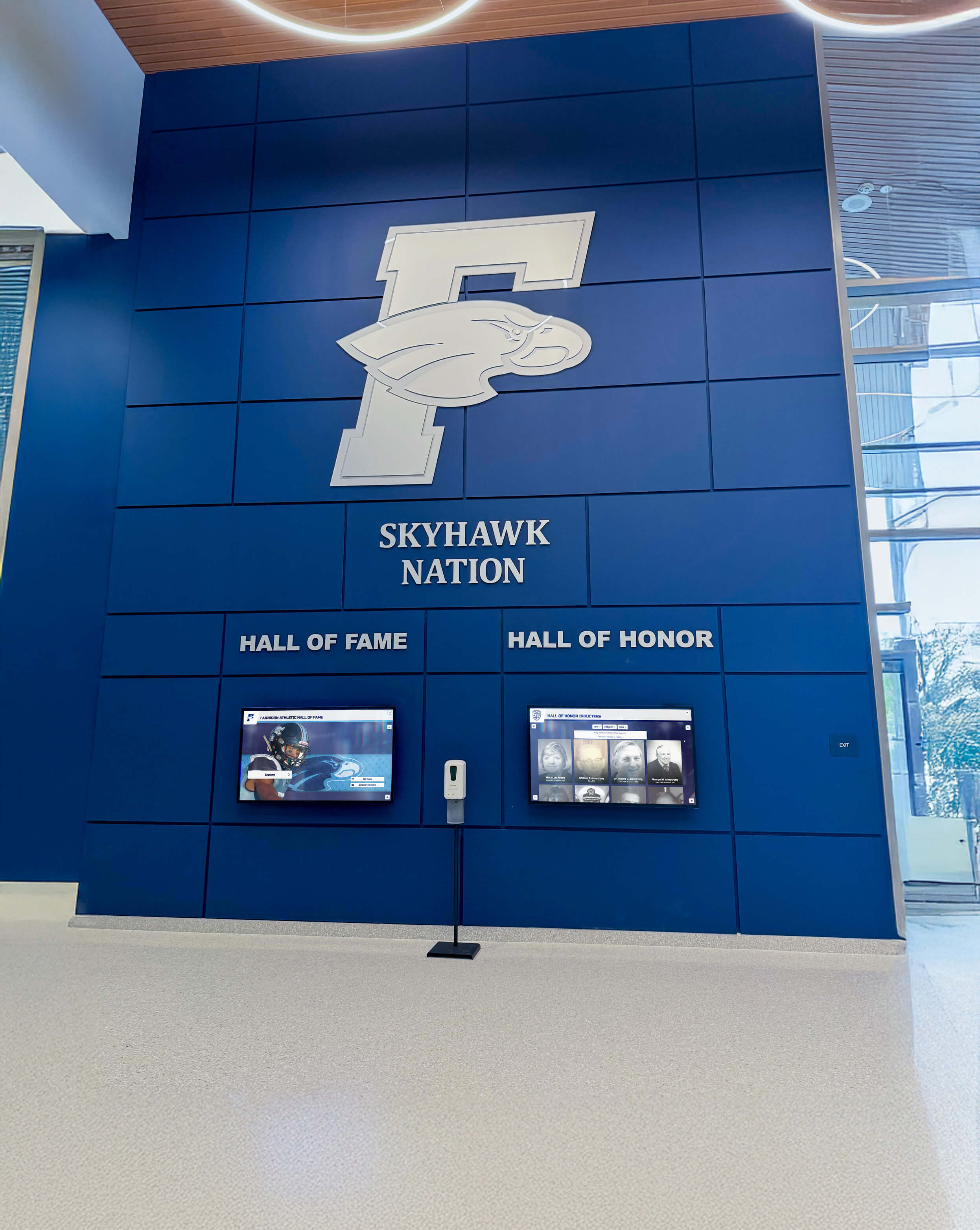
Permanent hall of fame displays give spirit week themes a year-round home in the school's visual identity
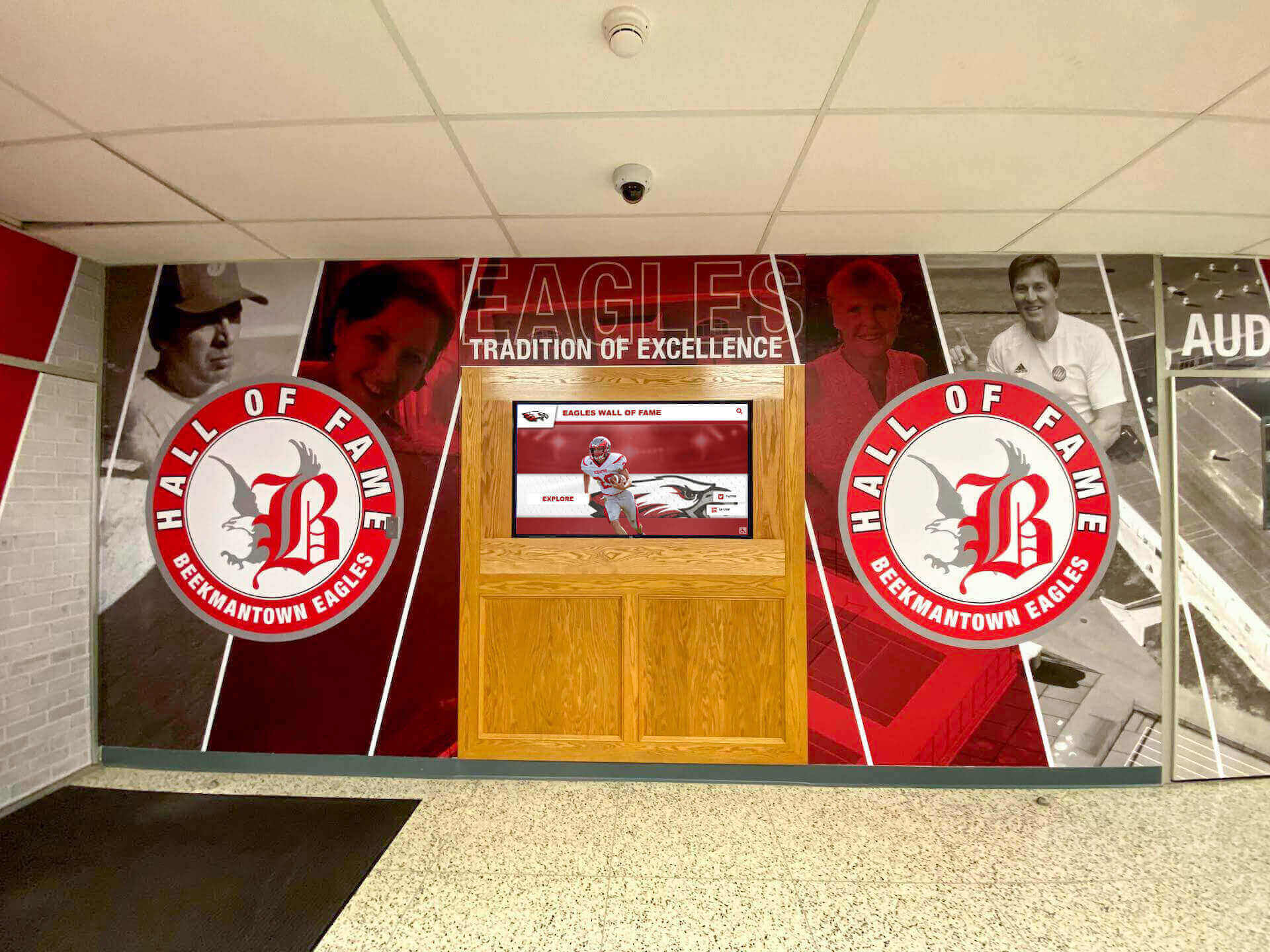
Hall of fame lobby installations give spirit week themes tangible, permanent form students interact with every day
Planning Timeline for Middle School Spirit Week
Effective spirit week requires more advance planning than most administrators initially estimate. A rough timeline:
6–8 weeks out: Student government or spirit committee selects themes, confirms activity logistics, and submits any budget requests for printing or supplies.
4 weeks out: Announce themes to students and families so costume planning has realistic lead time. Students who need to gather materials for Decade Day or Career Day need more than a week’s notice.
2 weeks out: Confirm faculty participation in games and events. Reserve gymnasium or assembly space. Prepare competition scoreboard or digital display infrastructure.
1 week out: Brief all advisory teachers on the competition format so they can build anticipation with their classes. Send home final reminders to families.
During the week: Update spirit point standings daily via announcements and visible display. Photograph every event. Maintain daily energy through morning announcements that reference standings and preview the day’s activities.
After the week: Display winners and highlights prominently. Submit spirit week photos for yearbook documentation. Debrief with student leaders to capture what worked and what to adjust next year.
Frequently Asked Questions About Middle School Spirit Week
What are the best spirit week themes for middle school?
The best middle school spirit week themes are accessible to all students regardless of budget, reflect the specific school’s identity and culture, and balance humor with genuine school pride. Dress-up days with broad interpretations—Wacky Day, Twin Day, Career Day—consistently achieve the highest participation rates. Grade-level Color Wars formats add competitive stakes that sustain energy across the full week. The most effective spirit weeks combine accessible individual themes with a competitive framework that gives participation collective meaning.
How do you increase student participation in spirit week?
Participation increases significantly when students understand the stakes from day one. Announce the full competition format at the opening assembly, display standings publicly throughout the week, and ensure recognition at the closing ceremony. Theme variety also matters—offering a range across the week means different days appeal to different students. Practical accessibility is critical: themes that require spending money or specialized items reduce participation among students who can’t or won’t make that investment.
How long should a middle school spirit week last?
Five days (Monday through Friday) is the standard and optimal length for most schools. A shorter duration doesn’t build sufficient momentum; extending beyond a week typically produces participation fatigue. Structuring the week with an opening event Monday morning and a closing ceremony Friday afternoon creates a complete arc. If logistical constraints limit the week, a three-day compressed format (Wednesday through Friday) can still produce meaningful community experience.
How do you connect spirit week to lasting school culture?
Spirit week connects to lasting school culture when it’s integrated with existing recognition infrastructure, documented visibly after it ends, and referenced explicitly in future school communications. Schools with active hall of fame displays, digital recognition boards, and strong yearbook programs have natural infrastructure for extending spirit week memory. When sixth graders see photos of last year’s spirit week winners before they’ve experienced the event themselves, they arrive motivated rather than indifferent.
What makes a spirit week competition fair for all grades?
Fair competition accounts for grade size differences by measuring participation as a percentage rather than total count (what portion of each grade showed up in costume vs. raw headcount). It distributes point opportunities across both performance-based activities (where larger grades may have advantages) and creative/knowledge-based activities that reward different strengths. Transparent scoring, announced daily, ensures students trust the system and feel their participation actually registers in the outcome.
From One Week to Year-Round Pride
A great spirit week creates energy that doesn’t have to end on Friday. Schools that use the week as a launchpad—documenting it well, recognizing winners publicly, displaying photos throughout the following months, and referencing the event in future school communications—transform a single event into a recurring anchor of school identity.
The 25 middle school spirit week ideas in this guide are starting points. The schools with the strongest spirit cultures combine great theme programming with the visual recognition infrastructure that makes pride visible every day: hallway murals, digital display boards, hall of fame installations, and championship recognition systems that remind students daily what it means to be part of this school.
Ready to extend your school’s spirit week recognition into a year-round campus experience? Rocket Alumni Solutions builds custom digital displays, hall of fame installations, and interactive recognition systems that keep school pride visible long after the costumes go back in the closet.