JROTC ranks are more than titles and collar insignia—they mark a student’s growth in leadership, discipline, and personal accountability over their high school career. Junior Reserve Officers’ Training Corps programs across the United States use structured cadet rank systems that mirror each military branch’s real hierarchy, giving students concrete milestones to work toward from their first day in uniform to the day they graduate as program leaders. Whether you’re a new cadet trying to understand your first chevron, an instructor looking for a clear reference, or a school administrator planning a promotion ceremony, this complete guide breaks down every rank tier, what the insignia look like, how promotions are earned, and how schools can celebrate cadet achievement publicly.
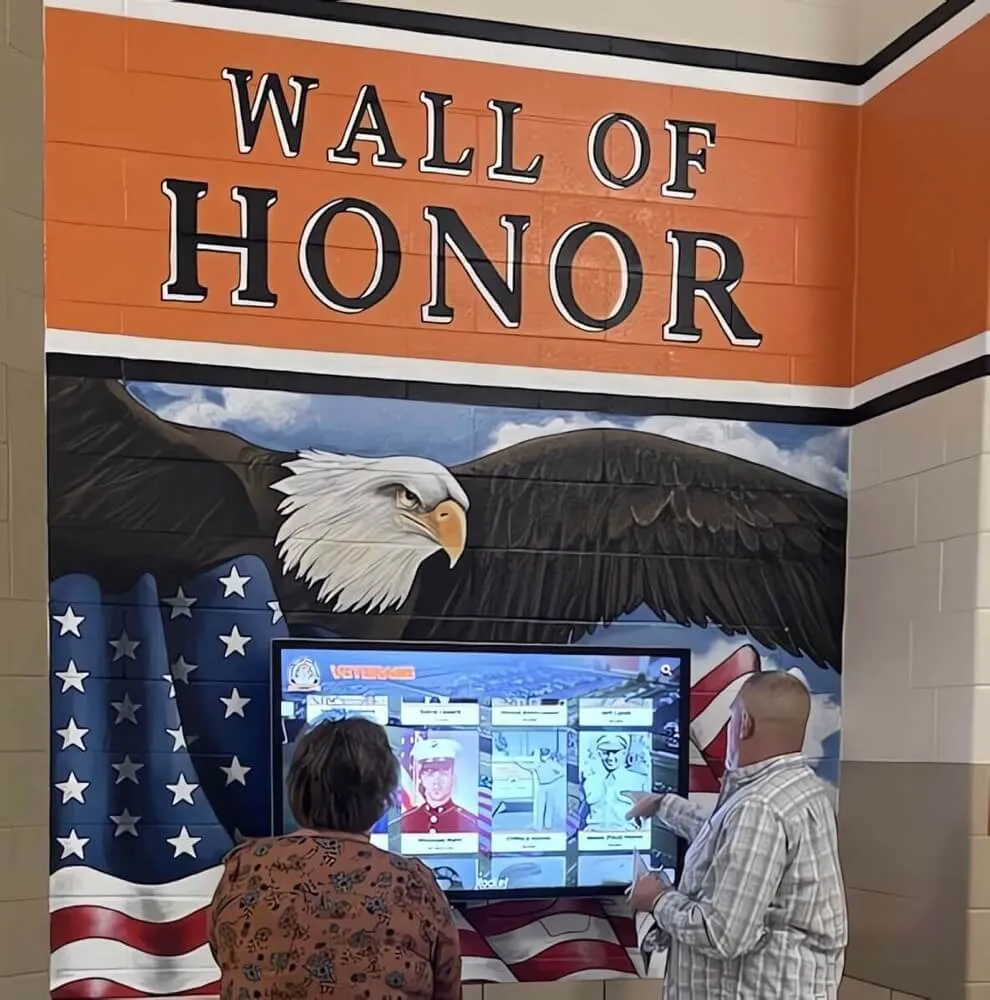
Schools with JROTC programs use recognition walls and interactive displays to honor cadet achievement alongside veteran service
What Is JROTC and Why Do Ranks Matter?
The Junior Reserve Officers’ Training Corps is a federal program operated by each branch of the U.S. military in partnership with high schools across the country. According to the U.S. Army Cadet Command, there are more than 3,400 Army JROTC programs alone serving approximately 280,000 students annually. The Air Force, Navy, Marine Corps, and Coast Guard together operate several hundred additional programs.
JROTC’s mission, as codified in 10 U.S. Code § 2031, is to “instill in students in United States secondary educational institutions the values of citizenship, service to the United States, and personal responsibility and a sense of accomplishment.” Ranks serve as the operational framework for that mission—they create a visible, merit-based leadership ladder that motivates cadets, structures the battalion or unit, and makes achievement legible to peers, parents, and the broader school community.
Unlike purely academic honors, JROTC ranks are earned through a combination of performance, attendance, drill proficiency, academic standing, and demonstrated leadership. A cadet can reach the highest enlisted cadet grade without ever commissioning into actual military service. The ranks teach organizational structure and earned authority long before cadets encounter those dynamics in college or careers.
How JROTC Rank Systems Are Organized
Each branch of the military operates its own JROTC program with its own rank structure, insignia style, and promotion criteria. All five programs share three broad tiers:
- Cadet Enlisted Ranks — The foundation of any program. Most incoming freshmen start here, and the majority of cadets spend their entire JROTC career progressing through enlisted grades.
- Cadet Non-Commissioned Officer (NCO) Ranks — Mid-tier leadership grades with responsibility for training and guiding junior cadets. NCO insignia in every branch feature variations on chevrons and rockers (arcs).
- Cadet Officer Ranks — The senior leadership tier, typically held by junior and senior cadets in battalion commander, company commander, or staff officer roles. Officer insignia use bars, leaves, and eagles rather than chevrons.
The Army JROTC program is the largest and most widely represented at U.S. high schools, so its rank structure serves as the benchmark for most discussions. The Air Force, Navy, Marine Corps, and Coast Guard programs follow the same three-tier logic but use branch-specific insignia and terminology.
Army JROTC Ranks Chart
Army JROTC (AROTC) cadet ranks mirror U.S. Army active-duty ranks but carry the prefix “Cadet” and use grade designations such as C-1 through C-7 for enlisted and WO1 through O-6 for the officer tier. The insignia worn on the collar or shoulder closely resemble their active-duty counterparts.
Army JROTC Enlisted Cadet Ranks
| Rank | Abbreviation | Insignia Description | Notes |
|---|---|---|---|
| Cadet Private | C-PVT | No collar insignia | Entry-level rank for new cadets |
| Cadet Private First Class | C-PFC | One chevron (point up) | First promotion, typically after completing basic requirements |
| Cadet Corporal | C-CPL | Two chevrons | Junior NCO; may lead small cadet groups |
| Cadet Sergeant | C-SGT | Three chevrons | Squad-level leadership begins here |
| Cadet Staff Sergeant | C-SSG | Three chevrons with one rocker | Typically leads a squad or serves as assistant platoon leader |
| Cadet Sergeant First Class | C-SFC | Three chevrons with two rockers | Platoon sergeant equivalent in battalion structure |
| Cadet Master Sergeant | C-MSG | Three chevrons with three rockers | Senior enlisted specialist or battalion staff role |
| Cadet First Sergeant | C-1SG | Three chevrons, three rockers, and a diamond | Highest company-level enlisted position |
| Cadet Sergeant Major | C-SGM | Three chevrons, three rockers, and a star | Battalion-level enlisted adviser |
| Cadet Command Sergeant Major | C-CSM | Three chevrons, three rockers, and two stars | Senior enlisted cadet for large or brigade-level units |
Army JROTC Officer Cadet Ranks
| Rank | Abbreviation | Insignia Description | Typical Role |
|---|---|---|---|
| Cadet Second Lieutenant | C-2LT | One gold bar | Platoon leader; first commissioned rank |
| Cadet First Lieutenant | C-1LT | One silver bar | Executive officer or company XO role |
| Cadet Captain | C-CPT | Two silver bars (railroad tracks) | Company commander |
| Cadet Major | C-MAJ | Gold oak leaf | Battalion staff officer (operations, logistics) |
| Cadet Lieutenant Colonel | C-LTC | Silver oak leaf | Battalion executive officer |
| Cadet Colonel | C-COL | Silver eagle | Battalion commander; highest rank in most programs |
Some larger programs or brigade-level competitions recognize a Cadet Brigadier General (one silver star), but this grade is rare in standard school-level programs and is typically awarded in special regional or national contexts.
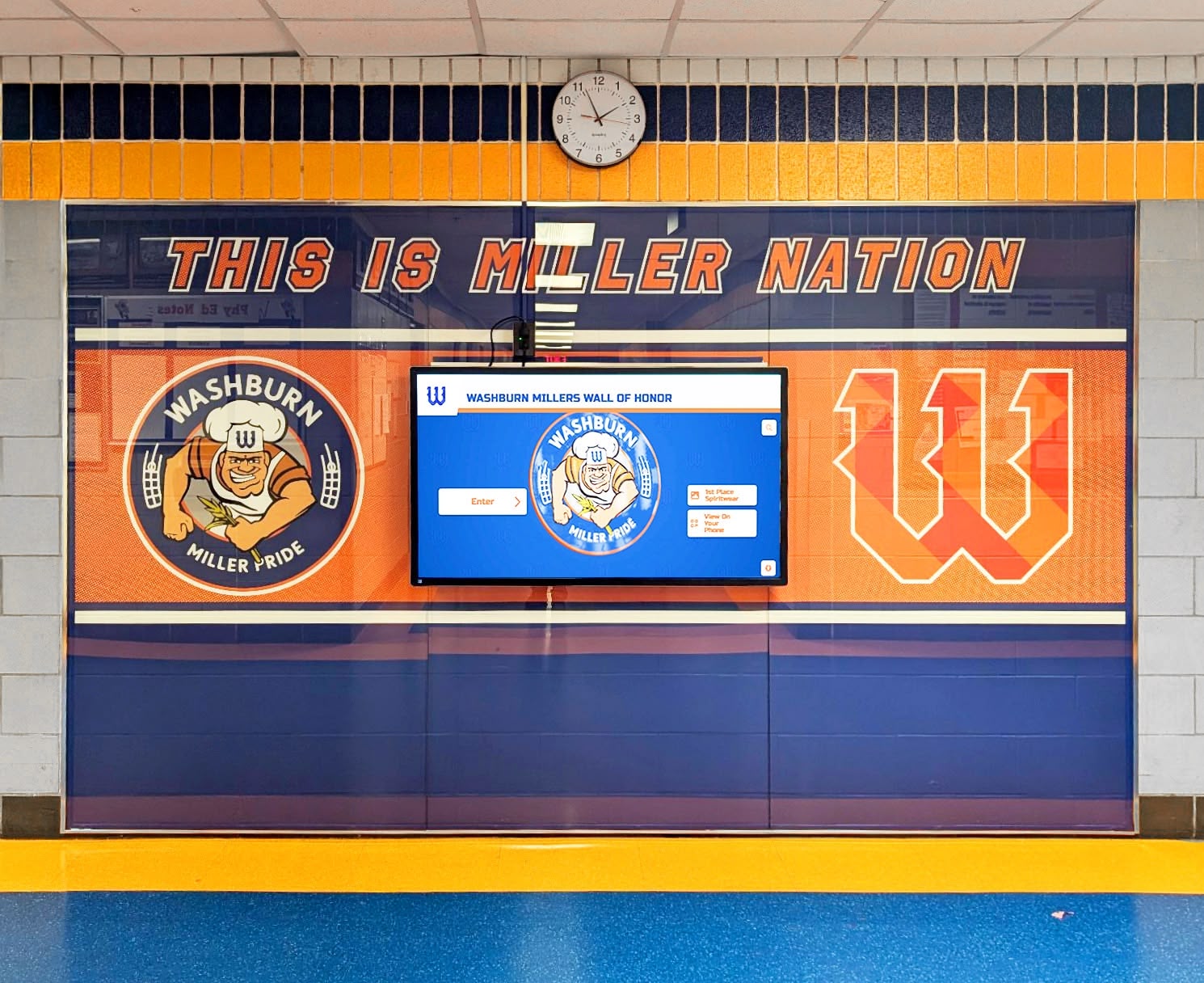
Physical and digital walls of honor give JROTC programs a permanent space to showcase promotion milestones and service achievements
Air Force JROTC Ranks Chart
Air Force JROTC (AFJROTC) programs, administered by the Air Force Junior ROTC directorate, use a rank system that parallels the U.S. Air Force enlisted and officer grades. AFJROTC insignia differ visually from Army JROTC — Air Force enlisted grades use horizontal chevrons (pointing toward the wearer’s chin) and curved rockers, compared to the Army’s downward-pointing chevrons.
AFJROTC Cadet Enlisted Grades
| Rank | Insignia Description | Notes |
|---|---|---|
| Cadet Airman Basic | No insignia | Entry grade upon enrollment |
| Cadet Airman | One stripe | First promotion after completing initial requirements |
| Cadet Airman First Class | Two stripes | Demonstrates consistent performance and attendance |
| Cadet Senior Airman | Three stripes | Eligible to serve as a training guide for juniors |
| Cadet Staff Sergeant | Three chevrons | NCO tier begins; responsible for flight-level duties |
| Cadet Technical Sergeant | Three chevrons with two rockers | Senior NCO advising flight or squadron |
| Cadet Master Sergeant | Three chevrons with three rockers | Group-level enlisted staff |
| Cadet Senior Master Sergeant | Three chevrons with four rockers and a star | Senior enlisted specialist |
| Cadet Chief Master Sergeant | Three chevrons with five rockers and a star | Wing-level senior enlisted adviser |
AFJROTC Cadet Officer Grades
AFJROTC officer grades use the same bar, oak leaf, and eagle insignia as Army JROTC but with the Air Force’s organizational titles:
- Cadet Second Lieutenant — One gold bar; flight commander
- Cadet First Lieutenant — One silver bar; deputy flight commander or staff officer
- Cadet Captain — Two silver bars; squadron commander
- Cadet Major — Gold oak leaf; group staff officer
- Cadet Lieutenant Colonel — Silver oak leaf; wing deputy commander
- Cadet Colonel — Silver eagle; wing commander (highest standard grade)
Navy JROTC Ranks Chart
Navy JROTC (NJROTC) programs use a separate rank structure that reflects the U.S. Navy’s rating system. At the enlisted level, Navy cadet ranks use the term “Seaman” for junior grades and “Petty Officer” for NCO-equivalent grades. Insignia include rating badges sewn or pinned to the uniform sleeve rather than collar devices.
NJROTC Cadet Enlisted Ratings
| Rank | Insignia Notes | Unit Role |
|---|---|---|
| Cadet Seaman Recruit | No rating badge | Entry level |
| Cadet Seaman Apprentice | Two diagonal stripes (white) | Basic skills demonstrated |
| Cadet Seaman | Three diagonal stripes | Squad or section member |
| Cadet Petty Officer Third Class | Eagle, one chevron, rating specialty badge | Junior NCO; section leader |
| Cadet Petty Officer Second Class | Eagle, two chevrons, specialty badge | Division-level NCO |
| Cadet Petty Officer First Class | Eagle, three chevrons, specialty badge | Senior division NCO |
| Cadet Chief Petty Officer | Fouled anchor device; combination cover | Senior enlisted adviser for company or ship |
| Cadet Senior Chief Petty Officer | Fouled anchor with one star | Battalion-level enlisted |
| Cadet Master Chief Petty Officer | Fouled anchor with two stars | Highest enlisted cadet grade |
NJROTC Cadet Officer Grades
Navy JROTC officer cadets use titles that mirror the U.S. Navy commissioned officer structure:
- Cadet Ensign — One gold bar (equivalent to 2LT)
- Cadet Lieutenant Junior Grade — One silver bar with one gold stripe
- Cadet Lieutenant — Two silver bars
- Cadet Lieutenant Commander — Gold oak leaf
- Cadet Commander — Silver oak leaf
- Cadet Captain — Silver eagle (Navy O-6 equivalent; highest standard grade)
Marine Corps JROTC Ranks Chart
Marine Corps JROTC (MCJROTC) programs use rank structures and insignia that closely parallel the U.S. Marine Corps enlisted and officer grades. The Marine Corps program is known for its especially rigorous physical and drill standards, which factor heavily into promotion criteria.
MCJROTC Cadet Enlisted Ranks
| Rank | Abbreviation | Insignia Description |
|---|---|---|
| Cadet Private | C-Pvt | No insignia |
| Cadet Private First Class | C-PFC | One chevron with crossed rifles |
| Cadet Lance Corporal | C-LCpl | One chevron with crossed rifles and arc |
| Cadet Corporal | C-Cpl | Two chevrons with crossed rifles |
| Cadet Sergeant | C-Sgt | Three chevrons with crossed rifles |
| Cadet Staff Sergeant | C-SSgt | Three chevrons, crossed rifles, one rocker |
| Cadet Gunnery Sergeant | C-GySgt | Three chevrons, crossed rifles, two rockers |
| Cadet Master Sergeant | C-MSgt | Three chevrons, crossed rifles, three rockers |
| Cadet First Sergeant | C-1stSgt | Three chevrons, diamond, three rockers |
| Cadet Sergeant Major | C-SgtMaj | Three chevrons, star, three rockers |
Marine Corps officer cadet grades follow the same bar, oak leaf, and eagle pattern seen across all branches:
- Cadet Second Lieutenant — Gold bar
- Cadet First Lieutenant — Silver bar
- Cadet Captain — Two silver bars
- Cadet Major — Gold oak leaf
- Cadet Lieutenant Colonel — Silver oak leaf
- Cadet Colonel — Silver eagle
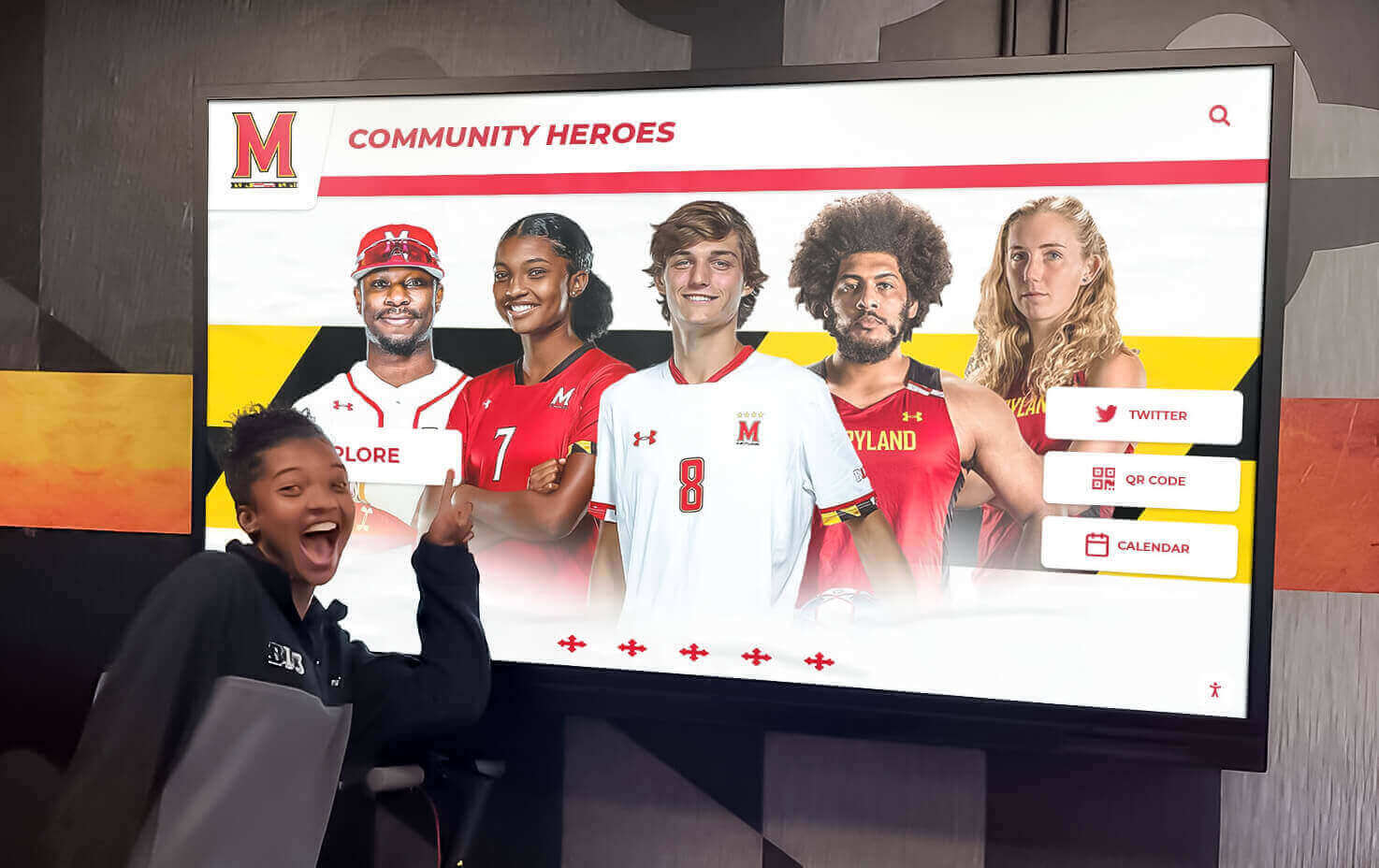
JROTC cadets are natural fits for community heroes recognition programs that celebrate student leadership alongside veteran service
How JROTC Promotions Work
Understanding what drives promotion decisions helps cadets plan their advancement and helps schools structure meaningful recognition ceremonies.
Army JROTC Promotion Criteria
Army JROTC promotion recommendations are governed by the Army JROTC Regulation 145-2. Unit instructors and cadet leaders evaluate promotion candidates on several criteria:
Performance Indicators
- Attendance and punctuality at JROTC classes and formations
- Drill and ceremonies proficiency scores
- Physical fitness scores on the Army Physical Fitness Test or Cadet Challenge
- Academic standing in school (minimum GPA requirements vary by unit)
- Conduct and adherence to the Cadet Code of Conduct
- Community service hours and extracurricular JROTC participation (drill team, color guard, Raider team)
- Time in grade at current rank
Promotion Board Process Most Army JROTC programs hold formal promotion boards where cadets appear before a panel of senior cadet officers and NCOs, answer questions on JROTC history and customs, demonstrate knowledge of their current rank’s responsibilities, and receive recommendations for advancement. This mirrors the structure of actual Army promotion boards and gives cadets practice in professional evaluations long before they face similar processes in careers or higher education.
Air Force JROTC Promotion Criteria
AFJROTC promotions are governed by the Air Force JROTC program guide and administered by the Senior Aerospace Science Instructor (SASI). Key factors include:
- Aerospace Education curriculum completion and test scores
- Leadership and Education Training (LET) course performance
- Participation in wing-level activities (honor guard, drill team, orienteering)
- Character and attitude evaluations from instructor staff
- Time in grade and time in service at the unit
Navy JROTC Promotion Standards
NJROTC promotion is based on the Naval Science curriculum, proficiency in seamanship and naval customs, physical fitness scores, and demonstrated leadership during unit operations. Academic standing in the overall school transcript is weighted prominently in most NJROTC programs.
Marine Corps JROTC Promotion Factors
MCJROTC programs are known for high physical standards. Promotion candidates are typically evaluated on Marine Corps physical fitness standards adapted for high school cadets, drill precision, leadership under stress during field exercises, and academic performance.
Reading JROTC Insignia: What Each Symbol Means
Understanding what the individual design elements on insignia signify helps cadets and observers interpret what they see on a uniform.
Chevrons — V-shaped stripes pointing upward on the collar or sleeve. The number of chevrons (one, two, or three) indicates the tier of NCO advancement within the enlisted grades. Three chevrons is the maximum; additional rank is shown by rockers below.
Rockers — Curved arcs worn below the chevrons. Each rocker represents an additional level of seniority above the three-chevron base. One rocker equals Staff Sergeant, two equals Sergeant First Class or Technical Sergeant, and three equals Master Sergeant across most branches.
Specialty Devices — Diamonds, stars, and wreaths placed between or around chevrons and rockers distinguish the most senior enlisted grades. A diamond indicates a first sergeant (company-level top enlisted); a star indicates sergeant major (battalion-level).
Bars — Rectangular devices worn on collars or shoulder loops for officer grades. Gold bars indicate the most junior commissioned officers; silver bars are worn one grade above. Two silver bars side by side (“railroad tracks”) indicate the captain grade.
Oak Leaves — Field grade insignia for major (gold leaf) and lieutenant colonel (silver leaf). Worn in place of bars at the battalion staff level.
Eagles — The colonel’s insignia, worn by the most senior cadet leader in most programs. The eagle faces toward the wearer’s right (the eagle’s own left in heraldic tradition, called “dexter”).
Stars — General officer insignia, rarely used in standard high school JROTC programs but occasionally awarded in regional or national competition contexts.
Comparing JROTC Ranks Across Branches
| Pay Grade Equivalent | Army JROTC | Air Force JROTC | Navy JROTC | Marine Corps JROTC |
|---|---|---|---|---|
| E-1 (Entry) | Cadet Private | Cadet Airman Basic | Cadet Seaman Recruit | Cadet Private |
| E-2 | Cadet Private First Class | Cadet Airman | Cadet Seaman Apprentice | Cadet Private First Class |
| E-3 | Cadet Corporal | Cadet Airman First Class | Cadet Seaman | Cadet Lance Corporal |
| E-4 | Cadet Sergeant | Cadet Senior Airman | Cadet Petty Officer Third Class | Cadet Corporal |
| E-5 | Cadet Staff Sergeant | Cadet Staff Sergeant | Cadet Petty Officer Second Class | Cadet Sergeant |
| E-6 | Cadet Sergeant First Class | Cadet Technical Sergeant | Cadet Petty Officer First Class | Cadet Staff Sergeant |
| E-7 | Cadet Master Sergeant | Cadet Master Sergeant | Cadet Chief Petty Officer | Cadet Gunnery Sergeant |
| O-1 | Cadet Second Lieutenant | Cadet Second Lieutenant | Cadet Ensign | Cadet Second Lieutenant |
| O-3 | Cadet Captain | Cadet Captain | Cadet Lieutenant | Cadet Captain |
| O-6 (Top) | Cadet Colonel | Cadet Colonel | Cadet Captain (Navy) | Cadet Colonel |
Promotion Ceremonies and Public Recognition
Promotion ceremonies are among the most meaningful traditions in any JROTC program. When a cadet receives a new rank, the ceremony typically involves the unit forming in ranks, an officer reading the promotion orders, and a sponsor — often a parent, sibling, or respected cadet leader — pinning the new insignia. This mirrors the tradition in active military service where loved ones participate in pinning ceremonies.
These moments deserve public recognition beyond the event itself. Schools with strong JROTC programs often incorporate cadet achievement into their broader recognition culture through several channels.
Recognition Walls and Displays
Many schools dedicate hallway or lobby space to JROTC achievement, featuring:
- Portrait boards showing cadet officers and their rank insignia
- Promotion milestone displays tracking senior cadets through their four-year journey
- Award displays for national-level recognition like the Distinguished Cadet Medal or Presidential Service Award
- Color photographs of promotion ceremonies that capture the family and community dimension
Schools that invest in alumni wall ideas and digital recognition displays for their halls find that JROTC content resonates powerfully — the visual hierarchy of ranks, the portraits in uniform, and the ceremony photography all tell compelling stories that visitors connect with immediately.
Schools building out student leadership award programs often find that JROTC ranks provide a ready-made, credible framework for recognizing leadership that extends naturally into broader school award structures.
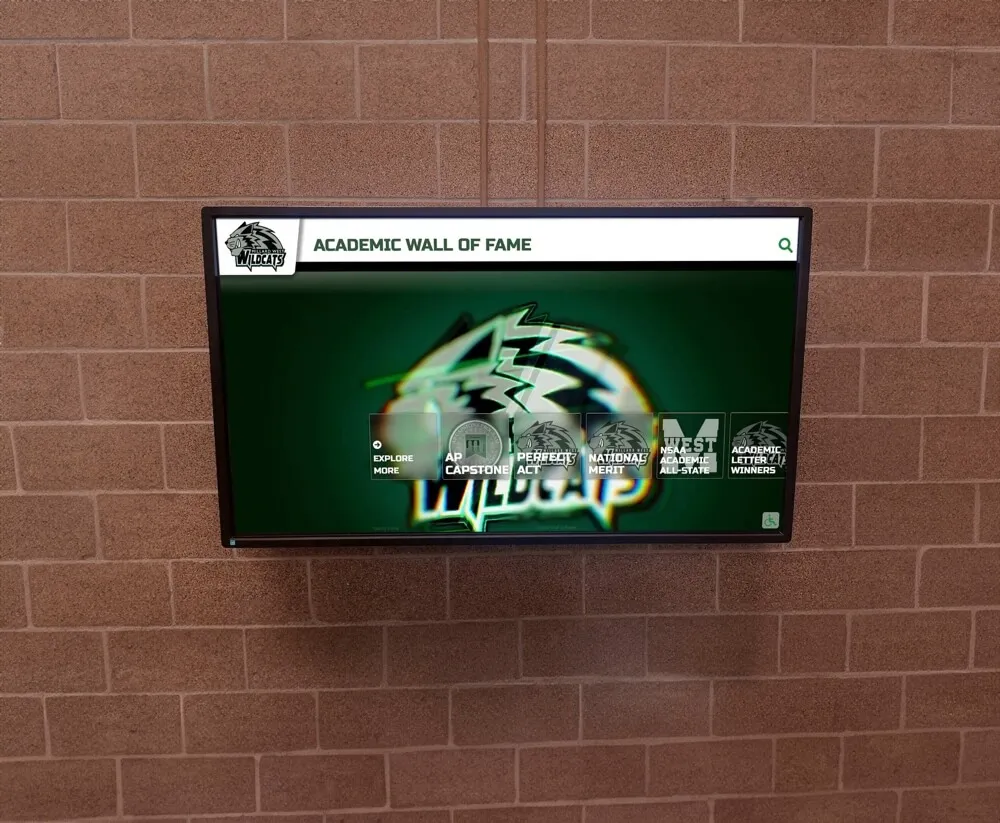
Recognition walls that combine academic achievement with program milestones like JROTC promotion create a comprehensive portrait of student success
Honoring Veterans Who Mentor the Program
Most JROTC programs are led by retired military officers or NCOs serving as Senior Army Instructors (SAIs), SASIs, or equivalent roles depending on branch. These veteran instructors bring real-world experience to every rank discussion and every promotion ceremony. Schools looking for meaningful ways to honor those connections should consider building inclusive digital recognition programs that celebrate both active cadets and the veterans who mentor them.
Preservation of program history through museum kiosk and historical archive solutions — including retired uniforms, historical photographs, and unit flags — gives JROTC programs tangible connections to the broader military tradition they represent.
Year-End and Promotion Season Recognition
The end of the academic year is the traditional peak of JROTC recognition, with annual reviews, awards presentations, and graduation ceremonies for senior cadets. Schools that build digital award display systems find that including JROTC ranks, awards, and promotion records creates a richer picture of student achievement that complements athletic and academic honors.
Academic achievement display ideas that incorporate JROTC cadet colonel portraits alongside other senior leaders send a powerful message about the program’s prestige within the school community.
JROTC Awards and Decorations
Beyond rank insignia, JROTC cadets earn ribbons, medals, and special awards that represent specific achievements. These awards appear on the cadet’s dress uniform in a miniature ribbon rack, similar to the decoration systems used in active military service.
Common JROTC Awards (Army)
- Academic Achievement Award — Recognizes outstanding academic performance in school courses
- Distinguished Cadet Medal — Awarded by the JROTC program to outstanding graduating cadets
- Cadet of the Month/Quarter/Year — Unit-level recognition for exemplary performance
- JROTC Service Ribbon — Awarded for each year of JROTC enrollment
- Drill Team Ribbon — For participation on the exhibition or regulation drill team
- Color Guard Ribbon — For service on the unit’s color guard
- JROTC Raider Team Ribbon — For participation in military obstacle and team events
- Community Service Ribbon — For completing required community service hours
- SAI Award — A discretionary award from the Senior Army Instructor for exceptional service
Air Force, Navy, and Marine Corps programs use parallel decoration systems, with branch-specific ribbon designs and award names.
National-Level Recognition
The most prestigious JROTC recognition comes from national and government organizations:
- Presidential Volunteer Service Award — Earned through significant community service hours verified by the program; awarded at bronze, silver, and gold levels
- DAR Award (Daughters of the American Revolution) — Presented to one cadet per unit for outstanding citizenship, honor, service, and courage
- American Legion Awards — Vary by post; typically recognize scholarship, service, and leadership
- VFW Awards — Veterans of Foreign Wars posts present awards to outstanding JROTC cadets in many communities
- Superintendent’s Award — Highest honor some units present to a graduating senior
How Graphic Design Plays a Role in JROTC Recognition
JROTC promotion ceremonies, awards presentations, and annual reviews generate significant design content — programs, certificates, banners, rank charts, and promotional materials for public events. Schools that invest in high-quality graphics for these materials elevate the perceived importance of the program within the school community.
Certificate design for rank promotions should clearly show the cadet’s full name, the rank being conferred, the date, and the authorizing signature. Annual review programs that feature a clean, professional JROTC ranks chart with accurate insignia drawings give community members a clear visual reference during ceremonies.
School lobby design and recognition displays that feature JROTC cadet officer portraits at the start of a new school year establish program pride from day one and introduce new students to what JROTC advancement looks like.
Schools looking to create academic awards and recognition category displays for JROTC programs can arrange portrait groups by rank tier — showing the battalion commander at the center, company commanders flanking, and platoon leaders arrayed around them. This mirrors the compositional traditions of military unit photography and creates an immediately legible visual record of who held each leadership position in a given school year.
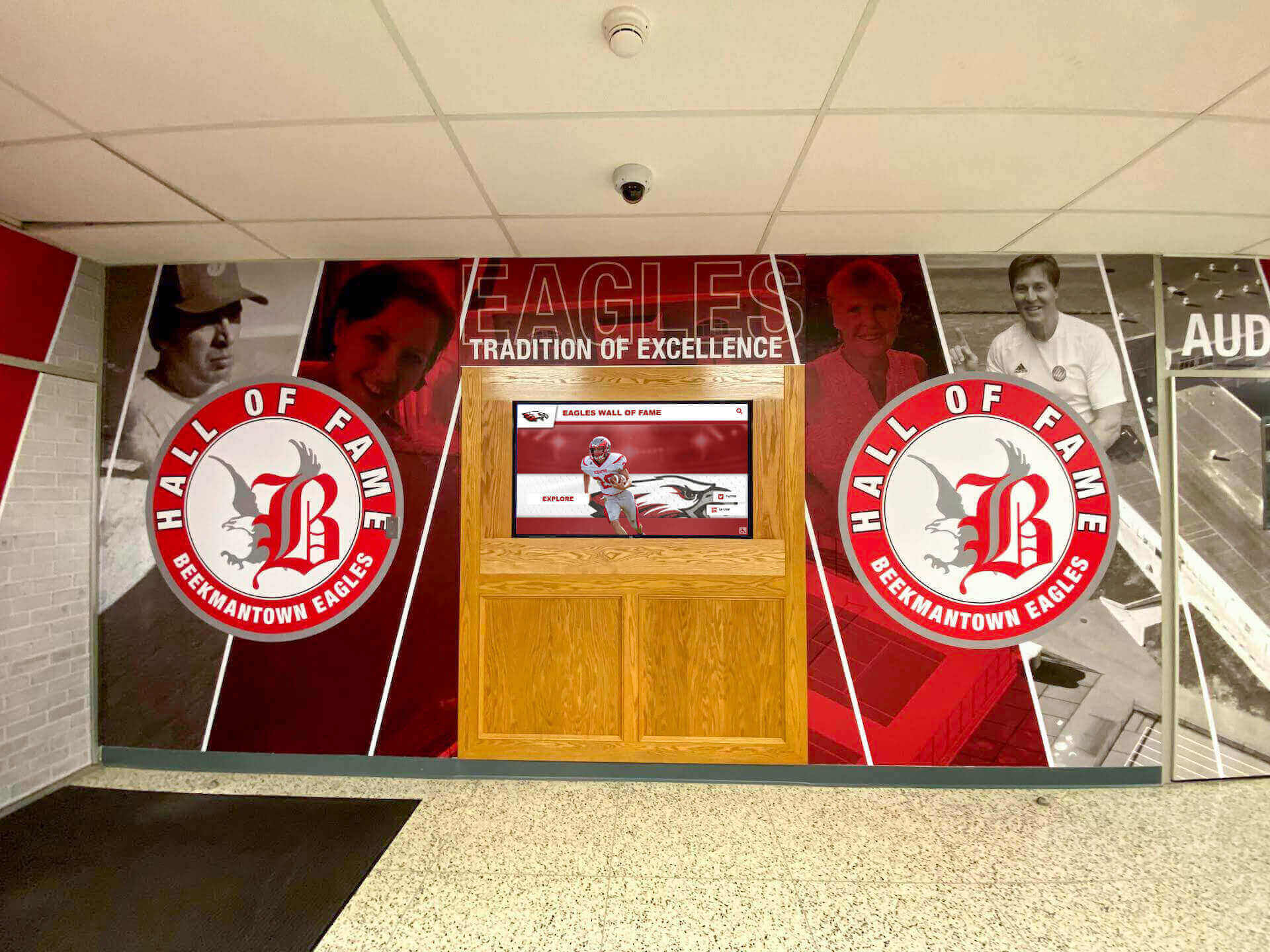
Schools with strong traditions of recognition — including JROTC programs — invest in lobby and hallway spaces that tell their community's leadership story visually
Common Questions About JROTC Ranks
Does JROTC rank transfer to the military?
No — JROTC cadet ranks do not automatically transfer to active military service. However, graduating cadets who join the military may receive an accelerated promotion for completing JROTC. Under Army regulations, for example, cadets who complete at least two years of JROTC and enlist in the Army may enter at the rank of Private First Class (E-3) rather than the default Private (E-1). This is a meaningful benefit but it is not an automatic transfer of JROTC rank.
What is the highest JROTC rank a high school cadet can achieve?
In most programs, Cadet Colonel (or the equivalent branch-specific O-6 grade) is the highest standard rank. This typically represents the battalion commander role. Some exceptionally large programs or brigade-level structures may include a Cadet Brigadier General grade, but this is uncommon at individual school units.
How long does it take to reach NCO ranks in JROTC?
Timeline varies significantly by program, school, and individual performance. Many cadets reach Cadet Sergeant (E-4 equivalent) by the end of their sophomore year with consistent participation. Senior cadet NCO grades like Master Sergeant typically require three to four years of dedicated service and demonstrated leadership.
Are JROTC ranks the same across all schools?
Within each branch’s JROTC program, the rank structure is standardized by the parent military service. An Army JROTC Cadet Colonel at one school holds the same grade as a Cadet Colonel at any other Army JROTC unit. However, Army, Navy, Air Force, and Marine Corps programs have distinct and separate rank structures from each other.
Can a cadet be demoted?
Yes. JROTC programs can reduce a cadet’s rank for conduct violations, sustained poor academic performance, or failure to meet program standards. The specific process varies by branch regulation and unit policy, but instructors have the authority to recommend rank reduction through their chain of command.
Displaying JROTC Ranks in School Recognition Programs
JROTC ranks create a natural framework for school recognition that most programs underutilize. The visual hierarchy of insignia, the ceremony of promotion, and the individual portraits of cadets in dress uniform are all compelling ingredients for recognition displays that serve multiple purposes — celebrating current cadets, inspiring incoming freshmen, and honoring the tradition of JROTC alumni.
Schools with digital trophy case and recognition programs that incorporate JROTC milestones demonstrate to students that leadership achievement outside of athletics and academics also deserves permanent institutional recognition.
School history archive software allows JROTC programs to build searchable, photo-rich records of every cadet officer class — preserving names, ranks, and portraits in a format accessible to alumni decades after graduation.
Schools that dedicate lobby or hallway space to JROTC recognition often find that it becomes one of the most visited parts of the building. Visitors — parents, community members, veterans — naturally gravitate toward the portraits in uniform and the visible rank insignia that communicate discipline and achievement at a glance.
FAQ
What does JROTC stand for? JROTC stands for Junior Reserve Officers’ Training Corps. It is a federal program administered by each branch of the U.S. military — Army, Navy, Air Force, Marine Corps, and Coast Guard — in partnership with high schools. The program focuses on developing citizenship, leadership, and personal responsibility rather than military recruitment.
How many JROTC ranks are there in the Army program? Army JROTC uses ten standard enlisted cadet grades (from Cadet Private through Cadet Command Sergeant Major) and six officer cadet grades (from Cadet Second Lieutenant through Cadet Colonel), for sixteen total standard ranks. Some programs include a Cadet Brigadier General grade for exceptional recognition, making seventeen in those units.
What insignia does a JROTC cadet colonel wear? A Cadet Colonel wears a silver eagle device — the same visual design as the O-6 insignia worn by full colonels in the U.S. Army, Air Force, and Marine Corps. The eagle faces toward the wearer’s right (heraldic dexter). This is the highest standard rank in most high school JROTC programs and is typically held by the battalion commander.
Do all JROTC branches use the same rank insignia? No. Each branch uses insignia specific to that military service. Army, Air Force, and Marine Corps JROTC programs all use chevron-based enlisted insignia and bar/leaf/eagle officer insignia, but the exact shape, orientation, and accompanying devices differ. Navy JROTC uses a rating badge system on the sleeve rather than collar devices for enlisted ranks.
How does a JROTC cadet get promoted? Promotion criteria include time in grade at the current rank, attendance and participation, performance on physical fitness assessments, drill and ceremony proficiency, academic standing, community service hours, and recommendation by the instructor staff. Most programs hold formal promotion boards where cadets are evaluated by a panel of senior cadets and instructors.
Celebrate Your JROTC Program with Professional Recognition Displays
Rocket Alumni Solutions helps schools create stunning digital recognition systems that showcase JROTC cadet officers, promotion milestones, and program history in lobby displays and hallway graphics that honor your cadets for years to come.
Get notified when Rocket Graphics opens