Step into any gymnasium that truly celebrates its athletic program and something on the walls tells the story before a single athlete takes the floor. Gym wall decals are one of the most cost-effective tools schools have for converting blank cinder block and painted drywall into visual statements about who you are, what you’ve won, and who has gone before.
This guide covers everything an athletic director, facilities manager, or school communications team needs to plan, select, install, and maintain gym wall decals—from choosing the right surface treatment to building an annual update workflow that keeps recognition current without repainting from scratch.
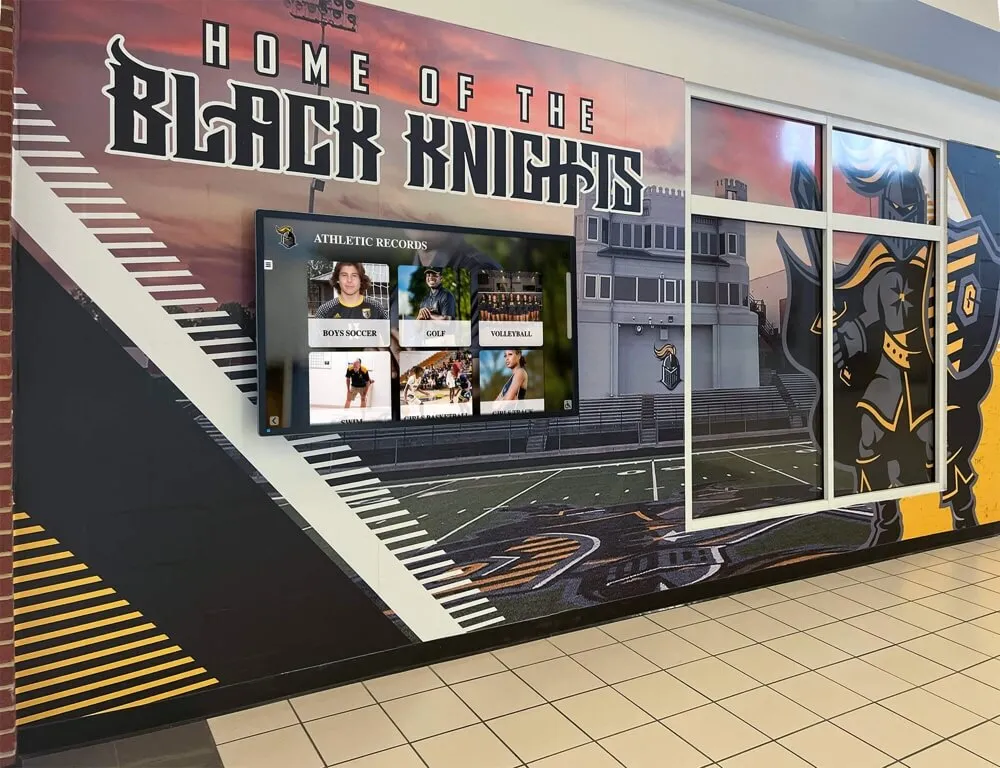
Well-designed gym wall decals integrate seamlessly with existing facility architecture to create recognition environments that feel permanent and intentional
What Gym Wall Decals Are—and What They Can Do
Vinyl wall decals for gymnasiums are large-format printed graphics applied directly to walls, paint-finished surfaces, and occasionally glass or metal partitions. Unlike painted murals, they are produced digitally, which means photographic images, precise color matching, and fine text all reproduce cleanly without a skilled artist on-site. Unlike framed posters or mounted prints, properly installed wall decals create a flush, permanent-looking result that reads as a designed feature of the space rather than an afterthought.
For school athletic programs, gym wall decals serve several distinct purposes:
- Spirit and identity: Mascot graphics, school colors, team mottos, and “home of the [mascot]” entrance treatments that greet athletes and visitors before competition begins
- Records and achievement: Static displays listing conference championships, state titles, individual records, and season win totals organized for quick reading
- Hall of fame recognition: Photo-inclusive panels honoring individual athletes, coaches, and program legends
- Wayfinding and brand consistency: Corridor treatments, locker room identification, and weight room motivational graphics that extend the program’s visual identity throughout the building
The most successful gym wall graphics programs use all four categories together, creating layered environments where athletic identity is visible from every angle at every moment of the day.
Building school pride through achievement recognition starts with visible, permanent displays that communicate the program’s values before any single athlete earns their first award.
Types of Gym Wall Decals for School Athletic Programs
Understanding the functional categories of school gym wall decals helps prioritize budget allocation and placement decisions before speaking with any vendor.
Spirit and Mascot Decals
Spirit decals anchor athletic identity in the visual language every fan, recruit, and student already associates with the program. These are the largest-format graphics in most installations and typically occupy end walls, the wall behind the scorer’s table, or the primary entry into the gymnasium.
Effective spirit decal elements:
- Full-color mascot graphic scaled to command attention across the full court
- School name in the program’s primary typeface
- Team motto, core values, or “home of the” statements
- School color field treatments as backgrounds or accent panels
- Locker room “prepare to compete” graphics positioned as the last image athletes see before taking the floor
Spirit decals establish the emotional environment of the gym. Visiting teams warm up in front of your championship record. Recruits see the culture before they meet the coaching staff. Current athletes see, every day they practice, what they are part of.
Visual identity consistency in school logos and spirit graphics extends naturally into gym wall decor—a program that invests in strong visual branding across yearbooks, social media, and athletic facilities creates a unified experience that alumni recognize decades after graduation.
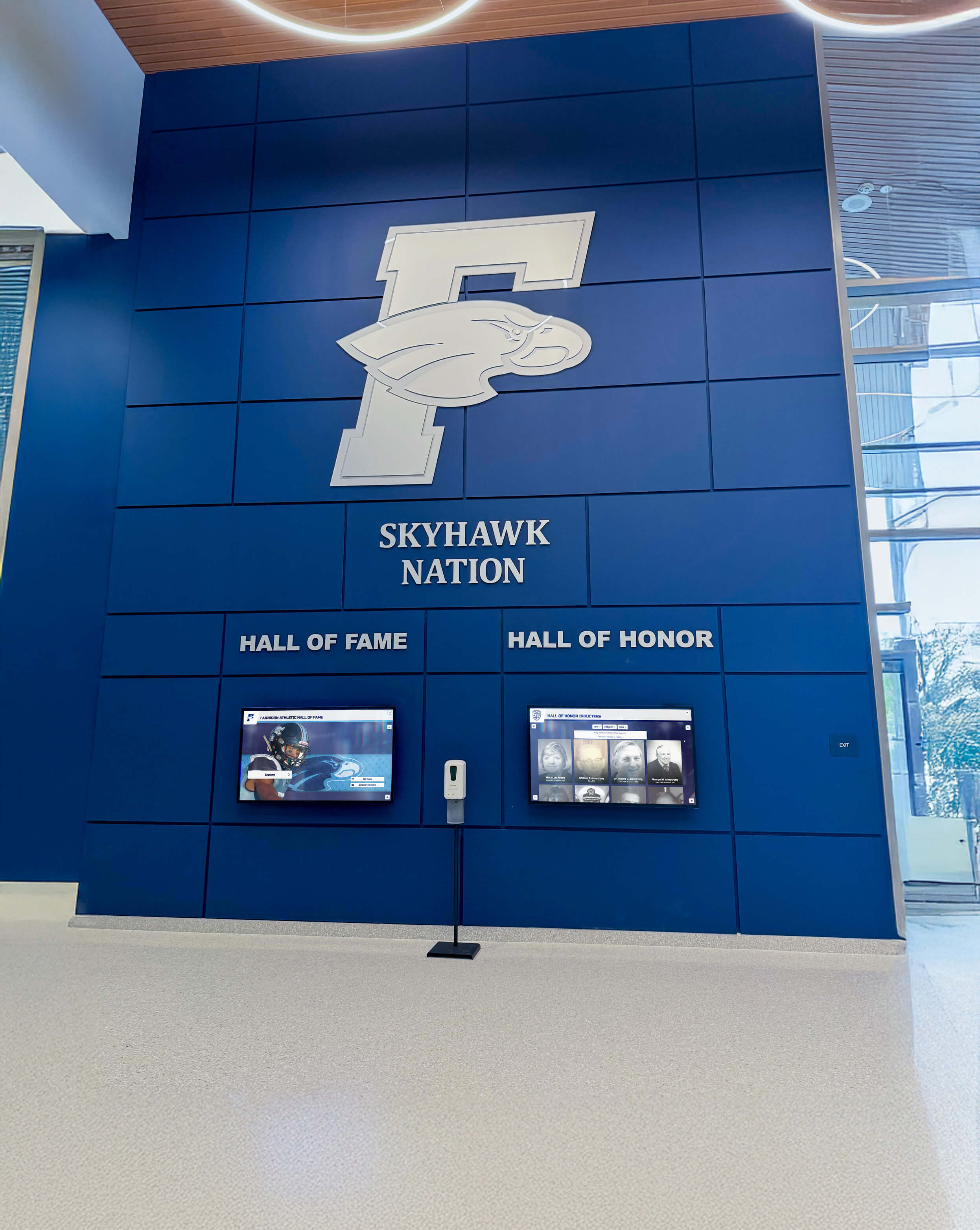
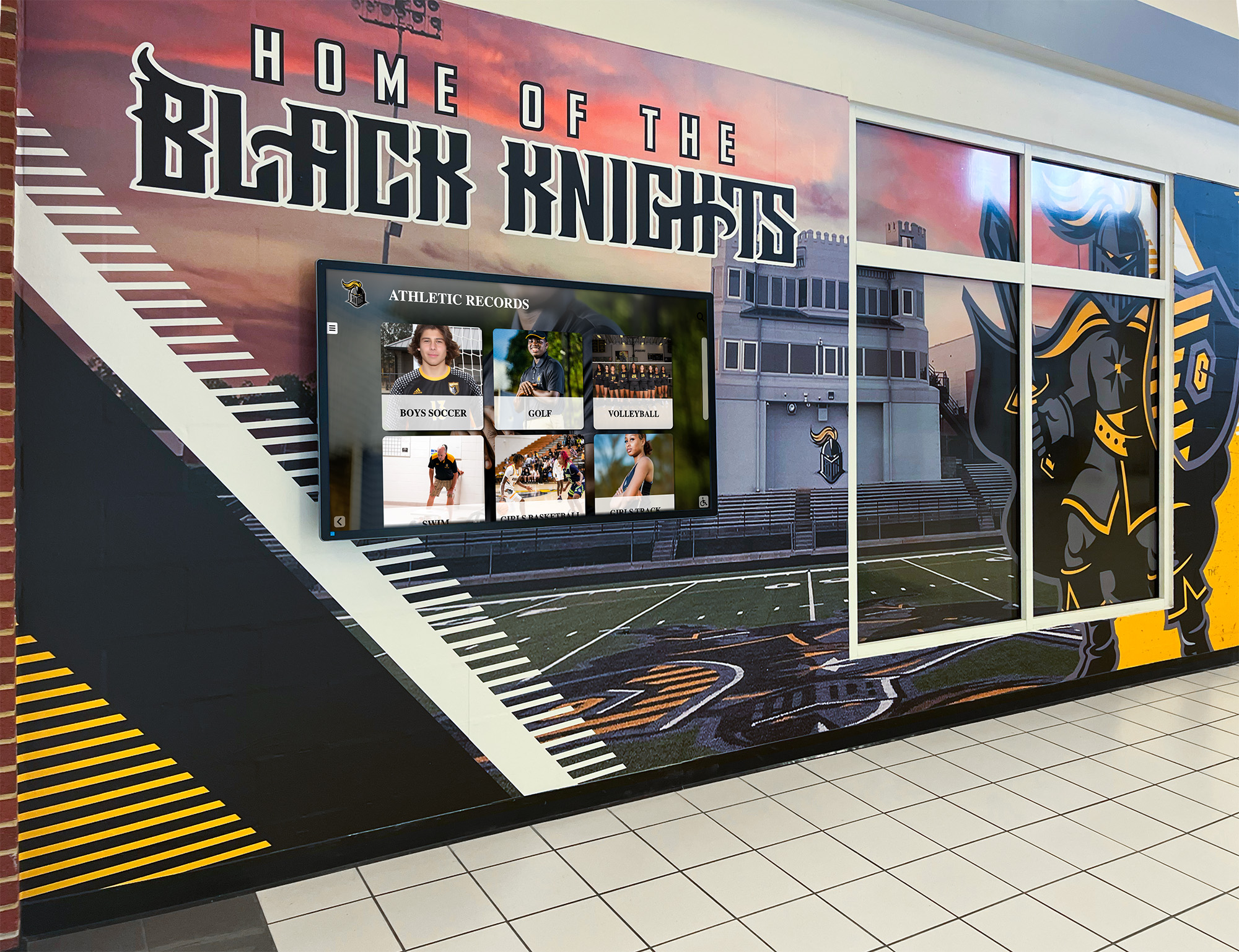
Color-blocked spirit treatments combined with recognition elements create high-impact gym wall displays that serve both motivational and archival functions
Record Board and Championship Decals
Record board gym wall decals list the numbers your program has earned—state championships, conference titles, individual performance records, season win totals, and retired jersey numbers. These are the displays that visiting coaches read during pregame warmups and that recruits photograph on unofficial visits.
Content categories for championship decals:
- State and regional championship years by sport
- Conference championship totals
- Individual sport record holders (scoring, assists, innings pitched, field event distances—sport-specific)
- Season win records and undefeated season notations
- Retired numbers with athlete names and years
The design challenge for record board decals is readability at viewing distance. Lists that look appropriately sized in a design file often become illegible at actual gym scale. Typography sizing should be calculated based on the furthest point from which athletes, officials, and fans will read the display—typically the opposite end of the court or the top of the bleachers.
Updating record board decals is the single most common maintenance challenge athletic directors face. A well-planned initial installation includes blank zones sized for future additions so new records can be applied as individual panel updates rather than full-wall replacements. This update workflow is covered in detail below.
Athletic director checklists for recognition and records display updates provide structured frameworks for managing ongoing record board accuracy across multiple sports.
Common record categories to display:
- Overall program win-loss record
- State and regional titles by sport and year
- Single-season scoring or performance records
- Career individual records
- Consecutive win streaks
- Playoff appearances and deep runs
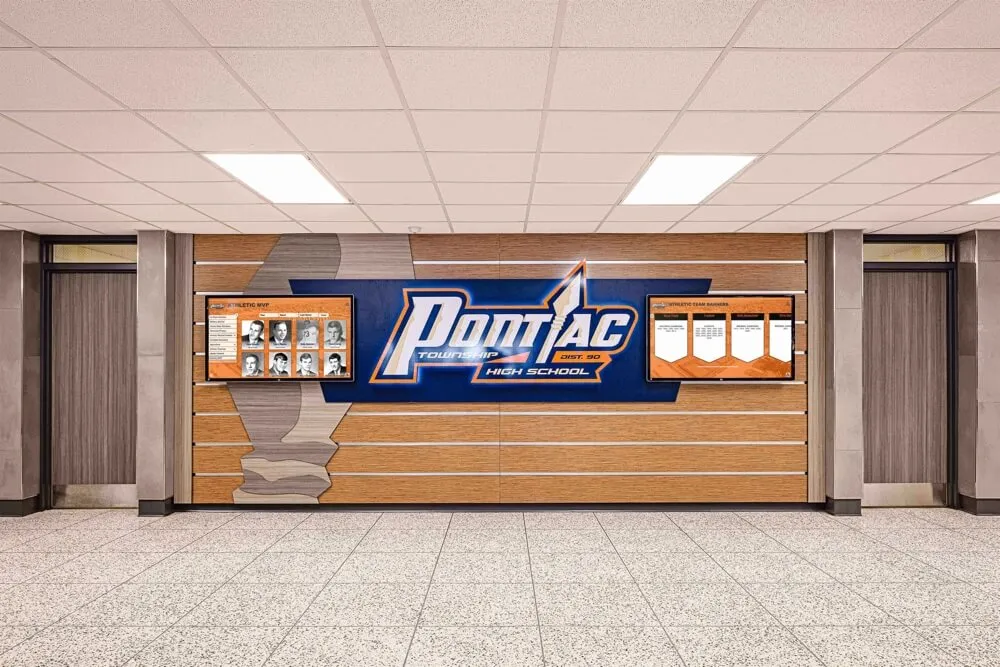
Record board installations work best as structured, scannable lists that visitors can absorb during brief viewing time
Hall of Fame Recognition Decals
Hall of fame decals go beyond lists and into individual recognition—photos, names, years, sports, and the specific achievements that earned each person their place on the wall. These installations create emotional impact that text-only displays cannot match. Seeing a face alongside a name transforms a record into a person.
Elements of effective hall of fame decals:
- Consistent portrait photo treatment (matching crop, background, and color style across all inductees)
- Name, graduation year, sport(s), and primary achievement
- Induction year or class designation for programs with formal selection processes
- Post-graduation highlights where available (college athletic career, professional play, coaching achievements)
- Visual organization by sport, decade, or induction class depending on collection size
Hall of fame decals work best when they establish a visual framework that can grow over time. A modular design approach—consistent panel sizes, matching typography, and standardized photo treatment—allows new inductees to be added without redesigning the wall. When each addition matches the visual system already in place, the display grows in authority with each class rather than looking patched together.
Student council and student recognition wall projects follow the same design principles and underscore how recognition walls build school spirit when they honor every program—not just the highest-profile sports.
Dance team identity and recognition walls are a useful case study: modular panel systems that started as a single-sport installation expanded across an entire performing arts wing using consistent sizing and typography, creating a unified recognition corridor from a series of incremental decisions.
Gym Wall Decal Selection Checklist
Before committing to a vendor or design direction, use this checklist to align stakeholders and define requirements.
Surface and Environment Assessment
- Wall surface type: Is the wall painted cinder block, drywall, concrete, metal, or glass? Different adhesive types are required for different substrates, and some surfaces need primer or surface treatment before application.
- Humidity levels: Gymnasiums with pools, locker rooms, or poor ventilation may require specialized adhesives rated for high-humidity environments. Standard vinyl decals can lift at corners in humid conditions.
- Lighting conditions: Natural light exposure causes UV degradation in standard laminated decals. Laminate options rated for UV resistance cost more but maintain color accuracy significantly longer in sun-exposed spaces.
- Impact zones: Walls behind goals, baskets, or benches receive regular ball and equipment contact. Specify heavier gauge vinyl (6+ mil) and protective overlaminates for impact-zone installations.
- Temperature variation: Facilities with wide seasonal temperature swings need flexible vinyl that won't crack or lift during contraction cycles.
Design and Content Requirements
- Color matching standard: Confirm the vendor can match your official PMS or hex color values. Request a physical swatch proof on the intended substrate before approving a full-run order.
- Image resolution: Supplied photos and logos must be provided at a resolution appropriate for the final print size. Low-resolution mascot art looks acceptable on screens and disappears into pixelation at wall scale.
- Update zones: Identify which sections will need to be updated annually or when records change, and design modular panels for those zones rather than printing them as part of a full-wall graphic.
- Approval workflow: Determine which stakeholders (athletic director, principal, school board) must sign off before production. Approve a scaled mockup showing the graphic in the actual space before committing to production.
Vendor Qualification Criteria
- School and athletic facility portfolio: Review completed school gym projects specifically. Commercial signage vendors without school portfolio experience often underestimate scale requirements and viewing-distance readability needs.
- Warranty and installation warranty: Material warranties cover adhesive and print longevity. Installation warranties cover lifting, bubbling, or misalignment within a defined period after install.
- Update and panel replacement process: Confirm the vendor can produce matching replacement panels years after the initial installation. Standardized material specifications in the original contract make this possible; one-off specifications make it nearly impossible.
- Removal capability: Confirm the vendor's decals are removable without wall damage when the time comes for an update or full redesign. Floor-to-ceiling permanent vinyl installations that require wall repainting to remove carry a significant hidden long-term cost.
Placement Strategies for Maximum Impact
Where gym wall decals are installed determines who sees them, how often, and in what context. Strategic placement multiplies impact without increasing material cost.
High-Priority Placement Zones
Entry walls and gym doors: The first surfaces visitors encounter set expectations for the entire athletic program. A well-executed mascot decal at the gymnasium entry communicates investment and tradition before anyone walks through the door.
End walls facing the primary seating: During events, community members, parents, and visiting teams face end walls for hours at a stretch. End-wall installations—large mascot graphics, championship totals, program mission statements—receive sustained viewing time that no other gym surface matches.
Behind the scorer’s table: Officials, coaches, and media personnel stationed at the scorer’s table face this wall throughout every event. Record boards and recognition displays placed here receive close-range, extended viewing from the most attentive observers in the building.
Corridor connections between locker rooms and the gym floor: The last wall athletes see before competition begins and the first wall they face after it ends. Motivational messaging and values graphics placed here have disproportionate psychological impact on team culture.
Hallway display runs: Schools with athletic corridors connecting multiple sport venues benefit from extending gym wall graphics language into hallway signage systems. Replacing expensive gym banners with digital and decal recognition solutions is a common upgrade path for programs managing multiple sports across extended hallway systems.
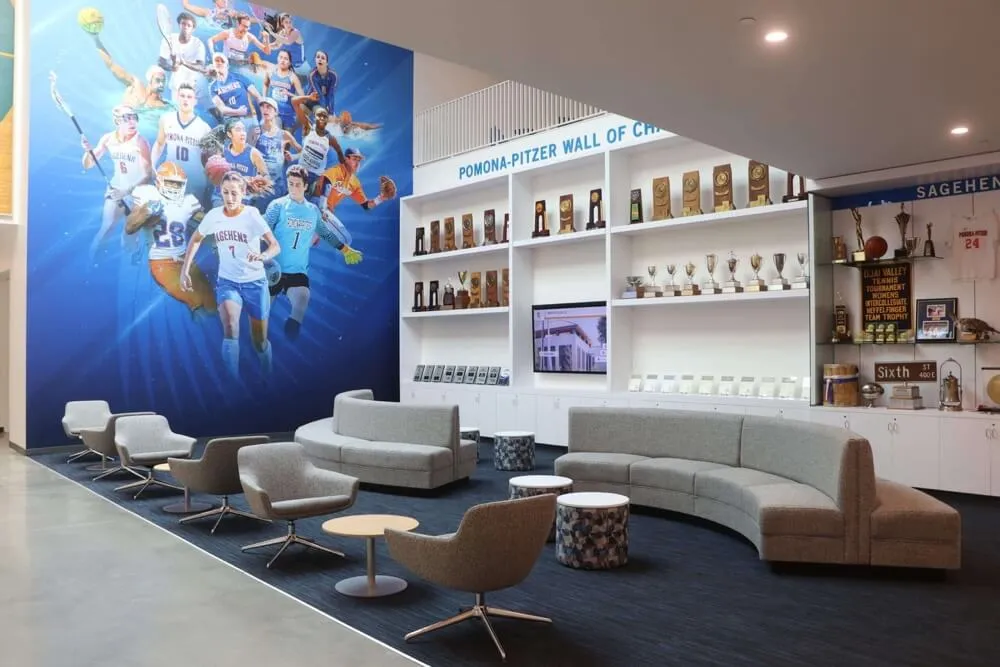
Gym wall decals extend naturally into adjacent athletic spaces—lounges, training rooms, and weight rooms—creating consistent visual identity throughout the facility
Secondary Placement Considerations
Weight rooms and training spaces: Athletes spend more total hours in training spaces than competition venues. Weight room decals—lifting records, core values, athletic identity graphics—provide persistent exposure to program culture throughout the full off-season.
Locker rooms: Decor in locker rooms creates environment-specific messaging for athletes in preparation and recovery modes. Motivational typography, program values, and team identity graphics in locker rooms reinforce culture during moments when coaching staff aren’t physically present.
Trophy case surrounds: Physical trophy cases benefit from decal treatments that frame the collection with program identity, color, and context. Bare glass cases feel like furniture; framed cases feel like designed recognition spaces.
Field day and spirit-building activities that connect to permanent recognition displays work most effectively when students have regular exposure to the program’s recognition infrastructure throughout their daily school life—consistent placement across the facility, not just in the gym, creates that familiarity.
Maintenance and Update Workflow
Gym wall decals are not install-and-forget installations. Records get broken. New champions earn recognition. Programs rebrand. Staff changes. A disciplined update workflow keeps recognition displays current and credible without requiring full wall replacements on unpredictable schedules.
Annual Review Protocol
Establish a fixed annual review date—typically August, before the fall sports season—to audit every recognition display in the facility:
- Pull current records from each sport’s coaching staff to compare against what is displayed. New records set in the prior year that have not yet been added to the wall are the most common gap.
- Photograph every display panel and compare against the previous year’s photo documentation. Missing or damaged panels are easier to identify against a documented baseline than from memory.
- Confirm induction status for hall of fame candidates if your program has a formal selection process. Panels for newly inducted honorees should be ordered and installed before the first home event of the year.
- Check adhesion at edges and corners, especially in high-humidity areas, and document any panels showing early lift for priority repair.
Football records recognition guides and basketball records recognition resources provide sport-specific frameworks for identifying which records belong on permanent display and in what format, making the annual content audit faster for programs managing multiple sports simultaneously.
Systematic annual review of gym wall displays keeps recognition current and credible—scheduling the review as a calendar event prevents records from falling outdated across multiple seasons
Panel Replacement vs. Full Redesign
The key maintenance decision each review cycle is whether to replace individual panels or plan a full-wall redesign. Use these criteria to guide the decision:
Replace individual panels when:
- The overall design system remains consistent with current branding
- Only specific recognition panels need updating (new record holders, new inductees)
- The school’s colors and identity have not changed
- Damage or lifting is isolated to specific sections rather than widespread
Plan a full redesign when:
- The program has rebranded (new mascot, new colors, or updated visual identity)
- The overall display architecture no longer accommodates the volume of records accumulated
- The display was installed more than 8–12 years ago and shows significant UV fade or material degradation
- Multiple full sections require replacement—at a certain point, individual replacements cost more than a comprehensive redesign
Transition to Digital Recognition
One of the most common updates to gym wall graphics programs is adding a digital screen or interactive kiosk to handle content categories that static decals cannot keep current. Records that change annually, video content, historical archives with hundreds of athletes, and recognition programs that add new honorees every few months all exceed what any static decal system can manage gracefully.
Complete guides to football records and recognition displays document how programs that start with static displays typically evolve toward hybrid systems—permanent decals for identity and foundational recognition, digital screens for records and content that updates regularly.
Rocket Alumni Solutions’ interactive touchscreen displays install as complements to existing gym wall decals rather than replacements. The physical decal or mural establishes school identity and tradition; the touchscreen adds depth—searchable athlete profiles, season archives, highlight video, and recognition categories that a wall panel cannot contain. The combination creates athletic recognition environments that serve casual observers and dedicated alumni with equal depth.
See How Digital Recognition Complements Your Gym Wall Decals
Rocket Alumni Solutions pairs touchscreen walls of fame and digital record boards with your existing physical installations—so your gym keeps pace with every record that gets broken and every athlete who earns recognition.
Get notified when Rocket Graphics opens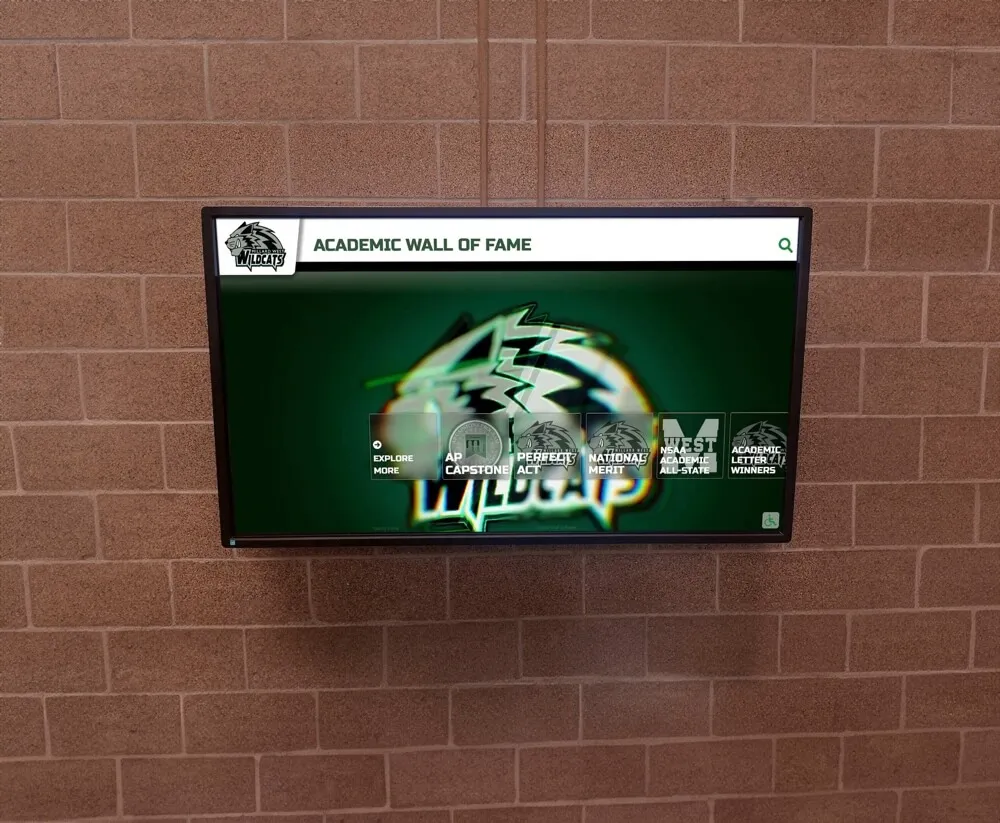
A digital screen installed alongside existing gym wall decals adds search capability, video, and seasonal updates without requiring decal removal or redesign
When Gym Wall Decals Alone Aren’t Enough
Static gym wall decals are the right starting point for most school athletic recognition programs. They are cost-effective, visually impactful, and achievable without ongoing content management overhead. But several scenarios signal that a digital supplement—or full transition—deserves evaluation.
Volume of recognition content exceeds wall capacity: Programs with deep winning histories often reach a point where championship lists, record boards, and hall of fame panels cannot all fit the available wall space at readable scale. Digital displays have no such limit—they archive entire decades of athletes in a single touchscreen footprint.
Annual updates create unsustainable vendor cycles: If the athletic director is placing new decal orders every August, January, and May just to keep record boards current, the administrative burden is significant and ongoing. Digital content management—where an athletic director adds a new record or honoree directly through a platform interface—reduces that cycle to minutes rather than weeks.
Alumni engagement is a strategic priority: Touchscreen hall of fame installations create a categorically different alumni experience than a wall panel. When former athletes can search by their graduation year, find their team photos, and share athlete profiles, the display becomes a reason to visit campus rather than a background element they walk past.
The facility is planning a renovation: Digital recognition infrastructure planned during a gym renovation costs significantly less than retrofitting it after construction closes. If a renovation is on the school’s capital plan, decal system decisions and digital integration decisions should be made simultaneously.
Frequently Asked Questions About Gym Wall Decals for Schools
How long do gym wall decals typically last in school athletic facilities?
High-quality vinyl gym wall decals with UV-resistant laminates typically last 5–8 years in interior school athletic environments. Facilities with high humidity, significant natural light exposure, or heavy ball-impact zones may see shorter lifespans without specialized materials. Proper surface preparation before installation significantly extends adhesion longevity.
What is the difference between gym wall decals and gym wall stickers?
In practice, “gym wall decals” and “gym wall stickers” refer to the same category of large-format vinyl adhesive graphics. “Decals” is the more common commercial and vendor terminology for school and athletic facility applications. Decals intended for gym use are typically heavier gauge, use more durable adhesives, and are produced at much larger scale than consumer-grade wall stickers sold for home decoration.
Can gym wall decals be removed without damaging paint?
Removable-adhesive vinyl decals, specified at the time of order, can typically be removed without wall damage when properly applied to a fully cured painted surface. Permanent adhesive decals may require solvent removal and wall repainting. Always specify removability requirements to the vendor before production and confirm the wall surface was painted at least 30 days before installation.
How much do gym wall decals cost for school athletic programs?
Costs vary significantly by size, material specification, design complexity, and installation requirements. Small panel installations (record boards, individual sport sections) typically range from $500–$2,500 per panel installed. Full gym wall treatments covering multiple large surfaces run $5,000–$20,000 or more for design, print, and professional installation. Many schools fund initial installations through booster clubs or alumni capital campaigns.
Should schools choose painted murals or vinyl decals for gym walls?
Vinyl decals and painted murals serve different needs. Painted murals offer unlimited surface customization and no adhesion limitations, but require skilled artists, longer installation time, and cannot be updated without repainting. Vinyl decals allow photographic imagery, faster installation, and modular update capability. Most schools with significant recognition content to maintain benefit from vinyl decals for recognition panels while using paint for background color treatments where full-surface adhesive vinyl would be cost-prohibitive.
Getting Started with Gym Wall Decals for Your School
The first step is a facility walk with an eye toward purpose rather than aesthetics. Note every wall surface visible from the competition floor, every corridor athletes and visitors travel between spaces, and every blank surface that currently communicates nothing about your program. That inventory becomes the scope document for a vendor conversation.
Prioritize entry points and the primary competition surface first—the walls that set expectations before anyone has seen an athlete perform. Fund the initial installation through your most accessible source (booster campaign, capital improvement allocation, or alumni outreach), then build the update workflow into annual athletic department operations so recognition stays current from year one.
For programs that want to complement physical decal installations with digital recognition depth, Rocket Alumni Solutions provides touchscreen walls of fame, digital record boards, and content management platforms designed specifically for school athletic programs. Many schools begin with physical decals and add a digital layer as the recognition program grows—the two systems are designed to work together rather than compete.
Transform Your Gym Walls Into a Recognition Destination
Rocket Alumni Solutions helps schools plan and build athletic recognition environments—from gym wall graphic strategies to interactive touchscreen displays that keep your records and honors current every season.
Get notified when Rocket Graphics opens