Graduation honor cords are braided or twisted fabric cords worn around a graduate’s neck during commencement ceremonies to signal academic achievement, membership in honor societies, or participation in distinguished programs. Draped over the cap and gown, these colorful cords serve as immediate, visible markers that distinguish high-achieving graduates from the rest of the class—long before a diploma is opened or a transcript reviewed.
For schools and universities, graduation honors cords represent more than ceremony decoration. They are a deliberate, public recognition system—one that families photograph, parents share on social media, and graduates carry as evidence of years of disciplined effort. Understanding what each cord color means, which organizations award them, and how schools build broader recognition ecosystems around them helps administrators, advisors, and senior-class coordinators run more meaningful, equitable ceremonies.
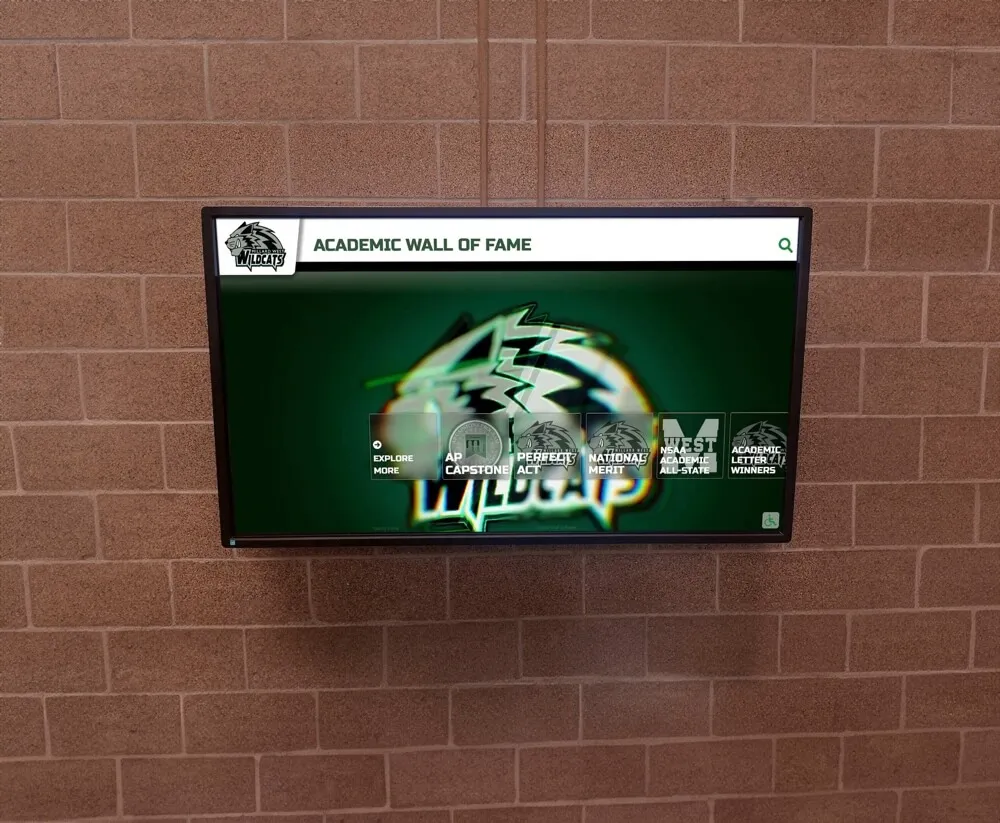
Schools use multiple recognition layers—from honor cords to digital achievement walls—to celebrate academic excellence
What Are Graduation Honor Cords?
Graduation honor cords are decorative, braided cords worn over the academic gown during commencement. They originated as a way to visually distinguish graduates who had earned special honors at a time when ceremony audiences could not easily read individual transcripts or program listings.
Today, cords serve several distinct purposes simultaneously. A single graduate may wear two, three, or even four cords representing different achievements—a GPA threshold, a specific honor society, a career-technical program distinction, or a community service award. Each cord communicates a discrete credential to everyone in the audience, from family members in the back row to scholarship committee members seated on stage.
Schools typically award honor cords through one of three mechanisms: automatic qualification based on cumulative GPA thresholds, nomination by faculty or staff for specific organizations, or completion of defined requirements for specialized programs. Understanding this structure helps schools develop consistent, equitable cord programs that genuinely reflect student achievement.
A Brief History of Honor Cords at Graduation
The use of colored cords and stoles at graduation ceremonies has roots in medieval European university traditions, where scholars wore specific academic regalia to signal their discipline and degree level. In American education, the modern honor cord tradition gained widespread adoption through the growth of national honor societies in the early twentieth century.
The National Honor Society, founded in 1921, helped standardize recognition regalia in secondary schools. As membership organizations multiplied across academic, professional, and service categories throughout the mid-twentieth century, each adopted distinctive colors—creating the varied cord landscape graduates wear today. According to the National Association of Secondary School Principals, NHS membership encompasses more than one million students annually across more than 23,000 chapters, making NHS-related honor cords among the most commonly awarded in American high schools.
Graduation Honor Cords Colors and Meanings
No single universal standard governs graduation honor cord colors—individual schools, national organizations, and state education departments each establish their own color conventions. However, certain widely recognized associations have created de facto standards that most institutions follow.
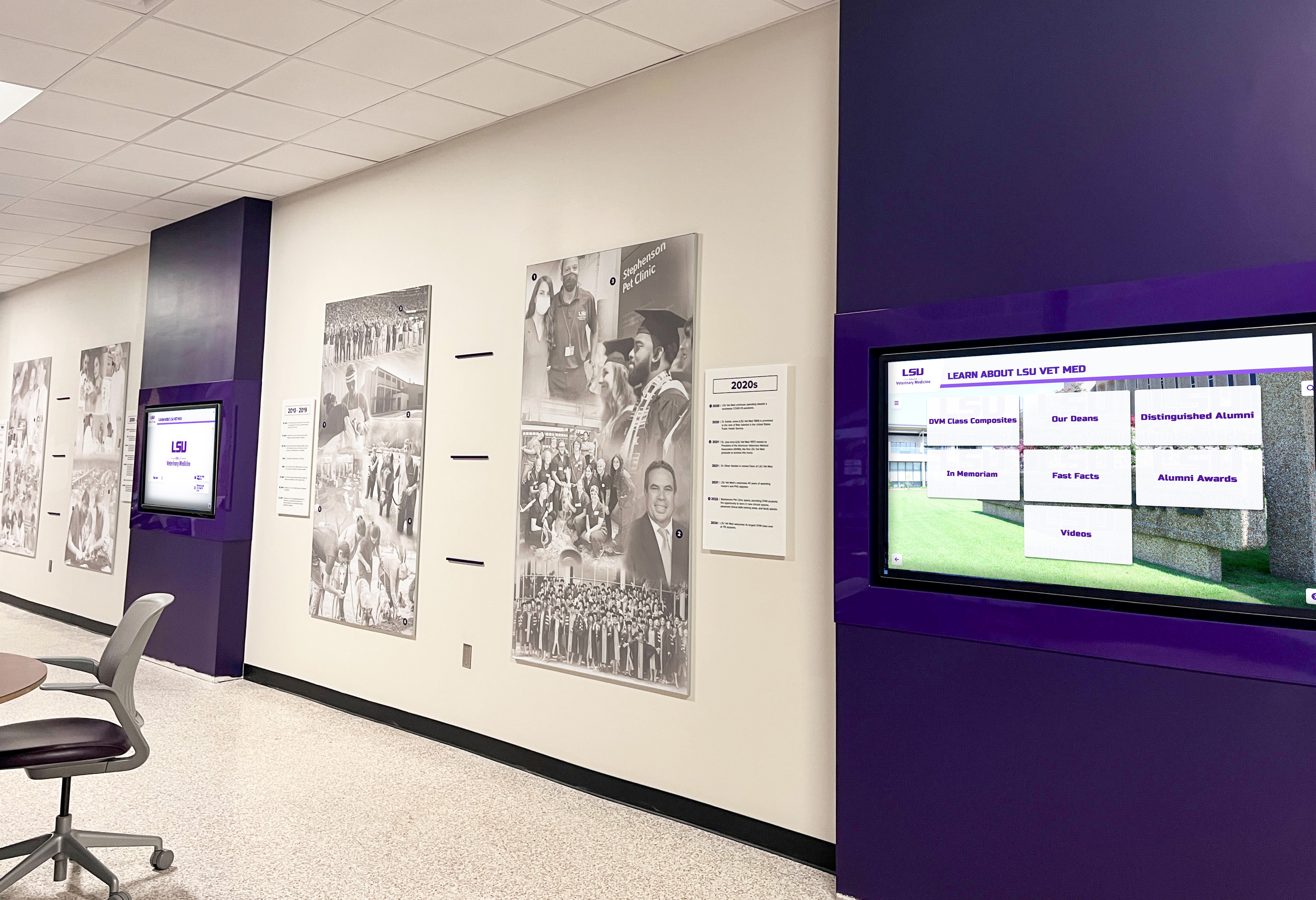
Universities use hallway recognition displays alongside ceremony regalia to build layered academic achievement programs
Gold and Yellow Honor Cords
Gold is the most commonly awarded honor cord color and typically signals high academic achievement. Most schools award gold cords to graduates who have maintained a cumulative GPA at or above a defined threshold—commonly 3.5 or higher on a 4.0 scale, though specific cutoffs vary by institution.
Common gold cord associations:
- Cumulative GPA of 3.5–4.0 (varies by school)
- National Honor Society membership
- Valedictorian and salutatorian distinctions
- Advanced Placement program completion
- General academic excellence recognition
Because gold is so broadly used for GPA recognition, students sometimes wear a gold cord alongside other organizational cords without conflict.
White and Silver Honor Cords
White cords appear frequently in academic, service, and healthcare-adjacent programs:
- Nursing and pre-medical programs recognizing clinical achievement
- Academic achievement in specific departments
- Graduation with distinction or high distinction at some universities
- Service-learning and community engagement programs
- Honor societies in specific disciplines (education, social work)
Silver cords function similarly to white and are sometimes used interchangeably depending on institutional preference and the appearance of other regalia worn simultaneously.
Red Honor Cords
Red cords appear across several different organizational and academic contexts:
- National Honor Society for specific chapters using red as a secondary color
- Mathematics and science honor societies
- Business and finance programs
- Phi Theta Kappa (community college honor society) chapters
- State-level academic distinction programs
The meaning of a red cord can vary significantly between institutions, making it important for ceremony programs to include a cord legend for attendees.
Blue Honor Cords
Blue honor cords span a wide range of meanings and are among the most frequently awarded non-gold cords:
- Royal blue: Often associated with National Junior Honor Society, special education program completion, or specific university departments
- Light blue: Education programs, teacher preparation, and some academic honor society chapters
- Dark navy: Vocational and career-technical education distinctions, JROTC recognition, and leadership programs
Schools using blue cords should specify shade in ceremony programs because different blues can appear similar at a distance.
Purple Honor Cords
Purple carries strong associations with honor and distinction in academic settings:
- Mu Alpha Theta (mathematics honor society)
- Social studies and history honor societies
- Leadership recognition programs
- Specific university graduate programs
- Some state gifted and talented program recognitions
Purple cords worn at university commencements often signal graduate-level achievement or membership in discipline-specific honor societies.
Green Honor Cords
Green cords are commonly associated with environmental, agricultural, and life science programs:
- Environmental science and sustainability programs
- 4-H achievement and agricultural education
- Biology and ecology honor society chapters
- Some public health and community health programs
- Bilingual education completion and second-language achievement
Maroon and Crimson Honor Cords
Deep red shades typically signal specific institutional or organizational affiliations:
- Health and medical professional program completion
- Specific university chapter colors
- Emergency medical and first-responder training programs
- Some athletic honor society recognitions
Black Honor Cords
Black cords appear less frequently than other colors but serve specific purposes:
- Doctoral program distinction at some institutions
- Specific departmental honors
- Drama, theater, and performing arts recognition
- Some career-technical and trades program completions
Multicolored and Braided Cords
Many organizations produce two-color braided cords that incorporate both the organization’s primary and secondary colors. These multi-strand cords can be quickly identified as organizational markers even when observers are unfamiliar with the specific colors:
- Blue and gold: Widely used by academic honor societies across disciplines
- Red and white: Common for student government and leadership recognition
- Purple and gold: Fraternities, sororities, and some honor societies
- Red and black: Specific honor society chapters and athletic associations
- Green and white: Agricultural and environmental programs
Honor Society Cords: Major Organizations and Their Colors
National honor societies represent the most structured and consistently recognized cord programs. Each organization designates specific colors that chapters use universally, creating recognizable markers across institutions.
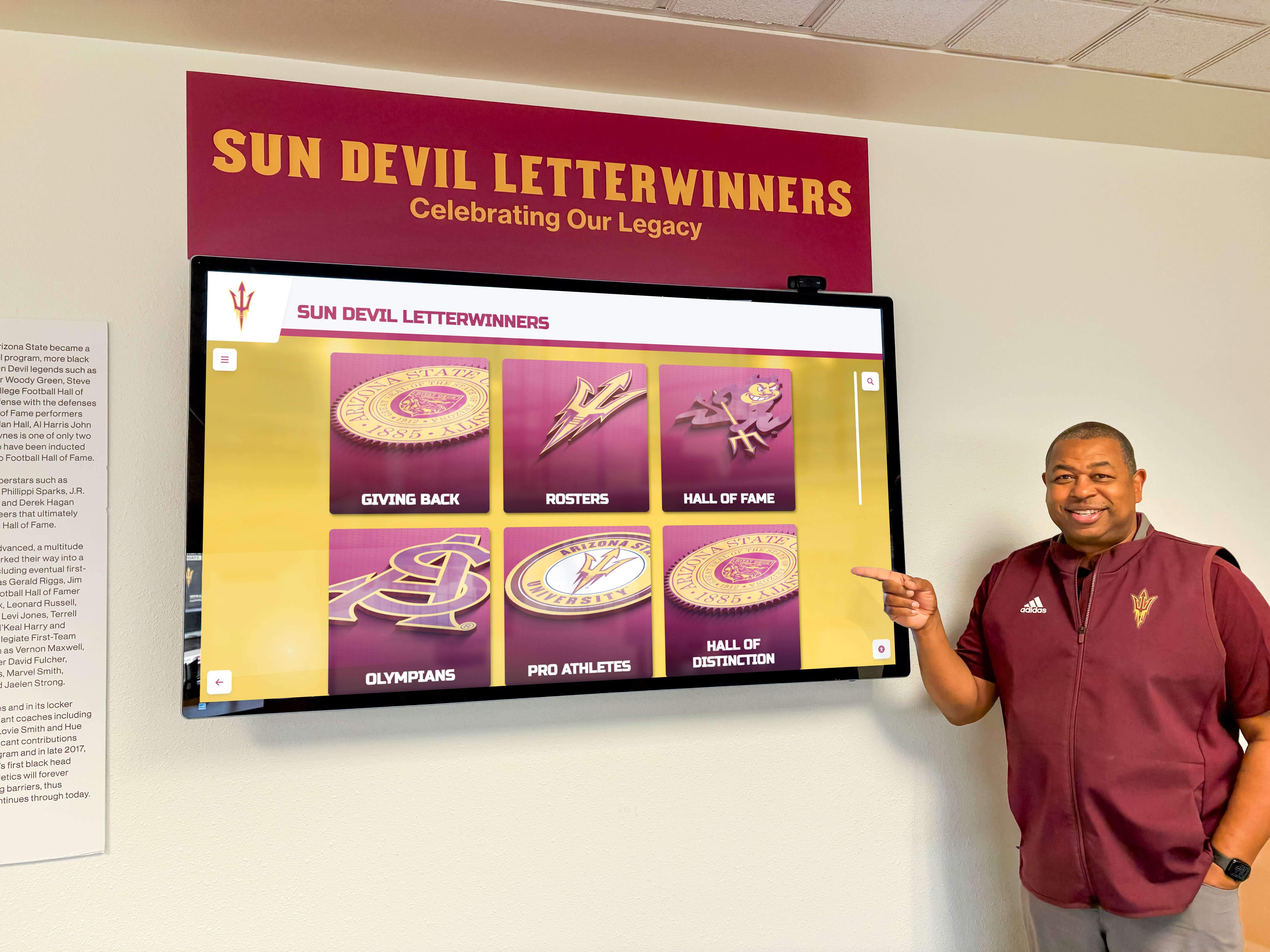
Digital recognition systems let schools catalog cord recipients alongside broader achievement records
National Honor Society (NHS)
The NHS uses blue and gold as its official colors. At most high schools, NHS members wear blue and gold braided cords at graduation. Some chapters supplement these with individual school-issued gold academic cords when a student qualifies on both NHS membership and GPA thresholds simultaneously.
NHS membership requires meeting standards in four pillars: scholarship, leadership, service, and character. The NHS induction ceremony is itself a major recognition milestone that precedes graduation honors—many schools build digital displays around inductee portraits and ceremony documentation.
Phi Theta Kappa (PTK)
Phi Theta Kappa, the honor society for two-year colleges, uses blue and gold as its official colors. PTK members typically receive gold honor cords or blue-and-gold braided cords at associate degree commencements. With over 3.5 million members inducted since its 1918 founding, PTK cords appear at community college ceremonies across the country.
National Technical Honor Society (NTHS)
NTHS uses blue and gold as well, specifically recognizing career and technical education students. This cord signals vocational and applied-skills achievement rather than traditional academic GPA—an important distinction that honors the full range of student pathways.
Mu Alpha Theta
The mathematics honor society Mu Alpha Theta uses red and white. Its cords appear at high school and community college ceremonies among students who have demonstrated strong performance in calculus-level or higher mathematics coursework.
Rho Chi (Pharmacy) and Other Discipline-Specific Societies
University-level honor societies in specific fields each maintain distinctive colors. Rho Chi (pharmacy) uses red and white; Sigma Theta Tau (nursing) uses purple; Alpha Epsilon Delta (pre-medical) uses green and white. At university commencements, multiple discipline cords can appear simultaneously on health sciences graduates.
GPA-Based Honor Cord Tiers: Summa, Magna, and Cum Laude
Many high schools and universities award cords specifically tied to Latin honor distinctions, creating a tiered visual system that distinguishes levels of academic achievement:
Common GPA-to-honors mapping (varies by institution):
| Distinction | Typical GPA Range | Common Cord Color |
|---|---|---|
| Cum Laude | 3.5–3.69 | Gold or white |
| Magna Cum Laude | 3.7–3.89 | Gold or silver |
| Summa Cum Laude | 3.9–4.0 | Gold, white, or platinum |
Some institutions use cord count rather than cord color to signal tier—a student earning summa might wear three gold cords while cum laude recipients wear one. Others use different weights or thicknesses of the same color. Schools benefit from publishing a clear legend in ceremony programs and on the school’s website to help families understand these distinctions.
For context on how schools recognize high academic achievement more broadly, resources covering National Merit Commended Scholar recognition offer useful frameworks for building layered academic recognition programs.
Other Common Cord Types Schools Award
Academic achievement is not the only reason graduates wear cords. Many schools award cords for:
Service and community engagement:
- Community service hours (often a specific threshold like 100+ hours)
- National service organizations (Key Club, Rotary Interact, Leo Club)
- Peer tutoring and mentoring programs
Career and technical education:
- Vocational program completion
- Industry certification achievement
- Apprenticeship and work-based learning
Leadership and government:
- Student council officers
- Senior class leadership roles
- Peer mediation and conflict resolution programs
Military and JROTC:
- ROTC program completion
- Junior ROTC distinguished cadet awards
- Military branch-affiliated recognition
Athletic academic achievement:
- Scholar-athlete distinctions (GPA above a threshold while participating in varsity sports)
- Athletic achievement recognition programs that combine athletic and academic performance
How Schools Award and Distribute Graduation Honor Cords
The logistics of awarding graduation honors cords requires coordination across multiple departments. Most schools use one of these approaches:
Automated Transcript-Based Distribution
The registrar or guidance office generates a list of cord-eligible students based on GPA cutoffs from the final transcript. This approach scales well for GPA-based gold cords but requires careful coordination with organizations whose membership criteria extend beyond grades.
Organization Advisor Submission
Honor society chapter advisors submit lists of eligible graduates to a central graduation coordinator, who then orders and distributes cords according to organizational specifications. This process requires a submission deadline well before ceremony day—typically six to eight weeks out.
Student Self-Certification
Some programs, particularly service-hour–based cord awards, rely on students to document and certify their own eligibility with advisor approval. This model places responsibility on students but can capture achievement that automated systems miss.
Combined Systems
Most schools use a hybrid: transcript-based cords for GPA distinctions and organization-submitted lists for honor society cords. A clear master list with each student’s eligible cords and corresponding colors helps graduation coordinators prepare cord packets without ceremony-day confusion.
Displaying Graduation Honor Cord Recipients Beyond Ceremony Day
The moment graduates walk across the stage with their cords represents a public recognition that families treasure—but the recognition doesn’t have to end when the ceremony does. Schools that invest in connecting ceremony-day honors to year-round recognition systems create more durable, accessible records of student achievement.
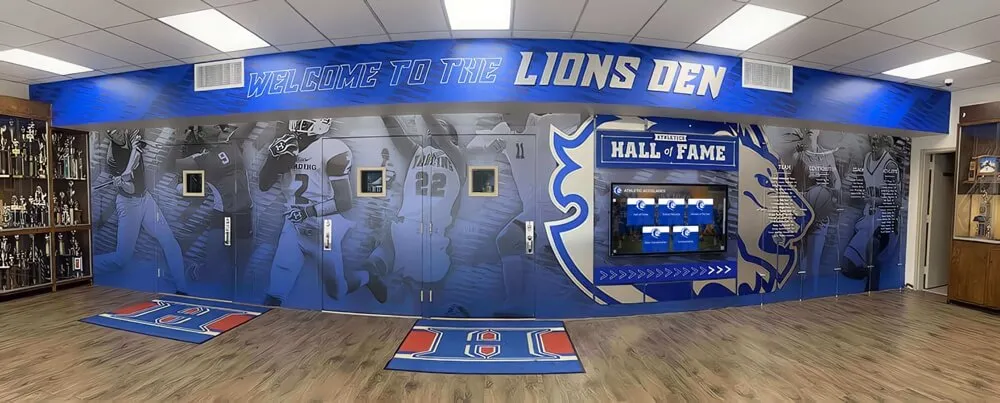
Permanent recognition displays complement ceremony honor cords, preserving achievement records for years after graduation
Digital Recognition Walls for Academic Achievers
Interactive digital displays installed in school lobbies, hallways, and common areas can catalog honor cord recipients alongside portraits, achievement data, and recognition narratives. These systems allow families and current students to explore the history of academic achievement at a school in a format that remains accessible year-round.
Schools using digital display systems for staff and student recognition consistently report that parents and community members engage more deeply with achievement records when those records are interactive and searchable rather than static.
Honor Roll and Academic Achievement Displays
Dedicating a physical wall or digital screen to cumulative honor roll data—updated semester by semester—keeps academic achievement visible throughout the school year, not only at graduation. This approach reinforces that earning a gold cord at commencement is the product of sustained effort across multiple years.
For schools exploring equity in recognition programs, tracking which students and programs are represented in recognition displays—alongside cord recipients—helps identify gaps in who gets seen and celebrated.
Ceremony Programs and Digital Supplements
Traditional printed ceremony programs include lists of honor cord recipients, but these programs are rarely preserved. Digital supplements—a QR code in the program linking to a searchable database of graduates and their distinctions—extend the life of that recognition indefinitely.
Schools that use touchscreen wayfinding and directory systems can integrate graduation recognition data into existing building directory infrastructure, giving visitors immediate access to achievement records without dedicated new hardware.
Donor and Alumni Walls That Feature Academic Achievers
Donor recognition walls and alumni halls of honor increasingly incorporate academic distinctions alongside athletic and philanthropic records. A graduate who wore gold honor cords for summa cum laude distinction, then went on to a distinguished career, represents the kind of story donor recognition systems are well-suited to tell. Schools can learn from models used in veterans and military recognition to build tribute-style displays that honor academic excellence with equal seriousness.
How Rocket Alumni Solutions Supports Academic Recognition Programs
Recognition programs that start with honor cords at graduation benefit from infrastructure that makes achievement visible before, during, and after the ceremony. Rocket Alumni Solutions builds customized digital recognition systems—interactive touchscreen walls, academic achievement displays, and honor society galleries—that schools use to catalog cord recipients, highlight top scholars, and build searchable archives of academic distinction.
These systems complement the physical ceremony by creating year-round recognition environments that current students see daily, motivating future achievement while honoring past graduates. Schools that want their honor cord programs to mean something beyond one ceremony morning benefit from recognition infrastructure that keeps achievement visible and searchable for years to come.
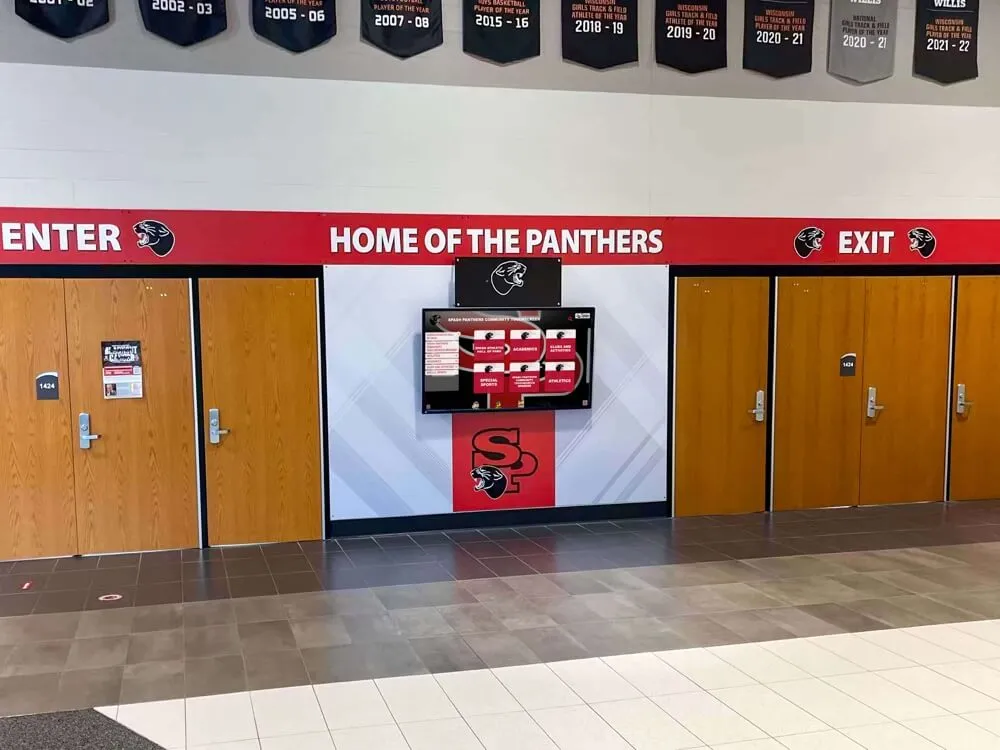
Digital recognition screens in school hallways keep academic achievement visible to students and visitors year-round
Comparison: Honor Cords vs. Other Recognition Traditions
Honor cords exist within a broader ecosystem of graduation recognition traditions. Understanding how they compare to related recognition formats helps schools build coherent, complementary programs.
Graduation Stoles: Wider fabric panels worn over the shoulders that serve organizational and cultural identification purposes. Stoles typically represent affiliation (HBCU pride, cultural heritage, service fraternity) rather than academic achievement levels. Some schools use both cords and stoles simultaneously.
Honor Medals and Pins: Physical medals worn on the gown or pinned beneath can represent specific academic competitions, AP scholar awards, or National Merit recognition. Medals complement cords by offering discipline-specific recognition that colored cords cannot differentiate on their own.
Class Rings: Rings represent institutional affiliation and class year rather than achievement distinctions. Like cords, class ring traditions are part of a school’s broader culture of marking student milestones with tangible, visible symbols.
Senior Nights and Recognition Events: Pre-graduation ceremonies like senior nights for athletic programs provide recognition outside the academic cord system, ensuring that students whose achievements don’t translate into cords still experience ceremony-level acknowledgment.
Tips for Schools Managing Honor Cord Programs
Running an equitable, accurate honor cord program requires attention to several operational details:
Establish clear, published criteria: Post GPA thresholds, organization requirements, and service-hour minimums on the school website and in the student handbook well in advance of senior year. Students who know what qualifies will work toward it.
Create a master cord legend: Document every cord color awarded at your school, what it means, which students are eligible, and which advisor or department is responsible. Publish this legend in graduation programs.
Set and enforce submission deadlines: Late organization lists create ceremony-day problems. Build a firm deadline at least six weeks before graduation and communicate it to all chapter advisors.
Order surplus cords: Cords lost, damaged, or missed in the distribution process need immediate replacements. A 10% surplus buffer prevents day-of shortages.
Photograph cord recipients: Capture portraits of honor cord graduates—both individually and as cohort groups for NHS, PTK, and other organizations. These photographs become the raw material for digital recognition displays and yearbook spreads that extend the recognition beyond graduation day.
Acknowledge cords in ceremony programs: List each cord recipient by name alongside their distinction. A graduate who earns summa cum laude recognition and NHS membership deserves to see both achievements listed in print.
Frequently Asked Questions About Graduation Honor Cords
What do graduation honor cords symbolize? Graduation honor cords symbolize a graduate’s academic achievement, membership in an honor society, completion of a specialized program, or participation in a recognized service or leadership organization. Each cord color represents a specific distinction, and graduates may wear multiple cords simultaneously to display multiple achievements.
What color cords are most common at graduation? Gold cords are the most common graduation honor cords and typically represent high GPA achievement—usually a 3.5 or higher on a 4.0 scale. Blue and gold braided cords are also very common, representing National Honor Society membership. Other frequently seen colors include white (nursing, academic distinction), red (mathematics and business honor societies), and purple (leadership and specific honor society chapters).
How are graduation honor cords awarded? Schools award graduation honor cords through transcript-based GPA qualification, honor society advisor nominations, or program completion verification. Most schools use a combination: the registrar’s office generates lists of GPA-based cord recipients automatically, while chapter advisors submit separate lists of qualifying members for their organizations.
Can a graduate wear more than one honor cord? Yes, graduates can wear multiple honor cords simultaneously. A student who earned a 4.0 GPA, holds NHS membership, and completed a service-learning program might wear three or more cords at once. Each cord represents a distinct credential, and wearing multiple cords is common among high-achieving graduates.
Do honor cords mean the same thing at every school? No, honor cord colors are not standardized across all schools. While certain colors have widely recognized associations—gold for GPA achievement, blue and gold for NHS—individual schools set their own color systems. Always check the ceremony program’s cord legend for institution-specific meanings.
Building a Complete Academic Recognition System
Graduation honor cords are the ceremony-day culmination of a recognition journey that should begin long before commencement. Schools that build layered recognition programs—posting semester honor rolls, celebrating honor society inductions, documenting achievement in digital displays, and awarding ceremony-day cords—create cultures where academic achievement is visible and valued across all four years of high school or undergraduate study, not just on graduation morning.
The most effective recognition programs use physical ceremony elements like honor cords to anchor broader systems: permanent hallway displays, interactive alumni archives, and digital achievement walls that remain accessible to future students, alumni, and community members. When a first-generation student sees the name of a prior graduate who wore gold cords and went on to a distinguished career, that display becomes a motivational tool as powerful as any pep talk.
For schools ready to build recognition systems that match the quality of their honor cord programs, Rocket Alumni Solutions provides the custom digital displays, touchscreen walls, and academic achievement showcases that make achievement visible, searchable, and permanent.
Make Academic Achievement Visible Year-Round
Rocket Alumni Solutions helps schools build digital recognition systems that celebrate honor cord recipients, preserve academic achievement records, and inspire future graduates—long after commencement day ends.
Get notified when Rocket Graphics opens