The yearbook cover represents the first impression of an entire school year—a visual gateway to memories, friendships, and milestones that students will revisit for decades. For elementary schools, creating a cover that resonates with young students while maintaining professional appeal requires balancing playful creativity with timeless design principles that honor the significance of this keepsake.
Elementary school yearbook covers face unique design challenges compared to high school or middle school editions. They must appeal to children ranging from kindergarteners to fifth or sixth graders, accommodate various reading levels with clear typography, feature age-appropriate imagery that avoids appearing too juvenile or too mature, and create visual excitement without overwhelming young eyes. The most successful covers achieve this balance by grounding creative concepts in authentic school identity—incorporating school mascots, colors, and symbols that students recognize and connect with throughout their daily campus experience.
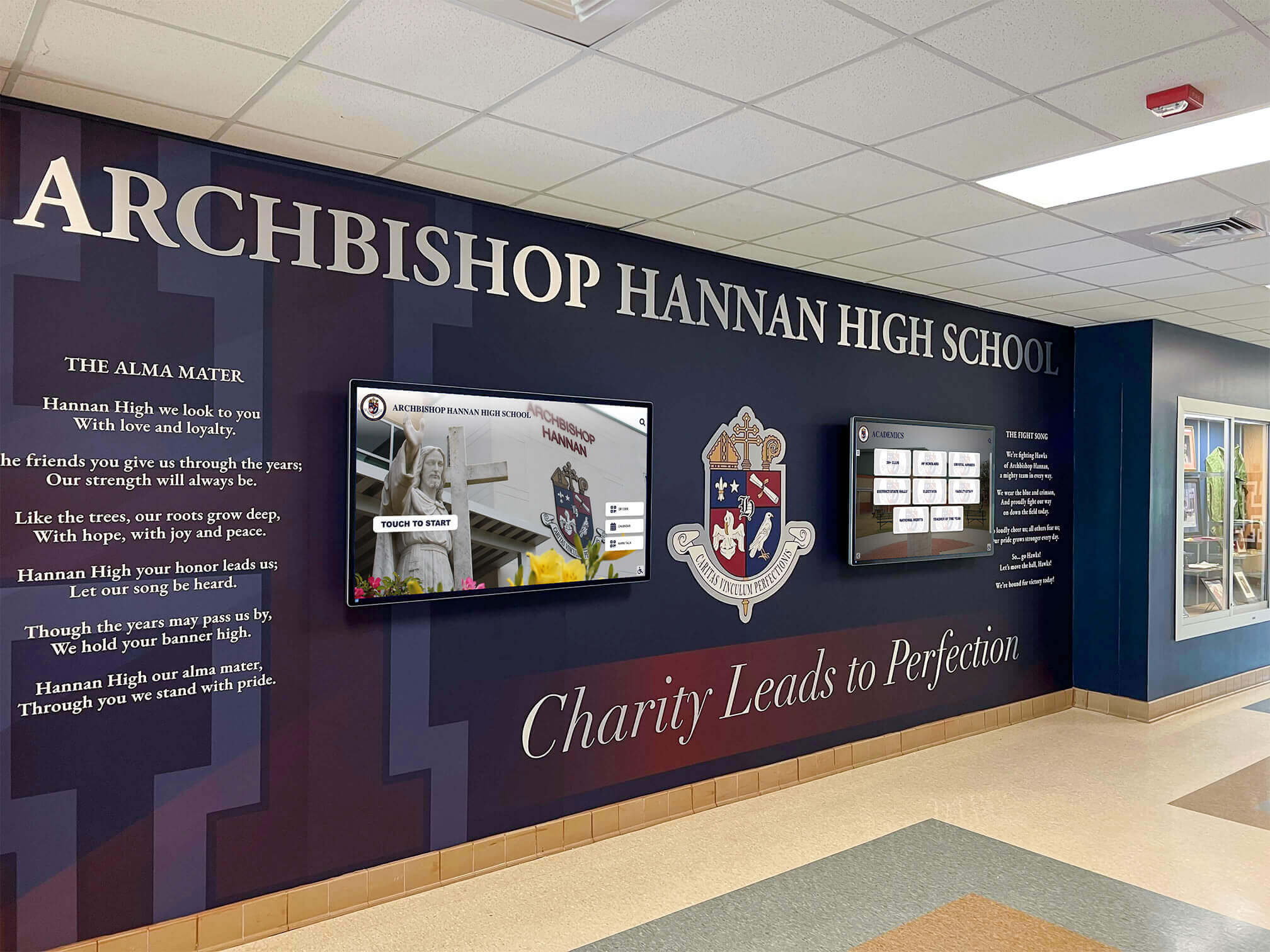
School identity elements like crests and mascots create visual continuity from campus displays to yearbook covers
Understanding Elementary School Yearbook Cover Design Fundamentals
Elementary yearbook covers serve different purposes than secondary school editions, requiring adjusted design approaches that account for developmental stages and institutional context.
Age-Appropriate Visual Complexity
Elementary students process visual information differently than older students, necessitating design choices that accommodate developing perceptual skills.
Kindergarten through Second Grade Considerations
- Large, bold imagery with clear subject identification
- High contrast between background and foreground elements
- Limited text that early readers can decode (“Lincoln Elementary 2026”)
- Bright, primary color schemes that attract young attention
- Recognizable symbols students encounter daily (mascot, school building, playground)
Third through Sixth Grade Considerations
- More sophisticated compositions with layered elements
- Expanded color palettes including secondary and tertiary colors
- Additional text elements (theme statements, mottos, locations)
- Abstract concepts students can interpret (unity, growth, achievement)
- Design elements referencing grade-level curriculum or experiences
The cover should appeal to the entire grade range without skewing too young for upper elementary or too complex for primary grades. Testing designs with student focus groups across grade levels reveals which concepts resonate universally versus which feel too targeted toward specific ages.
Timeless versus Trendy Design Elements
Elementary yearbook covers must balance contemporary appeal with longevity—students should feel the cover looks current when published but not dated when reviewing it years later.
Elements with Longevity
- Classic typography using established font families (avoid extreme display fonts)
- School-specific imagery tied to institutional identity rather than pop culture
- Traditional layout structures with clear hierarchy and organization
- Color schemes derived from official school colors rather than trending palettes
- Photography featuring timeless childhood activities rather than fad references
Current Appeal Strategies
- Modern graphic treatments (gradients, geometric shapes, patterns) that feel fresh
- Contemporary photography styles with natural lighting and candid moments
- Updated interpretations of school symbols that feel relevant to current students
- Design techniques common in children’s books and media students recognize
- Layout approaches that reflect current visual communication standards
Lincoln Elementary School in Portland found success with a cover featuring their mascot rendered in contemporary flat design style—honoring the 40-year-old mascot identity while making it feel relevant to today’s students. The approach satisfied both alumni who recognized the symbol and students who connected with the modern aesthetic.
Typography Considerations for Young Readers
Text hierarchy and font selection significantly impact cover readability for elementary students developing literacy skills.
Primary Text (School Name)
- 72-120 point size ensuring visibility and importance
- Sans-serif fonts for maximum readability (Futura, Helvetica, Avenir)
- High contrast with background (dark text on light background or reverse)
- Avoid script or decorative fonts that complicate letter recognition
- Test readability at distance students typically hold books (12-18 inches)
Secondary Text (Year, Theme, Grade Range)
- 36-60 point size maintaining clear visibility
- Complementary font that harmonizes with primary typeface
- Sufficient spacing from primary text to prevent visual competition
- Color coordination with overall palette
- Placement that supports logical reading order
Avoiding Common Typography Mistakes
- Don’t use all capitals for extended text (harder to decode for emerging readers)
- Avoid overlaying text directly on complex imagery without background treatment
- Don’t use more than two font families (creates visual chaos)
- Skip fonts with unusual letter forms (a’s that look like o’s, confusing i’s and l’s)
- Avoid extremely condensed or extended fonts that distort familiar letter shapes
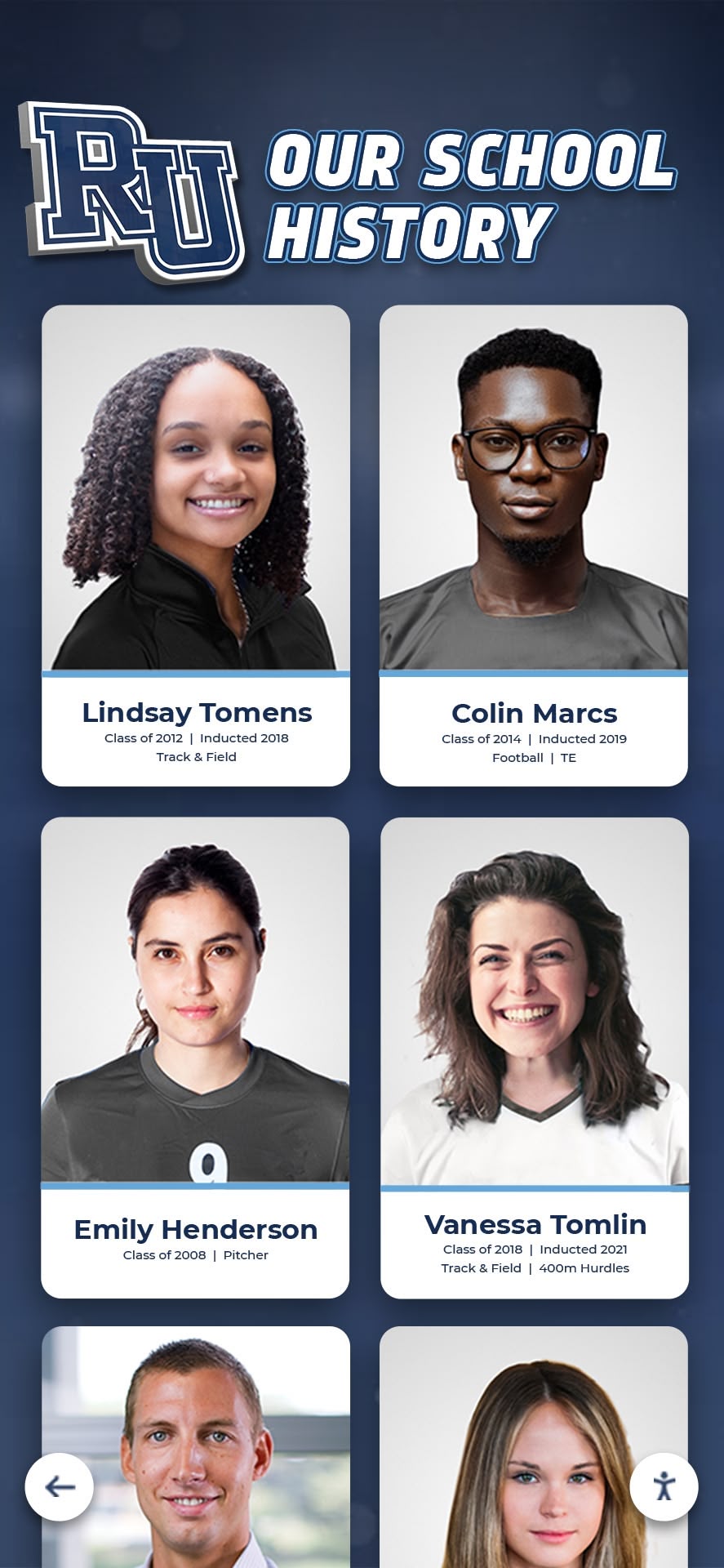
Portrait-style displays demonstrate how individual student imagery can be organized for visual impact
Theme-Based Elementary Yearbook Cover Concepts
Successful elementary yearbook covers often organize around cohesive themes that provide conceptual framework for design decisions and create meaningful narrative for the school year.
Mascot-Centered Designs
School mascots offer natural focal points that students instantly recognize and emotionally connect with throughout their elementary experience.
Full Mascot Illustration Approaches
- Large mascot character as central design element (covering 40-60% of cover)
- Mascot engaged in activities representing school year (reading, playing, creating)
- Background elements featuring school building, campus landmarks, or symbolic imagery
- Color palette derived from official mascot/school colors
- Typography that complements mascot personality (playful for friendly mascots, bold for fierce)
Mascot Integration Techniques
- Partial mascot appearance (just head or silhouette) with student photos as primary focus
- Mascot logo as background watermark with transparency allowing photo overlay
- Multiple small mascot illustrations scattered throughout composition in pattern form
- Mascot pawprint, feather, or other symbolic element as repeating design motif
- Mascot colors as dominant palette without literal mascot representation
Washington Elementary in Wisconsin created memorable eagle-themed covers for five consecutive years, each featuring different eagle artistic interpretations—realistic photography, watercolor illustration, geometric line art, collaged mixed media, and student-drawn versions. The consistency built recognition while the variation prevented repetition. Students collected the series, comparing design approaches across years while maintaining connection to their school’s eagle identity.
School Building and Campus Landmarks
Featuring recognizable physical spaces creates immediate connection for students who interact with these environments daily.
Architectural Photography Options
- Front entrance during golden hour with warm, welcoming lighting
- Aerial/elevated view showing entire campus layout and surrounding context
- Iconic architectural detail (unique window, entrance arch, bell tower)
- Building during different seasons throughout school year (composite of fall/winter/spring)
- Black and white or duotone architectural image as sophisticated backdrop
Campus Landmark Combinations
- Collage featuring playground, library, cafeteria, gymnasium, and classrooms
- Illustrated map of campus with highlighted important locations
- Seasonal progression showing same tree or outdoor space across school year
- Before-and-after of campus improvements or construction projects from the year
- Student-eye-view photography capturing spaces from child’s perspective
These approaches work particularly well for schools with distinctive architecture or campuses students feel proud of showing to family and community members. They ground the yearbook in physical place while creating nostalgia for specific spaces students associate with elementary experiences.
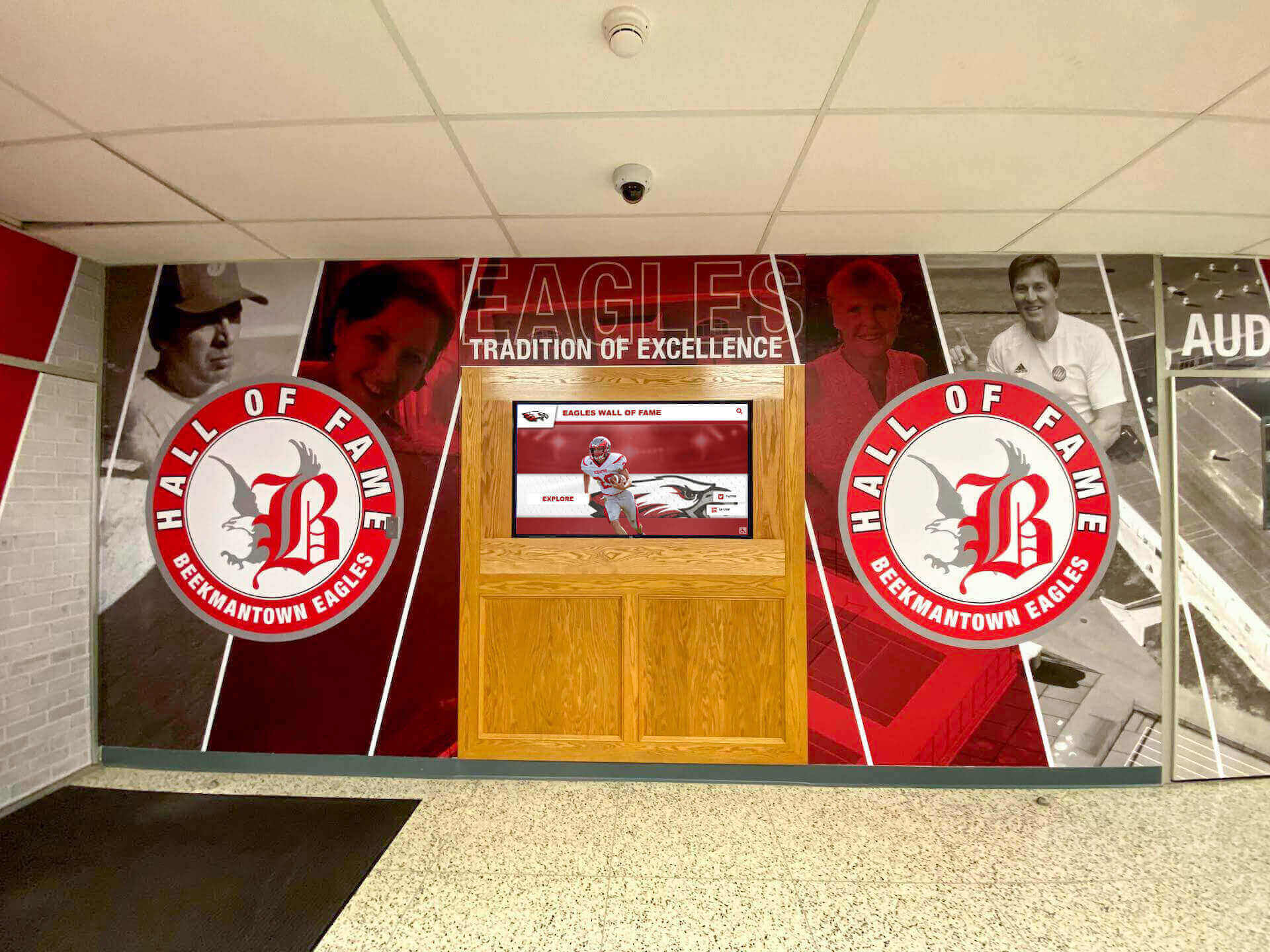
Eagle mascot branding demonstrates how school identity translates across environmental graphics and recognition displays
Student Photography Collages
Covers featuring actual students from the school year create personal connection and inclusive representation of the entire student body.
Collage Composition Strategies
- Grid layout with equal-sized photos representing different grades, activities, and moments
- Organic arrangement with varied photo sizes creating dynamic visual flow
- Silhouette cutouts of students arranged in creative patterns or school-related shapes
- Large group photo as background with smaller individual photos layered on top
- Mosaic effect where many tiny student photos form larger image (mascot, building, year number)
Representation Considerations
- Ensure photos represent demographic diversity of actual student population
- Balance grade level representation (not all sixth graders or all kindergarteners)
- Show variety of activities (academics, arts, athletics, social, special events)
- Include students with varying abilities and backgrounds authentically
- Avoid same students appearing in multiple photos (spread visual representation)
Photo Quality Requirements
- High resolution images (minimum 300 DPI) that maintain clarity when sized for cover
- Consistent lighting and color balance across photos for cohesive appearance
- Similar photo styles (all candid or all posed, not mixed) for visual unity
- Faces clearly visible and in focus for identification and emotional connection
- Released photos with proper permissions from parents/guardians
Jefferson Elementary in California successfully created student-mosaic covers for three years where hundreds of tiny student headshots formed the shape of their mascot when viewed from distance. Close examination revealed individual students while stepping back showed the unified mascot symbol—representing both individual identity and community connection.
Theme Statement and Motto Designs
Covers centered on annual theme statements provide conceptual framework that extends throughout the yearbook’s internal pages.
Common Elementary Yearbook Themes
- “Together We Grow”: Focus on community, development, and collective progress
- “Making Memories”: Emphasize experiences, friendships, and moments throughout year
- “Dream Big”: Highlight aspirations, possibilities, and achievement
- “Our Story”: Frame year as narrative with students as protagonists
- "[School Name] Strong": Emphasize school pride, unity, and community identity
- “Explore, Discover, Learn”: Academic focus on curiosity and education journey
- “One School, Many Stories”: Celebrate diversity and individual experiences
Design Integration Methods
- Large typography making theme statement the dominant visual element
- Illustrated representations of theme concept (growing tree for growth theme, journey map for exploration)
- Photo selections that visually demonstrate theme throughout the year
- Color and design style choices that reinforce theme mood (warm/communal vs. bold/aspirational)
- Continuing theme visually on spine and back cover for comprehensive coverage
Theme-based covers work best when the theme genuinely reflects the school year’s experiences, initiatives, or community values rather than generic statements that could apply to any school. Schools that select themes early in the year and incorporate them into school communications and recognition programs create stronger cohesion between cover design and yearbook content.
Artistic and Illustrated Approaches
Covers featuring original artwork or illustration offer distinctive visual identity that distinguishes the yearbook from photo-heavy designs.
Student Artwork Integration
- Schoolwide art contest with winning design featured on cover
- Compilation of artwork from different students throughout grades
- Collaborative mural created by multiple classes or entire student body
- Digital manipulation of student artwork for polished presentation
- Scanning and arranging students’ handwritten names as design element
Professional Illustration Options
- Custom mascot illustration by professional illustrator
- Thematic illustration representing school year’s major events or initiatives
- Decorative patterns and graphics inspired by student artwork but refined for polish
- Illustrated portraits of students in uniform artistic style
- Mixed media combining photography with illustrated overlay elements
Washington Elementary School invited students to submit mascot drawings during art class, then hired a local illustrator to create a finished cover incorporating elements from multiple student submissions. The process engaged students in cover design while ensuring professional execution, and students felt ownership seeing their creative contributions reflected in the final product.
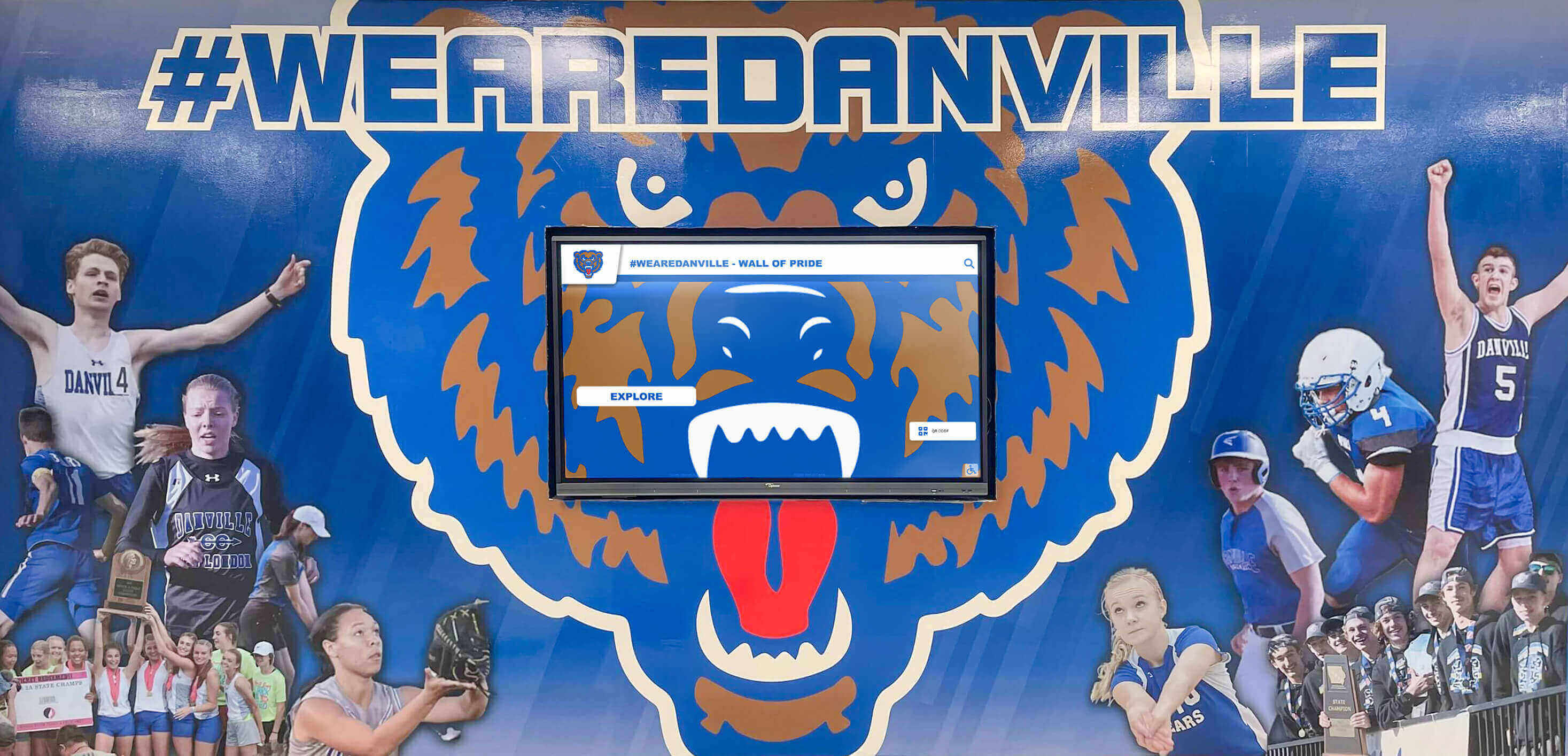
Creative mascot murals demonstrate how school branding creates cohesive visual identity across campus spaces
Color Theory for Elementary Yearbook Covers
Color choices significantly impact cover appeal, readability, and emotional response—particularly important for elementary students whose color preferences and perceptions differ from older students.
School Color Applications
Most elementary schools have established color schemes that should anchor cover design while allowing creative interpretation.
Traditional School Color Usage
- Primary school color as dominant background (60-70% of cover)
- Secondary school color for accents and typography (20-30% of cover)
- Neutral tones (white, cream, gray) for text backgrounds ensuring readability (10% of cover)
- Official colors matched precisely to brand guidelines or athletic uniform colors
- Consistent color application across front cover, spine, and back cover
Creative School Color Variations
- Gradient treatments blending both school colors for modern effect
- Tints and shades of official colors expanding palette while maintaining identity
- One school color as solid background, the other as pattern or texture overlay
- Color blocking with geometric shapes in school colors creating dynamic composition
- Watercolor or painted effects using school colors for artistic interpretation
Madison Elementary found success alternating between two cover color approaches year-by-year: one year featuring navy as dominant with gold accents, the next featuring gold as dominant with navy accents. The alternation created collectability while maintaining consistent school identity.
Emotional Impact of Color Choices
Colors trigger psychological and emotional responses that affect how students and families perceive and remember the yearbook.
Color Psychology for Elementary Audiences
- Blue: Trust, calm, stability, knowledge (excellent for academic-focused themes)
- Green: Growth, nature, renewal, health (ideal for growth or environmental themes)
- Yellow/Gold: Happiness, optimism, energy, friendship (creates warmth and positivity)
- Orange: Creativity, enthusiasm, excitement, playfulness (appeals to elementary energy)
- Red: Passion, strength, courage, importance (demands attention but use sparingly)
- Purple: Creativity, imagination, wisdom, magic (works for artistic or imaginative themes)
- Warm Color Combinations: Red/orange/yellow create energy, excitement, warmth
- Cool Color Combinations: Blue/green/purple create calm, contemplation, serenity
Color Contrast for Accessibility
- High contrast between background and foreground ensures readability for all students
- Test designs in grayscale to confirm value contrast independent of color
- Avoid red-green combinations that create difficulty for colorblind viewers (8% of males)
- Use online contrast checkers to meet WCAG accessibility standards (4.5:1 ratio minimum)
- Consider how colors reproduce in print versus screen display (colors shift slightly)
Seasonal and Time-of-Year Colors
Elementary yearbook covers can incorporate seasonal color palettes that reference the school year timeline.
Traditional Academic Year Palette
- Fall colors (rust, orange, gold, brown) for school year beginning in autumn
- Spring colors (fresh green, light blue, pink, yellow) for school year ending in spring
- Gradient or progression from fall to spring colors representing journey through year
- Four-season color blocks representing each quarter of the school year
- Colors matching memorable school events throughout the calendar (Halloween orange, winter blue, spring pastels)
Schools in year-round or non-traditional calendar systems should adjust seasonal references to match their actual schedule or avoid seasonal cues entirely in favor of timeless color approaches.
Design Layout and Composition Strategies
The arrangement of visual elements on the cover creates hierarchy, directs attention, and communicates professionalism—critical considerations for designs students will value decades later.
Rule of Thirds and Visual Balance
Applying basic composition principles creates covers that feel professionally designed rather than haphazardly arranged.
Rule of Thirds Application
- Divide cover into 3x3 grid (like smartphone camera overlay)
- Place primary visual elements at intersection points (optimal attention areas)
- Position mascot, main photo, or focal point at power intersections
- Avoid centering everything (creates static, less engaging composition)
- Use grid lines to guide text placement and element alignment
Visual Weight Distribution
- Balance heavy elements (dark colors, large images, bold typography) across composition
- Avoid clustering all visual weight in one corner or area
- Use symmetrical balance for traditional, formal feel
- Use asymmetrical balance for dynamic, contemporary feel
- Create visual pathway guiding eye through elements in intentional order
Negative Space Utilization
- Allow sufficient empty space for visual rest and clarity
- Avoid filling every inch with imagery or graphics (creates visual noise)
- Use negative space to separate and frame important elements
- White space acts as “breathing room” particularly important for young readers
- Negative space can form shapes (mascot silhouette in empty space)
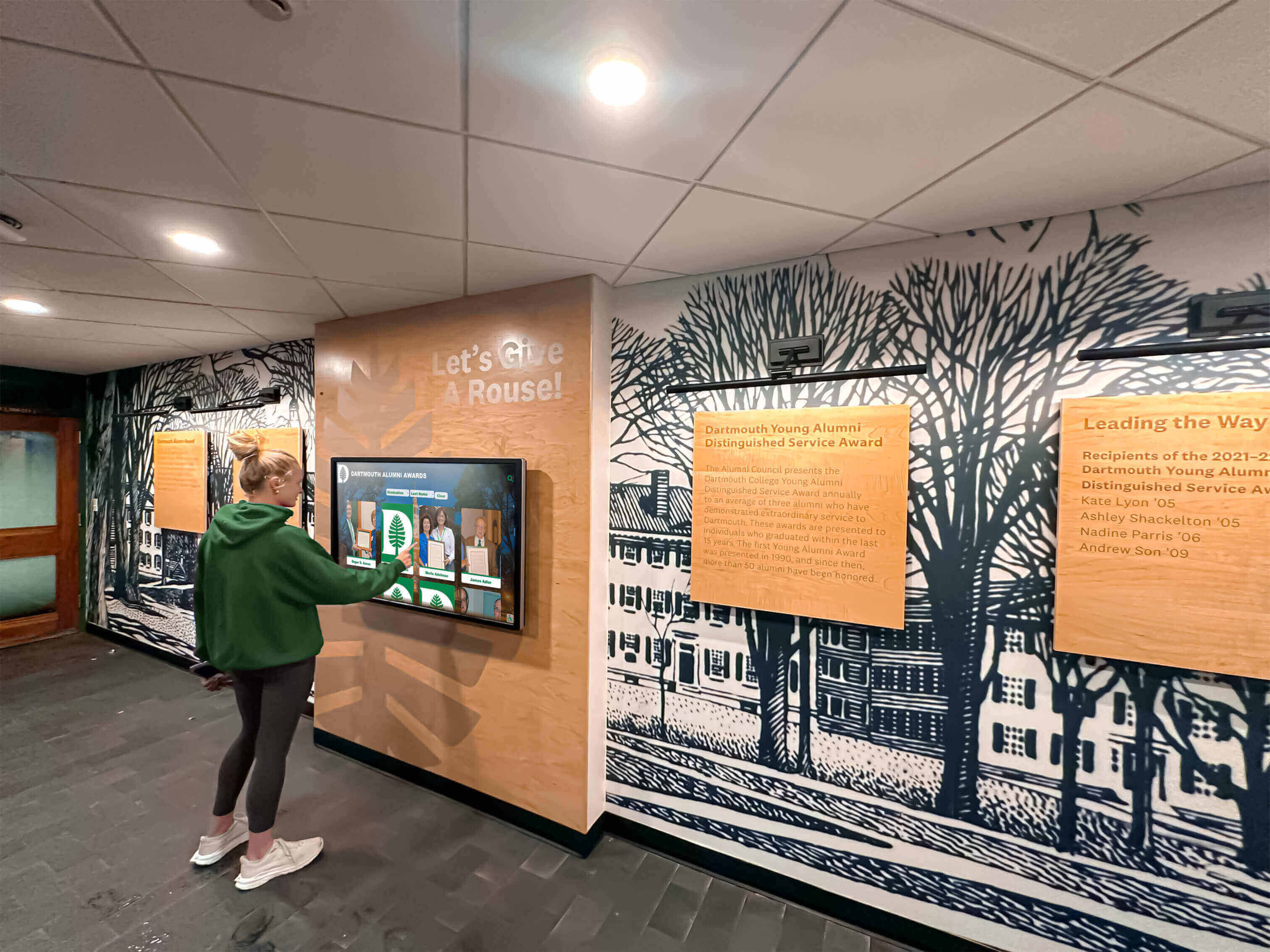
Student engagement with visual displays demonstrates how interactive design captures attention and creates memorable experiences
Spine and Back Cover Coordination
Professional yearbook design extends beyond front cover to create cohesive package across all exterior surfaces.
Spine Design Requirements
- School name clearly visible when yearbook sits on shelf
- Year prominently displayed for identification among other yearbooks
- Design elements that continue visual theme from front cover
- Adequate margins accounting for binding method (spiral, perfect bound, sewn)
- Typography sized appropriately for narrow spine width (typically 0.5-1 inch)
Back Cover Integration Options
- Extended background or pattern from front cover wrapping around
- Collage continuation with additional student photos not on front
- School information (address, mascot, motto) in professional layout
- QR code linking to digital yearbook content or school website
- Sponsor acknowledgments if applicable to yearbook funding model
- ISBN or publication information if distributing beyond school
Front-to-Back Visual Flow
- Color palette consistency across all surfaces
- Design motifs (borders, patterns, graphics) appearing on front, spine, and back
- Photography style matching across front and back images
- Typography families used consistently throughout external surfaces
- Overall aesthetic coherence creating unified product rather than three separate designs
Jefferson Elementary treated their cover as a wraparound canvas, creating a panoramic illustration of their campus that began on the back cover, continued across the spine, and concluded on the front cover. Students enjoyed examining how the complete scene connected when the yearbook lay open flat, creating engaging experience beyond typical front-cover-only focus.
Finishing Treatments and Special Effects
Physical cover treatments add tactile dimension and perceived value that distinguish yearbooks from standard publications.
Coating Options
- Gloss laminate: Shiny finish enhancing colors and creating premium feel (most common)
- Matte laminate: Subtle finish reducing glare, sophisticated appearance, fingerprint-resistant
- Soft-touch laminate: Velvety texture creating luxurious tactile experience (premium option)
- Spot UV: Glossy coating on specific design elements over matte background (high contrast effect)
Embellishments
- Foil stamping: Metallic foil (gold, silver, copper) applied to text or design elements
- Embossing: Raised elements creating dimensional texture (expensive but impressive)
- Die-cutting: Custom-shaped covers beyond standard rectangle (window revealing page beneath)
- Texture patterns: Linen, leather, or custom patterns embossed across cover surface
Practical Considerations
- Special effects increase per-unit cost by $2-8 depending on complexity
- Some effects require higher minimum order quantities
- Delicate finishes may not withstand elementary student handling as well as standard laminate
- Effects should enhance design rather than substitute for weak underlying concept
- Balance special effects with budget realities for school community
Most elementary schools find gloss or matte laminate provides excellent durability and appearance at reasonable cost. Schools with larger budgets or fundraising success can explore foil stamping school names or embossing mascots for added distinction.
Technical Specifications and Production Requirements
Understanding print production requirements ensures designs reproduce correctly and meet manufacturer specifications for successful printing.
File Format and Resolution Standards
Yearbook cover artwork must meet professional print standards significantly higher than screen display requirements.
Required Specifications
- Resolution: Minimum 300 DPI (dots per inch) at final print size
- Color mode: CMYK (cyan, magenta, yellow, black) for print, not RGB for screens
- File format: Print-ready PDF with embedded fonts and images
- Bleed: Extra 0.125-0.25 inches beyond trim size for cutting accuracy
- Safe zone: Keep text and important elements 0.25 inches from trim edge
- Spine width: Calculate based on page count and paper weight (printer provides specification)
Common Technical Mistakes to Avoid
- Using low-resolution internet images that appear pixelated when printed
- Designing in RGB color mode causing unexpected color shifts when converted to CMYK
- Placing text too close to edge where it gets cut off during trimming
- Not extending background colors/images to bleed edge (creates white line after cutting)
- Using special colors (Pantone) without confirming printer capabilities
- Not embedding fonts resulting in substitutions and typography changes
Working with Yearbook Companies
Most elementary schools partner with yearbook companies providing templates, design support, and printing services.
Major Elementary Yearbook Publishers
- Jostens: Largest provider with extensive template library and design tools
- Lifetouch: Photography-focused with integrated school photo programs
- Herff Jones: Comprehensive design options with online editing platform
- TreeRing: Modern digital-first approach with collaborative design tools
- Entourage: Customizable templates with design flexibility
Template Advantages and Limitations
- Templates ensure technical specifications are met automatically
- Pre-designed layouts accelerate production timeline significantly
- Professional design structure accessible to non-designer coordinators
- Templates may feel generic or similar to other schools using same publisher
- Customization options vary by publisher and package level
- Some templates limit creative freedom in exchange for ease of use
Custom Design Considerations
- Schools hiring professional designers need to ensure files meet printer requirements
- Custom designs provide unlimited creative control and unique appearance
- Requires more timeline for design iterations and technical preparation
- May cost more than template-based options depending on designer fees
- Consider hybrid approach: custom front cover with template interior pages
Many schools find success using templates for interior pages (providing structure and speed) while investing design effort in custom covers that create distinctive first impression and lasting identity for that year’s edition.
Print Production Timeline
Elementary yearbook production requires careful timeline management to capture full school year while delivering books before school ends.
Typical Production Schedule
- August-September: Select yearbook theme, plan cover concept, establish committee
- October-November: Begin photography, develop cover design options
- December-January: Finalize cover design, submit to printer for approval
- February-March: Complete interior page design and content
- April: Final proofing and submission to printer
- May-June: Printing and delivery for distribution before school year ends
Cover-Specific Deadlines
- Cover design typically due 2-3 months before final book delivery
- Early cover submission allows printer to begin preparation while interior finalizes
- Rush fees apply for expedited production (adding 25-50% to costs)
- Spring delivery requires January-February cover submission for most printers
- End-of-year photo inclusion requires planning what can wait versus what appears on cover
Schools planning student photo collage covers should photograph fall and winter while designing the cover layout, then add spring photos to interior pages rather than waiting for year-end photography to begin cover design—a delay that compresses already tight timelines.
Student Involvement in Cover Design
Engaging students in the cover creation process builds investment, teaches design thinking, and ensures the cover reflects student voice rather than only adult preferences.
Student Design Competitions
Structured competitions provide frameworks for broad student participation in cover design.
Competition Structure Options
- Schoolwide contest: All students invited to submit design concepts or artwork
- Grade-level competitions: Each grade submits representative design, committee selects winner
- Classroom collaborative projects: Art classes create designs as curriculum project
- Selected student committee: Yearbook club or leadership students develop options for school voting
- Hybrid approach: Student concepts professionally refined by adult designer or yearbook company
Competition Guidelines
- Provide clear specifications (dimensions, required elements, file format if digital)
- Establish evaluation criteria (school spirit representation, visual appeal, originality, feasibility)
- Form diverse judging panel (students, teachers, administrators, parents)
- Set reasonable submission deadlines allowing adequate design time
- Plan recognition for winners and finalists (assembly announcement, yearbook feature, certificates)
Managing Submissions
- Expect wide range of skill levels and conceptual sophistication
- Some submissions may require significant refinement for production feasibility
- Consider finalist approach where top 3-5 designs are professionally polished before final selection
- Protect student feelings with constructive feedback rather than public rejection
- Display all submissions to honor participation even if not selected as cover
Madison Elementary ran successful competitions for five consecutive years, each time featuring the winning student on the yearbook’s first page with explanation of their design inspiration and process—creating meaningful recognition that made competition desirable for subsequent years.
Student Focus Groups and Feedback
Even when adults lead design, student input ensures covers resonate with the intended elementary audience.
Feedback Session Structure
- Present 2-4 finalist cover concepts to student groups
- Include representation from multiple grade levels (primary and upper elementary)
- Ask specific questions: “Which cover makes you most excited?” “Which shows our school best?” “Which would you want to keep forever?”
- Observe immediate reactions (excitement, confusion, disinterest) before verbal responses
- Have students explain their preferences to understand reasoning
- Document feedback for design refinement
Incorporating Student Suggestions
- Look for pattern trends across multiple students rather than individual outlier opinions
- Distinguish between actionable feedback and subjective taste preferences
- Involve students in minor customization decisions (color options, photo selections)
- Test revised designs with new student group to confirm improvements
- Balance student preferences with adult considerations (appropriateness, longevity, technical feasibility)
The goal isn’t designing covers by committee or letting every suggestion dictate choices, but rather ensuring the final design connects authentically with students who are the yearbook’s primary audience and long-term keepers.
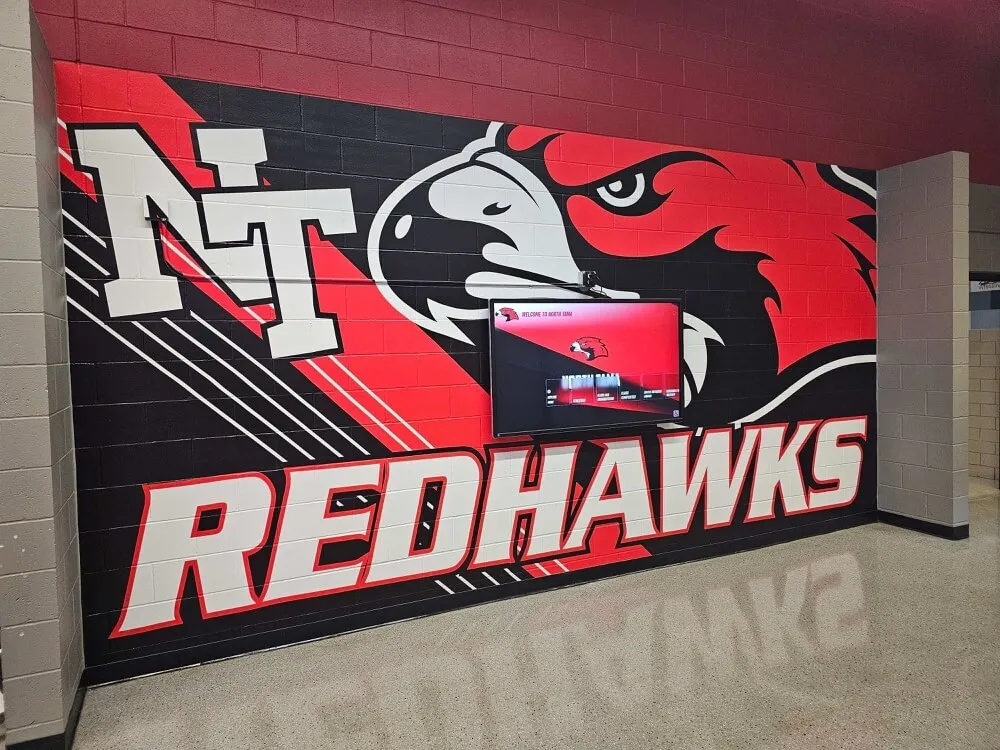
School mascot branding creates consistent visual identity across hallway murals and recognition displays
Budget Considerations and Cost Management
Elementary yearbook programs operate within varying budget constraints requiring strategic decisions about where to invest limited resources for maximum impact.
Cover Cost Factors
Understanding what drives cover costs helps schools make informed decisions aligned with budget realities.
Base Cost Elements
- Standard laminate cover: Typically $0.50-2.00 per book depending on quantity
- Hardcover binding: Adds $3-6 per book compared to softcover
- Four-color printing: Standard (all covers use CMYK, no additional cost)
- Quantity economies: Per-unit cost decreases with larger orders (200+ books)
Premium Upgrade Costs
- Foil stamping: Adds $0.75-2.00 per book depending on coverage area
- Spot UV coating: Adds $0.50-1.50 per book
- Embossing: Adds $1.50-3.00 per book
- Custom die-cutting: Adds $2-4 per book plus die setup fee
- Premium laminate: Adds $0.25-1.00 per book for soft-touch or specialty finishes
Design Service Costs
- Professional designer fees: $500-2,500 depending on scope and designer experience
- Yearbook company design services: Often included with purchase or $200-800
- Stock photography licenses: $50-500 depending on usage rights and image count
- Custom illustration: $300-1,500 depending on complexity and artist rates
Maximizing Impact Within Budget
Schools can create impressive covers without premium treatments through strategic design decisions.
High-Impact, Low-Cost Strategies
- Focus design budget on front cover only; use simpler treatment for back
- Invest in professional photography rather than special printing effects (great photos outperform mediocre photos with foil)
- Use student artwork eliminating illustration costs while adding authenticity
- Choose bold, graphic designs that look impressive with standard printing
- Create visual interest through design and composition rather than expensive embellishments
When Premium Features Make Sense
- Milestone years (school anniversaries, building openings, significant events)
- Schools with strong parent fundraising supporting enhanced yearbook budget
- When premium feature directly reinforces theme (embossed mascot for mascot-centered design)
- Upper elementary only (grades 4-6) where students better appreciate and preserve special finishes
- Schools where yearbook serves as primary school memorabilia (minimal other commemorative items)
Jefferson Elementary alternates between standard and premium covers on two-year cycles—standard covers most years with premium treatments for significant anniversaries or special occasions. This approach manages budget while periodically creating extra-special editions students and families remember.
Fundraising for Enhanced Yearbook Design
Schools desiring premium covers beyond base budget can pursue targeted fundraising for yearbook enhancement.
Yearbook-Specific Fundraising
- Pre-sale campaigns offering discounted pricing for early yearbook purchases
- Sponsorship ads on back cover or interior pages offsetting production costs
- Parent donations specifically designated for yearbook program
- School organization grants (PTA/PTO funds) supporting student activities
- Community partnerships with local businesses providing photography or design services
Value Communication
- Explain how enhanced covers create keepsakes students treasure long-term
- Share samples of premium versus standard finishes for comparison
- Connect yearbook quality to school pride and community recognition
- Frame yearbook investment as preserving memories and documenting school history
- Demonstrate yearbook role in creating lasting connection to elementary experience
Most parents willingly support modest yearbook cost increases (typically $5-15 per book) when they understand how the investment enhances the finished product their child will keep forever.
Avoiding Common Elementary Yearbook Cover Mistakes
Learning from frequent design pitfalls helps schools create more successful covers on first attempts rather than through trial and error.
Design Mistakes to Avoid
Overly Complex Compositions
- Problem: Cluttering cover with too many images, fonts, colors, and graphic elements
- Impact: Creates visual chaos difficult for elementary eyes to process
- Solution: Apply “less is more” principle focusing on 1-2 primary visual elements with supporting design
Inconsistent Branding
- Problem: Cover design disconnected from school’s visual identity, colors, or mascot
- Impact: Yearbook feels generic rather than specific to school community
- Solution: Audit existing school branding and recognition displays, incorporate recognizable elements
Poor Photo Quality
- Problem: Using low-resolution, poorly lit, or out-of-focus photography
- Impact: Cover appears unprofessional regardless of strong design concept
- Solution: Invest in quality photography or select best existing images meeting technical standards
Illegible Typography
- Problem: Decorative fonts, insufficient size, poor contrast, or text over busy imagery
- Impact: Elementary students and families struggle reading essential cover information
- Solution: Test readability at actual viewing distance with student focus groups
Dated Design Trends
- Problem: Following temporary design fads that quickly feel outdated
- Impact: Yearbook appears old-fashioned when reviewed years later
- Solution: Balance contemporary appeal with timeless design principles focused on school identity
Production Mistakes to Avoid
Missing Printer Deadlines
- Problem: Late submissions causing rushed production or missing delivery before school ends
- Impact: Students don’t receive yearbooks before summer break, reducing engagement
- Solution: Work backward from delivery date establishing milestone deadlines with buffer time
Incorrect File Specifications
- Problem: Wrong resolution, color mode, dimensions, or file format for printer
- Impact: Colors print incorrectly, images appear blurry, or files rejected requiring rework
- Solution: Request printer specifications early, build template matching requirements exactly
Insufficient Proofing
- Problem: Failing to catch typos, missing text, incorrect year, or design errors
- Impact: Permanent mistakes in printed books distributed to entire school
- Solution: Multiple reviewers check printed proof copy before authorizing full print run
No Contingency Timeline
- Problem: Building schedule with no buffer for delays, revisions, or unexpected issues
- Impact: Rushed decisions, compromised quality, or missed distribution timeline
- Solution: Add 2-3 week buffer between cover completion and final due date
Process Mistakes to Avoid
Design by Committee Paralysis
- Problem: Attempting to incorporate every suggestion from every stakeholder
- Impact: Diluted design losing coherent vision trying to please everyone
- Solution: Gather input broadly but vest decision authority in small core team
Ignoring Student Voice
- Problem: Adults designing covers based on their preferences without student input
- Impact: Covers that appeal to adult sensibilities but don’t resonate with children
- Solution: Include student feedback loops at multiple stages of design process
Last-Minute Theme Selection
- Problem: Choosing theme late in year after many photos already taken
- Impact: Difficulty creating cohesive design when existing photos don’t support theme
- Solution: Establish theme and cover concept by October-November for spring delivery
Underestimating Coordinator Workload
- Problem: Assigning yearbook to already-overloaded volunteer or staff without support
- Impact: Quality suffers when coordinator lacks time or resources to execute well
- Solution: Build yearbook committee sharing responsibilities, provide adequate time and support
Creating Covers That Last: Durability and Preservation
Elementary yearbooks face significant physical handling requiring design and production choices that ensure longevity.
Material Choices for Durability
Cover Stock Options
- 80-100lb cover stock: Standard weight providing adequate durability for softcover
- Hardcover/case binding: Premium option with rigid board covered in printed material
- Layflat binding: Allows cover to open fully flat (better for viewing, more expensive)
- Spiral/coil binding: Durable for frequent page-turning but less formal appearance
Laminate Protection
- All covers should include laminate protection against spills, dirt, and handling
- Matte laminate hides fingerprints better than gloss (important for elementary age)
- Laminate thickness (3mil vs 5mil) impacts durability—thicker better for elementary use
- Corner rounding prevents dog-earing and damage from drops
Spine Reinforcement
- Reinforced binding tape supporting spine stress from repeated opening
- Higher page count requires stronger binding method
- Perfect binding adequate for books under 100 pages; sewn binding better for larger books
Handling Elementary School Distribution
Protective Measures
- Deliver yearbooks in protective bags or sleeves preventing damage during transport home
- Provide nameplate stickers or labels so students can immediately identify their copy
- Consider distributing at end of day so books go directly home rather than in lockers/backpacks
- Include parent letter explaining care and preservation recommendations
Educational Component
- Brief classroom instruction on careful yearbook handling and storage
- Discussion of yearbook as keepsake to preserve rather than disposable book
- Explanation that these represent permanent record they’ll appreciate as adults
- Demonstration of proper page-turning techniques preventing spine damage
Schools distributing yearbooks at special end-of-year assemblies can create ceremony around the event, emphasizing the significance of the yearbook and treating distribution as meaningful ritual rather than casual handout—setting tone that these are important items deserving care.
Frequently Asked Questions About Elementary Yearbook Covers
What makes a good elementary school yearbook cover?
A good elementary school yearbook cover authentically represents school identity through recognizable symbols like mascots and school colors, uses age-appropriate design complexity that appeals to students from kindergarten through fifth or sixth grade, features clear typography that emerging readers can easily decode, incorporates high-quality imagery with strong emotional connection, creates visual excitement without overwhelming composition, and achieves timeless design that won’t feel dated when students review the yearbook decades later. The best covers balance playful creativity appropriate for elementary age with professional execution that honors the significance of preserving an entire school year’s memories.
How much should elementary schools budget for yearbook covers?
Elementary school yearbook covers typically cost $0.50-$2.00 per book for standard four-color printing with laminate finish, with hardcover options adding $3-$6 per book. Premium enhancements like foil stamping add $0.75-$2.00 per book, embossing adds $1.50-$3.00, and specialty finishes like soft-touch laminate add $0.25-$1.00. Professional design services range from $500-$2,500 depending on complexity, though many yearbook companies include basic design support with purchase. Most elementary schools produce quality covers with standard printing while reserving premium treatments for special occasions or milestone years. Larger print runs reduce per-unit costs significantly.
Should elementary yearbook covers feature student photos?
Student photo collages create strong emotional connection and inclusive representation making them popular choices for elementary yearbook covers. The approach ensures every family sees faces they recognize, demonstrates the diversity of the student body, and creates personal investment in the yearbook itself. However, photo collages require careful curation ensuring demographic and grade-level representation, high-resolution images maintaining quality when sized for cover, proper photo releases from all parents, and thoughtful composition preventing visual clutter. Many successful elementary covers balance student photos with school identity elements like mascots or buildings, or alternate between photo-heavy covers some years and symbolic/illustrated covers other years for variety.
How do you choose a yearbook theme for elementary school?
Elementary yearbook themes should reflect genuine school values, initiatives, or experiences from the actual school year rather than generic statements applicable to any school. Strong themes emerge from questions like: What defining events or changes occurred this year? What values do our students and community prioritize? What aspirations do we hold for our students? Common successful elementary themes include growth and development concepts (“Growing Together,” “Bloom Where You’re Planted”), journey and exploration metaphors (“The Adventure Continues,” “Charting Our Course”), community and belonging statements (“One School, Many Stories,” “Together We Shine”), and mascot-centered concepts incorporating school identity. Select themes early in the school year (August-September) allowing the concept to guide cover design, interior page organization, and consistent visual storytelling throughout the yearbook. Test theme options with student focus groups ensuring the concept resonates with elementary-age understanding and enthusiasm.
What software is best for designing elementary yearbook covers?
Professional yearbook design typically uses Adobe InDesign for layout composition, Adobe Photoshop for photo editing and manipulation, and Adobe Illustrator for vector graphics and logo work. These industry-standard tools provide comprehensive design capabilities and generate print-ready files meeting professional specifications. However, most elementary schools work within yearbook company platforms like Jostens Yeartech, Lifetouch Yearbook Studio, or TreeRing’s online design tools—browser-based systems with templates, drag-and-drop functionality, and automatic technical specification compliance. These platforms require no design software purchase or expertise while ensuring files meet printer requirements. Schools with professional designers or advanced design skills gain creative freedom with Adobe tools, while schools relying on parent volunteers or teacher coordinators typically find success with yearbook company platforms balancing ease-of-use with professional results.
How early should you start designing your yearbook cover?
Elementary schools should begin yearbook cover planning in August or September—the start of the school year being captured in the yearbook. Early start allows time for theme selection, cover concept development, student design competitions if applicable, committee review and revisions, and proper integration of design with school year activities and photography. Finalized cover designs typically submit to printers 2-3 months before desired delivery date, meaning schools targeting May delivery should complete covers by January or February. However, the design process including concept development, student involvement, focus group feedback, and refinement typically requires 8-12 weeks, making fall the ideal time to begin even though printing deadlines aren’t until winter. Early planning also ensures the selected theme and cover concept can guide interior page design and photography throughout the year rather than forcing design to work around disconnected photos taken before theme selection.
Building Yearbook Covers That Capture Elementary School Spirit
Elementary school yearbook covers serve as time capsules—visual gateways to memories, friendships, and formative experiences that shape students’ first sustained educational journey. The most successful covers honor this responsibility by authentically representing school identity, engaging students throughout the design process, balancing playful creativity with professional execution, and creating designs that students will treasure not just today but decades later when elementary school represents cherished memories of childhood.
Whether featuring beloved mascots, recognizable campus landmarks, student photo collages, or creative artistic interpretations, effective elementary yearbook covers ground design decisions in what makes your school distinctively yours. They incorporate school branding elements students recognize throughout their daily campus experience, speak to the developmental stage and visual preferences of elementary-age children, and create cohesive design across front cover, spine, and back that demonstrates attention to detail and respect for the yearbook’s enduring significance.
By investing thoughtful consideration into theme selection, design execution, student involvement, and production quality, elementary schools create yearbook covers that unite current students while honoring institutional legacy, attract families to school community while documenting authentic experience, and preserve the magic of elementary years through visual storytelling that endures across generations.
Ready to showcase your elementary school’s identity across campus displays and visual communications? Rocket Alumni Solutions creates custom digital displays and graphics that feature your school’s unique branding while celebrating student achievements and school spirit—creating cohesive visual identity from yearbook covers to hallway recognition displays throughout your campus.