Civil Air Patrol ranks tell a story that every cadet in the room can read at a glance — a cadet colonel’s silver eagle communicates a four-year leadership arc that no certificate can fully capture the way a single look at a shoulder board does. For the more than 26,000 cadets enrolled in CAP squadrons at schools and community units across the United States, rank is the most immediate visual language of achievement. It marks the progression from an uncertain new airman basic all the way to the wing-level leadership roles most cadets spend years working toward. Whether you’re a new cadet learning what each stripe means, a parent trying to understand your son’s or daughter’s latest promotion, or a school administrator building recognition displays for your campus CAP squadron, this guide covers every tier of the rank structure, what the insignia look like, how promotions connect to CAP’s achievement program, and how schools translate rank into compelling hallway and lobby recognition content.

Blue-toned recognition environments align naturally with Civil Air Patrol's Air Force blue color identity, making CAP cadet displays visually cohesive within a school's broader recognition ecosystem
What Civil Air Patrol Ranks Represent
Civil Air Patrol is the official auxiliary of the United States Air Force and carries three congressionally mandated missions: emergency services (including search and rescue and disaster relief), aerospace education, and the cadet program. The cadet program, open to young people ages 12 through 20, uses a structured rank system that mirrors the United States Air Force to give participants a concrete, visible framework for growth.
Unlike academic honor rolls where achievement is invisible until a report card arrives, civil air patrol ranks are worn publicly on the uniform at every meeting, encampment, and community event. This visibility is intentional — it allows any cadet or adult member to immediately identify who holds leadership responsibility in a formation, who has been in the program longest, and who has earned the confidence of the unit’s instructor staff. Rank makes achievement legible in a way that deepens program culture and motivates cadets at every stage of their development.
According to Civil Air Patrol’s program data, the cadet program operates in all 50 states and serves approximately 26,000 cadets through more than 1,100 squadrons nationwide. The structured rank and achievement progression are central to what keeps cadets engaged across multiple years — each promotion represents a concrete, publicly visible milestone that separates CAP’s program from unstructured extracurricular activities.
How CAP Ranks Differ from JROTC Ranks
Schools that host both a JROTC unit and a Civil Air Patrol squadron sometimes find families and visitors confused about the relationship between the two programs. They are distinct organizations with separate rank structures, even though they share the Air Force visual vocabulary of chevrons, bars, and eagles.
The critical distinction: JROTC programs are operated directly by the U.S. military branches (Army, Air Force, Navy, Marine Corps, Coast Guard) in partnership with individual high schools. Civil Air Patrol is a federally chartered nonprofit corporation and the official Air Force auxiliary — it is not itself a branch of the military and is not administered through individual schools the way JROTC programs are. A school may host a CAP cadet squadron that meets on campus without that program being tied to a specific military branch’s JROTC curriculum or staffing structure.
CAP cadet ranks also connect directly to a named achievement ladder. Cadets advance through milestone awards (Curry, Wright Brothers, Goddard, Eaker, Mitchell, Earhart, and Spaatz) as they progress through the program, tying rank to documented accomplishment rather than time-in-grade alone. This achievement-rank connection is one of CAP’s most distinctive structural features.
The Civil Air Patrol Cadet Rank Structure
CAP cadet ranks are organized in two tiers that mirror the U.S. Air Force: enlisted grades and officer grades. All new cadets enter at the lowest enlisted grade and progress upward through achievement, demonstrated leadership, and documented time in the program.
CAP Cadet Enlisted Grades
The enlisted tier covers the first phase of every cadet’s development. Insignia use the Air Force’s stripe and chevron system, visually connecting cadets to the broader Air Force tradition even as they work through CAP’s specific aerospace and leadership curriculum.
| Rank | Abbreviation | Insignia Description | Program Notes |
|---|---|---|---|
| Cadet Airman Basic | C/AB | No insignia on shoulder boards | Entry grade for all new cadets |
| Cadet Airman | C/Amn | One stripe | Awarded upon completing initial orientation requirements |
| Cadet Airman First Class | C/A1C | Two stripes | Demonstrates consistent participation and curriculum progress |
| Cadet Senior Airman | C/SrA | Three stripes | Eligible to begin serving as a training guide for junior cadets |
| Cadet Staff Sergeant | C/SSgt | Three chevrons | NCO tier begins; leads flight-level duties and mentors new cadets |
| Cadet Technical Sergeant | C/TSgt | Three chevrons with two arcs | Senior NCO advising flight or squadron operations |
| Cadet Master Sergeant | C/MSgt | Three chevrons with three arcs | Group-level enlisted staff role |
| Cadet Senior Master Sergeant | C/SMSgt | Three chevrons with four arcs and a star | Senior enlisted specialist at wing or group level |
| Cadet Chief Master Sergeant | C/CMSgt | Three chevrons with five arcs and a star | Highest enlisted cadet grade; senior enlisted adviser for the unit |
CAP Cadet Officer Grades
Officer grades are earned after cadets achieve the Mitchell Award — the major Phase 2 milestone that marks the transition from the program’s foundational phases to its advanced leadership tier. Officer insignia mirror those used throughout the Air Force officer corps, making senior cadet leaders instantly recognizable to any military-affiliated visitor.
| Rank | Abbreviation | Insignia Description | Typical Role |
|---|---|---|---|
| Cadet Second Lieutenant | C/2d Lt | One gold bar | Flight commander; first commissioned cadet grade |
| Cadet First Lieutenant | C/1st Lt | One silver bar | Deputy flight commander or squadron staff officer |
| Cadet Captain | C/Capt | Two silver bars (railroad tracks) | Squadron commander |
| Cadet Major | C/Maj | Gold oak leaf | Group or wing staff officer |
| Cadet Lieutenant Colonel | C/Lt Col | Silver oak leaf | Wing deputy commander |
| Cadet Colonel | C/Col | Silver eagle | Wing commander; highest standard cadet grade |
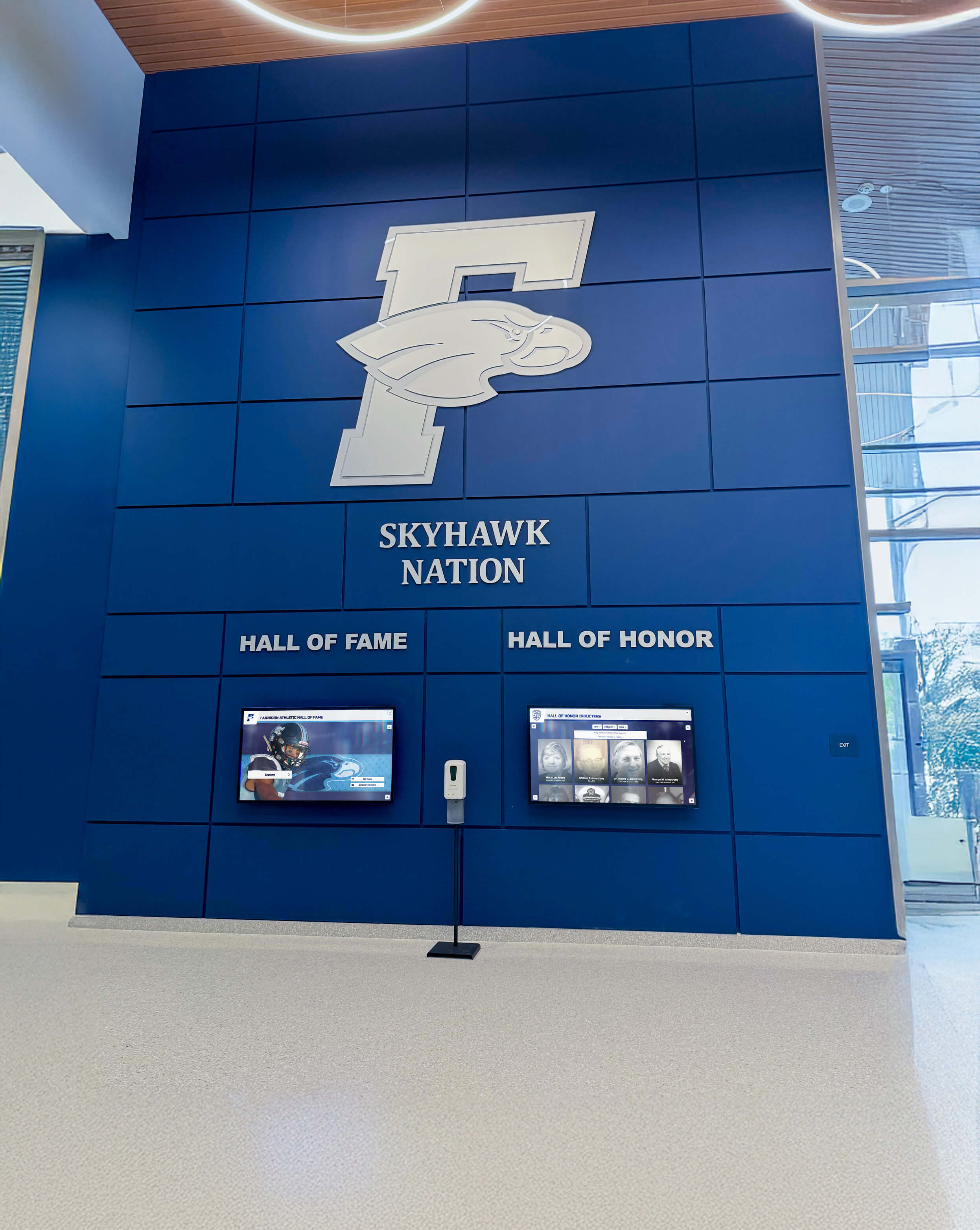
School lobbies and common hallways are natural settings for CAP rank and achievement displays — prominently visible to the full student body throughout the school day
CAP’s Achievement-Linked Promotion System
One of the most important distinctions between CAP ranks and other youth program rank systems is how promotions are directly tied to named achievement milestones. In CAP, advancement through the rank structure reflects documented completion of specific curriculum, physical, and leadership requirements at each program phase — not just accumulated time.
The CAP Achievement Awards Ladder
CAP’s cadet program is organized around a series of achievement awards that cadets pursue in parallel with rank advancement. These awards map to four program phases:
Phase 1 — Learning the Basics
- Curry Achievement — First formal milestone; covers leadership, aerospace education, and fitness fundamentals
- Wright Brothers Achievement — Builds on foundational leadership with expanded aerospace curriculum
- Goddard Achievement — Introduces physical fitness standards and deepens leadership responsibilities
Phase 2 — Leadership
- Eaker Achievement — Advanced leadership module preparing cadets for NCO responsibilities
- Mitchell Award — The major Phase 2 milestone, named for Brigadier General William “Billy” Mitchell. Completion unlocks cadet officer eligibility and makes cadets eligible for CAP’s powered flight scholarship program — one of the most tangible benefits the program offers
Phase 3 — Command
- Earhart Award — Requires a sustained record of leadership at the officer level, advanced aerospace education completion, and documented community service contributions
Phase 4 — Completing the Program
- Spaatz Award — Named for General Carl A. Spaatz, the first Chief of Staff of the United States Air Force. The Spaatz Award is CAP’s highest cadet honor. CAP’s own program documentation indicates that it is earned by only a small fraction of all program participants — typically less than 1% — over a multi-year career of excellence across every program dimension
This achievement-rank connection means that a cadet’s insignia carry additional meaning compared to most youth programs. Rank communicates not just seniority but specific documented accomplishments at each program phase.
Reading CAP Insignia: What Each Element Means
Understanding the visual grammar of CAP insignia helps families, school staff, and visitors interpret what they see on a cadet’s uniform.
Stripes — Worn on shoulder boards at junior enlisted grades (Airman through Senior Airman). Each stripe represents a step upward through the foundational enlisted tier. One stripe equals Airman; three stripes equals Senior Airman.
Chevrons — V-shaped devices beginning at Staff Sergeant. The three-chevron base is common to Staff Sergeant through Chief Master Sergeant; additional arcs below indicate seniority within the NCO grades.
Arcs (Rockers) — Curved stripes below the chevron cluster that indicate senior NCO seniority. One arc equals Technical Sergeant; two equals Master Sergeant; three equals Senior Master Sergeant; additional arcs with the star device distinguish the most senior grades.
Star Device — Appears between the chevrons and arcs at Senior Master Sergeant and Chief Master Sergeant, distinguishing these senior grades from the Master Sergeant tier.
Bars — Rectangular devices worn on shoulder boards for cadet officer grades. A single gold bar indicates Second Lieutenant; a silver bar indicates First Lieutenant; two parallel silver bars (the “railroad tracks”) indicate Captain.
Oak Leaves — Field-grade insignia for Major (gold leaf) and Lieutenant Colonel (silver leaf). These match the same visual convention used throughout the Air Force and most other military branches.
Eagle — The Cadet Colonel insignia — a silver eagle with wings spread, facing toward the wearer’s right. This is the highest standard cadet grade and typically designates the wing commander or comparable senior leadership position within a large unit.
How CAP Ranks Appear on the Uniform
CAP cadets wear the Air Force Blue service uniform with rank displayed on shoulder boards — the padded epaulet-style devices attached at the shoulder seam. Unlike Army-style JROTC programs that display rank on the collar, CAP’s shoulder board system mirrors the Air Force officer uniform convention while extending it to all cadet grades including enlisted.
Additional uniform elements that communicate rank and achievement include:
- Ribbon rack — A miniature array of CAP-issued ribbons worn above the left breast pocket, representing individual achievements, encampment attendance, special activities, and service milestones. Senior cadets with years of experience often have ribbon racks spanning multiple rows, creating an immediately visible record of accomplishment even before rank insignia are read
- Achievement badges — Specialty badges such as the Mitchell Award ribbon and Earhart Award ribbon appear on the ribbon rack and signal completion of the program’s most significant milestones
- Name tag and organizational identification — Standard Air Force-format name tags identify the cadet, while organizational identification connects them to their specific squadron and wing
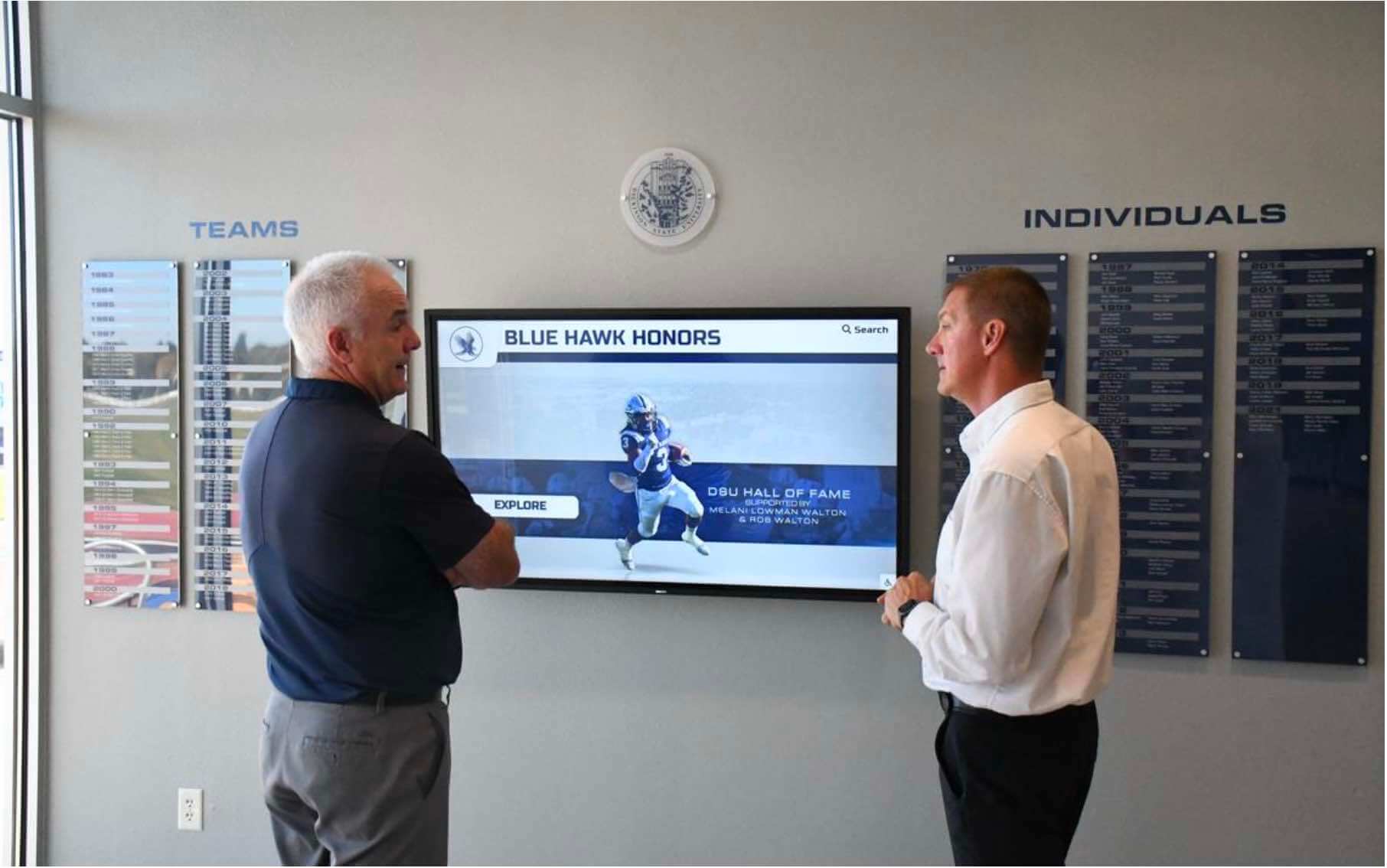
Interactive digital displays transform static recognition boards into explorable environments where families and visitors can discover the full context behind each rank and achievement milestone
CAP Promotion Requirements and Process
CAP cadet promotions are governed by Civil Air Patrol’s cadet program regulations and administered through the unit’s composite squadron or cadet squadron. The promotion process involves several documented components evaluated by the senior member staff.
Eligibility Requirements
Achievement completion — Cadets must have completed the achievement module associated with their next promotion. Achievement completion is tracked in CAP’s national online system (eServices) and requires completing the associated academic test, leadership laboratory activities, and physical fitness requirements.
Time in grade — CAP regulations specify minimum time requirements before a cadet is eligible for advancement to the next grade. These minimums exist to ensure cadets have adequate time to apply their current rank’s responsibilities before moving forward.
Attendance and participation — Regular attendance at squadron meetings is required for promotion eligibility. Most squadrons require a minimum attendance percentage over the preceding evaluation period, with provisions for verified extenuating circumstances.
Leadership evaluation — At NCO and officer grades, cadets must receive positive evaluations from senior member staff on leadership competencies — specifically the ability to lead and mentor junior cadets, conduct drill and ceremony, and represent CAP standards in the community.
Academic standards — CAP regulations generally require cadets to maintain satisfactory academic standing at their school as a condition of continued promotion eligibility, tying program advancement to overall student success.
Promotion Boards
Many CAP units hold formal cadet promotion boards for NCO and officer grades, similar in structure to the promotion boards used in JROTC programs. A promotion board typically involves the promotion candidate appearing before a panel of senior cadet officers and adult senior members, who evaluate military bearing, uniform appearance, verbal communication, and the candidate’s knowledge of CAP history, the chain of command, and cadet regulatory requirements.
Promotion boards are both a quality-control mechanism and a developmental experience — they simulate professional evaluation processes that cadets will encounter throughout their careers and higher education, long before those situations arise in a work context.
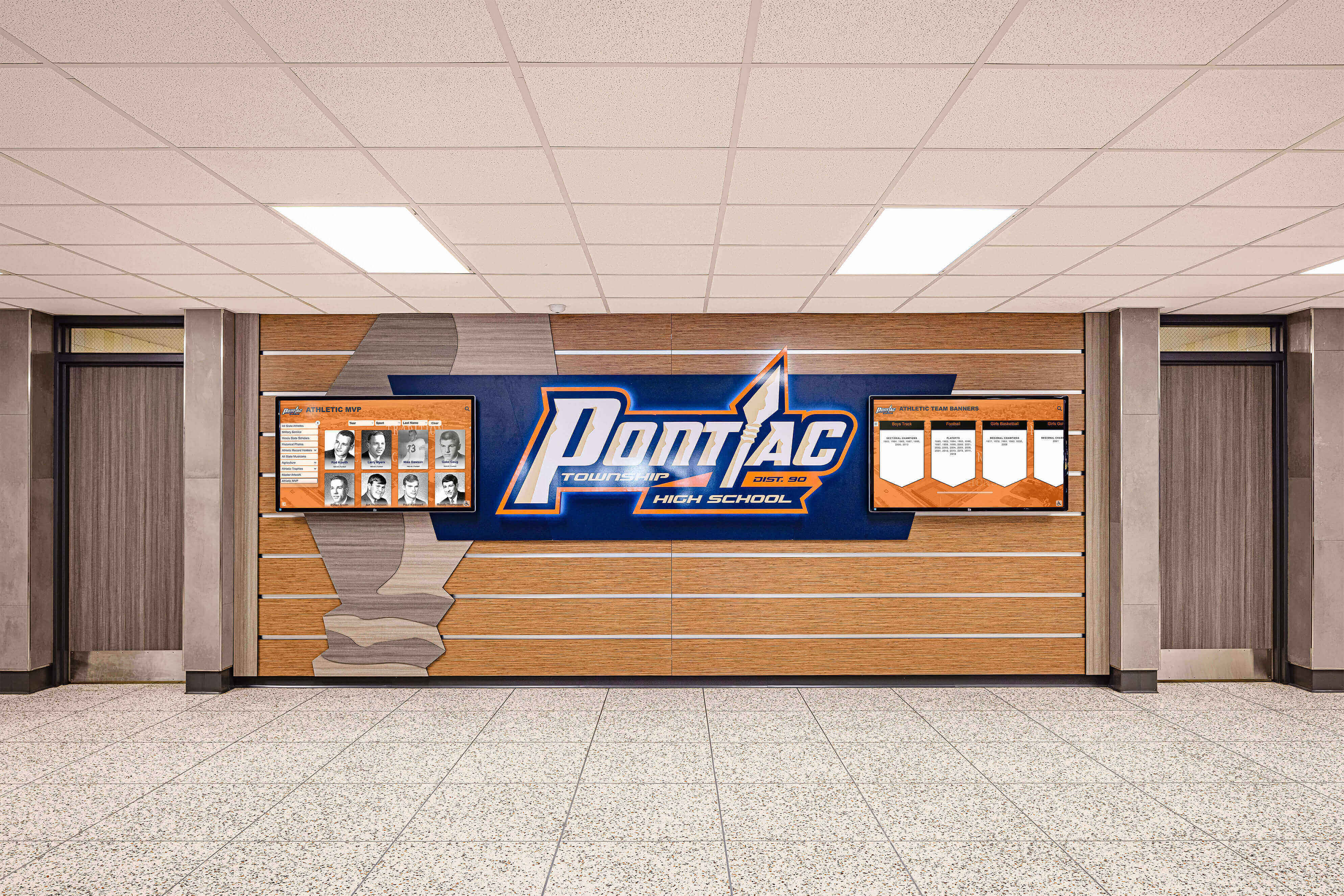
Hallway honor boards organized by program and achievement tier create recognition environments that are immediately legible to students, parents, and visitors without requiring any explanation
How Schools Display CAP Ranks in Recognition Programs
Civil Air Patrol rank structure provides a visually rich, naturally hierarchical framework for school recognition displays. Schools that host CAP squadrons can build recognition environments that communicate program quality and celebrate individual cadet achievement to the entire campus community.
Rank-Aware Cadet Officer Boards
The cadet officer board — a formatted display of the current year’s cadet officer corps with individual portraits and rank insignia — is the most fundamental recognition display any CAP unit can build. Best-practice cadet officer boards:
- Feature individual portrait photographs of each officer in dress uniform
- Display rank insignia prominently alongside the cadet’s name and current role
- Organize the display hierarchically from the Cadet Colonel down through Second Lieutenants
- Include the squadron name, charter number, and school affiliation in a professional header design
These boards serve the practical function of identifying current leadership while also communicating program prestige to every student, parent, and visitor who passes through the space. Schools that maintain academic honor society recognition frameworks find that adding a rank-aware CAP cadet officer board creates a cohesive multi-program recognition environment that honors different forms of student achievement under a unified visual standard.
Achievement Milestone Recognition Walls
CAP’s named achievement awards (Curry through Spaatz) are natural content for dedicated hallway or lobby recognition panels. A multi-year achievement board tracking which cadets earned the Mitchell Award, Earhart Award, or Spaatz Award in each graduating class creates an institutional record that inspires current cadets and honors program alumni simultaneously.
The rarity of the Spaatz Award means that a school’s list of recipients, even going back decades, may be short enough to fit on a single display panel. This concentration makes Spaatz Award recognition particularly powerful: visitors immediately understand that each name represents years of sustained excellence.
Digital recognition displays designed for school settings use the same design principles that serve CAP achievement walls well — portrait photography, rank or achievement annotation, and clear hierarchical organization — creating environments that communicate institutional seriousness to every observer.
Veterans Day and Community Service Recognition
CAP cadets are among the most visible youth volunteers in school communities. Their emergency services training, community service hours, and support for Veterans Day ceremonies make them natural candidates for public recognition alongside the school’s academic and athletic honorees.
Schools that plan digital displays for student recognition and community events often involve their CAP cadet squadron in ceremony color guards, honor flights, and memorial presentations — recognition moments that deserve permanent documentation in the school’s physical spaces.
Digital Displays for CAP Squadron Recognition
Schools with digital signage or interactive displays have meaningful advantages for CAP squadron recognition. Unlike static boards that require physical reprinting to update, digital displays allow squadrons to recognize newly promoted cadets within days of their ceremony and rotate content seasonally to reflect encampment completions, solo flight achievements, and competitive results.
Digital hall of fame touchscreen systems offer a format that transitions naturally from traditional physical plaques to interactive digital recognition — maintaining the formal aesthetic appropriate for a military youth program while gaining the flexibility of updatable content management.
Interactive touchscreen kiosk software for schools allow CAP programs to build searchable archives of past cadet officer classes, achievement milestone recipients, and squadron competitive history — transforming program records from binders on a shelf into an engaging institutional resource accessible to current cadets and returning alumni alike.
Year-Round Recognition Content Planning for CAP Programs
Effective CAP squadron recognition isn’t a single installation — it’s an ongoing content program that reflects the rhythm of the cadet year. A well-planned recognition calendar for a school CAP squadron might include:
Fall (August–October):
- New school year officer installation portraits and rank displays
- New cadet welcome and orientation content
- Return from summer encampment recognition updates
Winter (November–February):
- Veterans Day and holiday ceremony recognition
- Mid-year promotion ceremony content
- Aerospace education achievement displays
Spring (March–May):
- End-of-year promotion ceremony content and officer transitions
- Annual review and inspection recognition
- Senior cadet graduation recognition including Earhart and Spaatz Award recipients
- Powered flight scholarship announcement content
Summer (June–August):
- Encampment and special activity completions
- National CAP competition recognition
- Leadership laboratory milestone updates
Schools that maintain interactive digital composite displays and class yearbook systems find that CAP squadron content integrates naturally with athletic and academic recognition schedules — creating a more complete picture of school community achievement across all program types throughout the year.

Portrait card display formats — organized by rank tier and achievement level — translate directly from athletic recognition to CAP cadet officer boards, making the hierarchical structure of civil air patrol ranks legible at a glance
Designing Rank-Accurate Recognition Graphics
When schools create certificates, banners, promotion ceremony programs, or digital display content for CAP cadets, rank accuracy is essential. A certificate showing incorrect insignia — or a banner displaying a sergeant’s chevrons where an officer’s bar should appear — undermines the recognition it intends to deliver.
Best practices for rank-accurate CAP recognition design:
Reference current CAP uniform regulation — CAP Regulation 39-1 (Cadet and Senior Member Uniforms) is the authoritative source for insignia specifications. Keep a current version on file when designing recognition materials, as specifications can be updated.
Use the cadet’s rank at time of recognition — Certificates should reflect the rank held at the specific achievement moment, not the cadet’s current rank if they’ve since been promoted.
Scale insignia proportionally — When incorporating rank insignia into print materials, maintain original proportions. Distorted chevrons or stretched eagle devices undermine the professional quality the program represents.
Match the color conventions precisely — CAP officer bars are gold (Second Lieutenant) and silver (First Lieutenant and above). Oak leaves are gold (Major) and silver (Lieutenant Colonel). The eagle is silver. These distinctions should be confirmed against official references before printing.
Incorporate the CAP roundel correctly — Certificate and banner designs should follow CAP’s brand standards for logo clear space and color application. The roundel and rank insignia together frame the recognition document’s visual identity.
Top hall of fame tools for athletics, donors, arts, and history handle the content management workflows that keep recognition displays current without requiring staff to manually update physical boards — an important practical consideration for squadrons that may not have dedicated administrative support for ongoing display maintenance.
Student of the month bulletin board and recognition display guides offer transferable design frameworks — portrait-centered layouts, clear hierarchical organization, and achievement-anchored content — that adapt well to CAP squadron recognition when combined with rank-accurate insignia representation and the program’s distinctive color identity.
Connecting CAP Rank Recognition to School Culture
CAP cadets are among the most discipline-focused students in any school hosting a squadron. Their uniforms, rank structure, and public service record make them natural ambassadors for school culture — and schools that recognize this publicly, in hallways and lobbies that every student passes through, reinforce the message that leadership achievement outside of athletics and academics is valued by the institution.
When a new freshman walks past a hallway panel showing the current CAP cadet colonel’s portrait — silver eagle on the shoulder board, ribbon rack representing four years of achievement — and recognizes the name as a fellow student, the impact is immediate. The rank tells the story before any caption is read.
Schools that build digital tools and recognition environments that bring history to life spanning athletics, academics, arts, and military programs find that the physical environment communicates institutional values in ways that policy statements and handbooks simply cannot. Rank-aware CAP displays are among the most visually compelling elements available in any school recognition system.
Rocket Alumni Solutions supports schools in building digital recognition systems that bring CAP squadron achievement, rank milestones, and program history into the same searchable, updatable environment as athletic and academic recognition — making cadet achievement visible to the full school community every day.
FAQ
What is the highest Civil Air Patrol rank a cadet can achieve? Cadet Colonel (C/Col) is the highest standard rank in the CAP cadet program, identified by a silver eagle insignia on the shoulder boards. This grade is typically held by the wing commander or the most senior cadet in a large unit and represents the culmination of years of progressive leadership through the program’s four achievement phases.
How do CAP cadet ranks compare to Air Force ranks? CAP cadet ranks use the same visual insignia as U.S. Air Force enlisted and officer grades — stripes and chevrons for enlisted tiers, and bars, oak leaves, and eagles for officer tiers — mirroring the Air Force tradition that CAP has been tied to since the organization’s founding in 1941. However, CAP cadet ranks are youth program designations and do not confer any military commission, active-duty status, or formal rank transfer upon enlisting in the Air Force. Certain scholarship benefits are available to cadets who reach the Mitchell Award and above.
How long does it take to reach cadet officer ranks in CAP? The timeline varies based on commitment level, attendance, and individual performance. Many cadets reach the Mitchell Award — the threshold for officer eligibility — within approximately two years of sustained participation. Reaching Cadet Colonel typically requires three to four or more years of dedicated involvement. The Spaatz Award, the program’s highest honor, is rarely earned in fewer than four full years of program engagement.
What is the Mitchell Award and why does it matter for CAP ranks? The Mitchell Award is Civil Air Patrol’s major Phase 2 achievement milestone, named for Brigadier General William “Billy” Mitchell. It marks the transition from the program’s foundational learning phases to advanced leadership training and is the gateway to cadet officer eligibility — unlocking Second Lieutenant and the full officer grade progression. Mitchell Award recipients also become eligible for CAP’s powered flight scholarship program, one of the most tangible program benefits available to cadets.
Can Civil Air Patrol cadets be demoted? Yes. CAP program regulations allow senior member staff to recommend rank reduction for cadets who fail to maintain program standards, demonstrate sustained poor conduct, or significantly fall short of academic requirements. The specific process is governed by CAP cadet regulations and varies by unit, but instructors have the authority to initiate rank review through the unit’s chain of command.
Build Rank-Aware Recognition Displays for Your CAP Squadron
Rocket Alumni Solutions helps schools create professional digital recognition systems that celebrate civil air patrol ranks, achievement milestones, and program history — making cadet achievement visible to the full school community through lobby kiosks, hallway displays, and updatable graphics designed to honor your squadron for years to come.
Get notified when Rocket Graphics opens