When a school athletic department orders a championship recognition banner, the installation environment determines the material and hardware — not the other way around. For indoor gymnasium installations, the most common location for school championship banners, wind slits are typically unnecessary and are not part of standard banner finishing. For outdoor or semi-outdoor exposure, the supplier-approved approach is to order the right material from the start: mesh banners that allow airflow through the substrate, or solid banners paired with hardware systems engineered for outdoor wind load. Any modification to a finished banner — including cutting slits into a solid vinyl substrate — requires written manufacturer approval before it is made. Supplier guidance on this point varies and sometimes conflicts; when it does, the document that controls is the manufacturer’s written product specification, not general industry practice or what worked for another school’s situation.
This championship banner wind-slit review covers the full decision framework for school athletic directors: indoor versus outdoor exposure, the right material for each environment, supplier-approved wind-load alternatives, legibility trade-offs with mesh substrates, and how to get consistent guidance from your supplier before any modification is attempted.
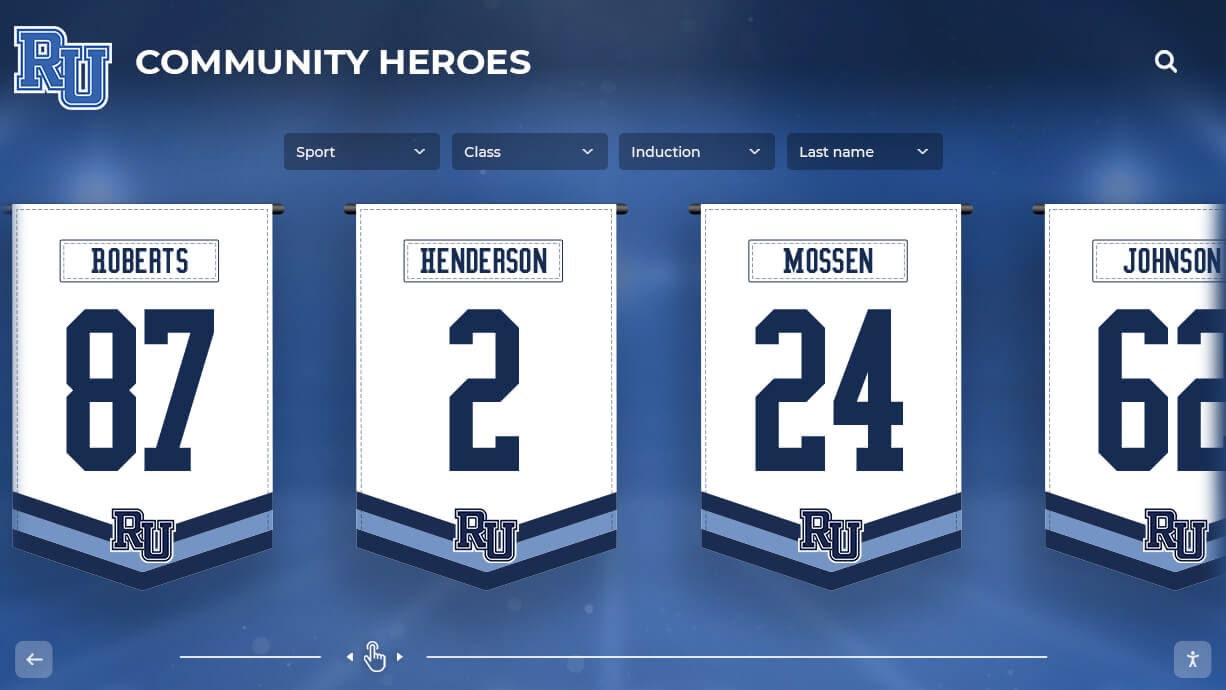
Recognition banners in a controlled indoor school environment do not require wind-slit modifications — the question of slits versus mesh arises specifically for exterior and semi-outdoor installations where sustained wind load is part of the installation reality
What a Wind Slit Is — and Why the Question Comes Up for School Championship Banners
A wind slit is a cut or intentional opening made through a solid banner substrate to allow air to pass through it. By reducing the solid surface area facing the wind, a slit lowers the load that pushes back against the banner material and its mounting hardware. The term is sometimes used interchangeably with “wind vent” or “wind cut.”
For outdoor banner installations on light poles, building facades, or athletic field fencing, wind load is a genuine engineering concern. A large, solid vinyl banner on an exterior pole in sustained wind behaves like a sail: the entire face catches wind and transfers force to the material, the grommets, and whatever hardware holds the banner up. Outdoor banner hardware manufacturers specifically design their products around this reality. BannerFlex, which makes exterior bracket systems for vertical light-pole banners, describes their hardware as “a flexible static system using today’s ‘space-age’ materials to dissipate wind force from the utility pole and banner” — an engineering approach that manages force through the system, not through holes cut in the banner after the fact.
The wind-slit question enters school championship banner programs because athletic recognition banners are sometimes needed in more than one environment. A gymnasium display is one thing; a banner on the building exterior during a homecoming event, on athletic field fencing, or mounted to a light pole at a school campus entrance is another. Knowing which environment applies — and ordering a product specified for that environment — is what prevents any need for post-production modification.
Indoor Gymnasium Championship Banners: Wind Slits Are Generally Not the Answer
The large majority of school championship recognition banners hang in interior gymnasiums. A gymnasium interior is a controlled environment. There is no sustained exterior wind load acting on a banner hanging from rafters, a ceiling cable system, or wall-mounted brackets. HVAC systems and gymnasium doors create airflow, but that movement is oscillation under low-force air currents — not the sustained directional load that outdoor installations face.
For indoor gymnasium championship banners, wind slits are not a standard finishing option and are not required by the installation environment. When a gymnasium championship banner moves more than the school expects, the contributing factors are typically:
- HVAC supply diffuser placement directly above or near the banner mounting location
- Banner substrate weight relative to its size — lighter materials move more under low-force airflow
- Insufficient bottom-edge restraint, such as missing bottom grommets or no weighted dowel in a bottom hem pocket
A facilities coordinator and HVAC staff can evaluate airflow-related banner movement by reviewing diffuser placement relative to the banner, adjusting HVAC direction, or adding bottom-edge restraint. These are the appropriate responses for indoor air-movement issues. Cutting slits in an indoor gymnasium championship banner is not a recognized solution for HVAC-driven movement, and any such modification — for an indoor or outdoor banner — requires written manufacturer approval for the specific substrate before it is made.
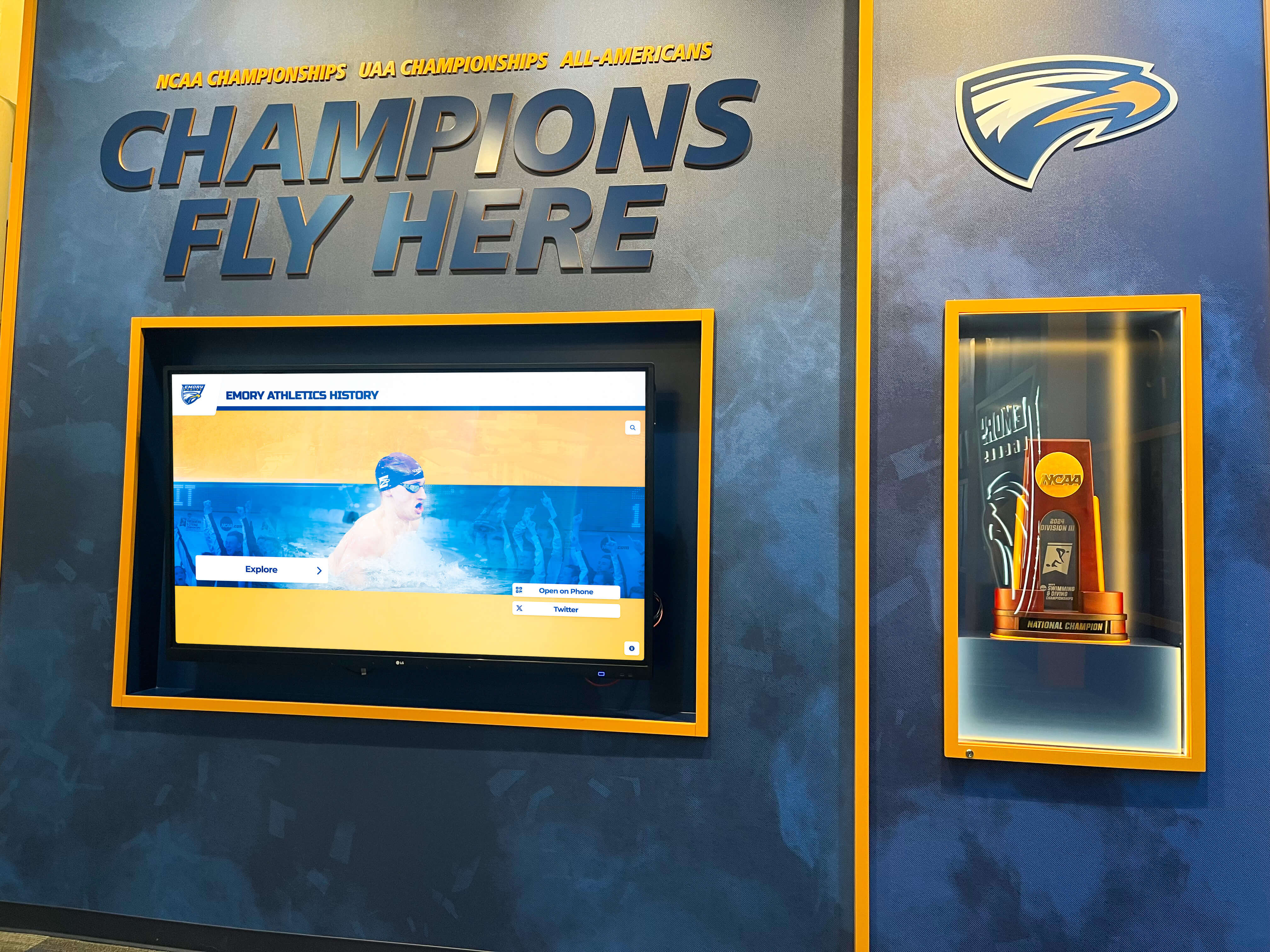
Indoor championship recognition walls accumulate banners across many sports and seasons — matching material and finishing to the indoor environment from the outset protects the appearance and legibility of each banner over the long display lifecycle
Outdoor and Semi-Outdoor Exposure: A Different Design Requirement Entirely
When a school championship banner is installed in a genuinely outdoor or semi-outdoor location — on a building façade, athletic field fence, light pole, or covered-but-exposed entrance structure — wind load becomes a real design factor that product selection must address before the banner goes to production.
Outdoor exposure for a school recognition banner involves conditions that interior gymnasium installations do not face:
- Sustained directional wind: Unlike indoor HVAC movement, exterior wind applies steady force in a consistent direction across the full banner face.
- Wind gusts: Peak gust loads on a banner face can exceed average wind speed at a given location by a significant margin. Hardware manufacturers who publish their wind-load specifications, such as BannerFlex, note that their systems are tested to defined wind-force thresholds — the school’s facilities or construction staff should confirm what load specification applies to a specific exterior installation site.
- UV and weather exposure: Outdoor substrates face sunlight, moisture, and temperature cycling that accelerate material wear in ways interior installations do not.
- Compounding hardware load: Exterior mounting hardware carries the combined weight of the banner and the wind pressure acting on it.
For outdoor championship banner installations, the school’s procurement decision should happen at the material selection stage — not as a field modification to a finished banner. The three supplier-approved approaches to outdoor wind-load management are: ordering a mesh banner substrate, selecting a factory-vented banner option if the supplier offers one, or pairing a solid banner with exterior hardware systems that are engineering-rated for the installation’s wind load.
Plan Championship Recognition That Fits Every Environment
Rocket Alumni Solutions helps school athletic departments plan banner programs that match material and hardware to the installation environment — from gymnasium recognition walls to exterior entrance displays. Get the specification right before your order goes to production.
Get notified when Rocket Graphics opens.Supplier-Approved Wind-Load Alternatives for School Championship Banners
The path to managing wind load on a school championship banner starts with the supplier, not with a cutting tool. Three supplier-approved options are common:
Option 1: Mesh Banner Substrate — Order It From the Supplier
Mesh banner material is a woven or perforated vinyl or fabric that allows airflow through the substrate. Its porosity is a designed product property: airflow passes through rather than pushing against the full solid face. For a school championship banner at an outdoor location — hypothetically, a school that displays recognition banners on building-mounted brackets at an outdoor athletic complex — ordering on a mesh substrate addresses wind load at the production stage, with the supplier’s product specification and warranty applying to the finished item.
Legibility trade-off: Mesh substrates produce a different visual result than solid vinyl. The perforations in mesh material affect ink coverage and, at close reading distance, can produce slightly lower-resolution print output than equivalent solid vinyl. For championship recognition banners with large type, simple layouts, and high-contrast school colors — the most common format for athletic recognition — mesh legibility at gymnasium or outdoor viewing distances of 15 to 50 feet is generally adequate. For banners with small text, photographic content, or fine graphic detail, the legibility difference is more significant. Ask your supplier for a printed mesh sample or reference to an installed mesh banner at a comparable size and viewing distance before approving a mesh production order.
Also confirm with your supplier and facilities staff whether the mesh material specified meets any fire-rating requirements applicable to the installation location. For indoor or covered installations, the applicable building and fire codes may require documented flame resistance; the supplier’s product specification should address this, and your facilities coordinator or the local authority having jurisdiction should make the determination for your specific building.
Supplier guidance on mesh and solid banners varies by company. A sports banner supplier such as CoverSports, which offers custom sports team banners, may specify different materials for indoor versus outdoor use. Ask your supplier directly which substrates they recommend for the specific installation environment — indoor gymnasium, outdoor pole, or building-mounted exterior — and get that recommendation in writing before placing the production order.
Option 2: Exterior Hardware Systems Engineered for Wind Load
For championship banners hung on exterior structures — light poles, building-mounted brackets, entrance archways — the hardware system is a primary wind-load management tool, not the banner substrate alone. Exterior banner bracket hardware manufacturers engineer their systems for this purpose.
BannerFlex’s hardware guidebook covers the installation requirements for exterior vertical banners on light poles, including how the bracket system is designed to flex and dissipate wind force rather than resist it rigidly. When a school’s facilities team installs a championship banner on an exterior pole or wall bracket using hardware that is specified and installed for the wind-load conditions at that location, the hardware system — not a modification to the banner — is doing the wind-load engineering work.
The key question for facilities staff to answer before any exterior championship banner installation: has the hardware been selected and installed to a specification that accounts for wind load at this specific location? If that answer is yes and the installation follows the hardware manufacturer’s guidelines, the banner material choice becomes a secondary specification about durability and legibility — not a wind-load engineering question that requires slitting the banner.
Option 3: Factory-Integrated Vented Banners
Some suppliers offer banners with integrated vent panels or wind-relief features that are designed and produced by the manufacturer. These differ fundamentally from field-cut slits: they are engineered into the banner design, specified in the product documentation, and produced under quality control that maintains banner structural integrity. If your outdoor championship banner application requires venting and your supplier offers a factory-vented option, that is the product to order — not a solid banner modified in the field after delivery.
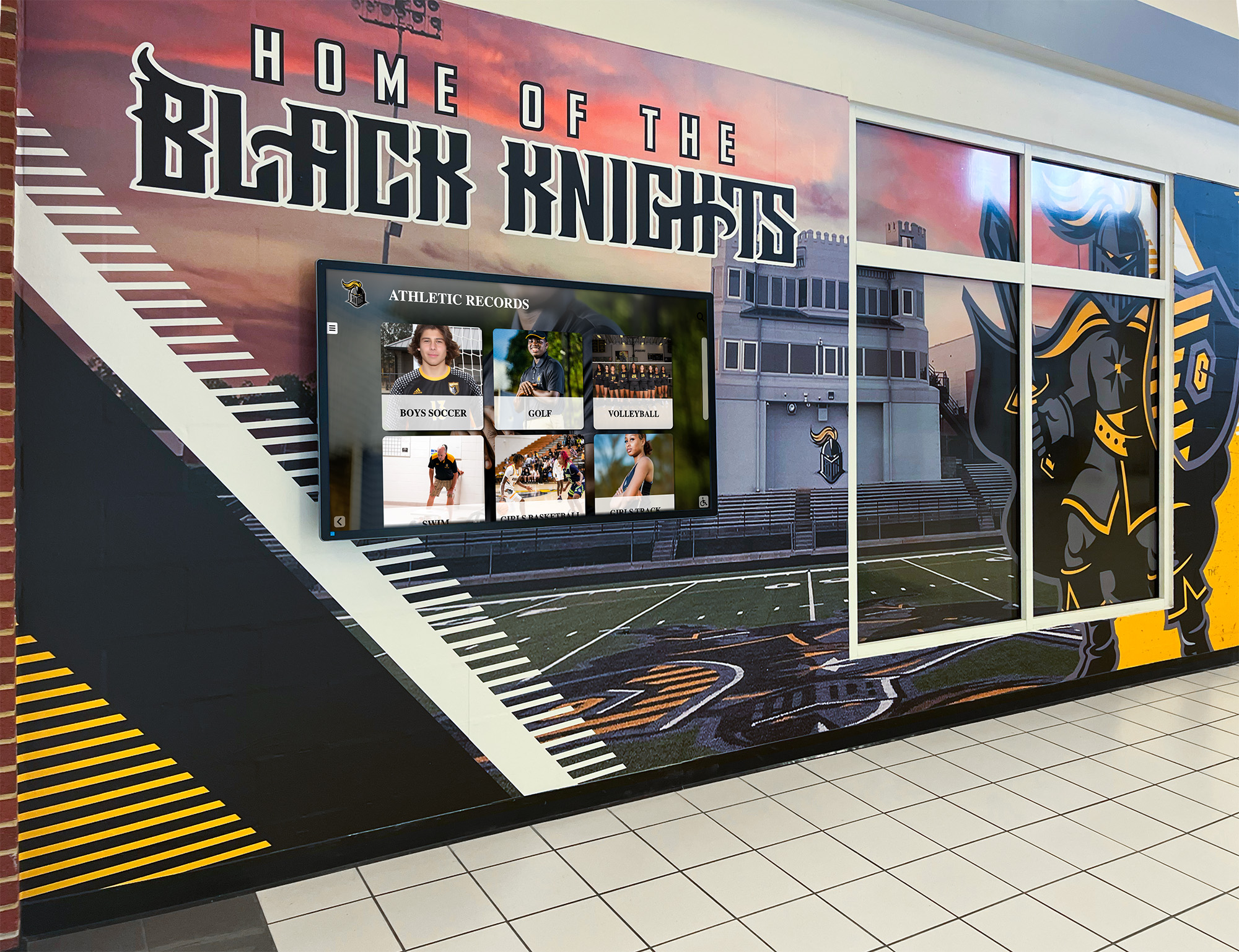
Championship recognition banners in school hallways are in a controlled environment — the wind-slit question applies to exterior or semi-outdoor installations, not to standard indoor school athletic displays
Why Supplier Guidance Conflicts — and What to Do About It
Athletic directors sourcing championship banners sometimes encounter genuinely conflicting guidance on whether wind slits or other modifications are acceptable. One supplier’s representative may say a field cut is permissible under certain conditions. Another supplier may say any post-production modification voids the warranty. A third may have no documented policy at all. This variation exists for identifiable reasons:
- Different banner suppliers use different substrate products from different manufacturers, each with their own material specifications and written policies
- Different hardware suppliers have different installation requirements that may or may not align with specific banner material modifications
- Some suppliers serve primarily indoor markets; others serve outdoor commercial markets; default guidance reflects their product mix and most common customer situations
- What a sales representative says on a phone call and what the manufacturer’s published technical specification states may not agree
The practical rule: get written, product-specific guidance from the banner manufacturer for the exact substrate on your order before any modification is made to a finished banner. This means:
- Ask for the Technical Data Sheet for the specific substrate material used in your order — by manufacturer name, product name, and formulation.
- Ask explicitly whether the manufacturer permits field modifications, including cuts, holes, or alterations to a finished banner.
- Get the answer in writing, referencing the specific product on your order.
A field-cut slit in a finished championship banner is a permanent, irreversible modification. If it cracks or tears the substrate, or reduces legibility in a way that is visible to students and families who see the banner daily, the school bears the full cost of reordering. Manufacturer approval in advance — in writing — establishes a clear record of who specified the modification and under what conditions. If the supplier cannot provide written approval for a specific modification, that is the answer: do not make the modification, and instead order the correct material from the start.
For schools managing recognition programs that involve multiple display environments and digital components, the documentation discipline applied to banner specification is part of the same record-keeping practice that supports school recognition display infrastructure management. A production record for each championship banner — substrate, supplier, finishing specifications, any manufacturer-approved modifications — is the reference that protects the school when a banner is damaged, questioned, or needs to be replicated years later.
Indoor vs. Outdoor Selection Table
Use this table to identify the right questions to bring to your banner supplier before placing an order. Answers depend on your specific installation, supplier, and applicable codes — this is a starting-point decision framework, not a production specification.
| Installation Environment | Wind-Load Reality | Questions to Ask Your Supplier | Modification to Avoid |
|---|---|---|---|
| Indoor gymnasium — rafters or cable system | Negligible exterior wind; HVAC airflow only | Confirm substrate, grommet spec, and hem depth; bottom-edge restraint if needed | Do not cut slits — address HVAC movement with bottom-edge hardware or diffuser adjustment |
| Indoor hallway or lobby — flat wall mount | Negligible | Confirm mounting hardware compatibility and substrate UV stability under lighting | No wind modification needed |
| Covered exterior — stadium concourse, covered breezeway | Partial or intermittent exposure | Ask whether location qualifies as “exterior” for substrate selection; confirm UV and moisture rating | Do not use an interior-spec banner if outdoor conditions apply |
| Open exterior — building facade, light pole, athletic fence | Sustained wind load | Order mesh substrate or factory-vented product; confirm hardware system has a wind-load specification; ask supplier to document approval in writing | Never cut slits in a finished banner without written manufacturer approval |
| Mixed-use — indoor display and outdoor events | Variable depending on use | Order to the more demanding specification; confirm one product serves both environments; get written confirmation | Do not assume an interior-spec banner is safe for outdoor use without supplier confirmation in writing |
Connecting Material Selection to the School’s Recognition Program
A championship banner is among the most permanent athletic recognition artifacts a school produces. Every banner in a gymnasium tells part of the program’s history — a sport, a season, a team. The legibility and condition of each banner, year after year, is part of how the school communicates to students, athletes, and families that achievement is recognized and remembered.
Matching the right material to the right installation environment is the decision that protects that record over time. A gymnasium championship banner ordered on the correct indoor substrate — with appropriate grommet specification, hem depth, and bottom-edge finishing — represents a team’s achievement clearly for the full service life of the display, which may span thirty or more years of repeated seasonal installation and removal. An outdoor banner ordered on a mesh or exterior-rated substrate, paired with hardware specified for the installation location, remains legible and structurally sound through the weather cycles that would compromise an indoor-spec banner within a single outdoor season.
For schools building out a comprehensive recognition program — combining physical championship banners with digital displays, hall-of-fame installations, and archival records — the physical banner also serves as a primary reference document for the digital record. Schools that have integrated digital hall of fame inductee profile terminology into their recognition program understand that the physical artifact — banner, trophy, plaque — is often the canonical reference for the corresponding digital entry. A banner that is damaged, illegible, or was produced in the wrong material for its environment disrupts that reference chain at the source.
Programs that manage historical athletic records across both physical and digital formats benefit from athletic archive photo preservation workflows that connect the physical championship banner record to accessible digital documentation — so that even if a physical banner is eventually retired, the achievement it represents is preserved in a form that can be referenced in future recognition contexts.
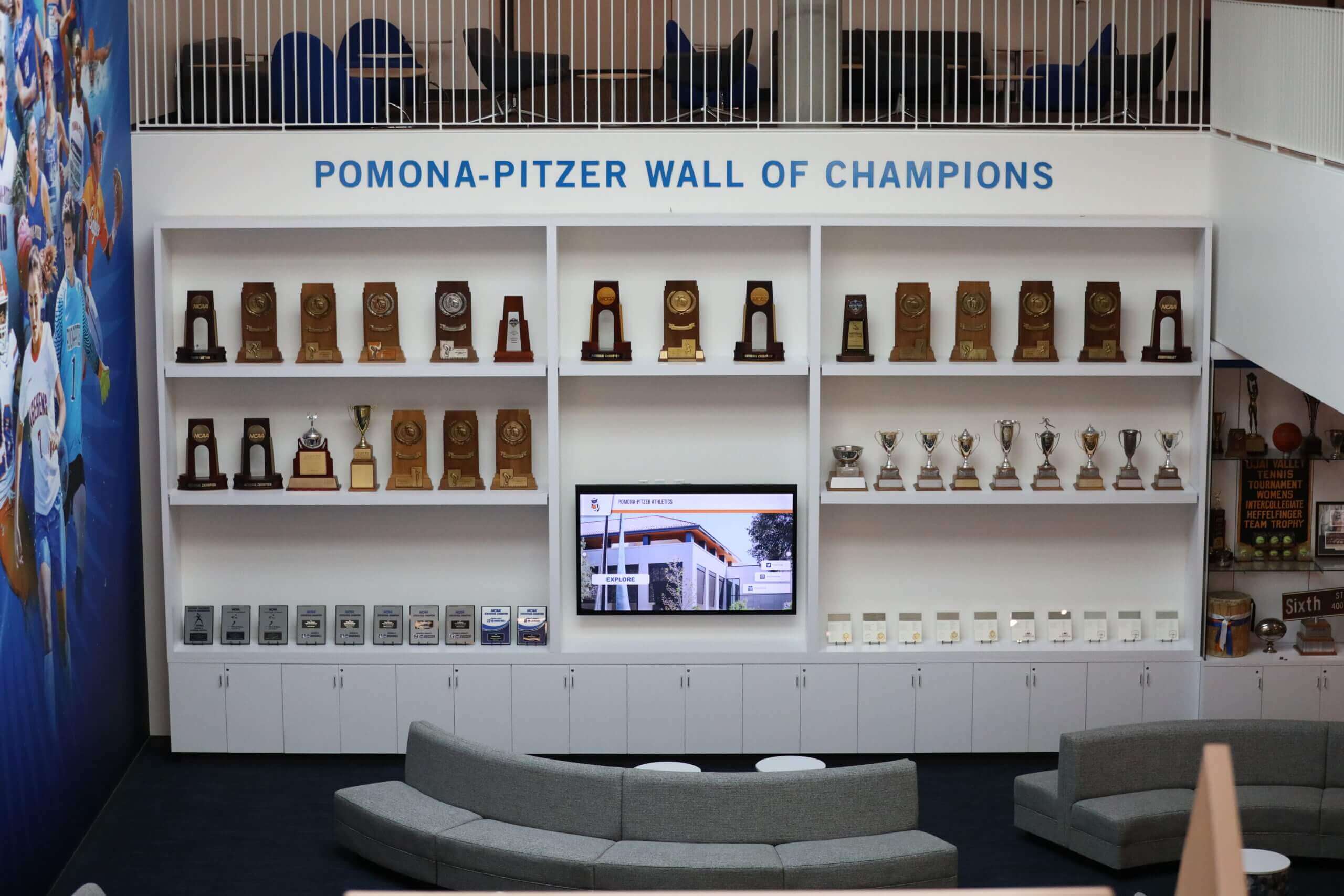
Championship recognition spaces combine physical banners, trophies, and display elements — matching each banner to its installation environment is the decision that determines whether each element maintains the visual quality the program's history deserves
The physical recognition environment also includes display elements that, like championship banners, require environment-specific installation and infrastructure decisions. Schools planning trophy case upgrades alongside banner programs benefit from reviewing trophy case lighting infrastructure considerations to coordinate the full recognition space before individual components are committed to.
For programs that maintain athletic awards as part of a connected recognition record, the same discipline of documenting specifications and approvals before making changes applies across the recognition infrastructure: athletic awards database integrity practices describe how schools manage award records across seasons and personnel changes — the same continuity that championship banner specification records require when materials decisions are passed from one athletic director to the next.
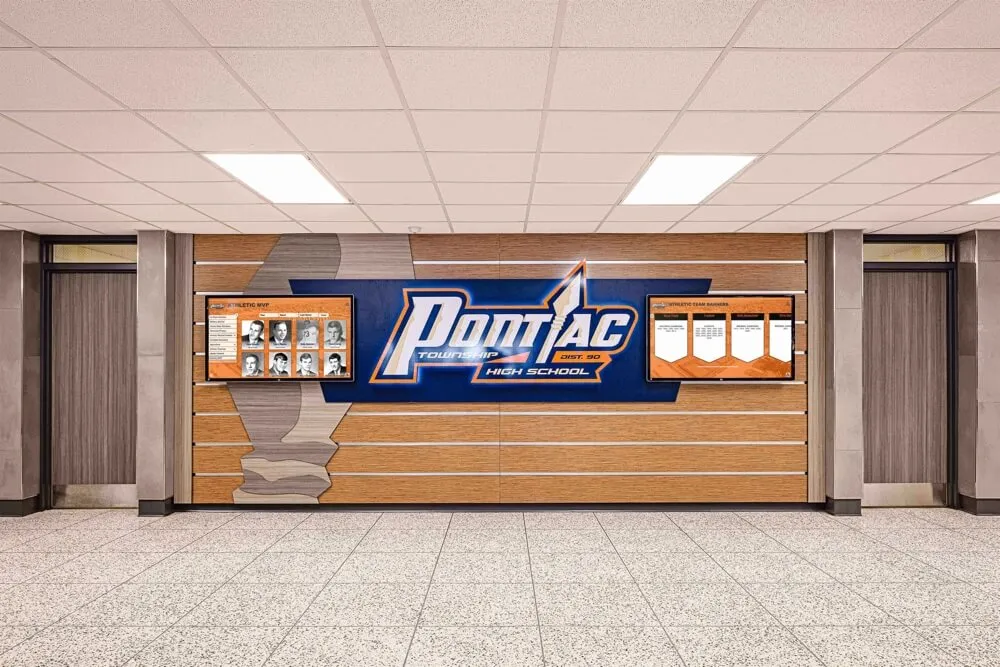
Athletic honor walls in school hallways accumulate championship records across many seasons — each banner should be ordered to the specification that matches its specific installation environment so the full wall remains consistent in appearance and condition over time
Frequently Asked Questions: Championship Banner Wind Slits for School Athletic Programs
Does a school gymnasium championship banner need wind slits?
Generally, no. Indoor gymnasium championship banners hang in controlled environments where sustained exterior wind load is not present. Wind slits address outdoor wind load on solid vinyl in exterior installations — they are not a standard finishing option for gymnasium recognition banners. If a gymnasium banner moves due to HVAC airflow, the appropriate response is to address the airflow source or add bottom-edge restraint hardware, not to modify the banner substrate. Any modification to a finished banner requires written manufacturer approval regardless of environment.
What is the supplier-approved alternative to cutting wind slits?
For outdoor installations where wind load is a genuine concern, order a mesh banner substrate — material that allows airflow through as a designed product property — rather than modifying solid vinyl after production. Some suppliers also offer factory-integrated vent panels. Both options carry the manufacturer’s product specification and warranty. Exterior hardware systems engineered for wind load, such as bracket systems designed for outdoor pole installations, are a third approach that addresses wind load at the hardware level rather than through the banner material.
Can I cut slits in my championship banner to manage wind?
You should not cut slits without first obtaining written manufacturer approval for the specific substrate and modification. Cutting slits is a permanent, irreversible modification that can affect structural integrity, legibility, and warranty coverage. Supplier guidance on field modifications varies — what a sales representative says and what the manufacturer’s written specification states may not agree. Get written approval from the manufacturer of your specific substrate before any modification is made.
Does mesh banner material affect legibility for school championship recognition?
Mesh substrates produce a slightly different visual result than solid vinyl because perforations affect ink coverage and fine detail. For championship banners with large type, clear layout, and high-contrast school colors, mesh legibility at typical viewing distances is generally adequate. For banners with small text, photographic content, or fine graphic detail, the legibility difference is more significant. Ask your supplier for a printed sample or reference installation at comparable size and viewing distance before approving a mesh production order.
Who should approve a championship banner modification for wind management?
The manufacturer of the specific substrate used in your order should provide written approval for any field modification. Supplier guidance varies and may differ between what a representative says and what the manufacturer’s written policy states — get the approval in writing, referencing the specific product and modification. Your facilities team and, for exterior installations, the applicable authority having jurisdiction should also be consulted.
Match the Material to the Installation Before the Order Is Placed
The championship banner wind-slit review framework is straightforward when applied at the right stage: before production, not after delivery. For indoor gymnasium championship recognition banners — the large majority of school athletic banner programs — wind slits are not a finishing requirement and should not be made without written manufacturer approval. For outdoor or mixed-environment installations, the right response is to order the correct material from the start: a mesh substrate, a factory-vented banner, or a solid banner paired with exterior hardware that is engineered for the wind load at the installation location.
When supplier guidance conflicts — and it will, across different companies and even between a sales call and a written specification — the document that controls is the manufacturer’s written product specification for the exact substrate on your order. Get that document, ask the modification question in writing, and make the material decision before the banner goes to production. The school’s championship recognition record is too important to compromise with an unapproved modification that damages a banner, reduces its legibility, or leaves the school without a warranty recourse when something goes wrong.
Championship Recognition That Stands Up to Every Environment
Rocket Alumni Solutions helps school athletic departments plan championship recognition programs that match materials and installation to real-world environments — from gymnasium recognition walls to exterior facilities displays. Get the right product specified before your order goes to production.
Get notified when Rocket Graphics opens.