When a rolled championship banner is shipped or stored in cold weather, the vinyl substrate can reach temperatures where unrolling creates cracks, coating fractures, or hem failures — damage that is permanent and happens before the banner is ever seen by students or families. The direct answer to how to protect a school championship banner from cold-crack damage: ask your printer for the substrate’s Technical Data Sheet (TDS) before the order ships. The TDS specifies the cold-crack rating and service temperature limits for that exact material, which determines the minimum temperature at which you can safely receive, store, and unroll your finished school championship banner. Never assume a universal cold-crack temperature applies across all vinyl or fabric banner substrates — ratings vary by formulation, and a lab test result is not an installation guarantee.
Cold-crack risk is highest when fall and winter championship banner orders ship through cold freight networks, sit on unheated loading docks, or wait in unheated storage rooms over school breaks before being unrolled for recognition events. A championship banner damaged by cold cracking before installation is a complete loss — the vinyl fractures permanently and the banner must be reprinted at full cost. The seven-step championship banner vinyl cold crack handling checklist below helps athletic directors, facilities coordinators, and recognition staff plan around that risk using substrate-specific temperature data from the printer’s TDS, rather than assumed universal values.
What Cold Cracking Is — and Why It Threatens School Championship Banners
Cold cracking in vinyl championship banners is not slow degradation. It is an instantaneous, visible fracture that occurs the moment a substrate is bent at a temperature below its formulation-specific cold-crack threshold.
Banner vinyl is a plasticized PVC (polyvinyl chloride) material. At room temperature, the plasticizers in the compound keep the vinyl flexible enough to be rolled, unrolled, and handled without damage. As temperature drops, those plasticizers lose their ability to maintain flexibility. Below a substrate-specific threshold — which varies by formulation and is documented in the manufacturer’s TDS — the vinyl becomes brittle. Applying bending stress at that point, such as unrolling a tightly wound banner roll, causes the substrate to fracture across the print face rather than flex.
Cracks from cold-temperature unrolling typically appear perpendicular to the unroll direction — in visible lines across the championship year numeral, mascot image, or athlete name block. There is no field repair for a cold-cracked vinyl substrate. The banner must be replaced.
Fabric substrates — woven polyester used for dye-sublimation championship banners — carry a different but related risk. While polyester does not cold-crack the same way as PVC vinyl, the ink and finishing layers applied to sublimated fabric can become brittle at low temperatures, and rapid unrolling of a cold fabric roll can cause delamination of finishing coatings or cracking at stiffened hem areas.
The risk is compounded by how tightly championship banners are typically rolled around shipping cores. The outermost layer of a tightly wound roll bends over the smallest radius and carries the highest bending stress of any point in the roll. That outermost layer is also the first point of contact when someone pulls the leading edge in a cold gymnasium or storage space. For context on how banner condition at installation shapes long-term display quality, the championship banner storage guide at Touchwall documents why the physical state of a banner when it first reaches the gymnasium wall determines how it represents the school program for years.
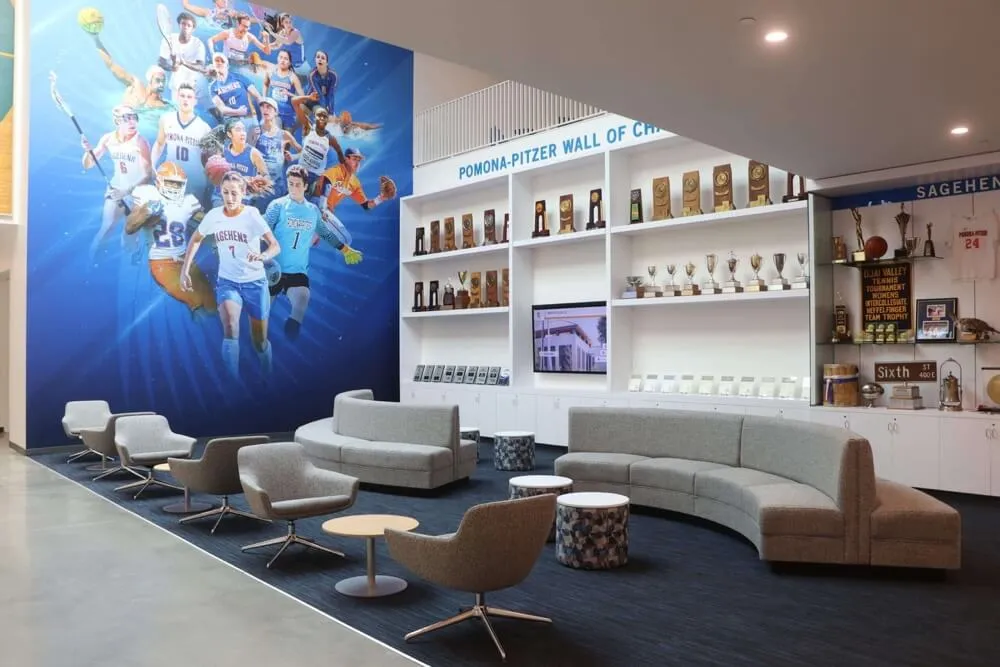
Championship recognition spaces accumulate banners across years and seasons — each banner that arrives cracked or damaged before it reaches the gymnasium wall represents a permanent gap in the recognition record that costs a full reprint to correct
What to Ask Your Printer: Substrate-Specific Cold-Crack and Service Temperature Data
The conversation about cold-crack risk belongs at the purchase order stage — before the banner is produced, before it ships, and before the school is under deadline pressure from a cracked delivery.
Four questions to ask your printer before any championship banner order shipping or stored in winter months:
- What is the exact substrate material for this banner — manufacturer name, product name or code, weight, and formulation?
- Can you provide the Technical Data Sheet for that substrate?
- What cold-crack rating does the TDS specify, and what test method was used to establish it?
- What is the minimum service or handling temperature for the substrate, and does that rating apply to the base material alone or to the finished printed and laminated banner?
A vendor producing your championship banner on a 13oz double-sided blockout banner vinyl can reference the substrate manufacturer’s Technical Data Sheet — such as the type of product documentation published for materials like the Nazdar SourceOne IMSB13BOP 13oz Double Sided Blockout Pro Banner — to confirm the cold-crack and handling temperature specifications for that specific formulation. Different substrate products carry different ratings: the cold-crack temperature for one 13oz matte vinyl may differ substantially from a 15oz blockout scrim, a coated polyester fabric, or a mesh material. There is no universal cold-crack rating that applies across all banner substrates.
What the TDS specifies:
- Cold-crack temperature: The tested minimum temperature at which the substrate can be bent without fracturing under controlled lab conditions. This is a material performance floor under test conditions — not a field operating target.
- Service temperature range: The temperature range within which the finished material is designed to perform and maintain physical integrity during display.
- Storage conditions: Temperature and humidity requirements for proper substrate storage after printing and before installation.
- Application temperature: The minimum temperature at which the substrate is specified to be processed — distinct from the cold-crack rating and from the service temperature range.
An important limitation: the cold-crack temperature in a TDS is a lab result, not a field installation guarantee. Lab cold-crack testing uses a controlled bend radius, consistent deformation rate, and base substrate without printing, laminate, or hem tape. In the field, unrolling a championship banner applies variable stress through printed ink and finishing layers, at a radius set by how tightly the banner was wound around its shipping core. Your printer is best positioned to advise on the safe handling margin above the TDS cold-crack rating for the specific material and finishing combination used on your order.
For a broader comparison of how substrate type and formulation affect both cost and cold-weather performance, the guide to high school championship banner printing costs, materials, and vendor comparison describes how substrate selection decisions made at order time carry downstream consequences for how the finished banner must be handled and stored.
Plan Championship Recognition That Protects Every Season's History
Rocket Alumni Solutions helps school athletic departments build championship recognition programs that account for the full lifecycle — from material selection and production standards through installation, long-term storage, and digital preservation of athletic achievement records.
Get notified when Rocket Graphics opens.Championship Banner Vinyl Cold Crack Handling Checklist: Seven Steps
Follow this checklist for every championship banner order scheduled to ship or be stored during cold-weather months. Steps 1 through 3 happen before the banner ships; steps 4 through 7 happen at receipt and before installation.
Request the substrate TDS before the order is placed. Ask your printer for the Technical Data Sheet for the specific substrate they will use. Confirm the cold-crack temperature rating and the minimum storage and handling temperature listed in that document. If the printer cannot provide a TDS or identify the substrate manufacturer by name, request a change to a substrate for which full TDS documentation is available. Record the TDS version and the key temperature thresholds in the purchase order record.
Confirm shipping route, carrier type, and transit conditions. Ask whether the shipment will transit through unheated freight depots, overnight cold exposure, or regions where ambient temperatures may approach or drop below the substrate’s service temperature range during transit. For winter orders shipping through northern freight networks, request cold-weather packaging — insulating wrap on the roll, enclosed outer carton, and temperature-sensitive labeling — or specify an expedited option that minimizes cold transit time. Acclimation at the printer’s shop before shipping does not protect a banner that then rides uninsulated in a freight trailer overnight.
Plan the school-side receiving location and timing. Identify where the banner will be received at your school and confirm the temperature in that space in winter. An unheated loading dock, athletic storage hallway, or maintenance entrance may be significantly colder than the gymnasium. Coordinate with facilities to arrange a warmed receiving area, or schedule delivery when the receiving space can be brought to temperature. A banner received correctly and moved immediately to a conditioned space arrives in better condition than one left on a loading platform for an hour before anyone collects it.
Store the finished banner at the temperature specified in the TDS. After receipt, store the rolled banner in a climate-controlled space at the temperature range the substrate TDS recommends — which for most banner vinyl materials means conditioned interior space, not an unheated storage room or cold equipment area. If the school does not have a suitable storage location, work with the facilities team: a heated equipment room, a closet within the gymnasium, or a section of the athletic office with stable temperature is preferable to a cold utility space. Extended cold storage — such as leaving a banner in an unheated room over a school holiday break — compounds cold exposure even if each individual day’s temperature seems marginal.
Acclimate the rolled banner to room temperature before unrolling. When retrieving a banner from storage for installation, bring the rolled banner to the gymnasium or an adjacent heated space and allow it to acclimate to room temperature for the period specified in the substrate manufacturer’s instructions. When instructions are unavailable, allow at minimum several hours for small, moderately cold rolls, and up to overnight for large banners that were in cold storage for an extended period. The center of a large, tightly wound roll takes significantly longer to warm through than the outer layers — surface temperature alone does not confirm full acclimation.
Test flexibility at the leading edge before applying force. Before beginning to unroll, gently lift the leading edge of the outer layer two to three inches. If the material resists flexing, feels stiff, or makes any audible sound when bent slightly, stop. Return the banner to the warmed room and recheck in 30-minute intervals. Never apply leverage or force to unroll a banner showing any stiffness — the rigidity is the physical indicator that the substrate has not reached flexible temperature, and force applied at that point produces cold cracking.
Inspect the unrolled banner surface before hanging. After fully unrolling and laying the banner flat in the gymnasium, inspect the entire print surface under even light before mounting. Look for:
- Hairline cracks perpendicular to the unroll direction across any area of the print face
- Cracking or flaking of ink or laminate layers at points that were at the outermost roll position
- Delamination between print and substrate layers at visible roll crease points
- Hem tape separation along any of the four edges
- Substrate cracking at grommet hole reinforcement zones
If damage is found, photograph each defect before contacting the vendor. Document the storage conditions, acclimation time, and temperature at the time of unrolling — this record is the basis for a replacement or return claim if damage resulted from a shipping or packaging failure rather than improper school-side handling.
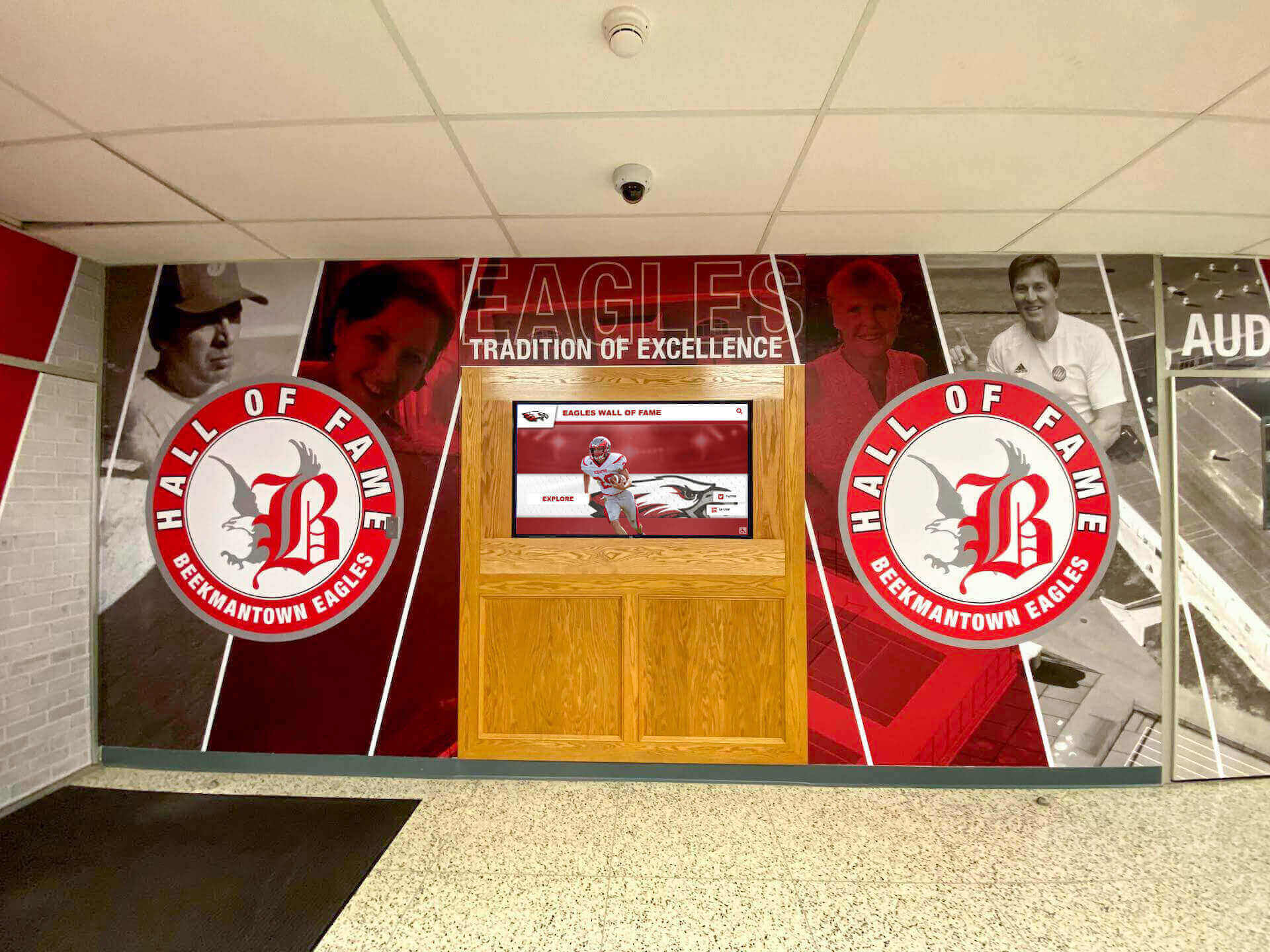
Championship recognition installations in school lobbies are seen by students, families, and visitors for years — protecting each banner from cold-crack damage before installation is the first step in ensuring the display remains visually complete for the long term
Cold Crack Risk and Handling Reference Table
Use this table to assess risk and determine the right action for each championship banner handling scenario. Risk level reflects likelihood that cold exposure will approach the substrate’s handling threshold under typical winter conditions — always verify against the actual TDS specifications for your specific material.
| Scenario | Risk Level | Action Before Unrolling |
|---|---|---|
| Winter ground shipment, uninsulated, multi-day transit | High | Request cold-weather packaging; confirm TDS specs before ordering; full overnight acclimation |
| Banner received at heated indoor dock, same day as delivery | Low | 1–2 hour acclimation in gymnasium; test leading edge flexibility before unrolling |
| Banner stored in unheated equipment room over school break | High | Retrieve to heated space 24–48 hours before installation; full acclimation; inspect leading edge |
| Banner stored at room temperature in conditioned athletic office | Low | 1–2 hour acclimation; flexibility test; full inspection after unrolling |
| Same-day delivery, banner moved directly to heated gymnasium | Low–Moderate | Minimum 2–4 hours acclimation before unrolling; leading edge test |
| Previously hung banner re-stored cold for next season | Moderate | Acclimate per TDS before re-hanging; inspect hem tape and surface after first cold storage cycle |
| Long-distance or international shipment, multiple climate zones | High | Specify substrate TDS before order; request shipping conditions documentation; full overnight acclimation |
How This Protects Your School’s Championship Recognition Program
Every championship banner in your gymnasium represents a specific achievement — a team’s season, a coach’s record, a school community’s shared moment. Schools with strong athletic recognition programs treat each banner as a permanent historical record. When a banner arrives from a cold shipping journey cracked before it ever reaches the gymnasium wall, the school loses both the artifact and the recognition it was meant to provide.
For athletic directors and facilities staff building recognition programs that span years and athletic seasons, systematic cold-crack handling protects the completeness of the visual record. Championship traditions in high school athletics are built through consistent, visible celebration — each correctly installed championship banner is one more link in that chain.
Schools with comprehensive recognition programs that combine physical banners with digital hall-of-fame displays benefit from this protection twice over: the physical banner must arrive intact to serve as the reference artifact for digital records, photography, and alumni recognition systems. A cracked or replaced banner disrupts the visual and archival record in ways that a correctly handled installation, year after year, does not. Schools planning multi-season recognition walls benefit from resources on high school championship banner display design and celebrating victories — where the context of the full display reinforces why every individual banner must meet the same arrival and installation quality standard.
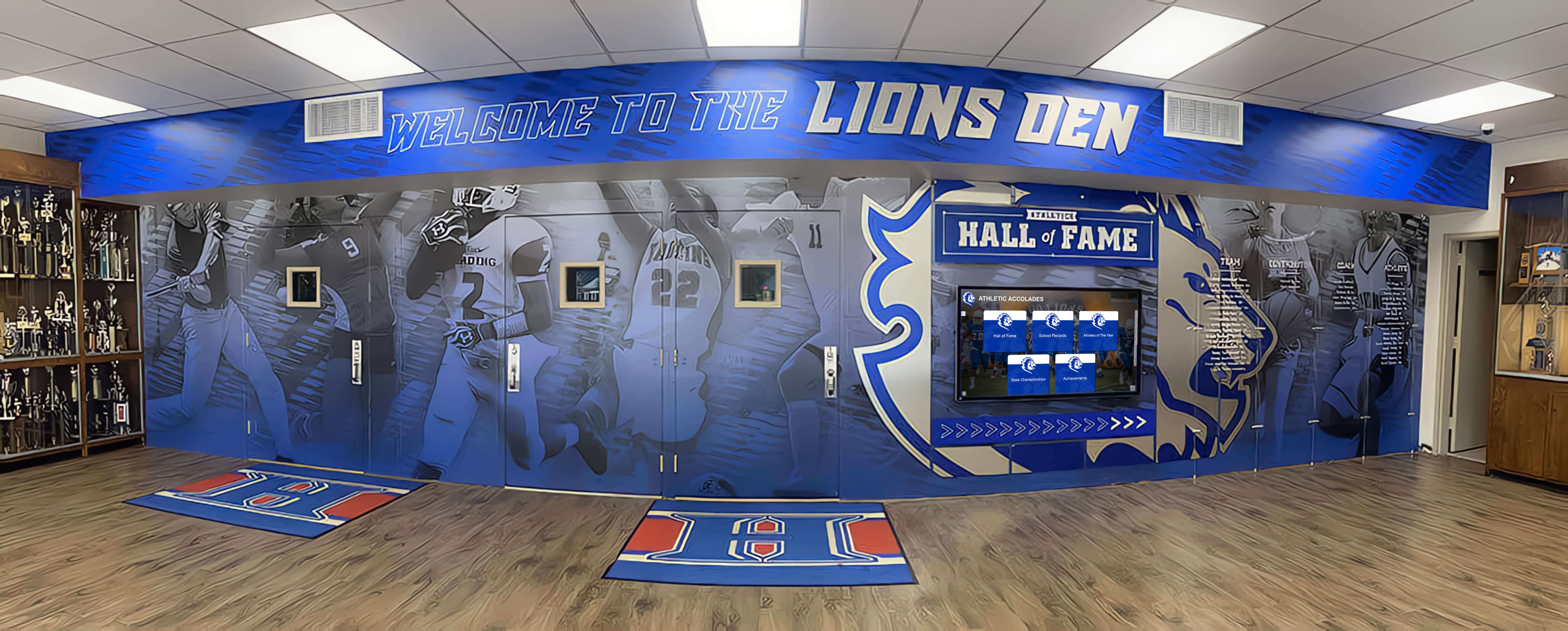
A complete gymnasium championship display depends on every individual banner arriving and remaining undamaged — cold-crack handling protocols protect the integrity of the full recognition record, not just each individual order
The physical quality of championship banners also directly affects a school’s ability to use its recognition program to celebrate athletes, teams, alumni, and community milestones in ways that are visible to students, families, and returning graduates. For schools considering how the physical recognition space connects to broader community engagement, resources on best displays for high school state championship recognition describe how championship displays function both as permanent records and as active community gathering points where achievement is made visible across generations.
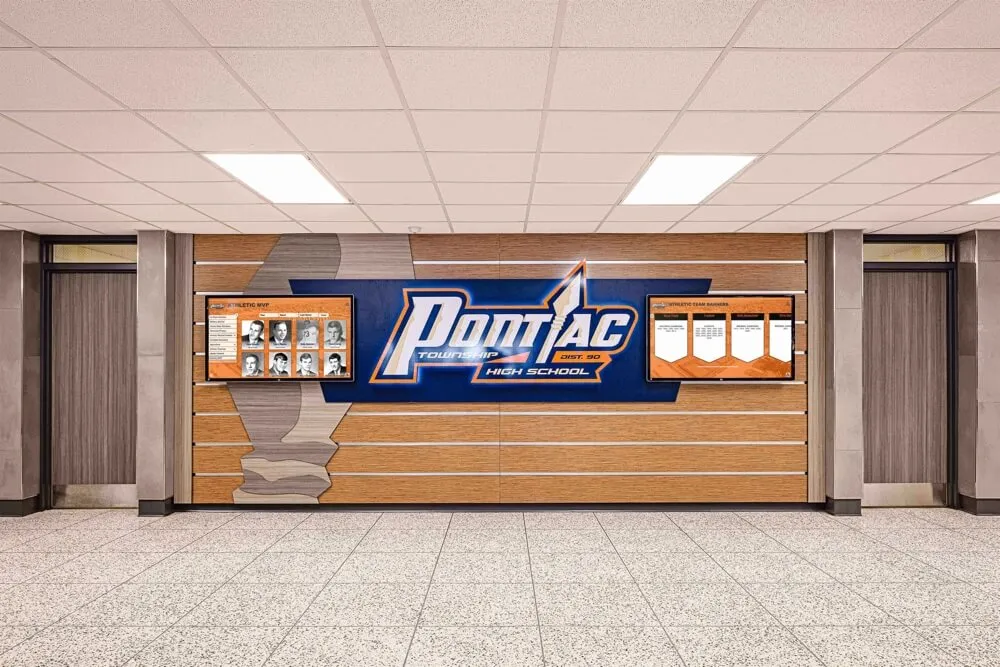
Athletic honor walls viewed by the school community every day deserve banners that arrive in installation-ready condition — the cold crack handling checklist is the pre-installation step that prevents the most preventable source of banner damage before it reaches the wall
Frequently Asked Questions: Championship Banner Vinyl Cold Crack Handling
What is cold cracking in championship banner vinyl and when does it happen?
Cold cracking in championship banner vinyl is an instantaneous fracture that occurs when a PVC vinyl substrate is bent below its formulation-specific cold-crack threshold temperature. The plasticizers in vinyl that provide flexibility at room temperature lose their effectiveness as temperature drops; below the substrate’s cold-crack rating, the vinyl becomes brittle and fractures rather than flexing. Cold cracking most commonly occurs during unrolling — especially of tightly wound rolls — when a banner has been shipped or stored in cold conditions and is unrolled before fully acclimating to room temperature. The fracture is permanent and cannot be repaired.
What temperature is safe for storing and handling a championship banner?
The safe storage and handling temperature for a championship banner depends on the specific substrate used — there is no universal safe temperature that applies to all vinyl or fabric banner materials. The substrate manufacturer’s Technical Data Sheet specifies the cold-crack temperature and service temperature range for that material. Ask your printer for the TDS for the exact substrate on your order, and store and handle the finished banner at temperatures above the minimum specified. As a general principle, conditioned interior space at normal building temperature is appropriate; unheated storage rooms, loading docks, and cold equipment areas are risk environments for winter banner storage.
How long should a championship banner acclimate before being unrolled?
Acclimation time depends on how cold the banner was during storage or shipping and how large the roll is. The substrate manufacturer’s instructions in the TDS should be the first reference. When specific instructions are not available, allow at minimum several hours for small, moderately cold rolls, and up to overnight for large banners that were in cold storage for an extended period. The center of a large, tightly wound roll takes significantly longer to reach room temperature than the outer layers. Test the leading edge before unrolling — if the banner feels stiff or resists gentle bending, continue acclimating.
Can a cold-cracked championship banner be repaired?
No. Cold cracking in a PVC vinyl championship banner is a permanent fracture in the substrate material. Field repairs with tape, adhesive, or patch material are not viable for a gymnasium display — the crack will remain visible and any repair compromises structural integrity and installed appearance. A cold-cracked banner must be reprinted. If the damage occurred during shipping or as a result of inadequate packaging, photograph the condition at receipt before contacting the vendor — a photographic record at discovery is the basis for a replacement claim.
What should I ask my printer before ordering a championship banner that will be shipped in winter?
Before placing a winter championship banner order, ask your printer: (1) what exact substrate material — manufacturer, product name, and formulation — will be used; (2) for the Technical Data Sheet for that substrate; (3) what cold-crack rating the TDS specifies and which test method was used; and (4) what the minimum service and handling temperature is for the finished printed banner. Also ask whether standard shipping packaging includes cold-weather protection, and whether an expedited or insulated shipping option is available.
Plan Cold-Crack Protection Into Every Winter Championship Banner Order
The championship banner vinyl cold crack handling checklist works because it moves the critical decisions upstream — to the purchase order stage, before the substrate is selected, before the banner ships, and before anyone at the school is in the position of unwrapping a cracked banner the week before a recognition ceremony.
Substrate-specific cold-crack data from the printer’s TDS, combined with managed storage and a consistent acclimation protocol before unrolling, eliminates the most preventable source of championship banner damage in schools in cold climates. Schools that build this checklist into their banner procurement routine protect not just the individual order, but the integrity of the entire gymnasium recognition program — one correctly handled banner at a time.
Championship Recognition That Lasts Through Every Season
Rocket Alumni Solutions helps school athletic departments build championship recognition programs — from production quality standards and physical banner management through interactive digital recognition displays that keep athletic achievement visible to students, alumni, and the school community year-round.
Get notified when Rocket Graphics opens.