Championship banner substrate acclimation is the process of staging banner printing materials — PVC vinyl, polyester fabric, or mesh — at the print environment’s temperature and relative humidity for a defined period before the substrate is loaded into the wide-format printer and production begins. The direct answer: any championship banner substrate that arrives from a delivery vehicle, cold storage, or a warehouse environment with conditions different from the print room must be allowed to equilibrate for a minimum of 24 to 48 hours in its original packaging within the print environment before unpacking, followed by a 1-to-2-hour open-air stabilization period immediately before loading — per the operating conditions specified in substrate manufacturer technical data sheets and the production environment standards recommended by PRINTING United Alliance for wide-format facilities. Skipping acclimation on a championship banner order is one of the most common, and most preventable, causes of ink adhesion failure, dimensional inaccuracy, and substrate flatness defects that produce a visible, permanent defect in a gymnasium banner that must be replaced at full cost.
This guide is written for school athletic directors, recognition coordinators, and print-management staff who place championship banner orders and review vendor processes — not for large-format print technicians who manage acclimation daily. Understanding what correct acclimation requires helps school staff evaluate vendors, respond to proof quality issues, and build accurate timelines for championship recognition events.
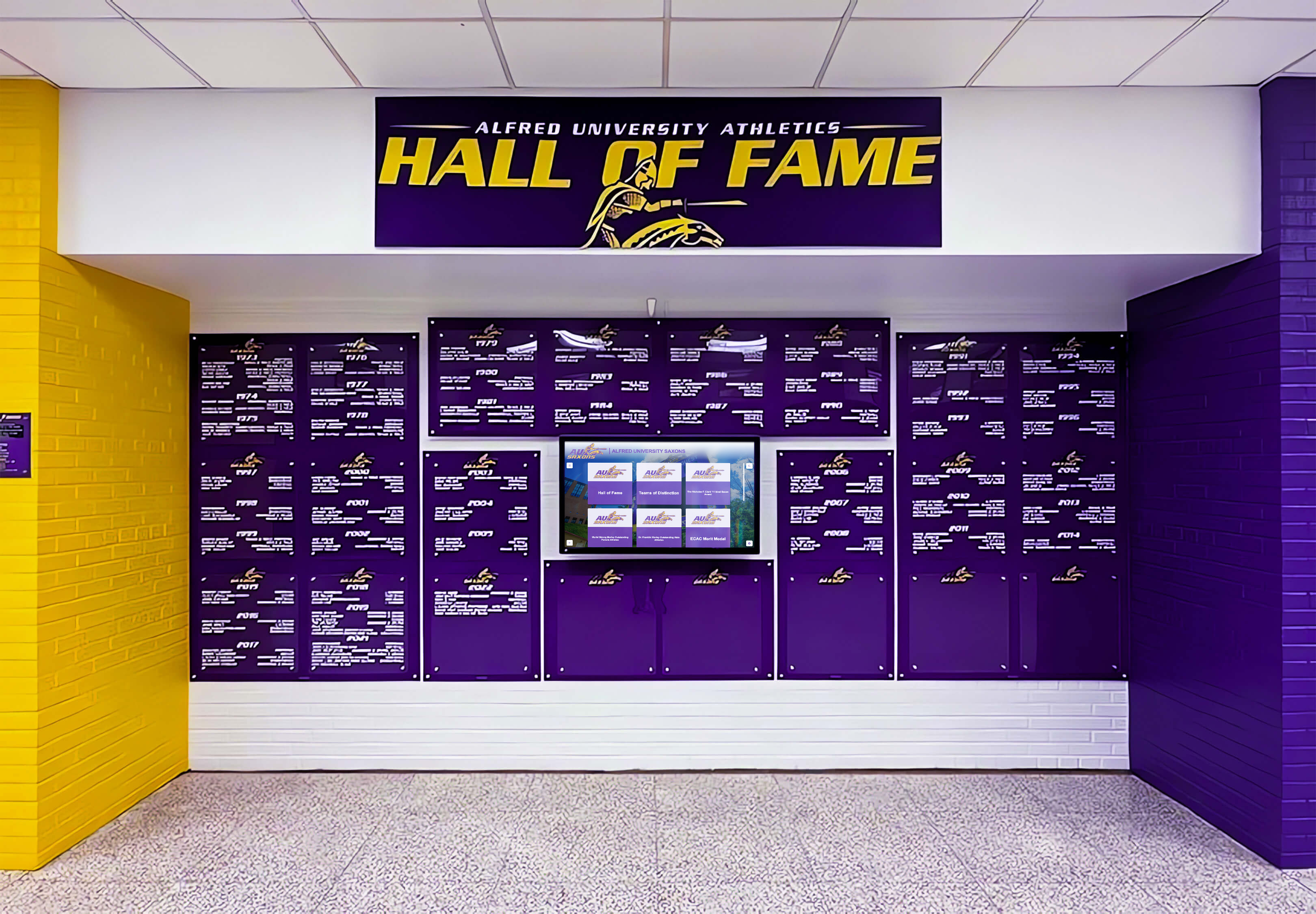
Championship banners installed in school recognition walls are viewed at close range by athletes, families, and visitors for decades — substrate acclimation is the first production step that determines whether the finished banner hangs flat, adheres correctly, and matches the approved dimensions
What Championship Banner Substrate Acclimation Controls
Championship banner substrate acclimation controls three physical properties of the banner material that directly affect print quality and long-term installed appearance.
Dimensional stability. Large-format banner substrates — especially PVC scrim vinyl, the most common material for gymnasium championship banners — expand and contract with temperature changes. According to technical data sheets published by large-format vinyl substrate manufacturers including Drytac and Avery Dennison, PVC vinyl expands measurably when ambient temperature rises and contracts when cooled. A roll delivered from an unheated vehicle at 42°F (6°C) and immediately loaded into a heated print room at 72°F (22°C) will continue expanding during the print run, producing an image that is physically larger than the file dimensions at room temperature. On a four-by-eight-foot championship banner, this dimensional drift can produce measurable registration errors — enough to shift fine text or mascot artwork out of intended alignment.
Ink adhesion. Cold substrate surfaces reduce the chemical receptivity of the print face to UV-curable, latex, and eco-solvent inks, reducing adhesion strength throughout the printed surface. If the substrate surface is below ambient room temperature when it is loaded, temperature differential between the substrate and the warmer air can produce condensation on the print face. Condensation moisture on a banner surface directly prevents ink bonding at the affected points, producing lifting, peeling, or chipping of cured ink after installation — a defect that is permanent and requires a full reprint to correct.
Substrate flatness and feed consistency. A cold, stiff substrate roll does not unwind, flatten, and feed through wide-format print heads with the same dimensional consistency as an acclimated roll. Cold-induced stiffness causes uneven tension across the banner width, producing lateral registration errors in print passes. For championship banners that include fine text — championship year, coach name, team records — lateral registration error is visible as blur or doubling at normal gymnasium viewing distance.
Acclimation Environment Requirements
The target print environment for championship banner substrate acclimation is:
| Condition | Target Range | Why It Matters |
|---|---|---|
| Temperature | 64–77°F (18–25°C) | Matches the dimensional state the substrate will be in at print time; prevents thermal expansion during production |
| Relative humidity | 40–60% RH | Prevents moisture absorption in fabric substrates; controls static discharge in synthetic vinyl |
| Direct sunlight | None on staging area | UV light initiates curing reactions in UV-coated substrates; radiant heat creates uneven temperature gradients across the roll |
| HVAC draft | Avoid direct airflow on substrate | Drafts create localized temperature and humidity variation across the roll face during stabilization |
| Floor contact | Substrate elevated on rack or pallet | Cold floor surfaces create a bottom-layer temperature differential in wide rolls, extending acclimation time |
These conditions align with the standard print environment specifications published by PRINTING United Alliance for wide-format production facilities. Vendors operating in temperature- and humidity-controlled environments that maintain these ranges consistently produce more dimensionally stable championship banner output than shops that operate in uncontrolled or seasonally variable conditions.
School print buyers should ask vendors explicitly whether the production facility is climate-controlled year-round before placing championship banner orders during cold-weather or high-humidity periods. A vendor operating in an unconditioned building during winter cannot guarantee the print environment conditions required for complete substrate acclimation, regardless of how long the roll sits before loading.
Championship Banner Substrate Acclimation Checklist
Follow this procedure for every championship banner order where the substrate arrives from outside the print environment. Items marked (Required) will cause a visible or permanent production defect if skipped.
Step 1: Verify Print Environment Conditions Before Substrate Arrival
- Confirm the print room temperature is between 64°F and 77°F (18°C and 25°C) using a calibrated thermometer placed at the substrate staging area — not at the thermostat or another room. (Required)
- Confirm relative humidity is between 40% and 60% RH using a calibrated hygrometer at the staging area. (Required)
- Confirm no direct sunlight falls on the substrate staging area at any point during the staging period, including morning and afternoon sun angles. (Required)
- Confirm no HVAC supply vents direct airflow onto the staging rack or pallet. (Required)
- If conditions are outside the target range: resolve the climate condition before accepting substrate delivery. Acclimating material in a room that is out of specification conditions the substrate to the wrong environment — it will be at the wrong dimensional state when it reaches the printer. (Required)
Request written confirmation of the vendor’s standard print room conditions as part of the championship banner production specification. If a vendor cannot provide this, select a vendor that documents its facility conditions in writing.
Step 2: Inspect Substrate Packaging on Arrival
- If possible, record whether the delivery vehicle was temperature-controlled or uncontrolled — this determines the minimum acclimation time needed. A substrate arriving in a refrigerated vehicle in winter requires longer acclimation than one delivered in a climate-controlled van. (Recommended)
- Inspect the outer packaging for damage: crushed core, moisture intrusion on the packaging exterior, or physical impact to the roll ends. (Required)
- Do not open the packaging at this step — unopened packaging protects the roll surface from contamination during the acclimation period. (Required)
- Record the delivery time on the production log to begin tracking the acclimation period. (Required)
If the outer packaging shows moisture intrusion or physical damage, notify the vendor immediately and document with photographs before accepting the substrate for championship banner production. A roll with moisture intrusion may require extended acclimation or vendor replacement.
Step 3: Stage the Substrate in the Print Environment
- Place the substrate roll on a rack, spindle stand, or pallet that elevates it from the floor by at least several inches. (Required)
- Position the roll in the same space where it will be printed — not in a hallway, anteroom, or storage room with different conditions. The acclimation environment must match the production environment. (Required)
- If multiple substrate rolls of different types are staged simultaneously, space them to allow airflow around each roll. (Recommended)
- Note the time when staging begins and record the ambient temperature and humidity at staging time. (Required)
Step 4: Allow Minimum Acclimation Time by Substrate Type
Minimum acclimation time varies by substrate type and the environmental differential between delivery and print conditions.
| Substrate Type | Minimum Packaged Acclimation | Additional Open-Air Time |
|---|---|---|
| PVC scrim vinyl (standard gymnasium banner) | 24 hours | 1 hour |
| Matte or satin coated vinyl | 24 hours | 1–2 hours |
| Knit polyester fabric | 48 hours | 2 hours |
| Woven polyester (dye-sublimation substrate) | 48 hours | 2 hours |
| Mesh / perforated vinyl | 24 hours | 1 hour |
| Canvas banner substrate | 48–72 hours | 2 hours |
These minimums assume the delivery environment was no more than 25°F (14°C) colder or more humid than the print room and that the print room maintains stable conditions throughout. If the substrate arrives significantly colder or more humid, extend acclimation time by 12–24 hours per the substrate manufacturer’s TDS and note the extension in the production log.
For championship banner orders with event deadlines, acclimation time is part of the production schedule — not a buffer that can be compressed. Include the acclimation period in the production calendar when placing orders for athletic banquets, recognition ceremonies, or season-end events.
Step 5: Inspect the Substrate After Opening
After the packaged acclimation period is complete:
- Open the packaging carefully, touching only the roll core and the non-print side. (Required)
- Inspect the print face of the outer layer for surface contamination: dust, fingerprints, or condensation marks. If condensation is visible, the packaged acclimation period did not fully eliminate the temperature differential — return the roll to the staged position for an additional 12 hours before re-inspecting. (Required)
- Check for visible curl or edge waviness across the face of the outer layer. Some curl from roll memory is expected; severe or persistent waviness on the roll face — especially in fabric substrates — may indicate humidity absorption during storage or transit. (Required)
- Inspect roll ends for physical damage, core crush, or edge deformation that would create uneven tension during printing. Flag any roll-end damage with the vendor before proceeding. (Required)
- Allow the opened roll to continue stabilizing in the print environment for the open-air time specified in the table above before loading into the printer. (Required)
Step 6: Verify Conditions Immediately Before Loading
- Recheck the print room temperature and humidity — confirm both are still within the target range after the acclimation period. (Required)
- Confirm the substrate surface has reached ambient temperature: hold the back of one hand 2–3 inches from the print face (without touching it). If the surface feels noticeably cooler than room air, extend the open-air stabilization period and recheck in 30 minutes. (Required)
- Confirm the print face is clean and dry with no visible surface contamination, dust accumulation, or moisture. (Required)
- Confirm roll tension is even across the full width by examining the unrolled face for consistent flatness — no edge waviness or visible deformation at the leading face. (Required)
Step 7: Post-Print Handling Before Proof Review
- Allow the finished banner output to cure at room temperature for the period specified by the ink and substrate combination. For UV-curable inks on vinyl, a minimum of 24 hours before lamination or finishing is typical; for latex ink sets, curing and outgassing time varies by ink formulation and substrate — confirm the requirement with the vendor in writing. (Required)
- Do not stack freshly printed banner panels face-to-face before the ink set period has elapsed. Ink transfer between warm panels is a production defect most likely to occur during the interval between print completion and full cure. (Required)
- Review the delivered proof in conditions that approximate the installation environment — a proof viewed in a dark production area will appear differently than the same banner viewed in a gymnasium with overhead fluorescent or LED lighting. (Recommended)
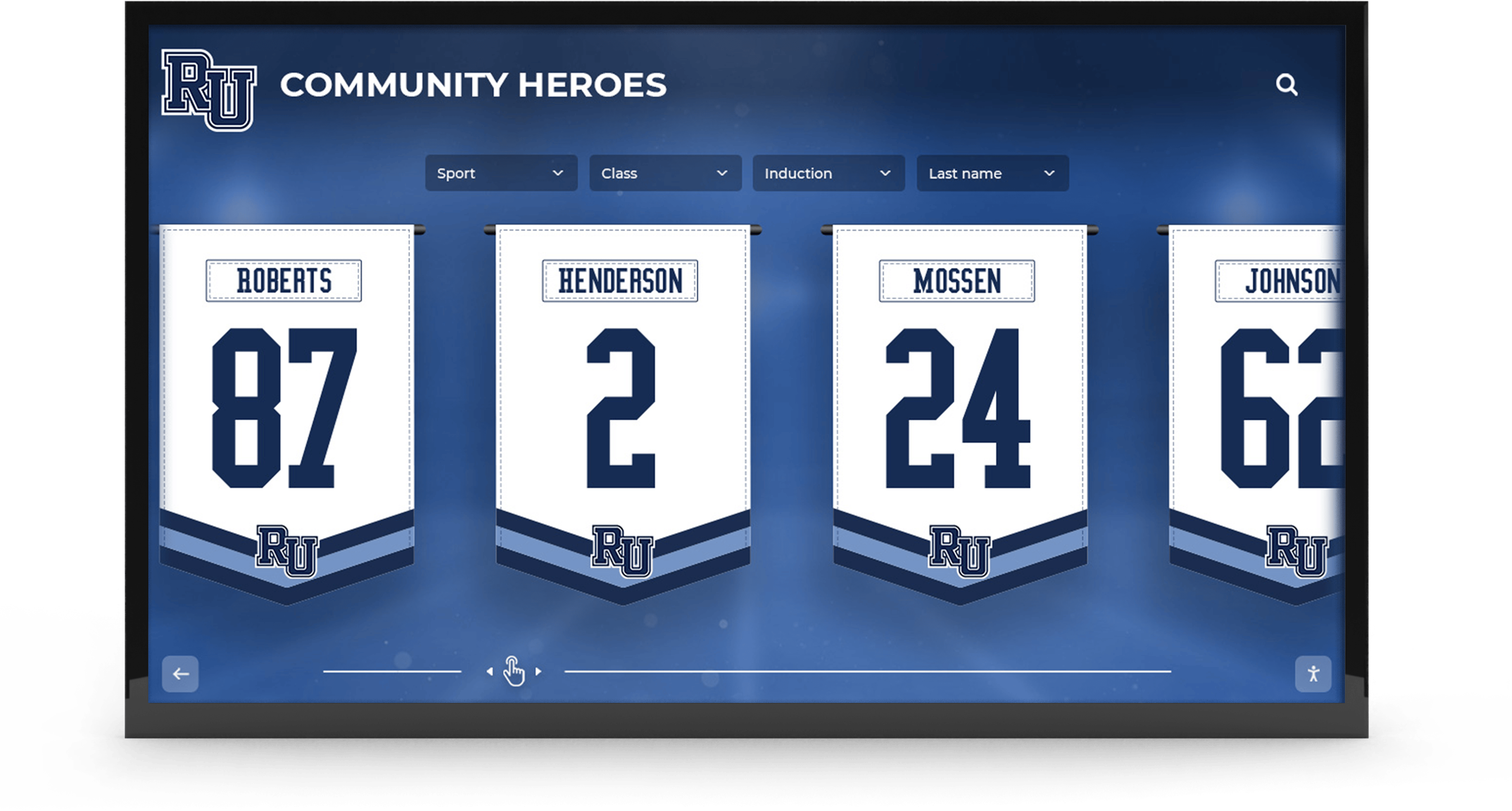
Proper substrate acclimation before printing is what allows championship banners to hang flat, display dimensionally accurate artwork, and maintain ink adhesion through years of temperature cycling in a gymnasium or lobby installation
Verification Table: Pre-Print Substrate Acclimation Conditions
Use this single-pass table before approving any championship banner substrate for production. Work through every row before the roll is loaded.
| Check Item | Method | Pass Criteria | Priority |
|---|---|---|---|
| Print room temperature | Calibrated thermometer at staging area | 64–77°F (18–25°C) confirmed | Required |
| Relative humidity | Calibrated hygrometer at staging area | 40–60% RH confirmed | Required |
| No direct sunlight on staging area | Visual inspection at all sun angles | Staging area shaded throughout the staging period | Required |
| No direct HVAC draft on roll | Visual inspection of vent positions and airflow | Vents redirect away from roll staging position | Required |
| Substrate elevated from floor | Physical check | Roll on rack, spindle stand, or pallet | Required |
| Packaged acclimation time elapsed | Production log timestamp | Minimum time per substrate type confirmed | Required |
| Outer packaging intact on delivery | Inspection record | No moisture intrusion, core crush, or roll-end damage noted | Required |
| Print face free of condensation after opening | Visual and proximity-temperature check | No visible moisture; surface feels at ambient temperature | Required |
| Open-air stabilization time elapsed | Production log timestamp | Minimum open-air period per substrate type confirmed | Required |
| Roll tension even across full width | Visual inspection of unrolled face | No edge waviness or curl deformation at roll face | Required |
| Print face clean and uncontaminated | Visual inspection under even lighting | No dust accumulation, fingerprints, or contamination marks | Required |
| Post-print cure time confirmed in writing | Ink manufacturer TDS or vendor specification | Cure period before finishing operations noted in production record | Required |
Substrate Acclimation and School Athletic Recognition Programs
Championship banner substrate acclimation happens at the print vendor’s facility — but school athletic directors and recognition coordinators are the clients who experience the consequences of skipped or inadequate acclimation. Understanding the standard gives school print buyers the questions to ask before placing an order, and the language to use when a delivered banner arrives with an adhesion problem, a dimensional error, or a substrate that hangs with persistent waviness.
For schools ordering championship banners for the first time, resources on high school championship banner printing costs, materials, and vendor comparison provide additional context on how material type, print process, and production conditions interact to determine both cost and output quality — including why vinyl and fabric substrates require different acclimation procedures and why the substrate choice affects the final installed appearance.
A championship banner printed without proper acclimation may appear acceptable when unrolled at the school — only to develop adhesion failures or dimensional distortion after installation, when seasonal temperature cycling in the gymnasium causes inadequately bonded ink to lift or the banner to rack out of alignment on its hanging hardware. Schools building recognition programs with multiple championship banners displayed side by side benefit from understanding that consistent acclimation standards across every production run are what make an entire wall of banners from different seasons hang flat and display color-consistently.
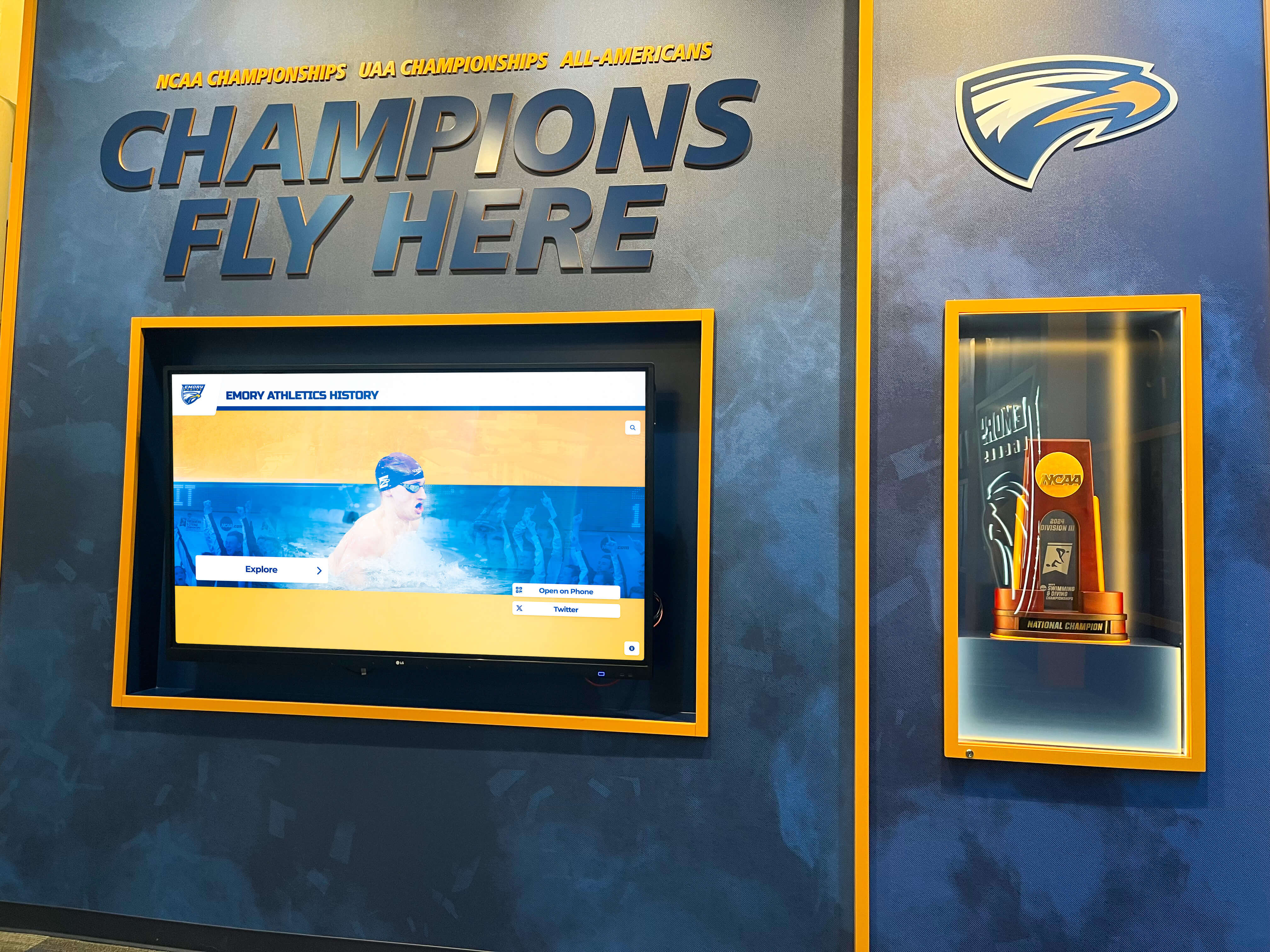
Championship walls accumulate banner installations over years and decades — consistent substrate acclimation standards applied to every production run ensure that new banners hang as correctly as the oldest ones in the collection
The connection between substrate acclimation and long-term recognition program quality extends to digital recognition systems. Athletic programs that display championship history digitally alongside physical banners — through interactive kiosks, lobby screens, or hall of fame recognition tools — need source artwork files that accurately represent the physical banners installed in the gymnasium. A banner produced with a dimensional error from inadequate acclimation may require artwork revision if the installed dimensions differ from the approved design file, creating a file-version management problem for any digital system that references the same championship artwork.
For schools managing comprehensive athletic recognition programs that include physical banners, trophies, and digital display systems, the physical banner is the anchor recognition artifact — typically the oldest, most permanent piece, and the standard against which all other recognition materials are visually compared. Recognition coordinators evaluating new recognition tools benefit from resources on athletic recognition display options for athletics, donors, and school history that address how physical championship history integrates with digital display systems — a context in which the dimensional accuracy and adhesion quality of physical banners directly determines how reliably digital artwork can reference and display the same championship records.
Championship Recognition That Meets a Professional Standard
Rocket Alumni Solutions helps school athletic departments build championship recognition programs — from print-quality graphic standards and production specifications to interactive digital recognition displays that connect banner history to athletes, families, and alumni.
Get notified when Rocket Graphics opens.Schools that replace championship banners on a recurring cycle — replacing banners that have faded, separated, or warped after years of installation — often find that the original production records, including substrate type and vendor acclimation documentation, are unavailable. This makes it difficult to specify a replacement that will match the color and dimension of the remaining banners in the collection. Building and retaining production records that include substrate acclimation confirmation is one component of a championship recognition archival standard that protects the program’s ability to produce matching replacement banners years or decades later. Resources on hall of fame tools for athletics programs address how schools document and manage long-term athletic recognition records — the organizational discipline that makes replacement banner production specifications recoverable when original vendors change or close.
For schools developing digital yearbooks and alumni recognition materials alongside athletic championship recognition, substrate acclimation documentation belongs to the same category of production record as yearbook print specifications and archival photography standards. Resources on digital yearbook and recognition tools for athletics, donors, and school history describe how schools coordinate academic and athletic recognition programs — contexts where production quality documentation, including material handling records, supports both the physical and digital dimensions of an institutional history program.
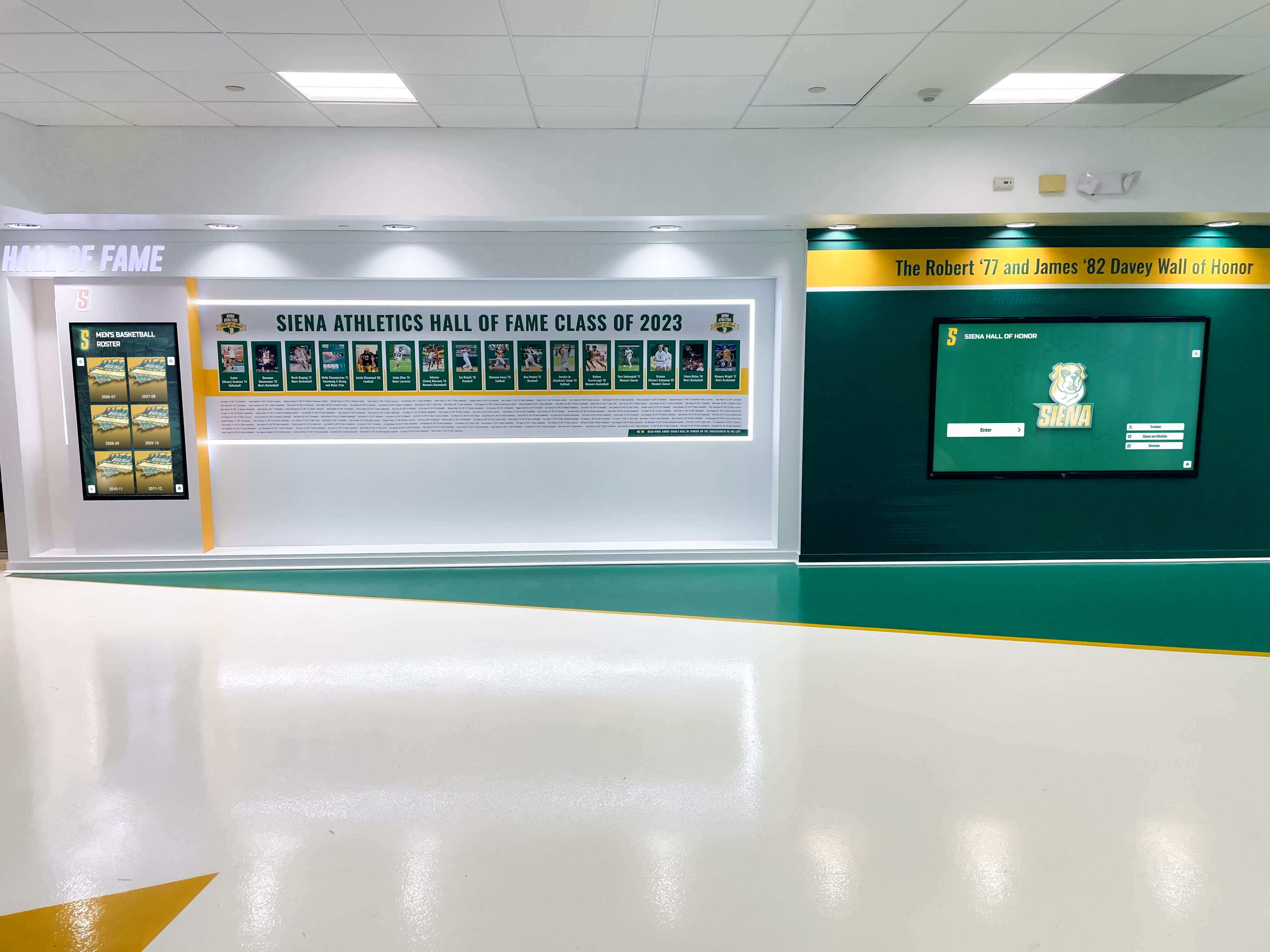
Recognition programs that add championship banners each season need consistent production quality across every order — substrate acclimation verification is one of the foundational steps that keeps dimensional accuracy and adhesion quality consistent across the full collection
Frequently Asked Questions: Championship Banner Substrate Acclimation
What is championship banner substrate acclimation and why does it matter?
Championship banner substrate acclimation is the controlled process of staging banner printing materials — PVC vinyl, polyester fabric, mesh, or canvas — at the print environment’s temperature and relative humidity for a defined period before printing begins. It matters because substrates that arrive cold, damp, or at a different humidity level than the print environment will expand, absorb moisture, or generate static during the print run, producing dimensional errors, adhesion failures, and flatness defects that appear as visible, permanent quality problems on the installed gymnasium banner. These defects cannot be corrected after installation without a full reprint.
How long should a championship banner substrate be acclimated before printing?
Most large-format substrate manufacturers’ technical data sheets specify a minimum of 24 hours of in-packaging acclimation at print room temperature and humidity for PVC scrim vinyl, and 48 hours for fabric substrates including polyester and canvas. After unpacking, an additional 1 to 2 hours of open-air stabilization at room conditions is recommended before loading. These minimums assume a delivery environment no more than 25°F (14°C) colder or more humid than the print room — larger environmental differentials require extended acclimation time.
What temperature and humidity conditions are required for championship banner substrate acclimation?
The target acclimation environment is 64–77°F (18–25°C) temperature and 40–60% relative humidity — the standard wide-format print environment specification aligned with PRINTING United Alliance guidance for large-format production facilities. The acclimation environment must match the print production environment, not a separate storage room, because the goal is to stabilize the substrate at the same conditions under which it will be printed.
Does substrate acclimation affect ink adhesion on championship banners?
Yes. Cold substrate surfaces reduce the chemical receptivity of the print face to UV-curable, latex, and eco-solvent inks, reducing adhesion strength throughout the printed area. If the substrate surface is below ambient temperature when loaded, condensation from the temperature differential can form on the print face — condensation moisture directly prevents ink bonding at affected points, producing areas where ink lifts, peels, or chips after installation. These adhesion failures require a full reprint to correct.
Do fabric championship banner substrates require different acclimation than vinyl?
Yes. Polyester fabric substrates are significantly more sensitive to relative humidity than PVC vinyl. A fabric roll moved from a humid warehouse to a drier print room will release moisture unevenly during acclimation, causing edge waviness and substrate distortion that affect print registration and flatness. Fabric substrates require a minimum of 48 hours of in-packaging acclimation versus 24 hours for vinyl, and must acclimate in the climate-controlled print environment rather than a storage area with different conditions.
Plan Acclimation Into the Championship Banner Production Timeline
Championship banner substrate acclimation is a non-compressible production step: the 24-to-48-hour minimum is a physical requirement of the material, not a scheduling preference that can be reduced under deadline pressure. Schools placing championship banner orders for recognition events, athletic banquets, or season-end ceremonies should build the substrate acclimation period into the total production calendar — treating it as a distinct phase alongside file submission, vendor production, shipping transit, and installation scheduling.
Working with a vendor who documents substrate acclimation as part of their standard production workflow means acclimation time is already included in the quoted turnaround. Vendors who offer unusually compressed turnaround times — appearing to collapse both the acclimation and production phases into a period too short for proper material handling — may be skipping the acclimation step. School print buyers can identify this by asking explicitly whether the vendor’s quoted production time includes substrate acclimation before printing begins.
Championship banner production quality standards — from substrate acclimation before the first print pass to color proofing, preflight verification, and installation review — are what make a gymnasium recognition program look consistent and professional across years of accumulated championship seasons. Applying an acclimation checklist to every championship banner order, regardless of order size or timeline pressure, protects the dimensional accuracy, adhesion quality, and installed flatness of every banner that will hang on the gymnasium wall for the next several decades.
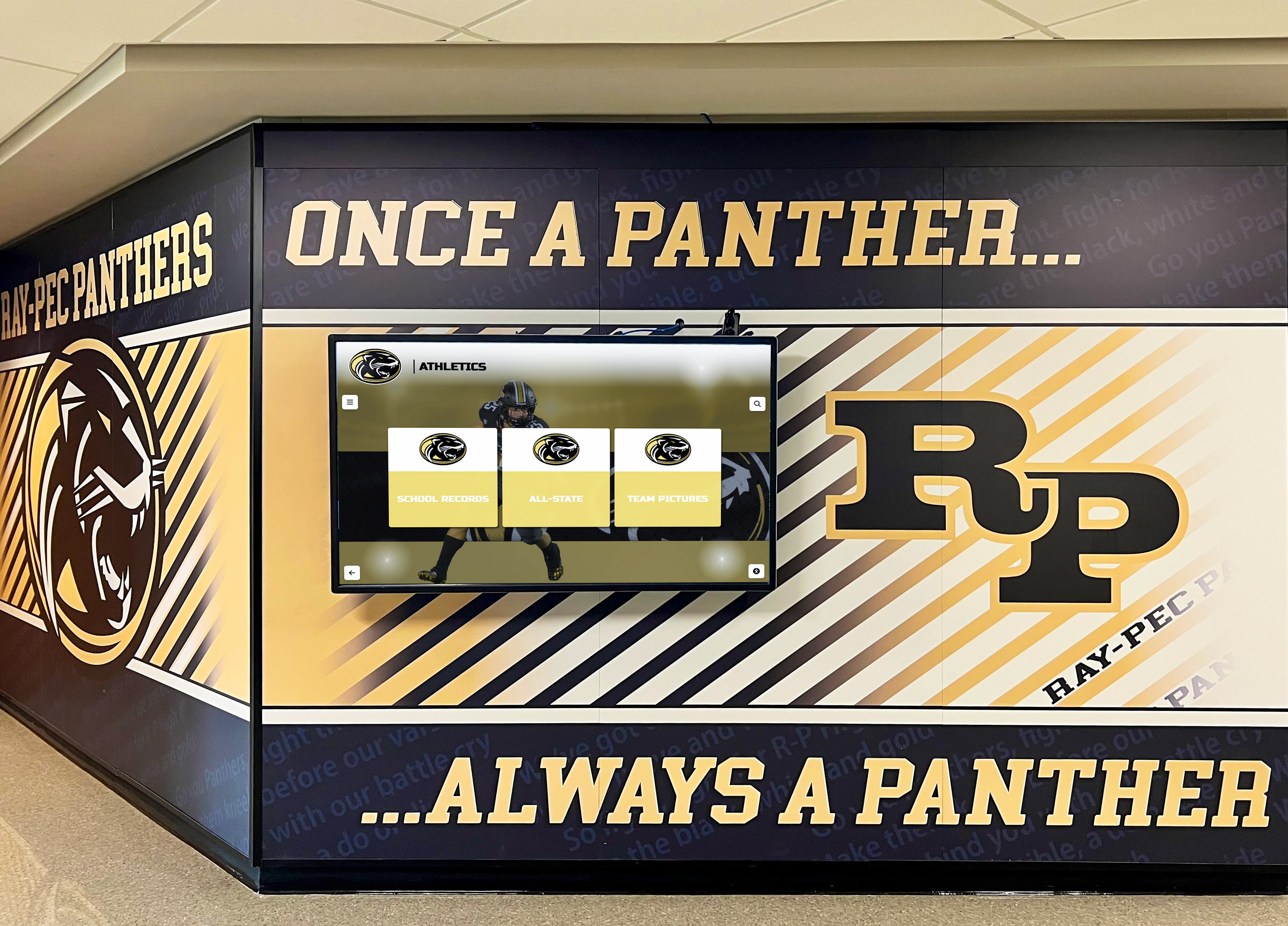
When championship banner production standards are applied consistently from the acclimation step forward, the artwork, dimensions, and adhesion quality of a banner added this season will match the standards of banners produced a decade earlier — the mark of a recognition program that treats every championship with equal care

Physical championship banners are the anchor recognition artifact in most school athletic programs — their dimensional accuracy, adhesion quality, and installed flatness set the quality baseline that all other recognition formats in the lobby are measured against
Build a Championship Recognition Program That Lasts
Rocket Alumni Solutions helps school athletic departments build championship recognition programs — from print-quality graphic standards and digital display systems to interactive hall-of-fame kiosks that connect banner history to the athletes and alumni who earned it. When your recognition program needs physical and digital to meet the same quality standard, we help ensure they do.
Get notified when Rocket Graphics opens.