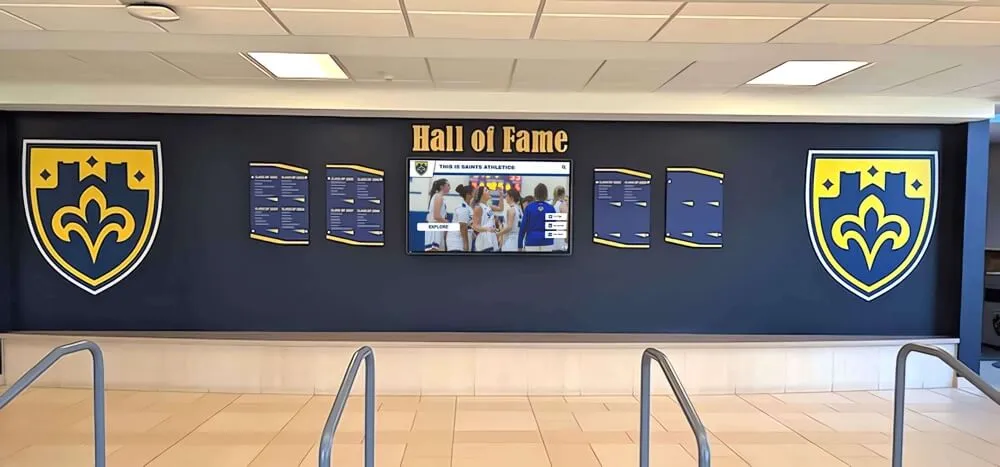
Championship banner optical brightener proofing is the pre-production verification step that confirms a school’s brand colors will read accurately on the finished banner substrate across the full range of lighting environments where the banner will be displayed — not only under the daylight or UV-rich proofing conditions where optical brightening agents in the substrate activate most strongly. The direct answer: many banner substrates — especially bright-white polyester fabrics and coated vinyls marketed as “high-brightness” or “ultra-white” — contain fluorescent whitening agents (FWAs), also called optical brightening agents (OBAs), that absorb invisible ultraviolet radiation and re-emit it as visible blue-white light. Under daylight, OBAs activate fully and the substrate appears brilliant white. Under gymnasium LED high-bay lighting — which produces little ultraviolet output compared to daylight or fluorescent lamps — the same substrate looks noticeably warmer and less bright as the OBAs deactivate. That shift changes the apparent white point of the entire banner, which in turn shifts every school color built on top of it: school gold appears slightly greenish when OBAs are activated under daylight and warmer under gymnasium LEDs; cream and off-white recognition fields shift from clean white toward yellow. A championship banner optical brightener proofing checklist identifies this shift from a physical proof evaluated under gymnasium installation lighting before the full production run is approved.
This guide is written for school administrators, athletic directors, facilities managers, and recognition-program coordinators who review and approve championship banner artwork before commercial production. It does not assume daily familiarity with ICC color management instrumentation, but it does assume responsibility for the visual accuracy of the banners that will represent the school’s official colors for years after installation.
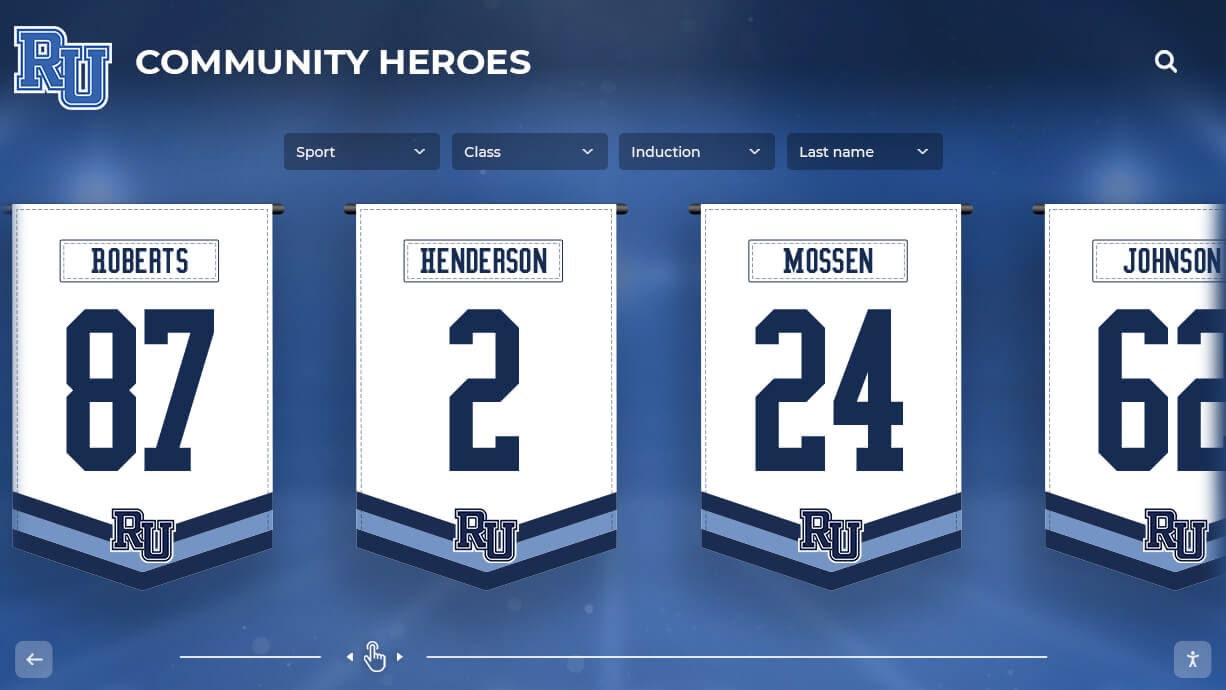
Championship banners hang permanently in gymnasia and corridors under lighting conditions that differ in UV content from the daylight or UV-rich fluorescent environments where optical brighteners in banner substrates activate most strongly — a proofing step under installation lighting is the only reliable way to confirm school colors hold under both illuminant types
What Optical Brightening Agents Are and Why They Affect Championship Banner Colors
Optical brightening agents are fluorescent chemical compounds added to paper, polyester fabric, vinyl, and other printing substrates during manufacturing. Their purpose is to make the substrate appear whiter and more brilliant by compensating for the yellow-absorbing properties of most white materials. A natural paper or fabric white reflects most visible light but absorbs some blue light, giving it a slightly warm or cream tint. Optical brightening agents are designed to absorb ultraviolet radiation — invisible to the human eye — and re-emit that absorbed energy as visible blue-white light, adding apparent brightness in the blue channel and making the substrate’s visual white appear cooler and more luminous than its reflectance alone would produce.
For championship banner substrates, this means a bright-white polyester fabric or a coated vinyl marketed as ultra-white typically contains OBAs. Under daylight or broad-spectrum fluorescent sources that include meaningful ultraviolet output, those OBAs fluoresce and the substrate appears significantly whiter and cooler than its material composition would produce without fluorescence. Under LED gymnasium high-bay lighting — which produces very little ultraviolet radiation compared to daylight or fluorescent sources — the OBAs do not receive the UV input they need to fluoresce. The substrate reverts to its actual reflectance-based appearance: warmer, less bright, and distinctly different from its daylit appearance.
The International Commission on Illumination (CIE) and ISO 13655 formalize this distinction in four spectrophotometric measurement conditions used for color and density measurement of print:
- M0 — no UV filter applied; includes the UV component of the measurement source; reflects OBA fluorescence if present. The historical standard for older densitometers.
- M1 — includes a defined UV component matching ISO 3664:2009 D50 illuminant; OBA response is included at the standardized level for graphic arts evaluation. The current ICC and ISO standard.
- M2 — UV-excluding filter applied; measures only the reflectance-based color of the substrate without any OBA fluorescence contribution. Represents the banner’s appearance under a UV-free illuminant such as an LED.
- M3 — polarized light measurement used to eliminate specular reflection on glossy substrates; rarely applied in championship banner production workflows.
For championship banner optical brightener proofing, the M1 versus M2 comparison is the central technical issue: M1 represents the substrate’s appearance under daylight or UV-rich proofing illuminants; M2 represents the substrate’s appearance under LED gymnasium lighting. If those two measurements differ significantly — meaning the OBA response is large — the school’s colors will look measurably different depending on whether the gymnasium uses UV-producing fluorescent fixtures or UV-free LED fixtures.
Why Gymnasium Lighting Determines Whether OBAs Are a Problem
The gymnasium lighting environment where championship banners spend their installed life determines whether the substrate’s OBA content is a practical color problem or a production non-issue.
High-UV gymnasium lighting (fluorescent fixtures): T8 and T5 fluorescent lamps produce meaningful ultraviolet radiation alongside their visible light output. Under these fixtures, OBAs in the banner substrate activate partially or fully. For schools whose gymnasia use fluorescent high-bay lighting, the gap between the OBA-activated white under proofing conditions and the OBA-activated white under installation lighting is smaller — both illuminants carry UV content, so the OBA response in the substrate behaves similarly in both environments.
Low-UV gymnasium lighting (LED high-bay fixtures): Modern LED high-bay gymnasium fixtures produce negligible ultraviolet radiation. Under LED lighting, OBAs in the banner substrate receive no UV input and do not fluoresce. The substrate reverts to its actual material white — warmer, less bright, and often measurably different from its appearance under daylight proofing. For schools that have upgraded their gymnasium lighting to LED high-bays — an increasingly common energy efficiency project — OBA response becomes a significant production concern because the proofing environment (daylight or fluorescent proofing booth) can activate OBAs that will not activate at all in the installation environment.
Mixed gymnasium environments: Many school buildings have undergone partial LED upgrades. The gymnasium floor lighting may have converted to LED high-bays while the corridor or lobby still uses fluorescent. A championship banner installed across that boundary — entering a corridor with a window at one end and a fluorescent fixture at the other — will exhibit different apparent school colors depending on where the viewer stands. Optical brightener proofing under each illuminant in the actual installation path identifies this variability before production.
The practical consequence for schools: a championship banner proofed under daylight or proofing-booth illumination — both UV-rich environments where OBAs activate — may be approved as a correct color match to the school’s reference materials. That same banner, installed under LED gymnasium lighting where OBAs do not activate, looks measurably warmer and less brilliant. School gold approved as matching under daylight proofing appears a fuller, richer tone under gymnasium LEDs (OBA-deactivated, warmer substrate) — a color shift traceable entirely to OBA response and lighting mismatch, not to a printing or design error.
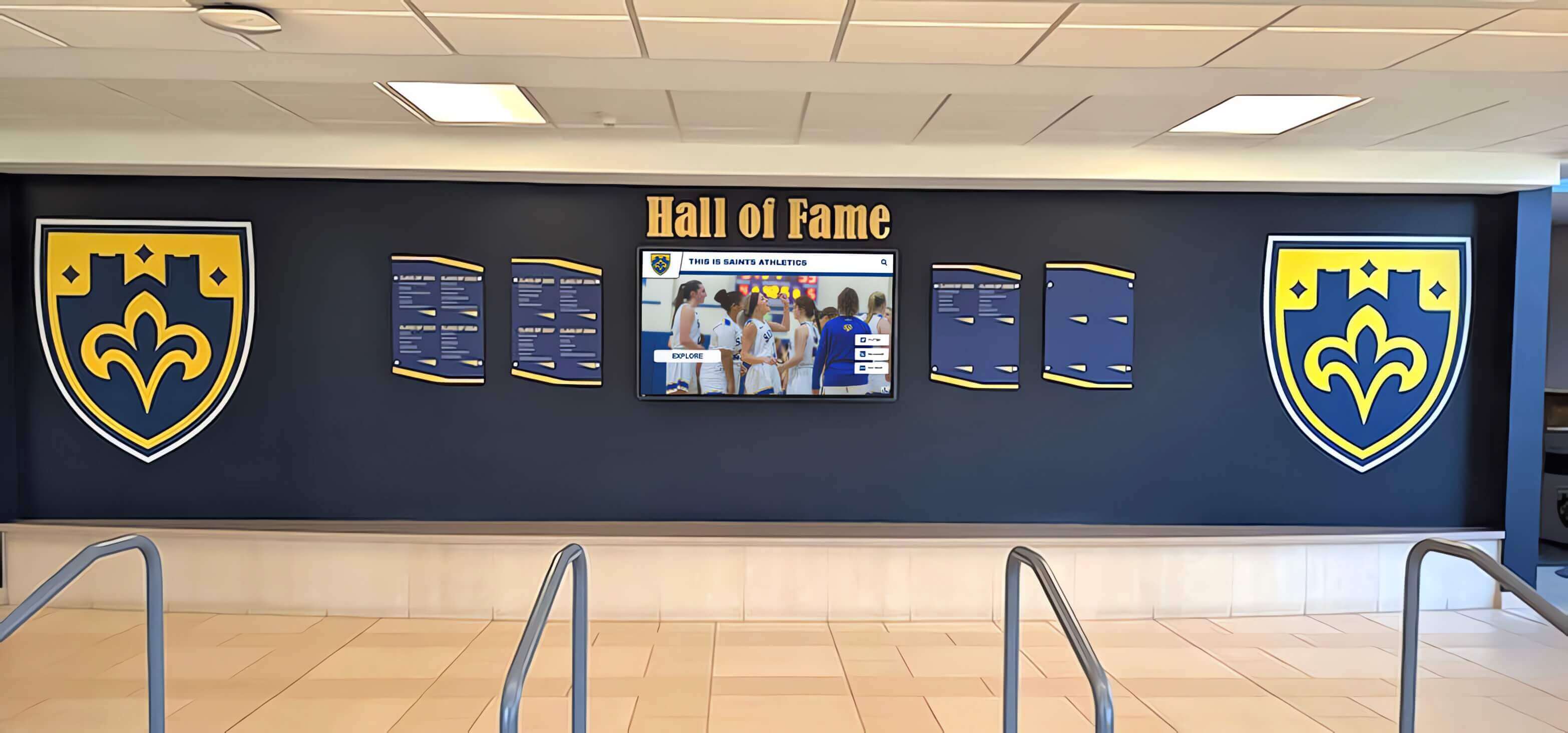
Recognition displays installed in school lobbies and corridors are evaluated under the available light — when that light differs in UV content from the proofing environment, optical brightening agents in the banner substrate produce a visible school color shift that OBA proofing identifies before the banner goes to production
Championship Banner Optical Brightener Proofing: Step-by-Step Checklist
This eight-step checklist applies at the design and pre-production stage, before any physical proof is ordered and before the production file is submitted to the large-format print vendor.
Step 1: Determine Whether the Banner Substrate Contains OBAs
Not every banner substrate contains optical brightening agents. The first step in OBA proofing is confirming whether the substrate selected for this production run contains them.
- Ask the vendor or substrate manufacturer directly: “Does this substrate contain fluorescent whitening agents or optical brightening agents?” Most professional substrate suppliers document OBA content, and production vendors experienced with color-critical banner work can answer immediately.
- If documentation is unavailable, perform a field test: take a substrate sample to diffuse daylight (a shaded outdoor location or near a north-facing window), then evaluate the same sample under LED-only lighting indoors away from windows. A substrate that appears noticeably whiter, cooler, or more brilliant under daylight than under the LED source contains OBAs. A substrate that shows essentially the same apparent white under both illuminants does not.
- Record the substrate name, supplier, and confirmed OBA status in the banner production file. This documentation is relevant for every future banner order using the same substrate from the same vendor.
If the substrate does not contain OBAs, Steps 2 through 5 of this checklist are not required. Proceed directly to Step 6 for a general installation-lighting proofing confirmation.
Step 2: Identify the Gymnasium’s Lighting Type and UV Output
The significance of OBAs in the banner substrate depends entirely on the UV output of the gymnasium’s installed lighting fixtures.
- Inspect the gymnasium lighting fixtures and look for the manufacturer label and lamp type:
- T8 or T5 fluorescent lamps: produce UV output; OBAs in the substrate will activate. Note the color temperature if labeled (typically 4000K or 5000K).
- LED high-bay or LED troffer fixtures: produce negligible UV output; OBAs will not activate under gymnasium lighting. Note the fixture’s color temperature.
- Metal halide HID lamps: produce significant UV output — often more than fluorescent; OBAs activate strongly under these sources.
- If the gymnasium lighting type is unknown, contact the facilities department for the fixture specification record. Many schools retain fixture documentation from installation and recent lighting upgrade projects.
- Document the gymnasium’s lighting type and the approximate year of most recent upgrade. LED conversion is a common facilities project; a gymnasium that used fluorescent lamps during a prior banner order may now use LED high-bays, changing the OBA proofing priority for the current order from low to high.
For school recognition programs that coordinate athletic award records and program documentation across multiple seasons, maintaining a lighting-type record for each installation space helps future coordinators understand the color environment without repeating the site survey for every banner production run.
Step 3: Obtain Physical Proof Samples on the Production Substrate
OBA response is a property of the physical substrate material and cannot be assessed from a monitor soft proof, a PDF proof, or a digital inkjet proof on a different substrate. A physical proof on the actual production substrate is required.
- Request a physical strike-off or press proof from the vendor, printed using the same ink set, density targets, and output profile that will be used for the full production run.
- Request the proof on the same substrate batch as the production material where possible. OBA concentrations can vary between manufacturing batches, and a proof on an older batch may not represent the OBA response of the current production material.
- Include solid color patches of each school color in the proof file alongside the banner artwork. Solid patches provide a clean, unambiguous surface for color evaluation under each illuminant — one that is not complicated by the design’s gradients, photographs, or overlaid text.
Physical proofs on production substrates are standard practice in professional large-format print workflows. Vendors who produce championship banners on a recurring basis typically include proof samples as part of their production quote or offer them as a preflight step before the run is approved.
Step 4: Evaluate the Proof Under Daylight or UV-Rich Proofing Illumination
Begin the OBA evaluation under a UV-rich illuminant — the environment where the substrate’s OBAs activate most strongly.
- Take the physical proof and school color reference materials (Pantone fan deck, existing banner swatch, or current-season uniform fabric) to a location with diffuse daylight: near a north-facing window or in open outdoor shade away from direct sunlight.
- Compare the proof’s school colors against the reference materials under this illuminant. Record whether the colors match.
- Pay particular attention to gold, cream, off-white, and light-toned color fields — these are most affected by substrate white-point shifts related to OBA response.
- Observe the apparent white of the unprinted substrate areas. Under UV-rich daylight, OBA-containing substrates typically appear cooler and more brilliant than OBA-free reference materials from prior banner seasons.
This evaluation establishes the OBA-active baseline: how the banner’s school colors appear when OBAs are fully activated by the illuminant. It is not a pass or fail step on its own — it is the first half of the comparison that the OBA proofing checklist requires.
Step 5: Evaluate the Proof Under Gymnasium Installation Lighting
Take the same physical proof and reference materials to the actual gymnasium, corridor, or lobby where the finished banner will be installed.
- Stand in the installation space with the proof in one hand and the reference material in the other, under the gymnasium’s actual lighting fixtures.
- Compare school colors between the proof and the reference material under this illuminant, evaluating the same color fields assessed under daylight in Step 4.
- Evaluate the substrate’s apparent white under gymnasium lighting. Under LED high-bay fixtures, an OBA-containing substrate will appear noticeably warmer and less bright than it did under daylight — the OBAs are not receiving UV input and are not fluorescing.
- Document the comparison result for each school color family:
- Match preserved: School colors appear consistent between the daylight evaluation and the gymnasium evaluation. OBA response is either absent, minimal, or symmetrical between the two illuminants.
- Shift detected: One or more school colors appear noticeably different under gymnasium lighting than under daylight proofing. The most common shift is a warming of the substrate white, which affects school gold (appears richer or more saturated), cream fields (appear warmer), and all light-value color areas.
If a shift is detected, note which colors shifted, the direction of the shift (warmer, cooler, more saturated, less brilliant), and its approximate magnitude. A color that reads visibly different from six feet away under gymnasium lighting compared to the approved daylight reference requires a production response before the full run is committed. For school programs that invest in sports banquet recognition and year-end athletic award ceremonies, a banner that reads consistently under the gymnasium lighting where those ceremonies take place is the practical outcome OBA proofing is designed to ensure.
Step 6: Compare the Proof Against Adjacent Installed Materials Under Gymnasium Lighting
Championship banners are never displayed in isolation. They hang alongside previously produced banners, painted murals, uniform display cases, retired jersey panels, and physical recognition hardware — all produced at different times, potentially on different substrates with different OBA levels.
- Under gymnasium installation lighting, compare the new banner proof against the existing installed materials in the same space.
- Evaluate whether the proof’s substrate white is consistent with the white areas visible in existing banners. If existing banners were produced on OBA-free substrates and the current proof uses an OBA-containing substrate, the current proof may appear noticeably cooler under UV-rich proofing conditions and warmer under LED gymnasium lighting — inconsistent with existing materials in both directions.
- Evaluate whether the new banner’s school color fields match existing banners in the same space under gymnasium lighting. A visible color discrepancy between a new and an existing banner on the gymnasium wall is the practical failure that OBA proofing is designed to prevent before production.
For programs that display championship banners alongside high school championship rings and other tangible recognition hardware, color consistency between the printed banner and adjacent physical recognition materials — the school-color enamel fill of championship rings, trophy base inscriptions, and uniform display cases — extends the OBA evaluation concern to objects viewed side by side in the same recognition environment.
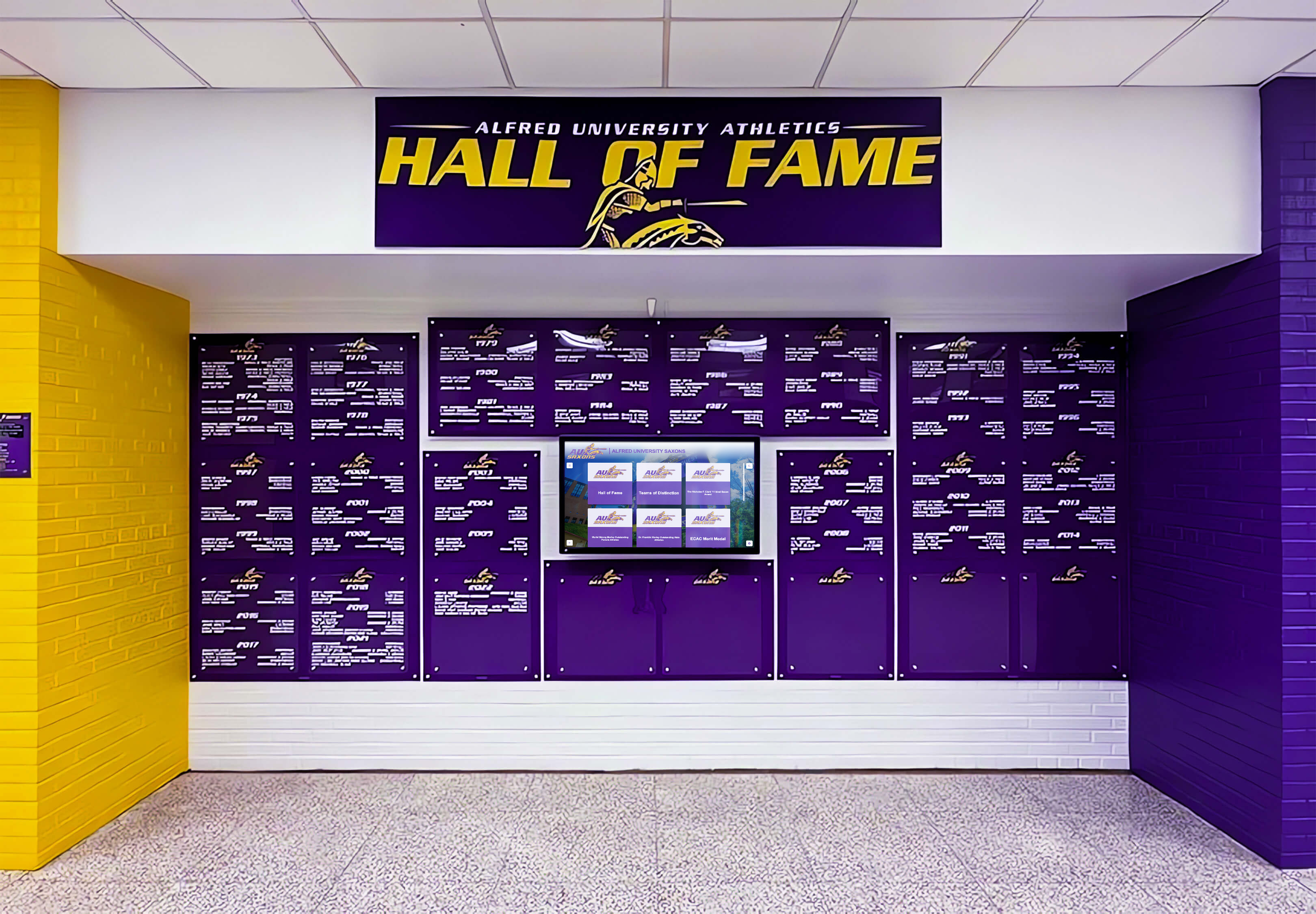
School color programs that include light-value colors such as gold, yellow, and cream are most sensitive to OBA substrate shifts — the substrate's apparent white point is visible through low-coverage ink fields, and its shift between UV-rich daylight and UV-free LED gymnasium lighting is most apparent in these color families
Step 7: Determine Whether Substrate Substitution or CMYK Compensation Is Required
Based on the evaluations in Steps 4 through 6, determine the appropriate production response before the file is submitted for the full run.
Option A — Shift within acceptable tolerance. If school colors appear consistent under gymnasium lighting without a visible shift relative to reference materials and existing banners, the substrate is acceptable for production. Document the evaluation results and proceed with the production run.
Option B — Visible but predictable shift manageable through CMYK adjustment. If the OBA-related shift under gymnasium lighting is visible but consistent — for example, school gold consistently appears 5–8% warmer under LED gymnasium lighting than under daylight proofing — the vendor may be able to adjust the CMYK build of the affected school colors to compensate for the expected OBA-deactivated shift. This approach calibrates the ink values for the gymnasium installation environment rather than the proofing environment. Confirm the adjusted values with a second physical proof evaluated under gymnasium lighting before the production run is approved.
Option C — Shift too large for CMYK compensation; request OBA-reduced substrate. If the shift between daylight and gymnasium lighting is large enough that CMYK adjustment cannot reasonably compensate for it — the entire white point of the substrate looks clearly different between the two evaluations — request that the vendor source an OBA-free or OBA-reduced substrate alternative. OBA-free banner substrates are available from most large-format print suppliers. They typically appear slightly warmer under daylight proofing than OBA-treated substrates, but their appearance is consistent across UV and non-UV illuminants. For schools whose gymnasia have converted to LED lighting, OBA-free substrates are often the most durable solution because they eliminate the illuminant-dependent white-point variability entirely.
Option D — Evaluate under all illuminants and document which produce acceptable results. For installations where the lighting transitions across the banner’s viewing path — part under fluorescent, part under LED — documenting which illuminant produces the closest match and which produces the most visible shift allows the athletic director to make an informed approval decision with full awareness of the installation’s lighting variability.
Step 8: Document the Evaluation Results Before Approving Production
A championship banner optical brightener proofing evaluation that produces no written documentation provides no institutional memory for future banner orders from the same program.
Record the following in the banner production file before approving the production run:
- Substrate name and OBA status: Confirmed by vendor documentation or by field test.
- Gymnasium lighting type and UV output: Fluorescent, LED, or metal halide; approximate color temperature if documented.
- Illuminants used in the evaluation: Daylight (location), gymnasium lighting (fixture type), any corridor or lobby lighting evaluated separately.
- Reference materials used: Which existing banner season, uniform piece, or Pantone chip was used for color comparison at each illuminant.
- Evaluation results per illuminant: For each school color family, whether the match was preserved or a shift detected, the direction of the shift, and its approximate magnitude.
- Production decision: Substrate accepted as-is; CMYK adjustment applied with adjusted build values documented; OBA-reduced substrate requested; or production postponed pending further evaluation.
- Approver: Name and role of the person who reviewed the proof and approved the production decision.
Schools that maintain systematic recognition program records — from athletic award data documentation to homecoming display traditions and seasonal archival programs — benefit from applying the same documentation discipline to championship banner production records. The OBA evaluation record becomes the color standard reference for every future banner order on the same substrate in the same gymnasium.
Creating championship banner artwork with accurate school colors?
Rocket Graphics is building an AI-powered platform to help school staff generate championship banner artwork and athletic recognition graphics with school colors built in — optimized for your substrate and installation environment before the file goes to the production vendor.
Get notified when Rocket Graphics opens.School Color Families and OBA Sensitivity
OBA response does not affect all school colors equally. The degree to which a school color shifts under OBA activation or deactivation depends primarily on the ink coverage in that color field — how much ink sits between the viewer’s eye and the substrate white.
Gold and Yellow — Highest OBA Sensitivity
School gold and yellow are built with very low combined ink coverage, primarily yellow with little or no overprinting colorants. In these fields, the substrate’s base white is the dominant visual factor, with a thin yellow ink layer on top. When OBAs activate under daylight, the substrate’s blue-white fluorescence can shift the apparent gold toward a slightly cooler, less saturated tone. When OBAs deactivate under LED gymnasium lighting, the warmer substrate white shifts gold toward a richer, more saturated appearance. Schools whose primary color is gold or yellow should treat OBA proofing as mandatory before any championship banner production run, as the shift between proofing and installation conditions will be most visible in these color families.
Cream, Off-White, and Light Gray — High OBA Sensitivity
Background fields and light-value areas used for year designations, sport labels, and championship record text are built with minimal ink coverage — these fields are largely substrate white with a tint layer. Under OBA activation, cream reads as a cooler, lighter off-white. Under OBA deactivation, the same cream reads as a warmer, more ivory tone. Championship banner layouts that display year, sport, and season information in light-background fields should include those specific areas in the Step 4 and Step 5 evaluations.
Navy and Royal Blue — Low to Medium OBA Sensitivity
Deep blue school colors built with high combined ink coverage are relatively insensitive to substrate white-point shifts because the ink layer substantially blocks the substrate’s base white from contributing to the visible color. Light-value navy applications — graduated fields, decorative elements, and drop shadows — carry higher OBA sensitivity in proportion to their reduced ink coverage. For programs that honor coaching staff and team achievements in school recognition ceremonies, navy championship panels displayed alongside lighter recognition materials — light gray recognition frames, cream name plates, off-white program covers — should be evaluated for substrate consistency under gymnasium lighting in Step 6.
Maroon, Crimson, and Cardinal — Low to Medium OBA Sensitivity
Red-family school colors in solid coverage are relatively insensitive to OBA substrate shifts because high ink coverage reduces the substrate white’s contribution. Gradient areas, text highlights, and decorative fine lines in maroon carry proportionally higher OBA sensitivity at lower coverage levels. Solid maroon championship lettering on a white vinyl background should be evaluated primarily for the white field’s apparent warmth under gymnasium LEDs — that surrounding white field’s OBA response is more significant than the dark lettering itself.
Black and Very Dark Fields — Negligible OBA Sensitivity
Solid black and very dark school color fields produced with high combined CMYK coverage are not meaningfully affected by substrate OBA response. The ink layer fully absorbs the substrate white at high coverage levels. Black field OBA sensitivity is not a practical concern in championship banner production.
OBA Proofing and ISO Measurement Conditions: Reference Table
| ISO Measurement Condition | UV Included | OBA Fluorescence | Represents |
|---|---|---|---|
| M0 (historical standard) | Yes — measurement source UV included | Yes — OBAs fluoresce | Mixed; varies by instrument source. Not reliably comparable across instruments. |
| M1 (current ISO 13655 standard) | Yes — defined D50 UV component | Yes — OBAs fluoresce at standardized level | Daylight proofing, D50 graphic arts illuminant. The design-approval standard. |
| M2 (UV-excluded) | No — UV filter applied | No — OBAs do not contribute | LED gymnasium lighting without UV output. Represents OBA-deactivated appearance. |
| M3 (polarized) | UV filter + polarized | No | Specular-reflection-free measurement; rarely used for banner OBA evaluation. |
For championship banner optical brightener proofing, comparing M1 and M2 measurements of the substrate white on the physical proof quantifies the OBA response numerically. If the M1 substrate white reads Lab L* 96, a* −1, b* −4 (cool, slightly blue-white) and the M2 reads Lab L* 92, a* 0, b* 3 (warmer, less bright), the OBA response is producing a Delta-E of approximately 5–8 between daylight proofing conditions and LED gymnasium conditions — large enough to be visible in school gold and cream fields.
Vendors with spectrophotometric measurement capability (X-Rite i1Pro or similar instruments) can perform M1 and M2 measurements of the substrate white and provide those values as part of the pre-production documentation. Schools working with vendors who lack this instrument capability can request OBA-free substrate alternatives as a practical substitute for the full M1/M2 numerical comparison.
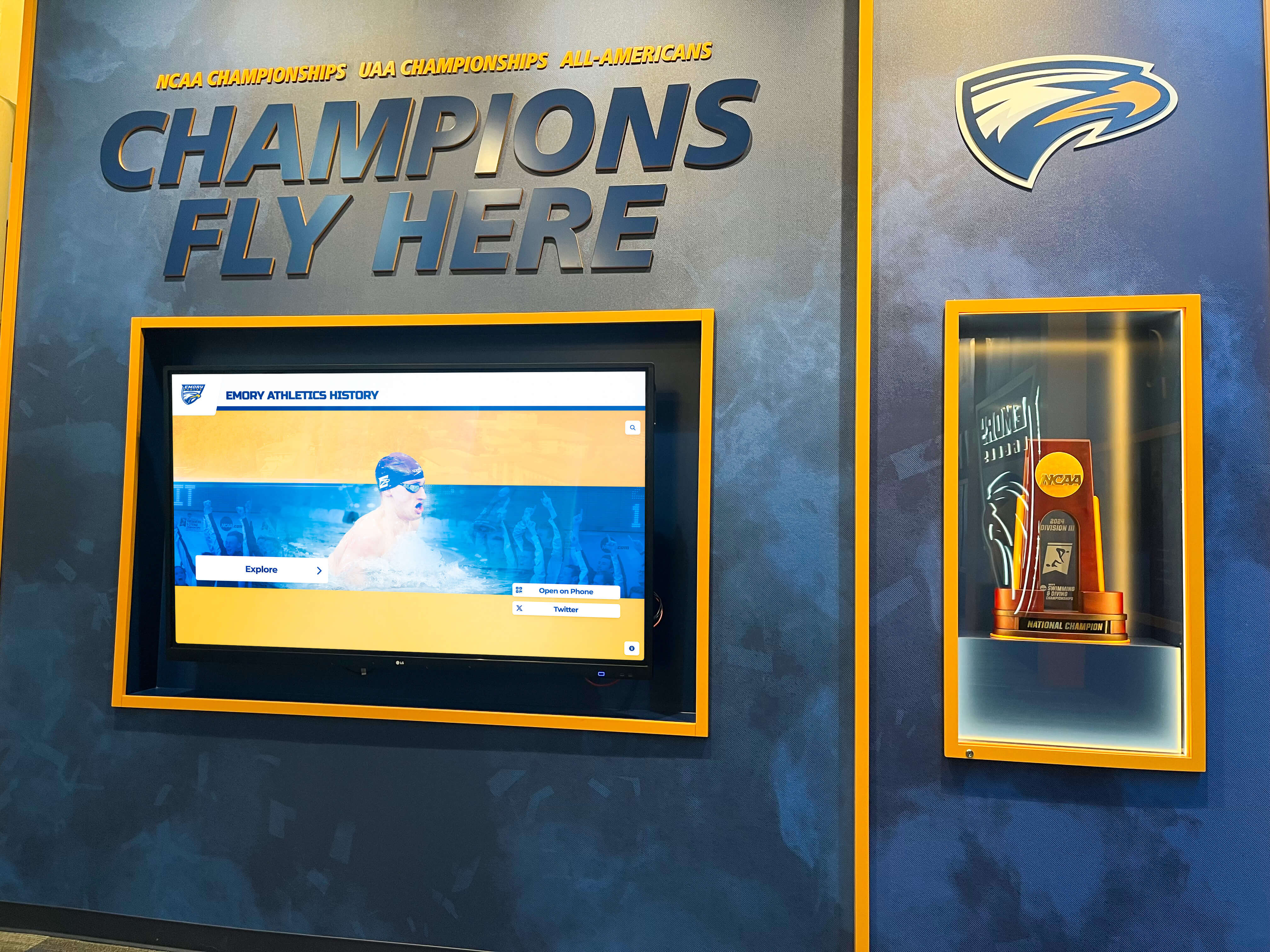
Multi-sport recognition programs accumulate championship banners from many production runs over many years — establishing a documented OBA proofing standard for the gymnasium's specific lighting environment and substrate combination ensures each new banner reads color-consistently with those already hanging on the wall
OBA Proofing When Championship Banners Are Installed Near Digital Displays
Schools increasingly install digital recognition systems — touchscreen hall-of-fame kiosks, LED-backlit corridor screens, and digital team history displays — in the same spaces where championship banners hang. This creates a practical OBA proofing scenario: the digital screen displays the school’s colors through RGB LED emission, which is UV-free and unaffected by OBA response in any substrate. The adjacent printed banner displays school colors through ink-on-substrate reflectance, which is affected by the substrate’s OBA content and the gymnasium lighting’s UV output.
Under daylight or UV-rich fluorescent lighting, a printed championship banner on an OBA-treated substrate may appear cooler and more brilliant than the adjacent digital screen displaying the same school colors in sRGB. Under LED gymnasium lighting where OBAs deactivate, the printed banner appears warmer — potentially closer to the digital screen’s color rendering under that illuminant, or, depending on the specific color, potentially farther from it. The gap shifts direction based on the specific OBA level in the substrate, the school colors involved, and the digital display’s calibration target.
For school recognition programs that coordinate academic honor recognition displays alongside athletic championship banners in the same corridor, visual consistency between printed banners and digital recognition screens matters to every student and visitor who moves through that space. OBA proofing under gymnasium installation lighting addresses the printed-banner side of this pairing; calibrated digital displays address the screen side. Together, those two calibration steps produce the visual coherence that makes a school’s recognition environment read as intentionally designed rather than assembled from inconsistent components.
Recognition programs that span academic and athletic achievement — including character and sportsmanship recognition programs displayed alongside athletic championship banners — benefit from a unified color standard for the installation space: a documented substrate white point under gymnasium lighting, confirmed OBA status, and an approved set of school color references that both printed and digital recognition elements can be calibrated against.
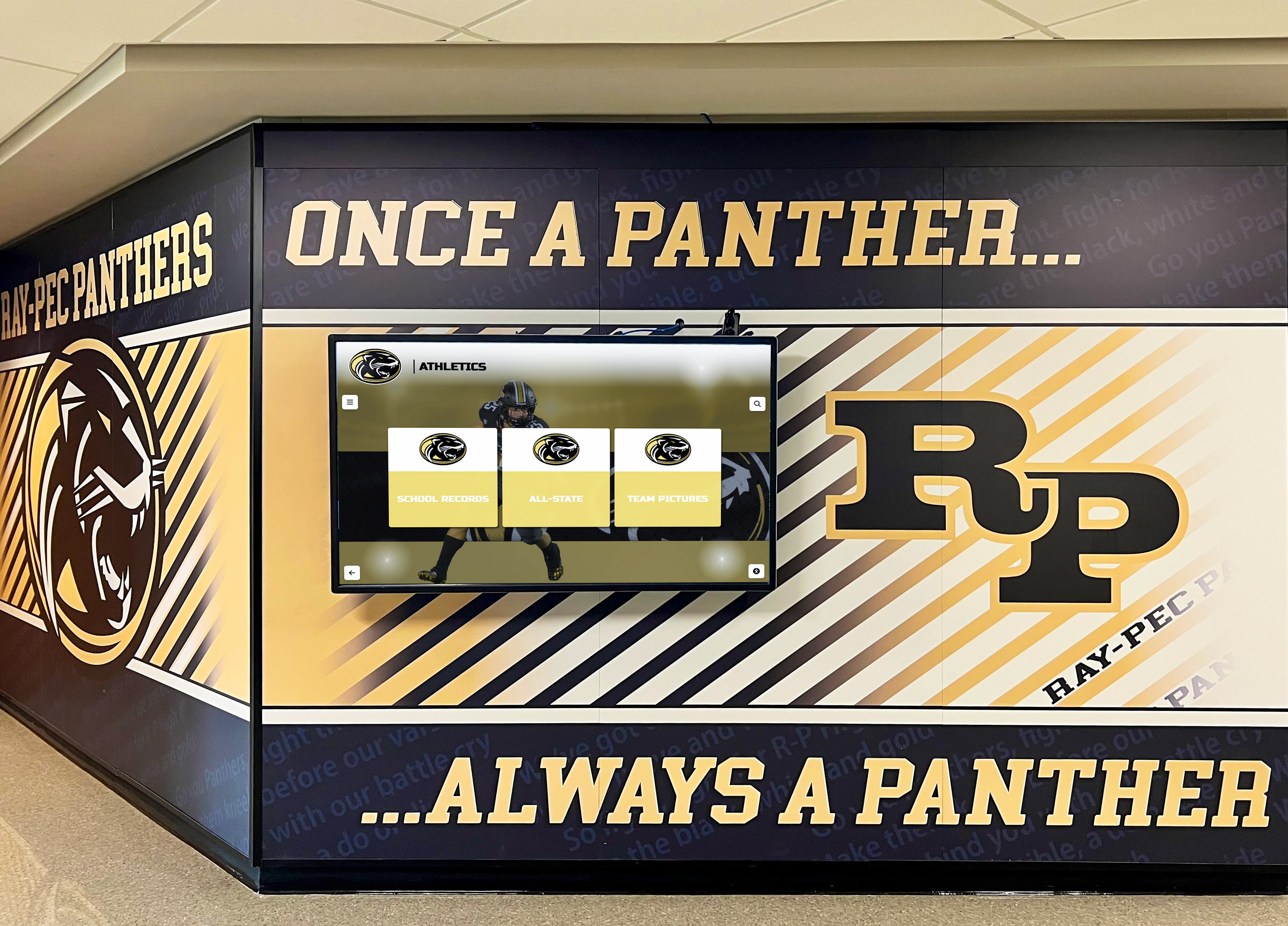
Physical championship banners and digital recognition screens installed in the same corridor are viewed together daily — OBA proofing under gymnasium LED lighting confirms whether the printed banner's school colors remain visually consistent with the digital display's emitted colors when OBAs in the substrate are deactivated by the installation illuminant
Selecting an OBA-Reduced or OBA-Free Substrate for Championship Banners
When OBA proofing reveals that the substrate’s optical brightener response is too large to manage through CMYK adjustment, requesting an OBA-free substrate is the most durable solution for schools whose gymnasia have converted to LED lighting.
OBA-free substrates appear slightly warmer under daylight. Without fluorescent whitening agents, the substrate’s base white reflects its actual material color. Under daylight, this reads as a warm white — noticeably less brilliant than an OBA-treated high-brightness substrate, but consistent. For school programs where the banner will be evaluated near entrance windows or in mixed-light lobby environments, the OBA-free substrate’s warmer daylight appearance may be visible against OBA-treated reference materials already in the space, and should be addressed as part of Step 6 of the proofing checklist.
OBA-free substrates are consistent across UV and non-UV illuminants. The practical benefit is that the substrate’s apparent white point does not shift between UV-rich proofing conditions and UV-free gymnasium LED lighting. School colors built on an OBA-free substrate appear consistent regardless of whether the illuminant carries UV content — a significant advantage for recognition programs that need to maintain color consistency across multiple lighting environments in a single installation.
Request OBA documentation from the vendor. Not all vendors label their substrates with OBA content information. When requesting an OBA-free substrate, ask the vendor to provide written documentation that the formulation does not contain fluorescent whitening agents — not just an assurance that it is “OBA-reduced,” which may still contain enough OBA content to produce a visible shift. The field test described in Step 1 — comparing the substrate’s apparent white under UV and LED lighting — takes fewer than five minutes and confirms a batch’s actual OBA status before the production proof is ordered.
Verify OBA status on each repeat order. Substrate manufacturers occasionally change formulations between production batches without updating product names. A substrate ordered as OBA-free for one banner run should be field-verified on the next order if a different batch is being used. This verification step requires no instruments and takes less time than a visible reprint after an approved banner installs with unexpected color differences.
Related Preflight Steps That Complement OBA Proofing
Championship banner optical brightener proofing addresses a specific variable — substrate UV-dependent white-point shift — within the broader preflight and proofing workflow for championship banner production.
A championship banner substrate white-point proofing checklist addresses the substrate’s overall base white as a soft-proofing parameter, including its warmth, coolness, and simulation using “Simulate Paper Color” in Adobe Acrobat and Photoshop. OBA proofing extends this by specifically addressing the lighting-dependent component of the substrate white: the fluorescent brightener response that causes the substrate white to shift between UV-rich and UV-free illuminants. Both steps are required for a complete substrate color characterization before production approval.
A championship banner metamerism proofing checklist addresses the broader phenomenon of school colors appearing inconsistent across illuminants due to spectral reflectance differences between ink-on-substrate and reference materials. OBA response contributes to metamerism specifically when the substrate white itself is illuminant-dependent — a metamerism proofing evaluation and an OBA proofing evaluation are complementary steps that together address the full range of illuminant-sensitivity concerns in championship banner production.
A championship banner rendering-intent preflight and a championship banner gray balance preflight address file-stage conversion and neutral balance — steps that precede substrate evaluation in the production workflow and ensure the file being sent to the vendor is color-correct before the substrate’s white-point characteristics come into play.
Frequently Asked Questions: Championship Banner Optical Brightener Proofing
What are optical brightening agents in championship banner substrates?
Optical brightening agents (OBAs), also called fluorescent whitening agents (FWAs), are chemical compounds added to banner substrates during manufacturing to make the material appear whiter and more luminous. They absorb ultraviolet radiation — invisible to the human eye — and re-emit it as visible blue-white light, adding apparent brightness and a cooler white tone. Under daylight or UV-rich fluorescent lighting, OBAs activate fully and the substrate appears significantly brighter and cooler than its material composition alone produces. Under LED gymnasium lighting, which emits little UV, OBAs do not activate and the substrate reverts to its warmer, less bright base white. This illuminant-dependent shift changes the visual appearance of every school color printed on the substrate, most noticeably in light-value fields such as gold, cream, and off-white.
How do I know if my championship banner substrate contains OBAs?
Ask the vendor or substrate manufacturer directly whether the material contains fluorescent whitening agents. If documentation is unavailable, compare a substrate sample under diffuse daylight against the same sample under LED-only lighting indoors. A substrate that appears noticeably whiter, cooler, or more brilliant under daylight than under LED lighting contains OBAs. A substrate that shows the same apparent white under both conditions does not. No instruments are required for this field test.
Why does LED gymnasium lighting deactivate OBAs in banner substrates?
OBAs require ultraviolet radiation to fluoresce. LED gymnasium fixtures produce very little UV compared to daylight or fluorescent lamps. Without UV input, OBAs have no energy source to convert and do not emit visible blue-white light. The substrate reverts to its reflectance-based material white — warmer and less bright than its OBA-activated daylight appearance. Schools that have converted gymnasium lighting from fluorescent to LED high-bays should treat OBA proofing as a new production requirement, because that conversion changes the UV environment championship banners are displayed under for their entire installed life.
Which school colors are most affected by OBA substrate shifts?
School gold, yellow, cream, and off-white are most sensitive to OBA shifts because these colors are built with low ink coverage that leaves the substrate’s base white as a significant visual contributor. Dark school colors — navy, maroon, and black in solid coverage — are least affected because the ink layer blocks the substrate white. Gradient areas and light-value decorative elements in any color carry OBA sensitivity proportional to their reduced ink coverage.
What is the difference between M1 and M2 measurement conditions for OBA proofing?
M1 includes a defined UV component that activates OBAs during measurement, representing the substrate’s appearance under daylight or UV-rich proofing conditions. M2 excludes UV, measuring only reflectance-based color, representing the substrate’s appearance under LED gymnasium lighting or other UV-free illuminants. Comparing M1 and M2 measurements of the substrate white on a physical proof quantifies the OBA response numerically — identifying how large the shift between proofing and gymnasium conditions will be before the production run is approved.
Every Championship Banner’s School Colors Should Hold Across Every Light
Championship banner optical brightener proofing is a practical, eight-step checklist that takes the physical proof to the installation space and evaluates school colors under the gymnasium’s actual lighting before any material is committed to a full production run. Confirm the substrate’s OBA status, identify the gymnasium lighting type and its UV output, obtain a physical proof on the production substrate, evaluate school colors under both UV-rich daylight and gymnasium installation lighting, compare the proof against existing installed materials in the same space, determine whether CMYK adjustment or an OBA-free substrate substitution is required, and document the results in writing before approving production.
The athletes whose championship seasons are recorded on gymnasium banners are recognized by every student, family member, and visitor who walks into that space for years to come. A banner whose gold reads differently under daylight than under the gymnasium LEDs — because OBAs in the substrate activate and deactivate with the lighting — is a visible quality inconsistency that is entirely preventable with a systematic evaluation of the physical proof under installation conditions. Combined with championship banner substrate white-point proofing and the championship banner metamerism proofing checklist, optical brightener proofing forms a complete pre-production color evaluation that confirms the school’s official colors will read accurately and consistently wherever the banner is displayed, for as long as it hangs.
Championship Banner Graphics With School Colors Built In
Rocket Graphics is building an AI-powered platform to help school staff create championship banner artwork and athletic recognition graphics with accurate school colors from the first draft — optimized for your substrate and gymnasium lighting environment before the file goes to the production vendor.
Get notified when Rocket Graphics opens.