A championship banner metamerism proofing checklist is the structured review process that confirms a school’s banner colors look consistent across the three distinct lighting environments where the banner will actually be seen — the gymnasium floor, the adjacent corridor under architectural lighting, and daylight near entrance windows — not only under the controlled conditions where the proof was made. The direct answer: metamerism is the optical phenomenon where two colors that appear identical under one light source look noticeably different under a second light source, because their underlying spectral compositions differ even when their overall reflectance values match under the original illuminant. For championship banners, that means school navy approved under proofing-room fluorescent lighting can appear shifted toward purple or green under the gymnasium’s high-bay fluorescents, and school maroon approved at the vendor’s proof station can look muddy or brownish under the LED accent lighting installed near the banner after it is hung. A championship banner metamerism proofing checklist addresses this before production by systematically evaluating the physical proof under each relevant illuminant, comparing it against approved reference materials — existing banners, uniforms, printed programs — and documenting the outcome before the final production run begins.
This guide is written for school administrators, athletic directors, facilities managers, and recognition-program coordinators who approve championship banner artwork before commercial production — not for professional prepress technicians who manage color measurement instrumentation daily.
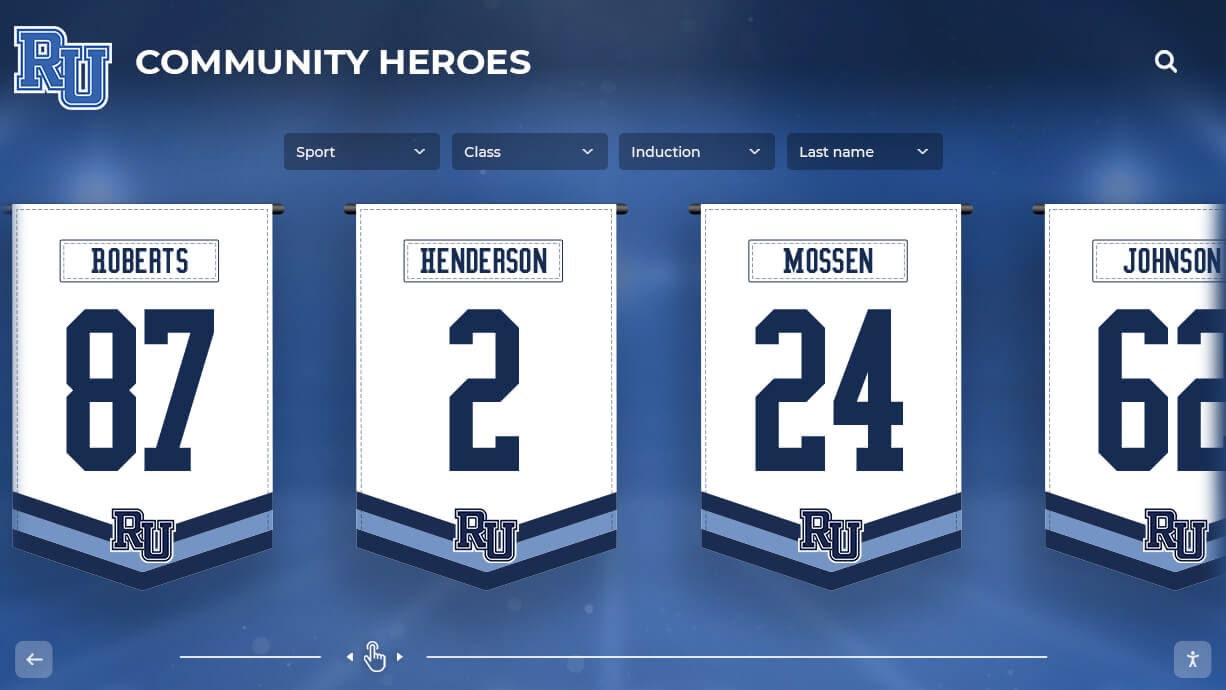
Championship banners hang permanently in gymnasia and corridors where lighting conditions differ from the proofing environment — a metamerism proofing checklist confirms school colors remain visually consistent across every environment where the banner will be seen
What Metamerism Is and Why It Affects Championship Banners
Metamerism occurs when two color samples appear to match under one illuminant but diverge under a second illuminant because their spectral reflectance curves differ even though their tristimulus values match under the original light source. In practical terms for championship banner printing: the school’s brand blue was approved by an athletic director standing under office fluorescent lighting, but when the finished banner is installed in the gymnasium under a high-bay LED or a fluorescent fixture with a different spectral power distribution, the banner blue looks subtly greenish or appears cooler than the navy blue on the team’s uniforms hanging on an adjacent wall.
The International Commission on Illumination (CIE) defines standard illuminants that graphic arts professionals use as references for color evaluation. The most commonly applied in print production are:
- D50 — a standard daylight illuminant at approximately 5,000 Kelvin, the reference most used in graphic arts soft-proofing and press-proof evaluation, as defined by ISO 3664:2009 for viewing conditions in graphic technology
- D65 — a 6,500 Kelvin standard representing average northern hemisphere daylight, used widely in product and fabric color evaluation
- A — a tungsten or incandescent illuminant at approximately 2,856 Kelvin, representing warm artificial lighting
- F2 and F11 — two standard fluorescent illuminants approximating cool-white and narrow-band triband fluorescent sources, representative of the school gymnasium and corridor lighting conditions where championship banners spend their entire displayed life
When a championship banner’s school colors were proofed exclusively under D50 or under a non-standardized office fluorescent — as is common when proofing is done informally by a staff member reviewing a printed sample at a desk — the color evaluation is valid only under that single illuminant. If the banner substrate’s ink produces a spectral reflectance curve that matches the school’s reference blue under D50 but not under F11 (cool fluorescent), the finished banner will exhibit an illuminant metamerism shift every time it is viewed under the gymnasium’s lighting.
For championship banners, three metamerism types are relevant:
Illuminant metamerism is the classic type: the color appears to match under proofing illumination but diverges under the gymnasium’s light source. This is the failure mode most frequently encountered in school banner production, because proofing and viewing environments almost always use different light sources.
Substrate metamerism occurs when the same ink formula produces a different color result on two different substrates, even under the same illuminant. A school navy defined as a Pantone spot color on coated paper may not match when converted to CMYK for large-format vinyl production, because the vinyl substrate’s optical characteristics interact differently with the ink at the spectral level. Schools that produce both printed programs and large-format banners in the same school colors frequently encounter substrate metamerism when comparing the two outputs side by side in the gymnasium.
Observer metamerism is the variation between individual human observers — some people are more sensitive to particular wavelength ranges, so two staff members comparing a proof to an existing banner may reach different judgments about whether the colors match. Standardizing the evaluation to a single observer or documenting results across multiple observers reduces the risk of observer metamerism affecting the approval decision.
Why Gymnasium Lighting Is the Critical Test Illuminant
Most school gymnasia operate under one of three artificial lighting types: high-intensity discharge (HID) metal halide, T8 or T5 fluorescent, or LED high-bay fixtures. Each type produces a spectral power distribution significantly different from the D50 standard illuminant used in graphic arts color evaluation booths, and different from the office lighting typically present when a staff member first reviews a banner proof.
Metal halide fixtures produce a broad spectral output with peaks in the visible range that can shift perception of certain hues — particularly greens, blues, and purples — relative to daylight references. Fluorescent fixtures, especially older cool-white types, produce a characteristic spectral distribution with spikes in the blue-green range and relatively weak red emission, which causes warm colors like maroon, burgundy, and forest green to appear dull or shifted. LED high-bay fixtures vary significantly by manufacturer and color temperature specification; a 4,000 K LED produces a different spectral power distribution than a 5,000 K LED, and both differ from D50 even at the same correlated color temperature.
The consequence for championship banners is that school colors approved under any of these conditions without metamerism evaluation may look correct in the approval environment and wrong in the gymnasium installation — and the difference cannot be corrected after the banner is produced and hung.
For school programs that also manage academic recognition displays and multi-format recognition programs, the same lighting-environment concern applies to any printed recognition element installed in a space with fluorescent or LED illumination — the gymnasium and corridor lighting that championship banners live under is the evaluation benchmark, not the office or proofing room.
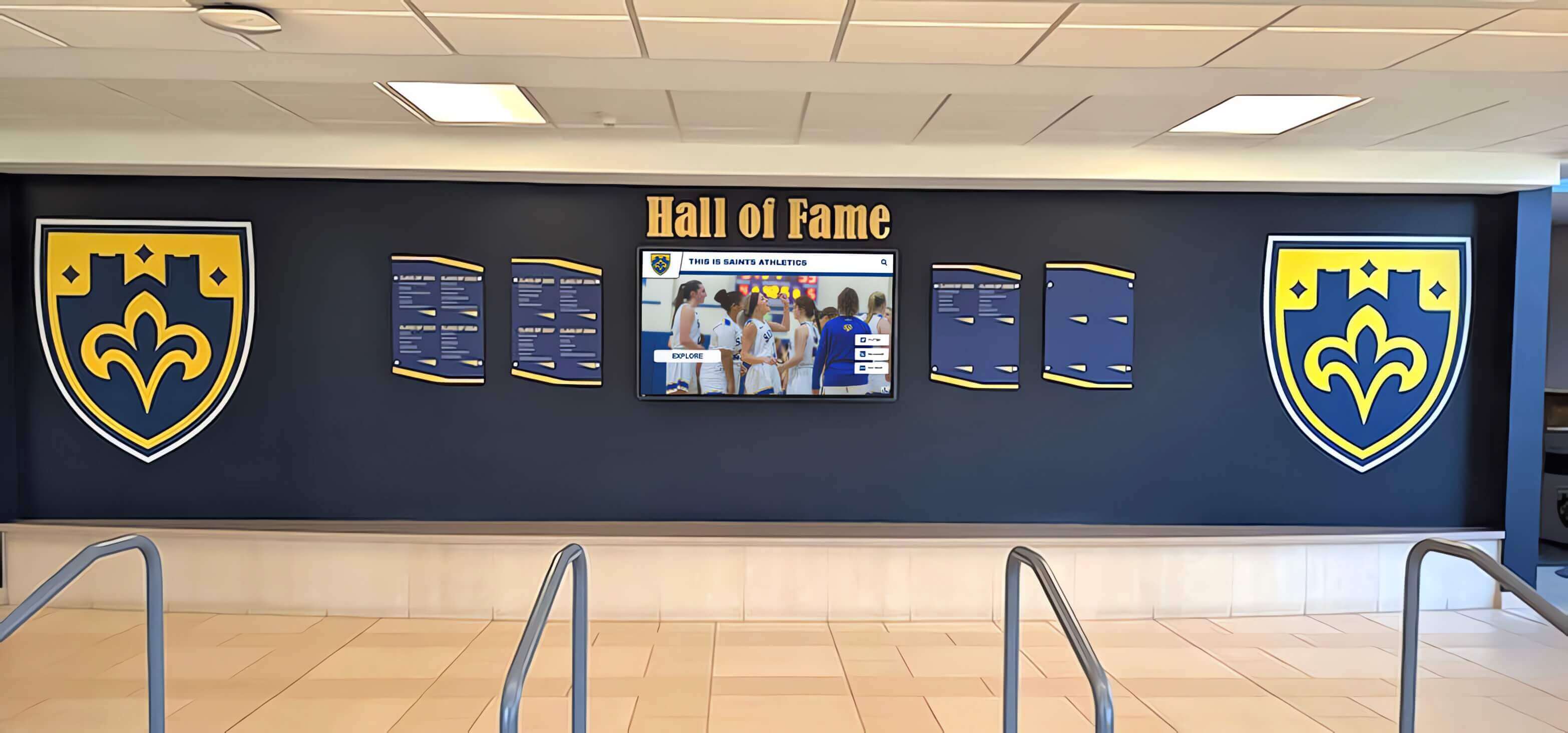
School recognition spaces combine printed banners with digital displays under architectural lighting that differs from standard graphic arts proofing conditions — metamerism proofing confirms school colors read consistently across both output types in the actual installation environment
Championship Banner Metamerism Proofing Checklist
This seven-step checklist applies at the pre-production approval stage — before the championship banner order is confirmed with the vendor.
Step 1: Identify and Document the Banner’s Viewing Environments
Before evaluating any proof, document the specific lighting environments where the finished banner will be seen.
Walk through the installation space and record:
- Primary installation location: Gymnasium interior, corridor, lobby, or field house. Note the fixture type and approximate color temperature if it is labeled on the fixture (many LED and fluorescent fixtures include a color temperature label: 3500K, 4000K, 5000K).
- Secondary viewing locations: Is the corridor near an entrance door that admits natural daylight? Is the gymnasium also used as an auditorium with theatrical lighting during award ceremonies? Each distinct lighting environment is a separate metamerism test condition.
- Adjacent materials: Note any installed banners, painted murals, uniform display cases, or printed materials that the new banner will be visually compared against. These become reference materials for the metamerism evaluation.
This documentation step is often skipped, but it is the foundation of a useful metamerism evaluation. Without knowing which illuminants the banner will be evaluated under by the students, athletes, and families who see it, the checklist has no target.
Step 2: Obtain the Physical Proof and Reference Materials Before the Evaluation
A metamerism evaluation requires a physical proof printed on the actual production substrate, not a monitor soft proof or a digital inkjet proof. Metamerism is a property of physical materials — the spectral reflectance interaction between ink and substrate — and cannot be assessed from a screen display.
Before the evaluation session, gather:
- Physical proof: A vendor press proof or strike-off on the production substrate, printed using the same ink set and profile that will be used for the full production run.
- Reference material: The most recently approved championship banner from the same program, or a current-season uniform piece, or a printed game program that has been signed off as color-accurate. This reference represents the school’s approved color standard.
- Pantone fan deck: If the school’s colors are specified with PMS numbers, bring the physical Pantone fan deck to the evaluation session. The fan deck provides a spectrophotometrically defined reference chip for each color.
If possible, conduct the evaluation using a portable color viewing booth or color evaluation light box with selectable illuminants. Graphic Whizard, Just Normlicht, GTI, and similar manufacturers produce light booths with switchable D50, D65, A, and fluorescent illuminant modes that allow direct comparison under each relevant light source. These are available through print supply distributors and are a practical investment for school programs that produce championship banners regularly. If a light booth is not available, the evaluation under gymnasium illumination — physically standing in the installation space with the proof in hand — is the most practical and relevant alternative.
Step 3: Evaluate the Proof Under Proofing-Standard Illumination (D50 or Office Fluorescent)
Begin the evaluation under the same lighting conditions where the initial proof was approved, or under the closest available equivalent.
- Hold the proof next to the reference material — existing banner, uniform, or Pantone fan deck.
- Record whether the school colors on the proof match the reference under this illuminant. If they do not match even at this stage, a color accuracy problem exists before metamerism is considered. Report the discrepancy to the vendor and request a corrected proof.
- If the colors match under the initial illuminant, proceed to Step 4.
This step establishes the baseline match. A proof that does not match the reference under the initial illuminant has a color accuracy failure — it is not a metamerism issue. Only a proof that matches the reference under the first illuminant but diverges under a second exhibits true metamerism.
Step 4: Evaluate the Proof Under Gymnasium or Corridor Lighting
Take the proof and the reference material to the installation space — the gymnasium, corridor, or lobby where the finished banner will hang.
- Hold the proof next to the reference material under the actual installation lighting.
- Compare the school colors: primary color (typically the dominant field color), secondary color, and any neutral elements.
- Document what you observe. Possible results:
- Match preserved: Colors appear consistent under both the proofing illuminant and the installation lighting. No metamerism shift is visible. Proceed to Step 5 to confirm under additional illuminants.
- Shift detected: One or more school colors look noticeably different under the gymnasium lighting than under the proofing illuminant. The colors may appear more or less saturated, shifted toward a different hue, or inconsistent with the reference uniform or existing banner. This is an illuminant metamerism problem.
If a shift is detected, note which colors shifted and the direction of the shift (warmer, cooler, more greenish, more purple). This information goes to the vendor with a request to adjust the ink formula or the output ICC profile targeting for the gymnasium illuminant condition. Schools that manage high school wall of fame recognition spaces with permanent banner installations benefit from documenting this evaluation result in writing so future banner orders can specify the adjustment without repeating the site visit.
Step 5: Evaluate the Proof Under Natural Daylight or a Secondary Illuminant
Many school corridors and lobby spaces have natural daylight from windows or entry areas. Banners near these spaces will be evaluated by visitors under mixed or daylight conditions.
- Move the proof and reference material to a location with natural indirect daylight — near a corridor window, at a lobby entry, or outdoors in open shade (not direct sunlight, which introduces extreme variation).
- Compare school colors under this third illuminant.
- Record whether the match is preserved, improved, or worsens compared to the result under gymnasium lighting.
For programs where banners are displayed in spaces that transition between artificial and natural lighting — such as a lobby that receives afternoon daylight through glass doors — this step identifies any shift that occurs as the dominant illuminant changes throughout the day.
Step 6: Evaluate Substrate Metamerism Against Existing Materials
Substrate metamerism requires a separate evaluation because it involves comparing the banner’s substrate-ink combination against materials printed on different substrates — uniforms, programs, or banners produced on different materials by different vendors.
- Stand in the installation space with the proof in one hand and the reference material (uniform, previous banner, program) in the other.
- Under the gymnasium installation lighting, compare the colors between the two substrate types — not just hue, but also how each material reflects the overhead light. A high-gloss vinyl substrate reflects gymnasium lighting specularly (a bright specular highlight) in a way that a matte jersey fabric does not, which affects apparent color when viewing both materials at the same viewing angle.
- Evaluate the comparison from the intended viewing distance — typically two to six feet for a gymnasium banner above bleachers, or eight to twelve feet for a high-mounted corridor banner. Substrate metamerism is often visible from a distance even when both materials appear to match when held at close range.
- If the colors diverge between substrate types at viewing distance, note the shift direction and communicate the finding to the vendor. The vendor can often adjust the ink mix for the banner substrate to reduce the visible substrate metamerism against the most commonly compared reference material.
For athletic programs where championship banners are installed near uniform display cases or retired jersey framing, evaluating substrate metamerism between the printed banner vinyl and the jersey fabric is particularly important — these materials are viewed side by side daily, and a visible color discrepancy between the two is immediately apparent to anyone familiar with the school’s colors. Schools that recognize a broad range of student achievement — from athletic championships to academic honors and graduation recognition — often display multiple types of physical recognition materials in the same corridor, making substrate-to-substrate color consistency a facility-wide concern.
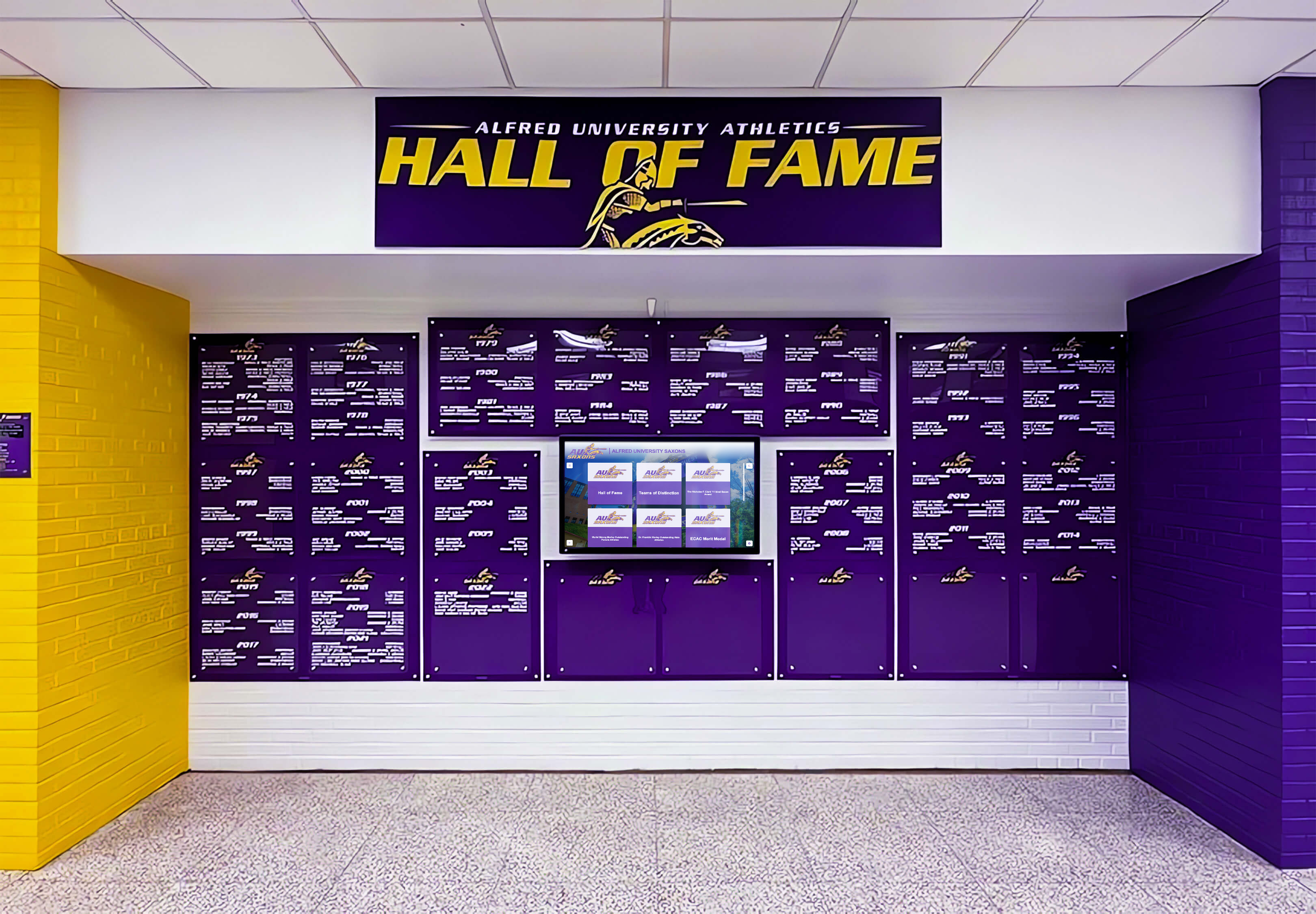
Dark and highly saturated school colors — purple, navy, maroon, forest green — exhibit the greatest metamerism risk under gymnasium fluorescent and LED illuminants; a metamerism proofing evaluation before production approval prevents color shifts that would be visible against reference materials installed in the same space
Step 7: Document the Evaluation Result and Conditions Before Approving Production
A metamerism proofing evaluation that produces no written documentation provides no protection on the next banner order. Document the evaluation before approving the production run.
Record the following in the banner production file:
- Evaluation date and location: The physical space where the on-site evaluation was conducted.
- Illuminants used: Which light sources the proof was evaluated under — proofing room fluorescent, gymnasium LED or fluorescent (with fixture type and color temperature if known), natural daylight.
- Reference materials used: The specific items the proof was compared against — which banner season, which uniform type, or which Pantone fan deck chips.
- Results per illuminant: For each illuminant, record whether the colors matched the reference, and if not, the direction and magnitude of the observed shift.
- Approval decision: Who approved the proof for production, based on which evaluation result, and what (if any) color adjustment was requested from the vendor before production began.
- Vendor adjustment documentation: If the vendor adjusted the ink mix or ICC profile targeting based on this evaluation, record what was changed.
This documentation becomes the institutional memory for the school’s championship banner color standard. If the athletic director changes roles, if the vendor changes, or if a banner from a prior season must be remade, the documentation provides a starting point rather than requiring a full site-visit evaluation from scratch. Athletic programs that maintain systematic athletic award records and athletic data documentation benefit from applying the same documentation discipline to banner production records as to athletic achievement records — both types of records represent institutional history that outlasts individual staff members.
School Color Scenarios and Metamerism Risk Levels
Not all school colors carry equal metamerism risk. The spectral composition of an ink determines how much its apparent color changes across illuminants.
Navy and Royal Blue
Deep blue school colors carry moderate-to-high metamerism risk under fluorescent gymnasium lighting. Cool-white and triband fluorescent fixtures emit relatively low energy in the red and orange range, which can cause navy blues to appear slightly more purple or violet under gymnasium lighting than under the D50 daylight reference used in proofing. Under LED high-bay fixtures with a 5,000 K color temperature, school navy typically reads closer to its daylight appearance than under older fluorescent sources.
When proofing a navy championship banner, evaluate the proof against the team’s navy uniform fabric under gymnasium lighting specifically. Uniform fabrics dyed for navy frequently use a different spectral combination than CMYK ink-on-vinyl navy, making substrate metamerism between the two a common finding in this color range.
Maroon and Cardinal Red
Maroon and cardinal red school colors are among the highest-risk colors for metamerism under fluorescent gymnasium lighting. Because fluorescent sources emit relatively little energy in the red portion of the spectrum, red-heavy school colors — maroon, burgundy, cardinal, and crimson — can appear darker, more purple, or more brownish under fluorescent gymnasium lighting than under the daylight reference where they were proofed.
The degree of shift depends on the specific Pantone ink formula and the fluorescent fixture’s spectral power distribution. Broader-spectrum fluorescent and high-CRI fluorescent sources produce a smaller shift than older cool-white fluorescent that clips the red range significantly. When reviewing a proof for a maroon championship banner, the gymnasium evaluation in Step 4 is the highest-priority step in the checklist — it catches the red-range fluorescent shift before the banner is produced.
Forest Green and Kelly Green
School greens carry medium metamerism risk, primarily because green sits at the peak of human visual sensitivity and the eye detects even small hue shifts in this range clearly. Forest green can shift toward olive or khaki under some LED illuminant types, and toward blue-green under cool-white fluorescent. Kelly green, which is more yellow-adjacent, can appear more saturated under daylight and more neutral under warm LED sources.
The most effective reference material for green school color evaluation is a current-season team uniform evaluated side by side with the banner proof under gymnasium lighting — jersey dyes for athletic green often produce a slightly different spectral curve than large-format ink-on-vinyl green, and the two are commonly compared by everyone who visits the gymnasium.
Purple and Violet
Deep purple and violet school colors have the highest metamerism risk of common school color families. Purple occupies the boundary between red and blue in the visible spectrum, and its apparent color is highly sensitive to the relative energy output at both ends of the visible range. Under daylight, purple reads as purple. Under cool-white fluorescent with reduced red energy, the same purple can shift noticeably toward blue. Under warm LED with elevated red emission, the same purple shifts toward the red side.
Championship banners in purple school colors require the most rigorous multi-illuminant evaluation in this checklist. The gymnasium lighting evaluation is critical, and if the school’s corridor or lobby also receives daylight from entrance windows, the natural-light comparison step is equally important. Schools building permanent hall of fame display walls with purple school colors in mixed lighting environments should conduct the full seven-step checklist evaluation and document which illuminant produced the most significant shift, so the vendor can target the production specifically for the gymnasium-priority condition.
Spot Color Versus Process Color: Metamerism Risk Comparison
The ink system used for the championship banner directly affects metamerism risk.
Spot color (Pantone PMS) printing uses a single, factory-formulated ink for each color. The spectral reflectance curve of that ink is fixed by the Pantone formula and the production conditions — it is reproducible from batch to batch. Metamerism still occurs with spot inks under different illuminants, but the degree of shift is consistent and documented by Pantone for each ink in their published spectral data. Schools using spot color production can, in principle, verify the metamerism behavior of the selected PMS ink across illuminants using Pantone’s published data before even ordering a proof.
Process color (CMYK) printing builds school colors by mixing cyan, magenta, yellow, and black dot patterns. The resulting spectral reflectance curve is a composite of four overlapping ink spectra, and it differs from the spectral curve of a spot ink that produces the same apparent color under one illuminant. A CMYK-built school color and a Pantone spot color may match visually under D50 but diverge under F11 fluorescent precisely because their underlying spectral curves are different. For this reason, CMYK championship banners carry a higher metamerism risk against Pantone-specified reference materials — uniforms, programs, or older spot-printed banners — than spot color banners do.
For schools whose championship banners are produced in process color (CMYK), the Step 6 substrate and material comparison under gymnasium lighting is the most important check in the entire metamerism proofing checklist. A CMYK-built navy compared against a Pantone-dyed navy jersey under gymnasium fluorescent often shows a visible shift that does not appear under daylight. Documenting that shift and establishing a corrected CMYK mix for the gymnasium illuminant — or requesting the vendor use a closer CMYK approximation — reduces the visual discrepancy for future orders.
A detailed spot color setup workflow for championship banners covers how to define school colors as Pantone references in design files — a foundational step that reduces metamerism risk for any banner comparing printed vinyl against other school materials. Confirming correct gray balance on neutral tones and dot gain compensation for the banner substrate are companion preflight steps that combine with metamerism proofing to form a complete color accuracy review before production approval.
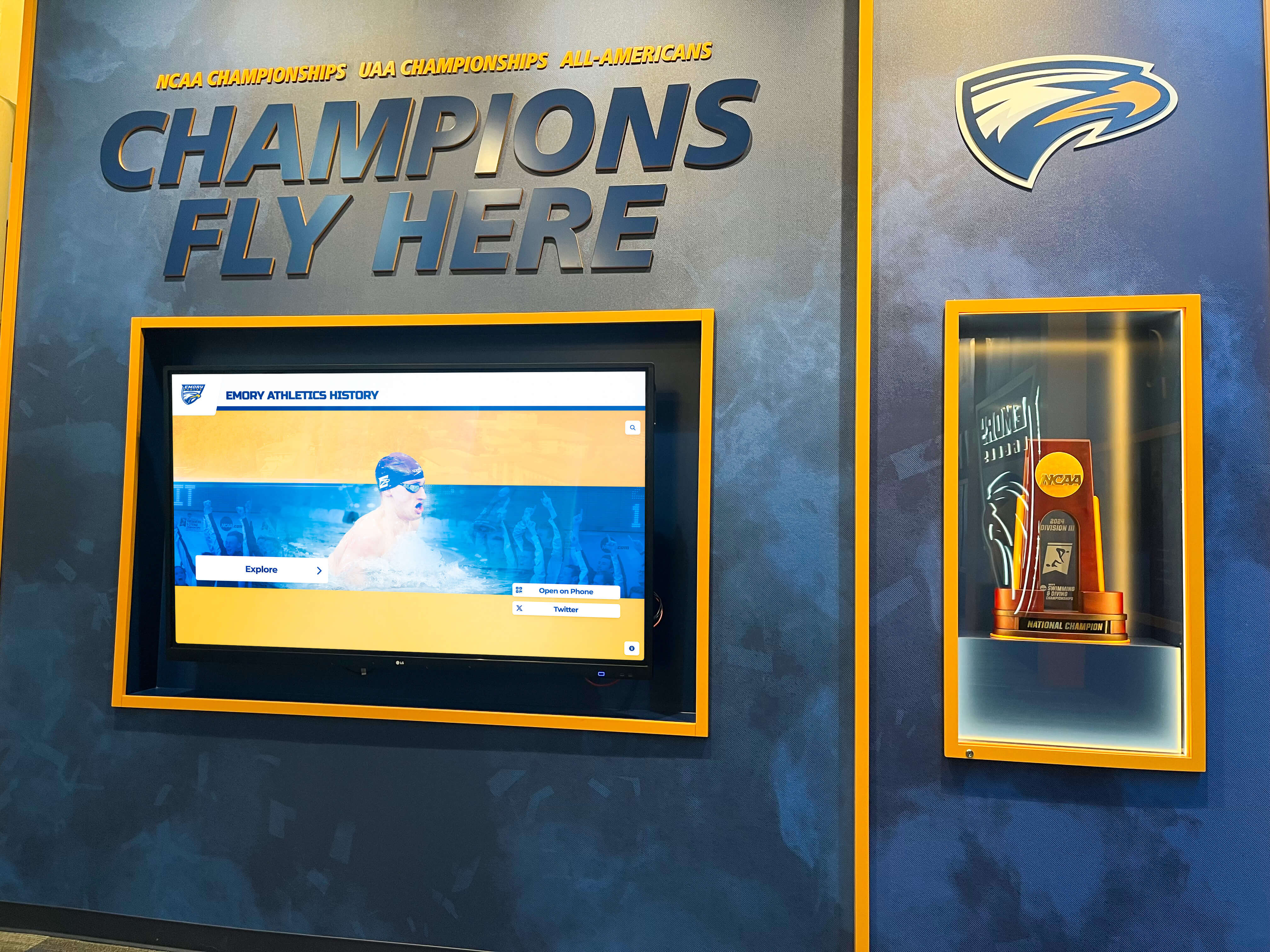
Multi-sport recognition programs produce championship banners across many seasons and sports — a documented metamerism proofing standard per substrate and illuminant type ensures each new banner matches the color quality of those already installed in the gymnasium or corridor
Metamerism Proofing When Banners Are Installed Near Digital Displays
Schools increasingly install digital recognition displays — touchscreen hall-of-fame kiosks, LED-backlit video walls, and digital corridor screens — in the same spaces where championship banners hang. This creates a practical metamerism scenario that is rarely discussed: the printed banner and the adjacent digital screen represent the school’s same brand colors, but they do so through fundamentally different optical systems.
A digital display produces colors by emitting light from RGB LEDs through its panel. An sRGB or DCI-P3 display calibrated to reproduce the school’s hex color for navy blue emits photons at specific wavelengths that the eye interprets as the school’s navy. A printed vinyl banner reproduces the same school navy by subtracting light through ink layers on a substrate. The two outputs produce the same apparent color through different physical mechanisms — and those mechanisms respond differently to the ambient illuminant in the space.
When the gymnasium’s LED high-bay lighting changes in spectrum or intensity — as when event-mode lighting replaces practice-mode lighting during a championship ceremony — the printed banner’s apparent color shifts because ambient light changes how the ink-on-substrate surface reflects. The digital display’s emitted color is independent of the ambient illuminant; its apparent color does not shift the same way the printed banner’s color does. The result is that the printed banner and the adjacent digital screen may produce different apparent school colors under event lighting than under the daily gymnasium lighting — a metamerism effect between print and digital output types.
For school programs managing both printed championship banners and digital recognition displays for academic awards and recognition programs, the most practical response to this effect is to conduct the Step 4 gymnasium evaluation under the full range of lighting modes used in the space — daily practice lighting, event lighting, and ceremony lighting if those differ. A proof that matches the digital display’s school colors under all three lighting modes has passed the most demanding version of the metamerism test.
Schools planning new installations of physical championship banners alongside digital recognition programs can reference how school volunteer recognition and community events use coordinated visual branding across physical and digital formats — the color consistency discipline that serves championship banner production also applies to every other printed element in the school’s recognition environment.
Building a Metamerism Proofing Record for Your Athletic Program
A championship banner metamerism proofing checklist produces value beyond the immediate production decision. Over time, the documentation from each evaluation builds a calibration record for the school’s production environment: which vendor’s ink formula for school navy minimizes shift under the gymnasium’s specific fixture type, which CMYK mix for school maroon produced the best match against the jersey reference under the gymnasium’s fluorescent, which proof evaluation conditions reliably predict the installation result.
For athletic programs that commission championship banners in multiple sports and years — accumulating a gymnasium full of banners from different vendors, different substrates, and different production eras — this documentation is what connects each new production run to the established color standard. The athletic director who approves a new banner years from now benefits from the evaluation record that documents what the current gymnasium lighting does to each school color, rather than starting the metamerism analysis from scratch for each new order.
Schools building recognition programs that extend beyond athletic championships into academic awards, honor roll recognition, and multi-year achievement documentation often discover that the same metamerism documentation discipline serves all of their recognition production — printed certificates, recognition boards, athletic banners, and academic displays installed in the same corridors all share the same viewing environment and the same illuminant challenge.
For academic programs managing student achievement recognition across grade levels and disciplines, a school-wide color standards record — anchored by the metamerism evaluation data from championship banner production — provides a shared reference that every recognition program in the school can use to keep printed and digital outputs visually consistent.
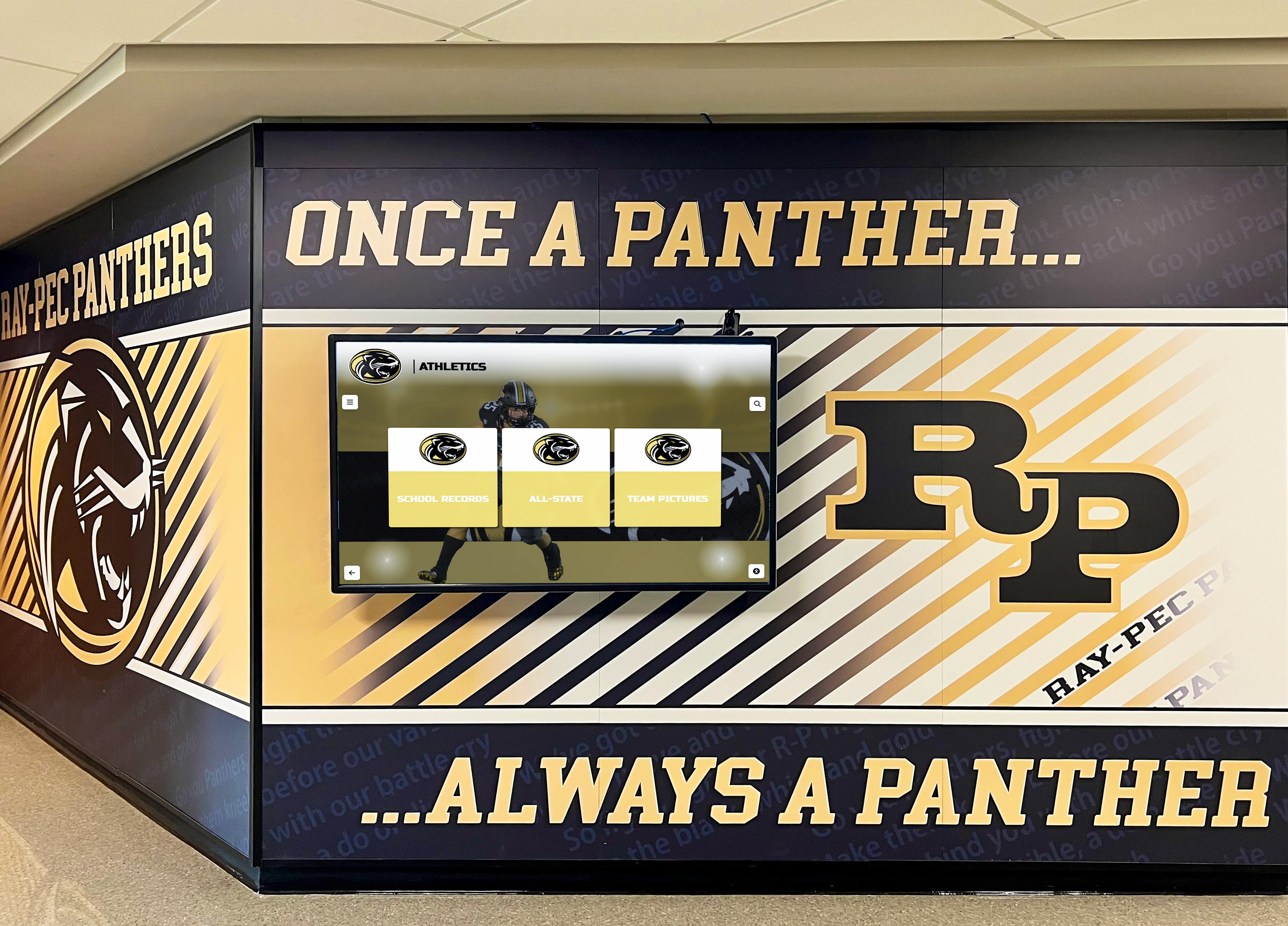
School corridors that mix printed banners and digital displays present a practical metamerism challenge — the physical banner reflects ambient light while the digital screen emits light, and their apparent school colors can diverge under certain illuminants; metamerism proofing before banner production identifies this gap before installation
Creating championship banner artwork with accurate school colors?
Rocket Graphics is building an AI-powered platform to help school staff generate championship banner artwork and athletic recognition graphics with school colors built in — no manual color proofing or metamerism correction required before the first draft.
Get notified when Rocket Graphics opens.Frequently Asked Questions: Championship Banner Metamerism Proofing
What is metamerism in championship banner printing?
Metamerism in championship banner printing is the phenomenon where two color samples appear to match under one light source but look noticeably different under a second light source, because their underlying spectral reflectance curves differ even when their visual appearance matches under the first illuminant. For championship banners, this means school colors approved under office or proofing-room lighting may appear shifted when the finished banner is installed under the gymnasium’s fluorescent or LED fixtures. A metamerism proofing checklist identifies this shift by evaluating the physical proof under the actual installation illuminant before the production run is approved.
How do I check a championship banner proof for metamerism?
Obtain a physical press proof on the production substrate — not a monitor soft proof or a digital inkjet proof. Take the proof and a reference material (existing banner, team uniform, or Pantone fan deck) to the installation space. Evaluate the color match under the gymnasium lighting, corridor lighting, and any natural daylight sources nearby. Record whether the colors match the reference under each illuminant. A proof that matches under proofing-room lighting but diverges under gymnasium lighting has an illuminant metamerism problem that should be communicated to the vendor before the full production run begins.
Which school colors have the highest metamerism risk on championship banners?
Purple and violet school colors carry the highest metamerism risk, because their apparent color is highly sensitive to the relative energy at both the red and blue ends of the visible spectrum — and gymnasium fluorescent and LED illuminants vary significantly in that balance. Maroon and cardinal red are also high-risk under fluorescent gymnasium lighting, where reduced red energy emission causes those colors to appear darker or more brownish. Navy blue and forest green carry moderate risk. Evaluating all school color families under gymnasium illumination is the most reliable way to identify shifts before production.
Is spot color printing more metamerism-resistant than CMYK for championship banners?
Spot color printing using Pantone PMS inks produces a single factory-formulated ink with a fixed spectral reflectance curve, making metamerism behavior more predictable and consistent. CMYK process color builds school colors from four overlapping ink spectra, producing a different spectral curve than a spot ink that appears visually identical under one illuminant — that spectral difference can cause a larger metamerism shift under gymnasium fluorescent when comparing the CMYK banner against a Pantone-specified reference. For schools comparing banners against Pantone-specified uniforms or prior spot-printed banners, spot color production reduces but does not eliminate metamerism risk.
Can metamerism in a championship banner be fixed after printing?
No. Metamerism is a property of the ink-substrate spectral interaction and cannot be corrected after the banner is produced. A championship banner with a visible color shift under gymnasium lighting must be reprinted with an adjusted ink formula or output ICC profile targeting. The metamerism proofing checklist is the production step that identifies this problem from a physical proof before the full banner run is confirmed — making it far less costly than discovering the shift after the banner is installed.
Every Championship Banner Deserves Colors That Hold Under Every Light
A championship banner metamerism proofing checklist takes less time than a production reprint and less money than a reproof after installation. The workflow is practical: document the viewing environments, gather a physical proof and reference materials, evaluate under proofing-standard illumination to confirm baseline accuracy, evaluate under gymnasium and corridor lighting to detect illuminant shifts, compare against existing installed materials to surface substrate metamerism, and document the result before production approval.
The athletes represented on a championship banner are recognized by every student, family member, and visitor who walks through that gymnasium for the next decade. A school color shift that makes the navy look purple under the fluorescent lights or makes the maroon look brownish under the LEDs is a visible quality defect that cannot be corrected after installation — and is entirely preventable with a systematic evaluation of the physical proof before the production run is confirmed.
Create Championship Banner Artwork with School Colors Built In
Rocket Graphics is building an AI-powered platform to help school staff create championship banner artwork and athletic recognition graphics with accurate school colors from the first draft — no manual metamerism proofing or color correction required before your artwork is ready to submit.
Get notified when Rocket Graphics opens.