A championship banner Fogra MediaWedge proofing checklist is the structured press verification workflow that places a standardized ISO control strip alongside each banner proof, measures its color patches with a calibrated spectrophotometer, and confirms that the printing system is producing colors within Fogra’s published reference tolerances before a school authorizes the production run. The direct answer: the Fogra MediaWedge CMYK v3.0 is a standardized control strip published by Fogra (Forschungsgesellschaft Druck e.V.), the German printing research institute that develops reference data for the ISO 12647 print standard family. Its 72 patches — CMYK primary solids, binary overprints, gray balance patches at 25%, 50%, and 75% coverage, and tone value patches — confirm at the press level that a vendor’s equipment is calibrated to Fogra’s reference condition. When a banner proof passes MediaWedge verification, any artwork file built against the corresponding Fogra output profile (Fogra51 for coated substrates, Fogra52 for uncoated) will reproduce school colors within that same specification. Schools and athletic departments that include Fogra MediaWedge verification in their banner proof approval process gain a press-level quality confirmation that goes beyond visual comparison and provides an archivable measurement record.
This guide is written for school administrators, athletic directors, facilities managers, and recognition-program coordinators who review championship banner proofs — not for prepress technicians configuring measurement software daily. No prior color science background is required.
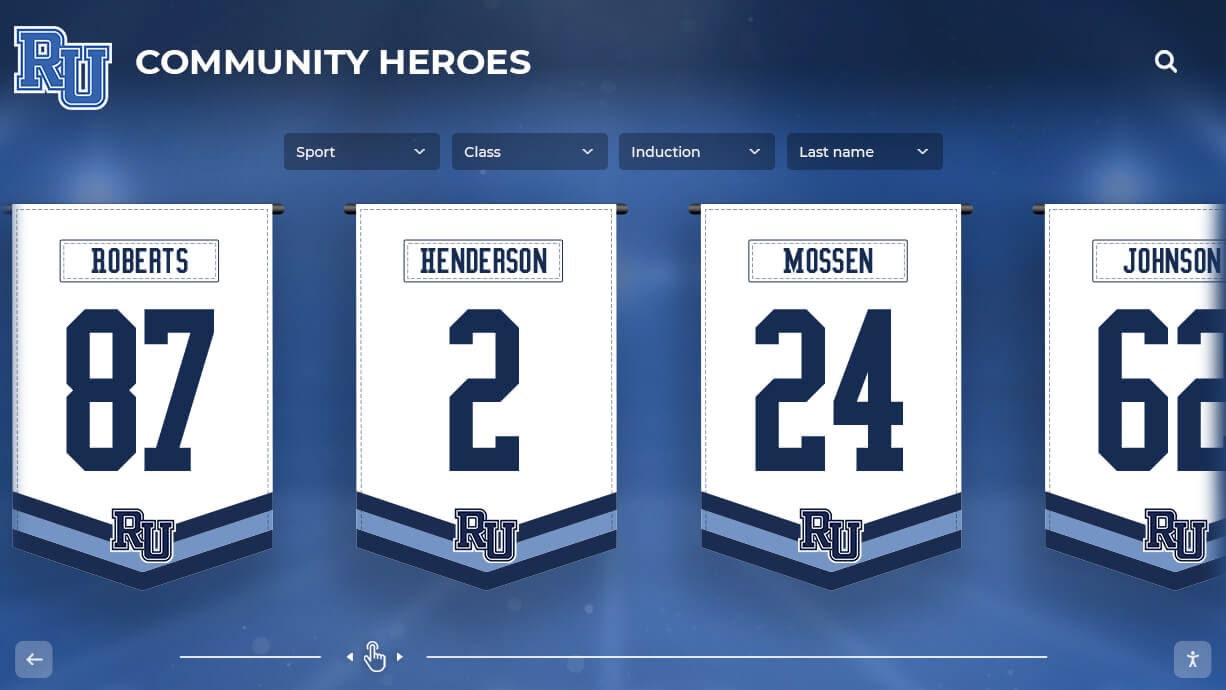
Championship banners installed in a school recognition corridor accumulate across many production years and vendors — Fogra MediaWedge verification for each proof creates a documented calibration record that confirms color accuracy at the press level before any banner is produced
What a Fogra MediaWedge Verifies and Why It Matters for Championship Banners
The Fogra MediaWedge CMYK v3.0 is a press control strip, not a school-color-specific measurement tool. It verifies that the printing system — the printer, ink set, substrate combination, and ICC profile in use — is producing colors that fall within Fogra’s measured reference values for the targeted output condition. If the system passes, any artwork file correctly built against that output condition will reproduce predictably. If the system fails, no artwork file will reproduce school colors accurately regardless of how well the file was prepared.
For championship banners, this distinction matters because the MediaWedge provides press-level verification that complements per-color CIEDE2000 measurement. A championship banner CIEDE2000 color-difference proofing workflow measures whether the specific school colors on a proof fall within ΔE₀₀ tolerance. The MediaWedge answers a prior question: is the press itself calibrated correctly before that measurement even takes place? A vendor whose press fails MediaWedge verification cannot reliably hit the CIEDE2000 tolerances for specific school colors, because the underlying printing system is not operating within specification.
Fogra, formally Forschungsgesellschaft Druck e.V., is a Munich-based applied research association that publishes reference measurement data for ISO print standards. Fogra’s published ICC profiles and reference data — including the Fogra51 dataset for ISO 12647-2 coated offset printing — are the foundation for G7-referenced output profiles used by commercial print vendors worldwide. Fogra MediaWedge verification is how a vendor demonstrates that their press is actually achieving the Fogra reference, not merely claiming a profile name.
Fogra MediaWedge CMYK v3.0 Patch Structure
The Fogra MediaWedge CMYK v3.0 contains 72 color patches organized into functional groups. Understanding what each group verifies helps school administrators interpret a MediaWedge measurement report when the vendor supplies one alongside the proof.
| Patch Group | Patches Included | What It Verifies |
|---|---|---|
| Primary solids | C, M, Y, K at 100% | Ink density and maximum gamut at press conditions |
| Binary overprints | CM (blue), CY (green), MY (red) | Overprint accuracy — critical for mixed-color banner elements |
| Tone value patches | C, M, Y, K at 25%, 50%, 75% | Dot gain (tone value increase) at key tonal levels |
| Gray balance patches | CMY combinations at 25%, 50%, 75% | Neutral gray reproduction — confirms backgrounds and white areas will be accurate |
| Paper white | Unprinted substrate patch | White point measurement for the specific banner substrate |
| Near-neutral patches | L*, a*, b* patches near neutral axis | Confirms neutrals throughout the tonal range are within Fogra gray balance tolerance |
Primary solids confirm that the maximum ink density for each channel (C, M, Y, K) matches Fogra’s reference value. For a banner printed to Fogra51, the published L*a*b* values for a 100% cyan patch are the reference; the measured proof patch must fall within ΔE₀₀ ≤ 3.0 to pass.
Gray balance patches are the most diagnostically useful group for championship banner proofing. A gray balance failure — CMY combination patches that read as warm (yellowish) or cool (bluish) rather than neutral — indicates that the printer’s ink curves are not balanced. If gray balance is off, white elements in the banner design, cream or light-gray backgrounds, and white lettering will show a color cast. For programs with multi-year gymnasium banner installations, a gray balance failure visible in one production year will be apparent when that banner hangs next to a correctly produced one.
Fogra Reference Conditions and Which Applies to Championship Banners
Fogra publishes reference data for multiple output conditions. Selecting the correct reference condition before ordering a banner proof determines which MediaWedge tolerance set applies.
| Fogra Reference | ISO Standard Basis | Substrate Type | When to Use for Banners |
|---|---|---|---|
| Fogra51 | ISO 12647-2 | Coated offset (LWC/MFC coated) | Vinyl banner substrates with coated-equivalent ink absorption; GRACoL 2013 is the North American equivalent |
| Fogra52 | ISO 12647-2 | Uncoated white offset | Fabric or textile banner substrates without coating |
| Fogra39 | ISO 12647-2 | Coated offset (older reference) | Legacy profiles; prefer Fogra51 for new orders |
| Fogra47 | ISO 12647-6 | Newsprint/flexo | Not applicable to championship banners |
For most championship banner production — vinyl banners, coated fabric, or scrim substrates — Fogra51 is the applicable reference condition. Ask your banner vendor: “Which Fogra output condition does your ICC profile reference, and which Fogra MediaWedge tolerance set does your press calibration target?” A vendor who cannot answer this question is not running a Fogra-referenced workflow, regardless of what their press certificate says.
Large-format printing for championship banners does not always run directly on sheetfed offset presses. The Fogra MediaWedge control strip approach extends to digital inkjet wide-format production through ISO 12647-7, which defines digital proofing tolerances, and ISO 12647-8, which covers inkjet wide-format output. Vendors producing championship banners on wide-format inkjet equipment should reference their calibration against the applicable ISO condition and use the MediaWedge to confirm they are within that condition’s tolerance.
Championship Banner Fogra MediaWedge Proofing Checklist
Step 1: Confirm the Vendor’s Fogra Reference Condition Before Ordering the Proof
Before requesting a proof, confirm in writing which Fogra output condition the vendor’s ICC profile references and which MediaWedge tolerance set their press is calibrated against. Record the reference condition (e.g., Fogra51) in the banner production file. This documentation serves two purposes: it ensures the school’s artwork file is built against the same output condition, and it establishes the measurement standard the proof will be evaluated against.
Include in the proof request:
- The Fogra reference condition targeted (Fogra51 or Fogra52, depending on substrate)
- A requirement that the vendor include a Fogra MediaWedge CMYK v3.0 control strip in the print zone of the proof sheet
- A request for the MediaWedge measurement report alongside the physical proof
Schools that track their championship banner inventory and production history across multiple seasons should include the Fogra reference condition in each production record so future banner orders can specify the same baseline.
Step 2: Verify the Artwork File Is Built Against the Matching Output Profile
A Fogra MediaWedge proof is only meaningful if the artwork file being proofed is built against the same output condition the MediaWedge references. If the vendor’s press is calibrated to Fogra51 but the artwork file embeds a GRACoL 2013 output intent, the comparison between proof and reference is complicated by a profile conversion step that may or may not have been performed correctly.
Verify the file’s output intent before submitting for proofing:
- Open the PDF in Adobe Acrobat Pro and navigate to File > Properties > Description.
- Check the “Output Intent” field — it should display the Fogra reference condition name (e.g., “Fogra51”) or the equivalent ISO name (“PSO Coated v3”).
- If the output intent does not match the vendor’s Fogra reference, either correct the file or ask the vendor to convert the profile before plating. A championship banner rendering intent preflight confirms that any out-of-gamut school colors are mapped correctly during this conversion.
This file verification step is also where spot color setup for championship banners is confirmed: if the artwork uses Pantone spot colors alongside CMYK builds, the Pantone-to-Fogra51 conversion should be documented before the proof is ordered so the MediaWedge measurement reflects the correct conversion path.
Step 3: Inspect the Physical Proof for MediaWedge Strip Placement
When the physical proof arrives, confirm that the Fogra MediaWedge control strip is present in the trim zone — typically at the top or bottom edge of the print sheet, outside the banner’s bleed area. The control strip must be in the press zone (the printed region where the press applies ink to substrate) to produce valid measurements; a MediaWedge printed outside the ink zone, or missing entirely, cannot confirm that the production ink system was in specification.
A control strip that is partially trimmed, folded, or obscured by wrapping material should be flagged as insufficient for measurement before proceeding. Request a replacement proof with a full, accessible control strip before scheduling spectrophotometer measurement.
For schools assessing the overall condition and production quality of incoming banner proofs, a championship banner inspection checklist covers physical quality criteria — substrate uniformity, ink adhesion, edge finishing — that complement the MediaWedge color verification step.
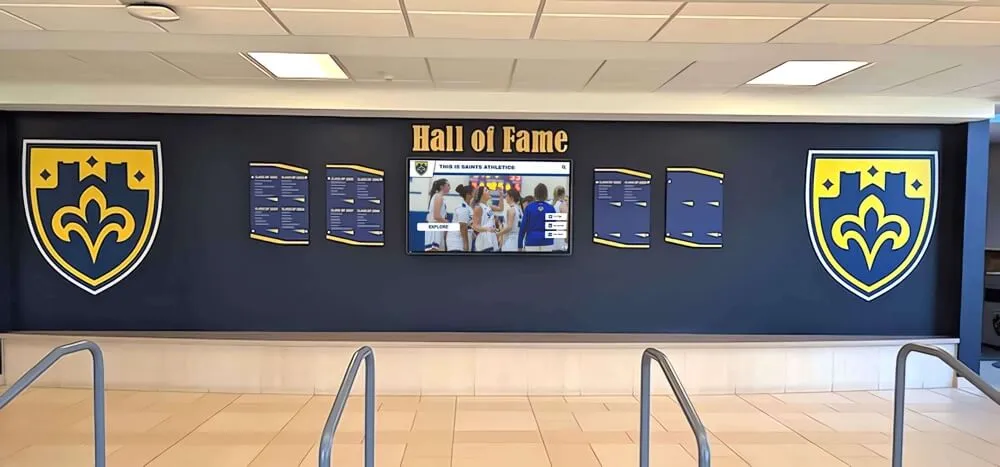
Permanent recognition displays serve as a daily color reference for every championship banner produced after them — Fogra MediaWedge verification for each banner proof confirms the production system is operating within specification before ink reaches the final substrate
Step 4: Calibrate the Spectrophotometer and Measure the MediaWedge Strip
Before measuring the MediaWedge, perform a white calibration on the spectrophotometer. Fogra MediaWedge measurement requires a calibrated instrument — readings from an uncalibrated spectrophotometer cannot be compared against Fogra reference values. A championship banner spectrophotometer calibration check before each measurement session ensures the instrument’s white tile calibration is current and the instrument is at room temperature.
Measure the control strip using the following procedure:
- Set the measurement condition. Use M1 (D50 illuminant, UV-included) per ISO 13655 — this is the standard measurement condition for Fogra reference data. If the vendor specifies M0 or M2, confirm they have corresponding reference data; Fogra’s published reference values are measured under M1.
- Measure each patch in sequence. Use spectrophotometer software that supports Fogra MediaWedge strip reading (X-Rite i1Profiler, Barbieri Spectro LFP, or GMG OpenColor all support this). The software reads the strip in sequence and automatically compares each patch against Fogra’s published L*a*b* reference values for the selected output condition.
- Record the ΔE₀₀ value for each patch group. The measurement report will show ΔE₀₀ values for primary solids, overprints, gray balance patches, and tone value patches separately.
Starting a championship banner order and need artwork with school colors already set?
Rocket Graphics is building an AI-powered platform to help school staff generate championship banner artwork with accurate school colors from the first draft — giving vendors a correctly profiled file to run through Fogra MediaWedge verification from the start.
Get notified when Rocket Graphics opens.Step 5: Apply Fogra Tolerance Limits to the Measurement Report
ISO 12647-7, the standard for digital proofing systems, defines the tolerance limits that apply when evaluating a Fogra MediaWedge proof of a digital printing process. The table below summarizes the primary tolerance values for championship banner proof verification.
| Patch Group | Metric | Pass Threshold | Fail |
|---|---|---|---|
| Primary solids (C, M, Y, K) | ΔE₀₀ vs. Fogra reference | ≤ 3.0 | > 5.0 |
| Binary overprints (R, G, B) | ΔE₀₀ vs. Fogra reference | ≤ 4.0 | > 6.0 |
| Gray balance patches | ΔCh (chroma difference) | ΔCh ≤ 2.5 | ΔCh > 4.0 |
| Tone value increase (25%, 50%, 75%) | ΔL* or tone value difference | Within ± 4% at 50% patch | > ± 8% at 50% patch |
| Paper white | ΔE₀₀ vs. Fogra substrate reference | ≤ 3.0 | > 5.0 |
How to apply this table: For each patch group, locate the ΔE₀₀ or ΔCh column in the vendor’s measurement report. Apply the pass/fail threshold to each group independently. A proof that passes primary solids but fails gray balance requires a gray balance correction before production — gray balance failure affects every neutral element in the banner design, not just the control strip patch.
Values between the “Pass” and “Fail” thresholds indicate borderline performance. For championship banner production where color accuracy across multiple seasons is important, request vendor explanation and documented corrective action for any borderline measurement before authorizing the production run.
Step 6: Evaluate Gray Balance Separately from Primary Color Accuracy
Gray balance failures require special attention in championship banner proofing because they affect elements the school may not immediately notice during visual proof review. A proof where the school navy and gold look correct to the eye may still have a gray balance failure in the CMY midtone range — producing backgrounds, white text areas, and neutral photograph gradations with a color cast that becomes visible when the installed banner is compared against existing recognition panels under gymnasium lighting.
The gray balance ΔCh threshold (ΔCh ≤ 2.5) measures the chroma of a patch that should be visually neutral. A positive ΔCh value means the gray balance patch is chromatic — it has a perceptible color cast rather than a true neutral. For each gray balance patch that exceeds ΔCh = 2.5:
- Record the measured L*, a*, and b* values.
- Note the direction of the cast: positive a* indicates a reddish/warm cast; negative a* indicates a greenish cast; positive b* indicates a yellowish cast; negative b* indicates a bluish cast.
- Include this direction in the corrective proof request — the vendor’s prepress team needs the direction of deviation to adjust ink curves and re-balance the gray.
A championship banner gray balance preflight that establishes the correct CMY gray balance target in the artwork file before submission reduces the probability of gray balance failures at the proof stage. The MediaWedge measurement then confirms that the press is reproducing that target correctly.
Step 7: Review Tone Value Results for Dot Gain Compliance
Tone value increase (dot gain) affects how a championship banner’s graduated tones, photograph elements, and halftone-rendered mascot artwork reproduce in the final print. The Fogra MediaWedge tone value patches at 25%, 50%, and 75% confirm whether the press is applying more or less ink than the Fogra reference specifies at each tonal level.
For championship banner production, a dot gain failure that the MediaWedge identifies — before the production run begins — prevents the school from receiving banners where photographs print darker than intended, highlight detail in mascot artwork is lost, or type at small sizes fills in and becomes illegible. A dot gain compensation preflight for championship banners addresses how dot gain is accounted for in the artwork file; the MediaWedge measurement at proofing confirms the press’s actual gain behavior matches the file’s assumptions.
Step 8: Archive the MediaWedge Measurement Report Before Authorizing Production
Before signing off on the production run, archive the following in the banner production file:
- Fogra reference condition used for measurement (e.g., Fogra51)
- Measurement condition (M1, D50, 2° observer)
- MediaWedge measurement report — a PDF or CSV export from the spectrophotometer software showing ΔE₀₀ and ΔCh values for all patch groups
- Pass/fail decision for each patch group with the name of the staff member who authorized production
- Date of measurement and spectrophotometer model/serial number
- Any corrective action taken before the final proof was approved (e.g., second proof requested, gray balance adjusted)
This archive becomes the press-level color verification record for the production run. Athletic programs maintaining long-term athletic archives and recognition records benefit from storing MediaWedge records alongside the banner artwork files — when a new vendor is needed five years later, the archived MediaWedge reports demonstrate what Fogra tolerance the prior production met.
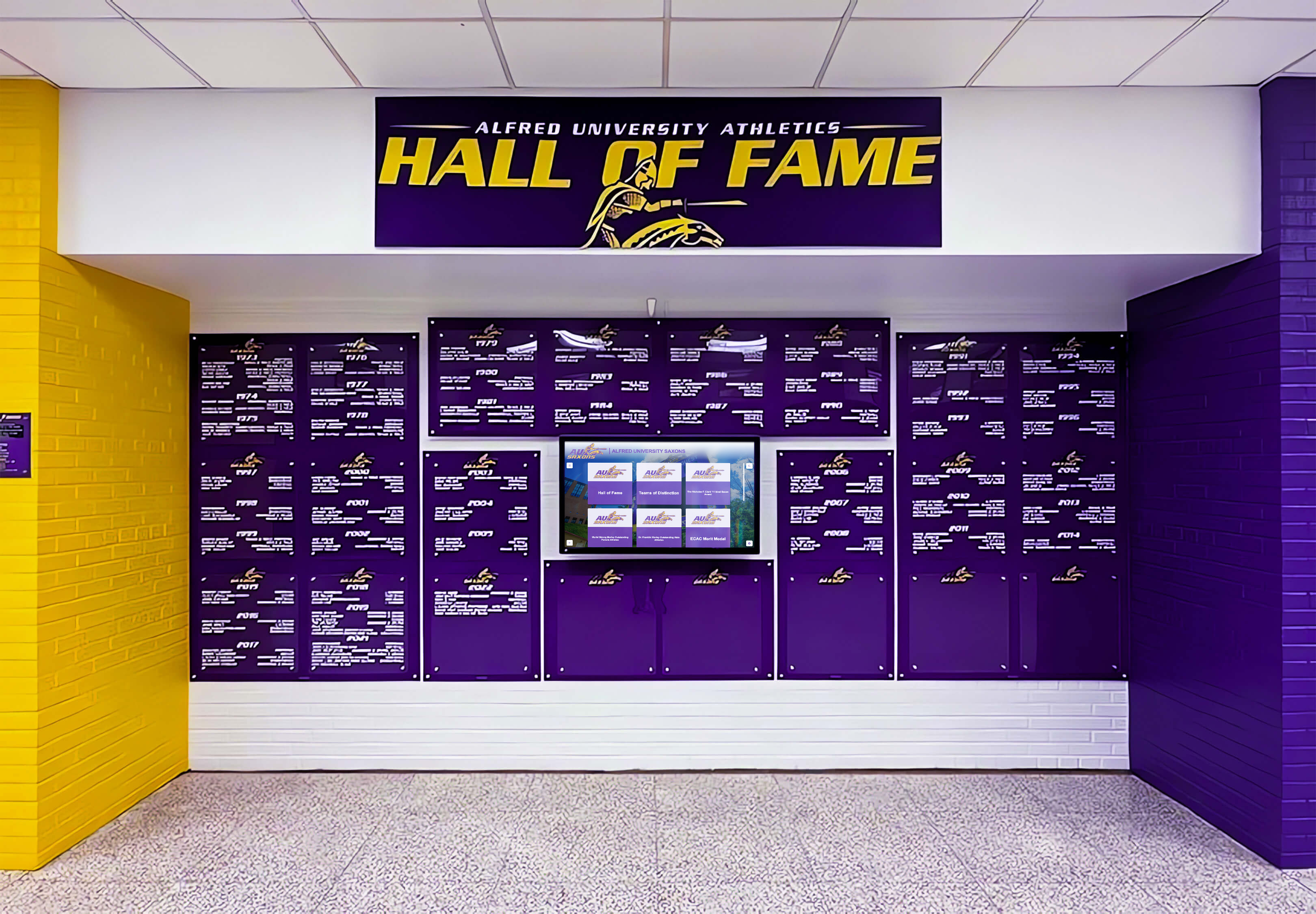
High-chroma school colors — purple, yellow, royal blue — require the most precise press calibration to reproduce correctly. Fogra MediaWedge primary solid and overprint measurements verify that the press is within Fogra reference tolerance for these demanding hue families before production begins
How Fogra MediaWedge Proofing Fits the Broader Championship Banner Preflight Workflow
Fogra MediaWedge verification is one of several complementary proofing and preflight disciplines that address different failure modes in championship banner production. Understanding where it fits helps administrators know which tools apply to which problems.
CIEDE2000 color-difference proofing measures whether specific school colors on the proof fall within ΔE₀₀ tolerance against the school’s approved reference L*a*b* values. It is a per-color measurement. A championship banner CIEDE2000 color-difference proofing checklist provides the specific workflow for that measurement. The MediaWedge verifies the press system; CIEDE2000 verifies the school-specific color output.
G7 calibration aligns a press’s tonal response to the G7 gray balance target, which is the North American equivalent of Fogra’s approach applied through Idealliance certification. A championship banner G7 print calibration workflow explains how G7 and Fogra reference conditions relate. A vendor may be both G7 Master certified and running to Fogra51 — the two are compatible and mutually reinforcing.
Metamerism proofing evaluates a proof that passes MediaWedge and CIEDE2000 verification under the gymnasium’s actual lighting conditions. A banner proof that measures within Fogra tolerance under D50 illumination may show a visible color shift under the school’s LED gymnasium fixtures. MediaWedge proofing does not substitute for metamerism evaluation under installation lighting.
Physical condition assessment of completed banners — surface damage, ink adhesion, grommets, color fading — is a separate discipline from proof verification. A championship banner condition assessment checklist addresses installed banner quality over time, while MediaWedge proofing addresses production quality before a banner leaves the press.
When comparing print vendors based on their color management capabilities, understanding the difference between G7 certification, Fogra reference conditions, and MediaWedge verification allows school purchasing staff to ask more specific questions. A high school championship banner printing cost and vendor comparison that includes press calibration documentation as an evaluation criterion produces a more durable vendor selection than price-only comparison.
For schools evaluating whether printed championship banners remain the right long-term recognition format — given the available alternatives — a championship banner versus digital trophy case comparison provides context on wall space, maintenance, and total cost of ownership across both formats. Regardless of format, color accuracy and a documented approval record remain core requirements for any recognition installation.
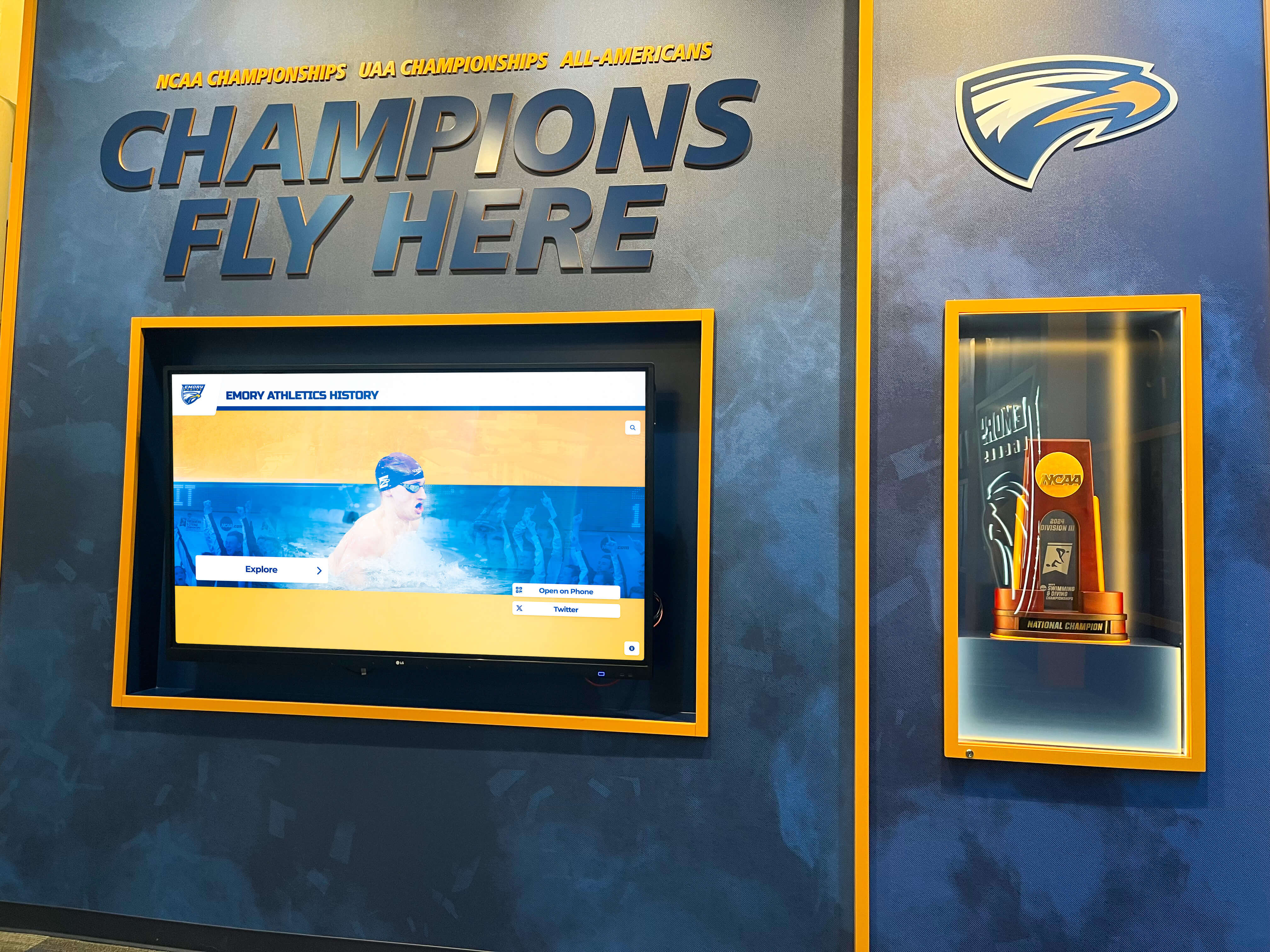
Multi-sport championship recognition programs accumulate production runs from many years — Fogra MediaWedge measurement records for each approved proof create a press calibration history that supports consistent color reproduction across the full recognition installation, regardless of when or by whom each piece was produced
When to Accept, Conditionally Accept, or Reject a MediaWedge Proof
Not every borderline MediaWedge measurement warrants a full proof rejection. The decision depends on which patch group is out of tolerance, by how much, and what the out-of-tolerance element represents in the finished banner.
Accept the proof as-is when all primary solid, overprint, gray balance, and tone value measurements meet the Fogra tolerance thresholds. Authorize production and archive the measurement report.
Conditionally accept when a secondary element (a binary overprint used only in a minor design accent, or a tone value patch outside the banner’s primary tonal range) is borderline but all primary solid patches and gray balance patches pass. Document the conditional acceptance with the specific measurement value and the element it represents in the banner design. For programs tracking championship banner gymnasium display traditions across many seasons, conditional acceptances should be rare and documented — they represent a deviation from full specification.
Reject the proof when any primary solid patch fails (ΔE₀₀ > 5.0), when gray balance ΔCh exceeds 4.0 at any coverage level, or when tone value increase at the 50% patch deviates by more than ± 8% from the Fogra reference. Issue a written corrective proof request that includes the specific measurement values, the patch groups that failed, and the tolerance thresholds the corrected proof must meet.
For schools transitioning to digital recognition formats as a complement to or replacement for traditional printed banners, digital banner recognition at schools operates through display calibration rather than press calibration — but the same documentation principle applies: a measurement record confirming that each recognition output was produced within specification before it was installed.
Frequently Asked Questions: Championship Banner Fogra MediaWedge Proofing
What is the Fogra MediaWedge and why is it used for championship banner proofing?
The Fogra MediaWedge CMYK v3.0 is a standardized 72-patch control strip published by Fogra (Forschungsgesellschaft Druck e.V.), the German printing research institute that develops reference data for ISO 12647 print standards. It is placed in the trim zone of a banner proof sheet so a spectrophotometer can measure whether the printing system is producing colors within Fogra’s published reference tolerances. For championship banner proofing, it confirms press-level calibration before school-specific school colors are evaluated — a vendor whose press fails MediaWedge verification cannot reliably hit school color tolerances regardless of how well the artwork file was prepared.
Which Fogra reference condition applies to championship banner production?
Fogra51 (ISO 12647-2, coated substrate) is the most commonly applicable reference condition for vinyl and coated-fabric championship banners. Fogra52 applies to uncoated textile or fabric substrates. Ask your banner vendor which Fogra output condition their ICC profile and press calibration reference before ordering a proof, and confirm that the artwork file’s embedded output intent matches the vendor’s reference condition.
What tolerance values does a Fogra MediaWedge proof need to meet for championship banner approval?
Per ISO 12647-7, the primary tolerances are: ΔE₀₀ ≤ 3.0 for primary solid color patches (C, M, Y, K); ΔE₀₀ ≤ 4.0 for binary overprint patches (R, G, B); and ΔCh ≤ 2.5 for gray balance patches. Tone value increase at the 50% patch should fall within ± 4% of the Fogra reference. Any primary solid patch measuring ΔE₀₀ above 5.0 or gray balance ΔCh above 4.0 is an unambiguous fail requiring a corrected proof before production.
Can a Fogra MediaWedge proof replace a school-specific CIEDE2000 color measurement?
No — MediaWedge proofing and CIEDE2000 measurement serve complementary but distinct purposes. The MediaWedge verifies the printing system is calibrated to Fogra’s reference condition. CIEDE2000 measurement verifies that the specific school colors on the proof fall within ΔE₀₀ tolerance against the school’s approved reference values. A complete championship banner color verification workflow includes both.
Do I need specialized software to read a Fogra MediaWedge control strip?
Yes — Fogra MediaWedge measurement requires spectrophotometer software that supports strip reading and automated comparison against Fogra’s published reference values. X-Rite i1Profiler, Barbieri Spectro LFP software, and GMG OpenColor all support this. Many championship banner vendors who run Fogra-referenced workflows will supply a MediaWedge measurement report alongside the physical proof if the school includes this requirement in the proof request — the most practical option for schools without in-house measurement software.
A Press-Level Verification Record for Every Championship Banner
A championship banner Fogra MediaWedge proofing checklist confirms that the printing system reproducing a school’s championship recognition is operating within ISO 12647 specification before a single production banner is produced. The workflow is systematic: confirm the vendor’s Fogra reference condition, verify the artwork file’s output intent matches, inspect the control strip on the physical proof, calibrate the spectrophotometer and measure the strip under M1 illuminant, apply ISO 12647-7 tolerances to each patch group, evaluate gray balance and tone value results separately, and archive the complete measurement report before authorizing production.
The athletes, teams, and seasons represented on each championship banner earn a color standard that holds across every production run. A Fogra MediaWedge measurement record for each approved proof is how that standard is verified at the press level — before it is installed, before it is compared against existing banners, and before it becomes part of a school’s permanent recognition legacy.
Generate Championship Banner Artwork with School Colors Already Built In
Rocket Graphics is building an AI-powered platform to help school staff create championship banner graphics with accurate school colors from the first draft — giving your vendor a correctly profiled file ready for Fogra MediaWedge verification from the start.
Get notified when Rocket Graphics opens.