When a school asks a fabric supplier for a tear-strength report on championship banner material, the most useful question is not simply “what is the tear strength?” — it is “what exactly was tested, in which direction, under which version of which standard, and against what agreed acceptance criterion?” A school championship banner fabric tear strength report checklist gives athletic directors, recognition coordinators, and the facilities or purchasing partners who support them a structured way to evaluate a supplier’s ASTM D2261 test document before authorizing a banner production order. The checklist confirms that the test was conducted on the correct substrate, in the specimen direction that corresponds to the banner’s orientation under installation load, and that the reported values were compared against a buyer-agreed criterion — not a universal threshold that the standard itself does not establish.
This guide is written for school athletic directors and the recognition, IT, archives, or facilities staff who support their banner programs. It explains what fabric tear resistance measures and how it differs from seam strength, grommet pullout force, tensile breaking strength, and ink rub resistance — four related but distinct properties that sometimes appear together in supplier documentation and are sometimes confused with one another. It covers the ASTM D2261 tongue-tear method’s scope and specimen design, why specimen direction matters, and what a complete supplier report should contain. No testing of finished championship banners by school staff is described or recommended; this is a document-review and supplier-communication process, not a physical test procedure.
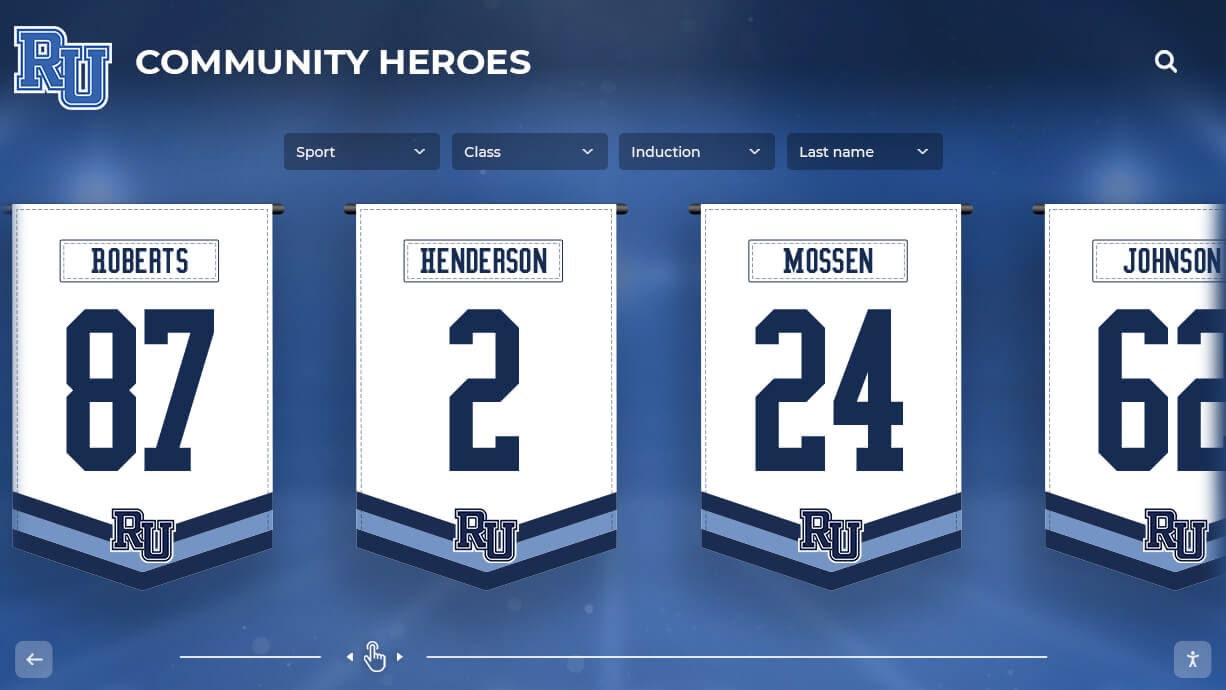
Championship banners, jersey displays, and community heroes banners hanging in school corridors represent athletic achievement expected to endure for years — verifying fabric tear resistance from a supplier report before production is one step in protecting that physical record of athletic history.
What Fabric Tear Resistance Measures — and What It Does Not
Fabric tear resistance — as measured by ASTM D2261 — is the force required to continue propagating an existing tear through a woven fabric under controlled laboratory conditions. The test applies a pulling force to two fabric strips (the “tongues”) created by an initial slit in the specimen, tearing the fabric along its length as the testing machine separates the tongues. The result is a force measurement; for the same substrate and direction, a higher value indicates greater resistance to tear propagation.
Tear resistance describes a fabric’s response to a tear that has already started — not how much force it takes to initiate a tear in undamaged fabric, and not how much force the entire fabric width can withstand before rupturing. That distinction matters for championship banner procurement because it defines what a tear-strength report can and cannot confirm about the material being ordered.
Tensile breaking strength measures how much force is required to rupture the full width of a fabric specimen pulled across its cross-section. A tensile test loads every yarn in the specimen width simultaneously. Tear strength, by contrast, loads only the yarns at the propagating tear front at any given moment. Both properties matter for banner fabric, but they describe different aspects of material performance under different loading conditions. A tear-strength report does not confirm tensile strength, and a tensile report does not confirm tear resistance.
Seam strength measures the force required to rupture the fabric at a sewn or bonded seam — a result that depends not only on the fabric’s intrinsic properties but on the seam construction: stitch type, thread weight, needle size, and seam allowance. A tear-strength report tests base fabric without a seam and does not substitute for seam-specific documentation. If a championship banner’s panel joins are a separate concern, a seam-quality report using an appropriate seam test method is required for that purpose.
Grommet pullout force measures the load required to pull the fabric away from a grommet, eyelet, or reinforced edge hole used to attach the banner to a wall, beam, or hanging system. This test evaluates local stress concentration around the attachment point — where installation load transfers into the fabric through a small area. A high base-fabric tear strength reduces risk at grommet zones, but grommet-specific performance depends on local reinforcement, eyelet design, and mounting hardware in addition to base-fabric properties. Schools requiring grommet pullout documentation should request that test separately.
Ink rub resistance measures how well printed ink adheres to the fabric surface and resists transfer under abrasion. It evaluates the print system’s durability — ink chemistry, fabric coating, curing process — not the fabric’s structural integrity. A banner can have high tear resistance and poor ink durability, or vice versa. Ink rub test methods and tear strength test methods measure entirely different properties and are not interchangeable documentation.
ASTM D2261: Scope, Specimen Design, and What the Standard Reports
ASTM D2261 is the Standard Test Method for Tearing Strength of Woven Fabrics by the Tongue (Single Rip) Procedure, conducted on a constant-rate-of-extension (CRE) tensile testing machine. It is a woven-fabric test method.
The tongue-tear specimen is rectangular, with a defined slit cut into the center of one short edge, dividing that edge into two fabric strips — the tongues. The testing machine grips each tongue in separate jaws and pulls them apart at a controlled rate, continuing the tear through the body of the specimen. Force is recorded as the tear propagates, and a representative force value is reported as the tear strength for that specimen and direction. Results are expressed in force units — typically Newtons (N) or pounds-force (lbf).
Three limits apply when using a D2261 report in championship banner procurement:
The standard does not establish universal pass/fail thresholds for championship banner fabric. Any acceptance criterion referenced in a supplier report is a buyer-supplier agreement established in the purchase specification before the test is run — not a value set by ASTM. When a supplier states that a result “meets ASTM D2261,” they mean the test was conducted according to the standard’s procedure. They are not describing compliance with an ASTM-defined force minimum, because the standard does not set one.
The standard applies to woven fabrics. Knitted fabrics, nonwovens, and materials where a thick coating substantially masks the base fabric’s structural response are not straightforward candidates for this method. If the banner substrate is unusual, ask the testing laboratory to confirm in writing that the method is applicable to the specific material construction.
The standard tests a flat specimen — not the finished mounted banner. A D2261 result describes the base fabric’s resistance to tear propagation under controlled conditions. How that material behaves when fabricated into a banner with seams, grommets, hardware, and the weight and airflow dynamics of a gymnasium installation requires design and installation assessment beyond the scope of a flat-specimen tear test.
Specimen Direction: Why Warp and Filling Results Differ
In a woven fabric, yarns run in two perpendicular directions: the warp (lengthwise yarns, parallel to the selvedge) and the filling (crosswise yarns, also called weft). These yarn systems can differ in fiber content, yarn count, crimp, or finish, and they typically produce different tear-strength values when tested.
ASTM D2261 tests can be conducted on specimens cut in the warp direction, the filling direction, or both. The specimen direction determines which set of yarns is torn through during the test:
- A warp-direction specimen is oriented so that the tear travels parallel to warp yarns and tears through filling yarns. The result reflects the filling yarn system’s resistance to being torn under the forces generated during the test.
- A filling-direction specimen is oriented so that the tear travels parallel to filling yarns and tears through warp yarns. The result reflects the warp yarn system’s resistance.
The relevant direction or directions for a school championship banner depend on how the banner’s mounting points, grommets, and seam lines are oriented relative to the fabric’s warp and filling during installation. A banner with grommets running along one edge parallel to the warp may experience tear-initiation stress concentrated at those attachment points in a direction that makes the filling-direction specimen result more directly relevant — or both may matter, depending on the hanging configuration. A report covering only one direction leaves a gap if the other direction is also exposed to significant load during gymnasium installation and seasonal handling.
When reviewing a supplier tear-strength report, confirm which specimen direction was tested and confirm that the tested direction or directions are appropriate to the banner’s actual mounting design and orientation under load.
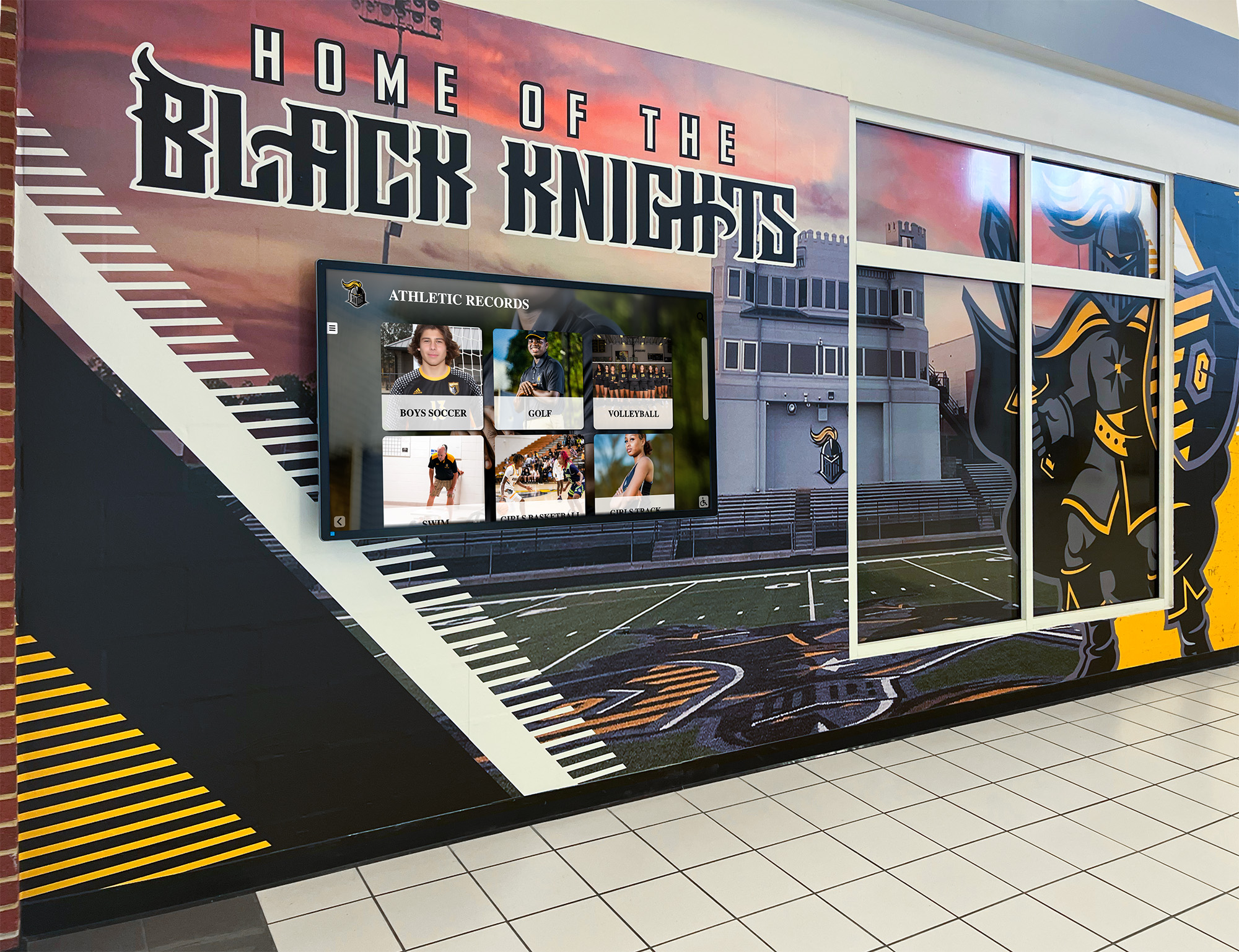
Championship recognition environments in school hallways integrate physical banners with broader display programs — confirming specimen direction in a supplier's tear-strength report before production ensures the test covered the orientation most relevant to how the banner will hang and be handled.
What a Complete Supplier Tear-Strength Report Should Contain
A supplier tear-strength report generated under ASTM D2261 should allow a school buyer to confirm seven things without ambiguity:
The standard and version cited. The report should reference the full ASTM D2261 designation including version year and any reapproval suffix. The designation D2261-13(R24), for example, identifies the 2013 version reapproved in 2024. Knowing the version allows a buyer to confirm which procedure was followed and flags if an older version was used.
The substrate identity. The report should identify the tested fabric by trade name, construction, weight, and any relevant coating or treatment — matching the specific material named in the purchase order. A tear-strength result generated on a similar but different substrate from the same supplier line is not procurement evidence for the ordered material.
The specimen direction or directions tested. The report should state whether specimens were cut in the warp direction, the filling direction, or both. If only one direction was tested, the buyer should confirm whether that single direction is sufficient given the banner’s mounting and loading design.
The result values and their units. Tear-strength results are force values expressed in Newtons or pounds-force. The report should state units clearly. A result expressed in one unit system cannot be compared against an acceptance criterion expressed in the other without conversion.
The agreed acceptance criterion. The report should reference the acceptance criterion established in the purchase specification before the test was run. A report that states values without referencing agreed criteria provides data but does not confirm that the material met the specification. Acceptance criteria are buyer-supplier agreements, not ASTM-defined minimums.
Whether the result met the criterion. The report should state the outcome: the reported value compared against the agreed criterion, and whether the material fell within the agreed range.
Laboratory identification. The report should name the testing laboratory and, where applicable, note any applicable accreditation. Supplier in-house test results may warrant additional documentation depending on the school’s procurement requirements.
Step-by-Step: Reviewing a Supplier Tear-Strength Report
Request the tear-strength report in writing before production authorization. Specify ASTM D2261 as the required method — including the specimen direction or directions — at the time the purchase order is placed. A pre-production report is actionable. A report requested after the banner is fabricated on a specific substrate is not.
Confirm the standard cited in the report is ASTM D2261. The report should cite D2261 with its full version designation. If the report references a different tear test — such as ASTM D1424 (Elmendorf pendulum tear) or ASTM D5587 (trapezoid tear) — those results use different specimen geometries and different loading mechanics. They are not interchangeable with D2261 tongue-tear values, and the method difference should be resolved with the supplier before the report is accepted as D2261 compliance documentation.
Verify that the tested substrate matches your purchase order. Compare the trade name, weight, construction, and any coating stated in the report against the material listed in your purchase order. If they differ, request a corrected report on the specified material before proceeding.
Confirm the specimen direction tested and its relevance to your banner’s mounting design. Review the report for warp-direction and filling-direction results. Confirm that the tested direction corresponds to how the banner’s mounting points, seam lines, and grommet zones will be oriented during gymnasium installation. If the design places significant load on the fabric in both directions, confirm both are covered.
Identify the result values and units. Note the reported force values and confirm the units — N or lbf. Confirm that the agreed acceptance criterion is stated in the same units. Do not compare values across unit systems without converting.
Compare results against the acceptance criterion documented in the purchase specification. The criterion should have been agreed in writing before the test was run. If no criterion was documented in the purchase specification before the test was conducted, establish one now and ask the supplier to confirm the results against it before production is authorized.
Assess whether the finished banner’s mounting design has been evaluated separately. A flat-specimen D2261 result describes base-fabric tear resistance under controlled conditions. How the material performs at grommets, seam edges, folded hems, and anchor points under the weight and airflow of the gymnasium installation is a design-level assessment to be discussed with the supplier separately — that question is outside the scope of the ASTM D2261 flat-specimen test.
File the report with the banner’s procurement record. Retain the supplier tear-strength report alongside the purchase order, agreed acceptance criteria, and any correspondence about substrate scope or specimen direction. Schools conducting periodic condition assessments of their banner collections — following a structured championship banner condition assessment checklist to prioritize repair, replacement, or digitization decisions — benefit from access to original procurement documentation when evaluating whether observed material changes align with documented substrate properties.
Pre-Order Tear-Strength Report Checklist
Complete all items before authorizing production on a championship banner order that includes fabric tear-strength compliance requirements.
- Tear-strength report requested in writing, with ASTM D2261 specified as the method and specimen direction(s) identified, before production authorization
- Report cites the full ASTM D2261 designation, including version year and any reapproval suffix
- Tested substrate trade name, weight, construction, and any coating match the purchase order specification
- Specimen direction(s) tested — warp, filling, or both — identified in the report and confirmed as appropriate for the banner’s mounting design and load orientation
- Result values and units clearly stated (N or lbf)
- Agreed acceptance criterion documented in purchase specification before the test was run, stated in the same units as the result
- Reported values compared against agreed acceptance criterion and confirmed within range
- Finished-banner design assessment — grommet zones, seam edges, mounting hardware, installation load — discussed with supplier separately from flat-specimen test results
- Laboratory identity stated in report; accreditation documented if applicable
- Report filed with purchase order and acceptance-criteria correspondence before production is authorized
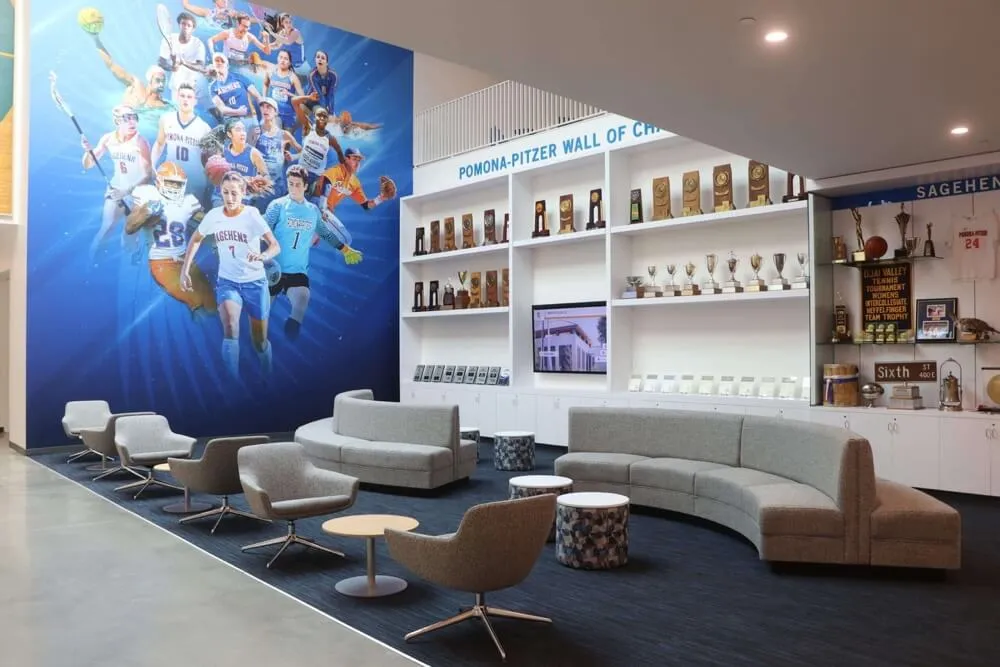
School athletic lounges combining trophy displays with recognition banners represent decades of competitive achievement — fabric banners joining those collections should arrive with supplier tear-strength documentation confirming the material met the agreed acceptance criterion before production began.
Decision Table: What Each Report Finding Means
| Report Finding | Action |
|---|---|
| D2261 designation, substrate match, specimen direction, result units, and agreed criterion all confirmed; result within criterion | Accept — file report with procurement record |
| Report cites “ASTM D2261” without a version year or reapproval suffix | Request the full designation to confirm which procedure version was followed |
| Standard cited in report is ASTM D1424, D5587, or another tear method — not D2261 | Results are not interchangeable; clarify the required method with supplier before proceeding |
| Tested substrate differs from purchase order specification | Request a corrected report on the specified substrate before proceeding |
| Report covers only warp direction but filling direction is also relevant to the banner’s mounting design | Request filling-direction test results, or confirm with supplier that warp-only coverage is sufficient for the specific design |
| Report covers only filling direction but warp direction is also relevant | Request warp-direction test results |
| Result values stated without units | Request clarification on units before comparing against any acceptance criterion |
| Results stated without reference to any agreed acceptance criterion | Establish acceptance criterion in writing; confirm results against it before accepting |
| No acceptance criterion was documented in the purchase specification before the test was run | Document criterion now; ask supplier to confirm results against it before production authorization |
| Substrate is non-woven, knitted, or heavily coated | Request written confirmation from testing laboratory that D2261 is applicable to the specific material construction |
| Supplier cannot provide a D2261 report for the specified substrate | Do not proceed; consider alternative substrate with available test data or arrange independent pre-production testing |
Placing Tear-Strength Documentation in the Broader Athletic Record
A tear-strength report is a pre-production procurement document, but it retains value well beyond the initial purchase decision. When a school can retrieve the original tear-strength documentation for a banner — knowing which substrate was tested, in which specimen direction, against what agreed criterion — that information supports future orders for the same program, assists condition evaluation if the banner is assessed for repair or replacement, and provides context for supplier conversations if a material concern arises after installation.
Schools conducting annual reviews of their championship banner programs benefit from having procurement documentation available at review time. A championship banner inspection checklist used at an annual safety and recognition review is more informative when the reviewer can reference what was agreed at procurement — the substrate, the tear-resistance specification, the seam construction — rather than assessing material condition without baseline documentation.
Procurement records for physical athletic artifacts should be organized so they remain retrievable across staff transitions. Schools evaluating the credibility and completeness of older records in their athletic archives — whether supplier reports, historical programs, or photograph collections — may find an athletic archive source reliability rubric useful for ranking which historical documents are authoritative enough to support current purchasing or condition decisions.
Physical recognition artifacts beyond banners benefit from similar documentation practices. Schools mounting trophies, jerseys, and memorabilia in display cases alongside championship banner collections can apply consistent artifact-handling standards across the collection. Specific mount and display guidelines for trophy cases — such as the approaches covered in trophy case object mount guidelines for safely displaying jerseys, trophies, and memorabilia — reflect the same documentation-first approach that tear-strength report review brings to banner fabric procurement.
Schools building structured records for their broader athletic recognition programs also benefit from consistent data frameworks for athlete names, team records, and award categories. A hall of fame profile data dictionary template for standardizing names, teams, awards, and media supports the same goal of consistent, retrievable athletic records that banner procurement documentation serves — ensuring the school’s recognition program is accurate and accessible whether someone is looking at a physical banner in the gymnasium or a digital profile in a recognition database.
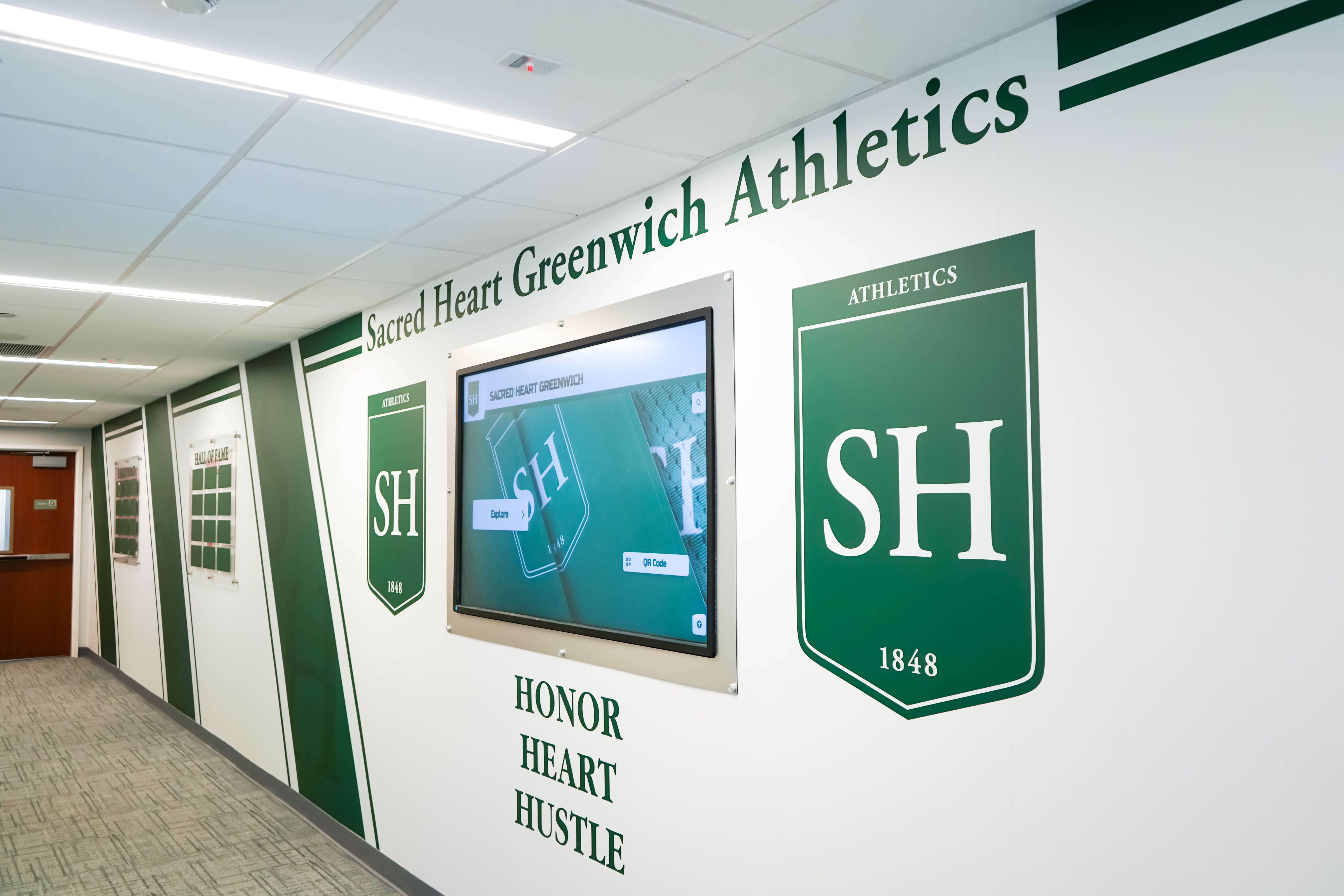
Athletic recognition hallways carry championship history for students, alumni, and staff — fabric banners in those corridors should arrive with tear-strength documentation confirming the substrate was tested in the relevant specimen direction against agreed criteria, creating a reference for the banner's full service life.
Frequently Asked Questions
What does ASTM D2261 measure for championship banner fabric?
ASTM D2261 measures the tearing strength of woven fabrics by the tongue (single rip) procedure — specifically, the force required to continue propagating an existing tear through a fabric specimen on a constant-rate-of-extension tensile testing machine. Results are force values in Newtons or pounds-force, reported separately for warp-direction and filling-direction specimens. It does not measure tensile breaking strength, seam strength, grommet pullout force, or ink adhesion. It also does not establish pass/fail thresholds; any acceptance criterion is a buyer-supplier agreement documented before the test is run.
Why does specimen direction matter in a championship banner tear-strength report?
Woven fabrics have different yarn properties in the warp and filling directions, and those differences typically produce different tear-strength values. A warp-direction specimen tears through filling yarns; a filling-direction specimen tears through warp yarns. The relevant direction for a championship banner depends on how the banner’s mounting points, grommets, and seam lines are oriented under installation load. A tear-strength report that covers only one direction may leave a gap in documentation if the other direction is also exposed to significant stress during gymnasium installation and seasonal handling.
How is fabric tear strength different from seam strength for a championship banner?
Fabric tear strength measures the base material’s resistance to tear propagation in a flat, unseamed specimen under controlled laboratory conditions. Seam strength measures the force required to rupture the fabric at a sewn or bonded join — a result that depends on the seam construction (stitch type, thread, needle size, seam allowance) as well as the base fabric. A tear-strength report alone does not confirm seam performance. If a banner’s panel seams are a specific concern, a separate seam-quality report using an appropriate seam test method is required for that purpose.
Can school staff test a delivered championship banner for tear strength?
No. ASTM D2261 requires fabric specimens prepared and conditioned under controlled laboratory conditions and tested in calibrated equipment. It is a pre-production supplier qualification process, not a field test for finished banners. Schools should not cut into or destructively test delivered championship banners. If a delivered banner shows visible material degradation or damage, document the condition with photographs and contact the supplier to discuss the finding against the original procurement specification and agreed acceptance criteria.
Does a high D2261 tear-strength result confirm that championship banner grommets will hold under installation load?
Not directly. Fabric tear strength and grommet pullout force are related properties — a fabric that resists tear propagation also tends to resist tearing at grommet attachment points — but they are measured separately by different test methods. Grommet-specific performance also depends on local reinforcement, eyelet design, and mounting hardware in addition to base-fabric tear strength. Schools requiring grommet pullout documentation should request that test separately. The finished banner’s overall mounting design still needs to be assessed with the supplier outside the scope of the flat-specimen D2261 test.
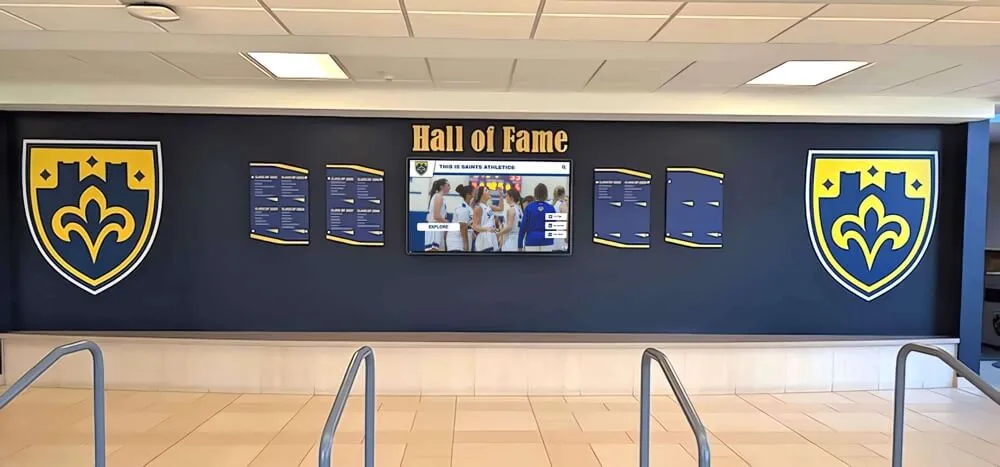
School athletic hall of fame programs combining physical shields, recognition banners, and digital displays carry competitive history across decades — pre-production tear-strength documentation for each fabric banner creates a baseline that supports condition assessment and future procurement decisions throughout the program's life.
Championship Graphics Built for School Recognition Programs
Rocket Graphics is building AI-powered tools to help school athletic programs create championship recognition graphics — from artwork files ready for fabric production to recognition content that connects physical banners with the school's broader athletic legacy.
Get notified when Rocket Graphics opens.