A school championship banner fabric dimensional change report is a lab document a supplier provides — before production — showing, as a signed percentage of original measurement, how much the specified fabric substrate’s length and width shift after laundering under defined conditions. Reviewing that report before your order enters production lets you confirm that the fabric’s shrinkage or growth values fall within the tolerances your purchase specification requires, that the test was conducted on the substrate your order names, and that the conditions used in the test match the care requirements agreed for your banner. Suppliers who cannot produce this document before production have not established that the substrate they plan to use behaves dimensionally within your specification. If reported values fall within agreed tolerances, proceed and file the report; if they do not, resolve the discrepancy with the supplier while substrate alternatives are still available — not after a finished banner has been raised in a gymnasium.
This guide is written for school athletic directors, recognition coordinators, and facilities staff who evaluate fabric championship banner orders from print and textile suppliers. It covers what a dimensional-change report contains, the specific scope and limits of AATCC TM135 for this purpose, a numbered workflow for reviewing the report, a decision table, and a pre-order checklist. Laundering or mechanically testing a delivered, finished gymnasium banner is outside the scope of this review and should not be performed on completed school athletic artifacts. This is also a distinct pre-order step from fabric bow and skew inspection, seam puckering checks, and substrate acclimation before printing — each requires its own separate process. Custom championship banner planning for schools — covering design choices, data fields, and digital archive specs — is a natural stage at which to schedule the dimensional-change report request before production is authorized.
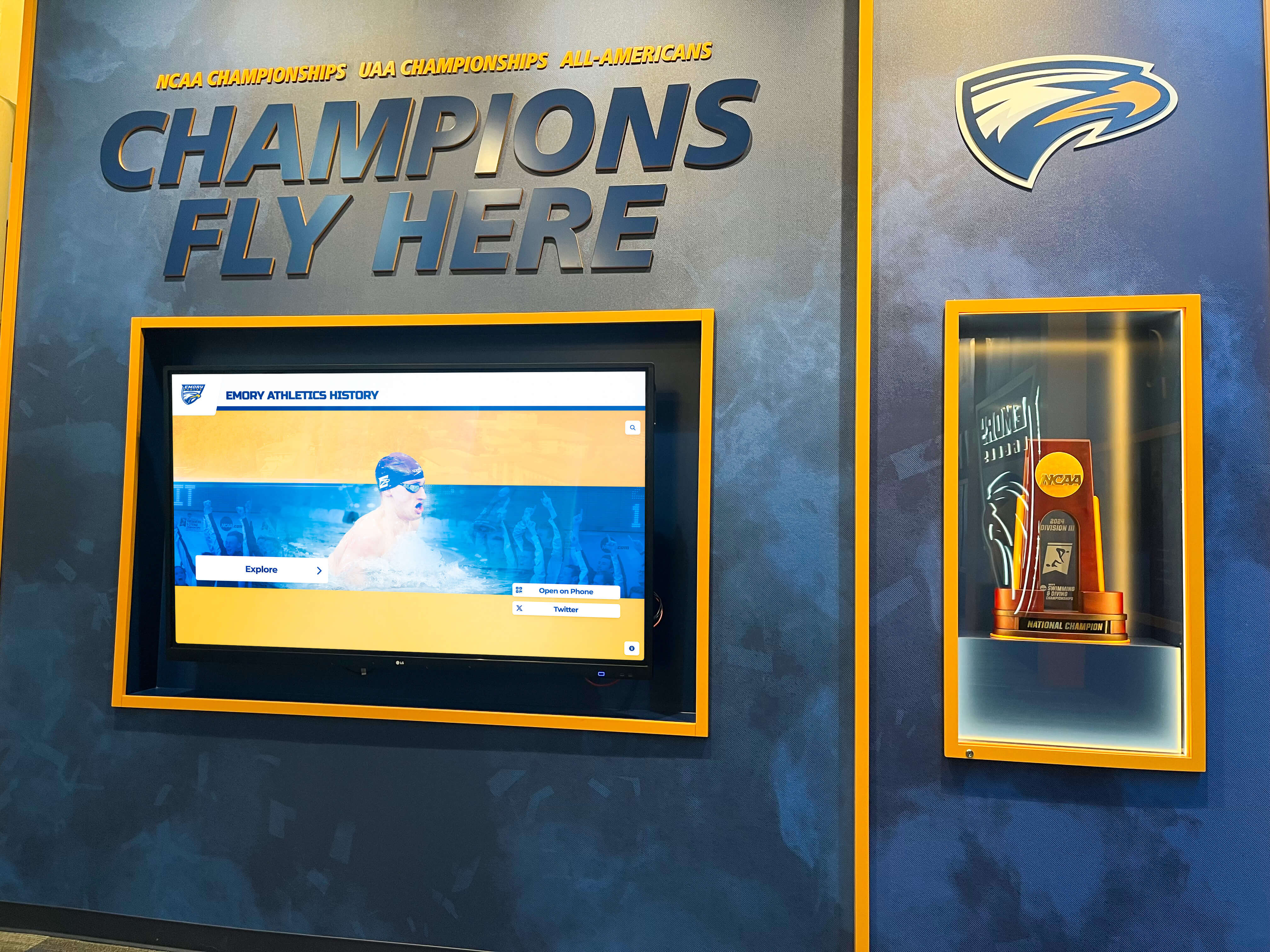
Championship recognition walls in school athletic facilities hold titles across multiple decades — confirming that a fabric banner substrate's dimensional behavior falls within agreed tolerances, before production begins, protects the display's visual integrity throughout the banner's service life
What AATCC TM135 Measures — and What It Does Not Apply To
AATCC Test Method 135 — published as TM135-2025, Dimensional Changes of Fabrics after Home Laundering — is the standard most commonly referenced in fabric dimensional-change reports for textile banner substrates. Its scope covers the determination of length and width changes of fabrics when subjected to home laundering procedures. The standard defines four washing temperatures, three agitation cycles, and four drying procedures as parameters representing common home-care options.
Two critical limits apply when using a TM135 report in championship banner procurement.
TM135 covers fabric coupons under specified home-laundering conditions — not finished banners. A report generated under TM135 reflects how the substrate material behaves when test specimens are laundered under controlled lab conditions. It does not describe the behavior of a finished, installed banner under gymnasium hanging loads, dry-cleaning conditions, high-humidity athletic environments, or fire-testing protocols. Applying TM135 data as authorization to launder a delivered championship banner is outside the standard’s scope and risks permanent damage to an artifact that represents the school’s athletic record.
TM135 does not set acceptance thresholds. The standard defines how to measure and express dimensional change as a percentage; it does not specify a universal tolerance that all banner substrates must meet. An acceptable dimensional-change range for a specific school banner order is a buyer-supplier agreement established in writing in the purchase specification before the order is placed. Any tolerance figure cited in this guide — such as ±2% in each direction — is an example for illustration only, not a universal requirement.
The dimensional-change report also addresses a different condition than fabric bow and skew (geometric deviations of the fabric’s crosswise threads from perpendicular alignment with the selvedge), seam puckering (a stitch-local finishing defect at sewn joints), or substrate acclimation before printing (dimensional behavior in the pre-print thermal environment). Each condition requires its own separate inspection or review procedure.
What a Supplier Dimensional-Change Report Contains
A complete dimensional-change report for a championship banner substrate should include:
- Substrate identity: trade name, weight (grams per square meter or ounces per square yard), and fabric construction — the exact material your order specifies, including any coating or treatment relevant to the agreed care conditions
- Test method: the standard referenced (for example, AATCC TM135-2025) and the specific wash temperature, agitation cycle, and drying procedure used — not just the standard number
- Number of test cycles: how many laundering cycles the specimens completed before measurement
- Dimensional change values: length change percentage and width change percentage, each as a signed value (negative = shrinkage, positive = growth)
- Specimen count: the number of test specimens measured and the basis for the reported percentage
- Laboratory identification and test date: confirming the report is current and traceable to the testing facility
A report that omits specific test conditions, names only the standard without identifying which parameters were selected, or lacks laboratory identification does not provide sufficient information for procurement decisions. Request a corrected report that states all parameters before proceeding.
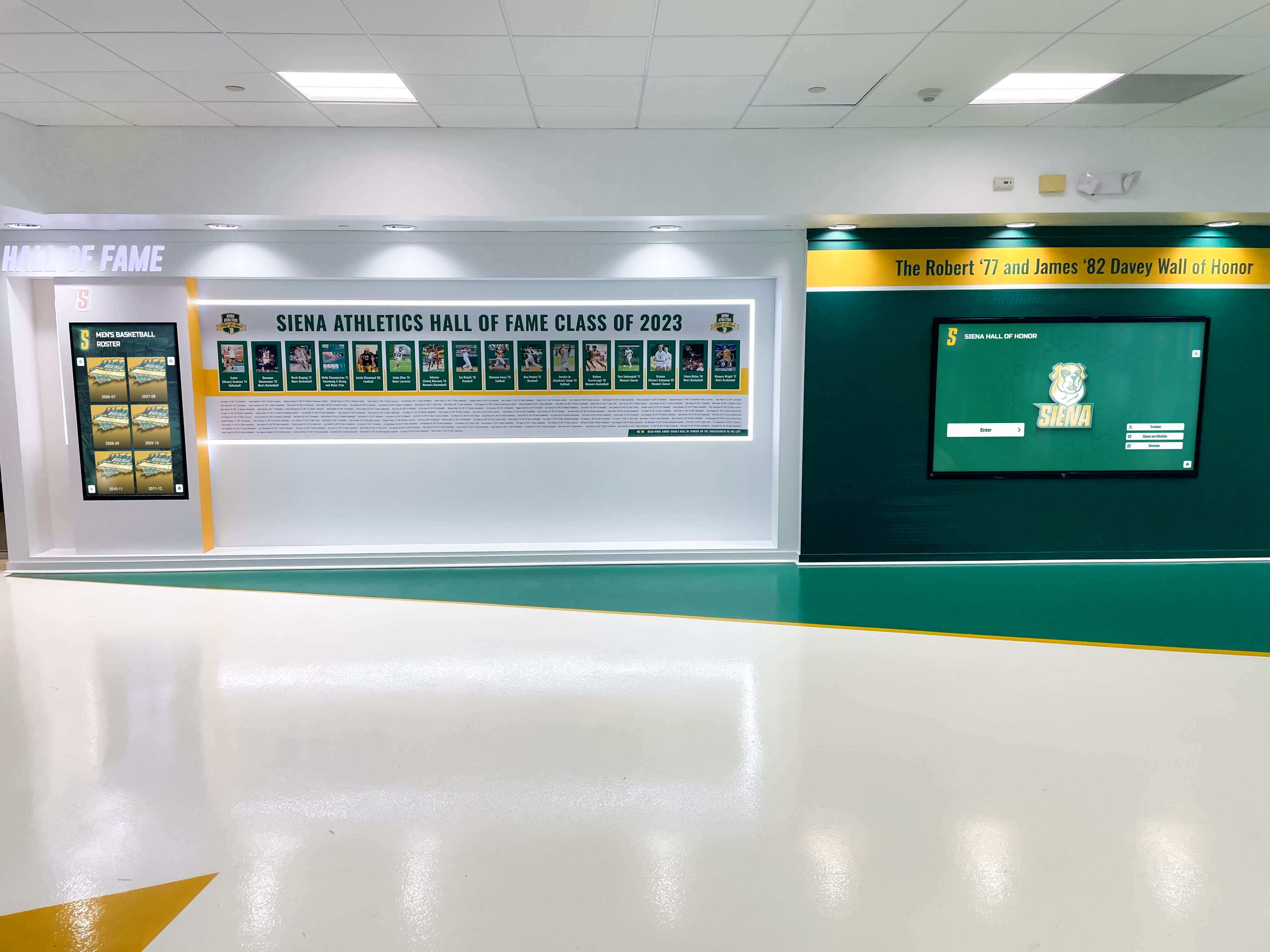
Recognition banners installed on school athletic walls carry championship years and rosters that cannot be reprinted without full vendor engagement — the dimensional-change report review, completed before production, is the step that confirms the specified substrate meets the agreed dimensional tolerance
Step-by-Step: Reviewing a Supplier Dimensional-Change Report
Request the report before the order enters production. Dimensional stability data is actionable only when substrate alternatives and specification revisions are still available. Requesting the report after a banner is printed eliminates those options.
Confirm the substrate in the report matches your purchase order. Verify that the trade name, weight, and construction in the report match the fabric your order specifies. A report on a different or related substrate — even from the same supplier line — is not evidence for your specified material.
Verify the stated test conditions against your agreed care specification. Confirm that the wash temperature, agitation cycle, and drying procedure in the report reflect the care conditions the supplier has identified as appropriate for the specified fabric. A report using conditions substantially different from the banner’s agreed care requirements may not represent how the substrate behaves under those conditions.
Read the reported length-change and width-change percentages. Note the sign and exact value for each dimension. Record values precisely — rounding or paraphrasing introduces ambiguity when comparing against agreed tolerances.
Compare the values against the agreed tolerance range in your purchase specification. If no written tolerance was established before requesting the report, this comparison has no contractual reference point. Establish tolerances in the purchase order before the supplier runs the test.
Document the review and communicate the outcome to the supplier. Record the substrate name, test method and conditions, reported values, agreed tolerance range, and your accept or reject determination. Retain the original report and the review record together in the banner’s procurement file.
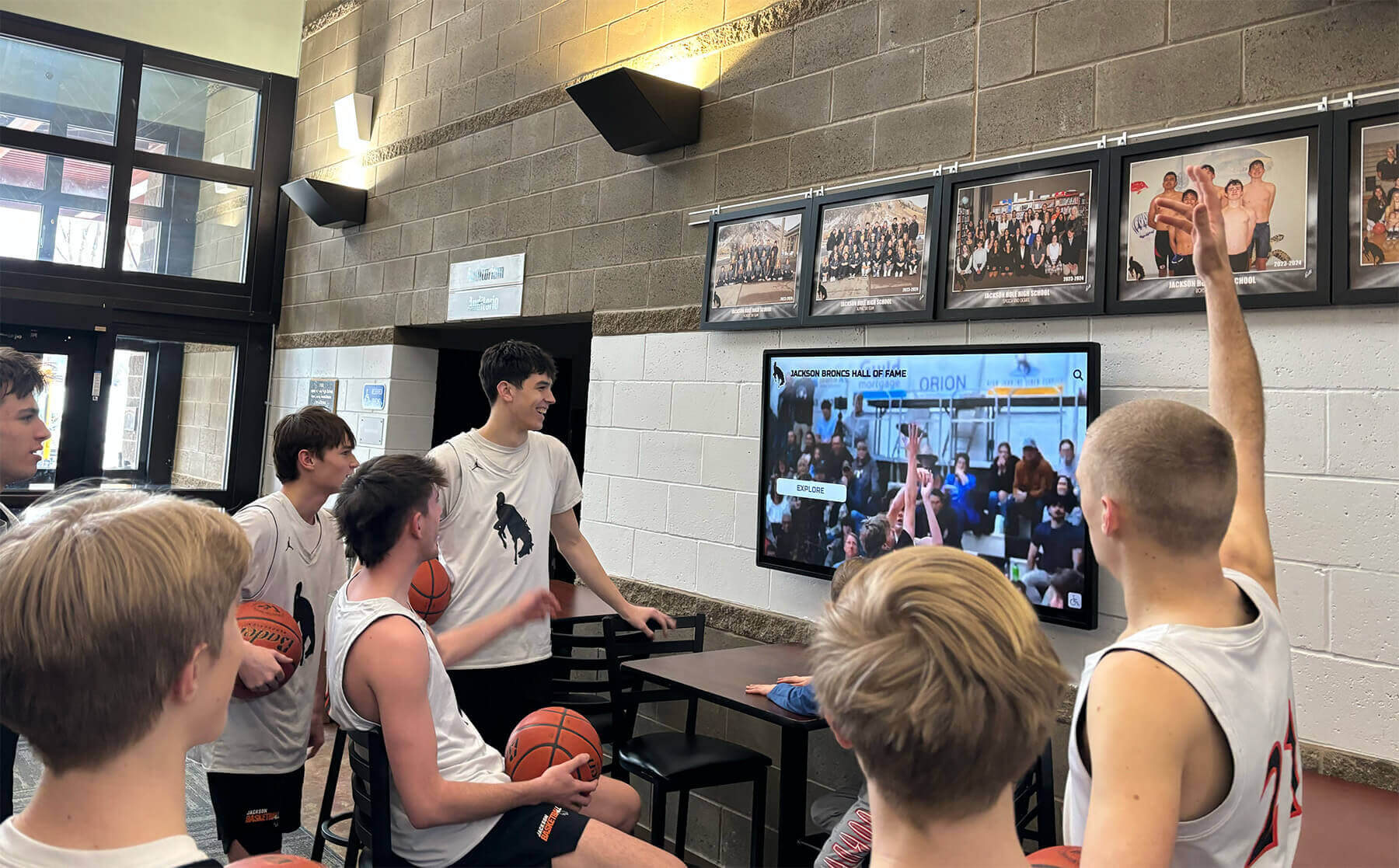
School recognition environments where championship banners hang near digital displays require every physical banner to meet its finished-dimension specification — a pre-order dimensional-change report review confirms the specified substrate will produce a banner within the tolerances the display space requires
Evidence and Decision Table
| Reported Finding | Decision |
|---|---|
| Length and width values within agreed tolerance; substrate and conditions match | Accept — retain report in procurement file |
| Values within tolerance; substrate name in report differs from order spec | Request clarification — confirm same material before accepting |
| One or both values exceed agreed tolerance | Flag to supplier — discuss substrate alternatives or tolerance revision before proceeding |
| Test conditions differ materially from agreed care specification | Request a corrected report reflecting agreed conditions before deciding |
| Report cites standard number only; specific parameters not stated | Request parameter-complete report — standard number alone is insufficient |
| Report absent or supplier cannot provide one | Do not proceed to production without it |
| Number of cycles in report is fewer than the agreed care spec requires | Request additional-cycle data or confirm cycle count is appropriate for this order |
Pre-Order Review Checklist
Complete all items before authorizing production on a fabric championship banner order that requires dimensional-change compliance.
- Dimensional-change report requested from supplier in writing before production authorization
- Substrate trade name, weight, and construction in report match purchase order specification
- Test method reference (e.g., AATCC TM135-2025) and edition stated explicitly in the report
- Wash temperature, agitation cycle, and drying procedure each stated explicitly — not referenced by number alone
- Number of test cycles stated
- Length-change percentage recorded (sign and exact value)
- Width-change percentage recorded (sign and exact value)
- Both values confirmed within the tolerance range documented in the purchase specification
- Laboratory identification and test date present and legible
- Original report and review record filed together in the banner’s procurement file
Schools managing banner orders through a manual spreadsheet or paper-file system should designate a dedicated procurement folder for each banner order and retain the supplier report alongside the purchase order and tolerance correspondence. Schools maintaining a structured championship banner inventory — tracking titles, years, sports, and display locations — can attach the dimensional-change report directly to the banner’s record, making it retrievable across staff transitions and available as a reference when a future order for the same substrate is being evaluated.
If a delivered banner is later found to have physical condition issues, having retained the pre-order dimensional-change report provides useful context in the broader evaluation. A championship banner condition assessment checklist — covering repair, replacement, and digitization decisions — is the appropriate process for evaluating a delivered banner’s physical state; the dimensional-change report supports that process but does not substitute for a post-delivery physical inspection.

Lobby and corridor championship banner installations depend on accurate finished dimensions — a pre-order dimensional-change report review confirms that the specified substrate will produce a banner that fits the designed display space within the agreed dimensional tolerances
Frequently Asked Questions
Does AATCC TM135 apply to finished championship banners after gymnasium installation?
No. TM135 determines dimensional changes of fabric specimens after home laundering. It addresses the substrate material under controlled lab conditions — not the behavior of a finished, mounted, installed banner under hanging loads, humidity cycles, or gymnasium handling. Post-installation evaluation is a separate process; a championship banner inspection checklist for annual safety and recognition review covers that ongoing assessment, which is distinct from the pre-order dimensional-change report review described here.
Should a school launder a delivered championship banner to verify the fabric met its dimensional-change report?
No. A delivered, finished gymnasium banner should not be laundered as a test or verification step. The dimensional-change report is based on fabric coupon testing under specified lab conditions. Applying it to authorize laundering a completed school athletic artifact risks permanent damage to a recognition display the school may not be able to reproduce. If a delivered banner’s finished dimensions do not match the purchase specification, document the discrepancy and present it to the supplier alongside the specification and agreed tolerances — pursue vendor resolution, not banner-level testing.
What dimensional-change tolerance ranges are appropriate for championship banner fabric?
AATCC TM135 does not specify tolerance values. Acceptable ranges are a buyer-supplier agreement based on the substrate, treatment, care conditions, and end-use display requirements. Some procurement specifications for display textiles reference example starting points — such as ±2% in length and ±2% in width — as a basis for negotiation. Treat any specific figure as an illustrative example, establish and document the agreed range in the purchase order before requesting the report, and describe the agreed tolerance as specific to your order rather than a universal standard.
How does fabric dimensional change differ from fabric bow and skew?
Dimensional change is a response to laundering conditions — the fabric’s absolute length and width shift as a result of thermal and mechanical processing during a wash and dry cycle. Bow and skew are geometric deviations of the fabric’s crosswise threads from perpendicular alignment with the selvedge, caused during weaving and finishing. They are different conditions, measured differently, with different supplier resolution paths. If a delivered banner appears distorted across its full width in a way that is not attributable to care-condition exposure, a bow and skew inspection is the appropriate next step, not a dimensional-change report review.
What if the supplier cannot provide a dimensional-change report for the specified fabric?
A supplier who cannot provide a compliant report has not established that the substrate meets your specification’s dimensional stability requirements under the stated conditions. Options include requesting the supplier use an alternate substrate for which a compliant report exists, commissioning independent testing through a qualified textile testing laboratory before the order is placed, or revising the agreed care specification to conditions for which data is available. For schools managing a growing recognition program where physical display space is a real constraint — a challenge explored in how schools showcase titles without running out of wall space — each banner added to the collection should meet its full specification, making dimensional-change compliance especially worth establishing in writing before committing to production.
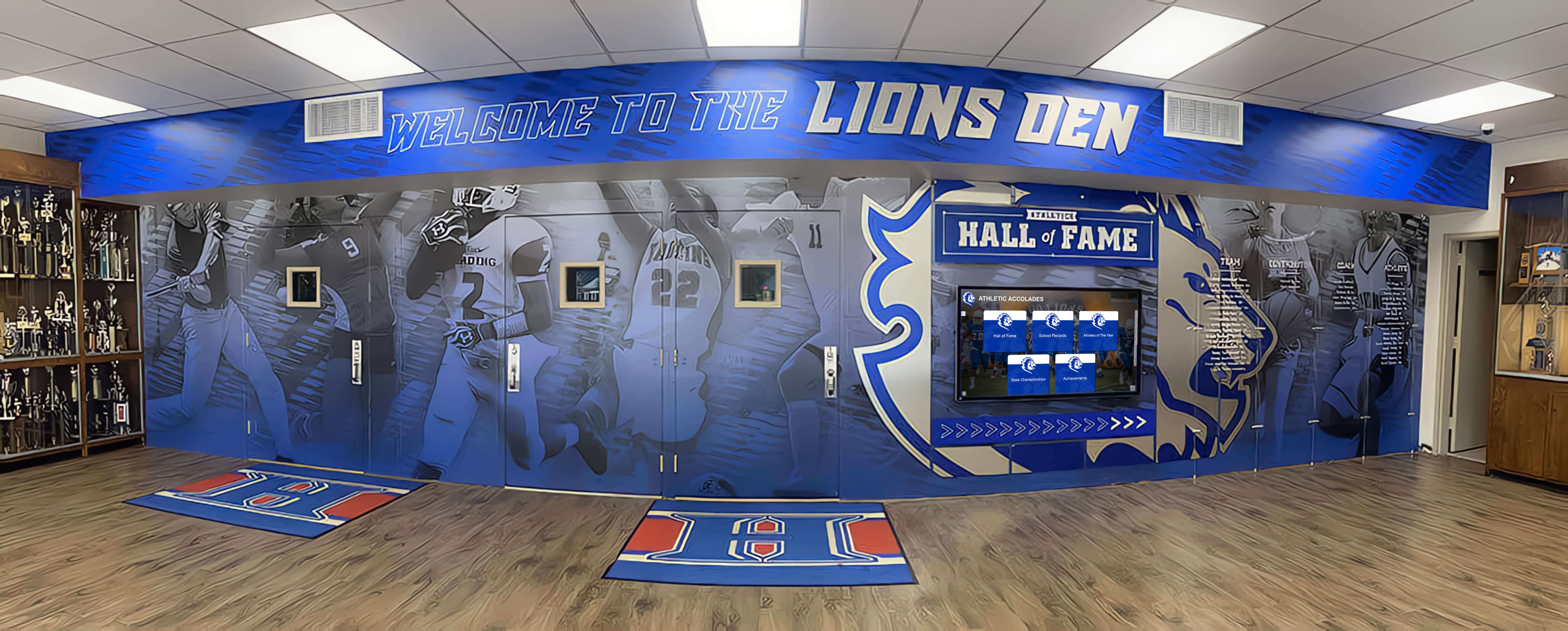
School recognition corridors integrating championship banners with murals and trophy cases expect each banner to hold its designed dimensions throughout a multi-year service life — dimensional-change report review before production is the procurement step that confirms the specified substrate is capable of meeting that requirement